Discovery of the ‘Likweli’: Scientists Unveil New Primate Species with Orange Lips and a Thundering Roar in the Congo
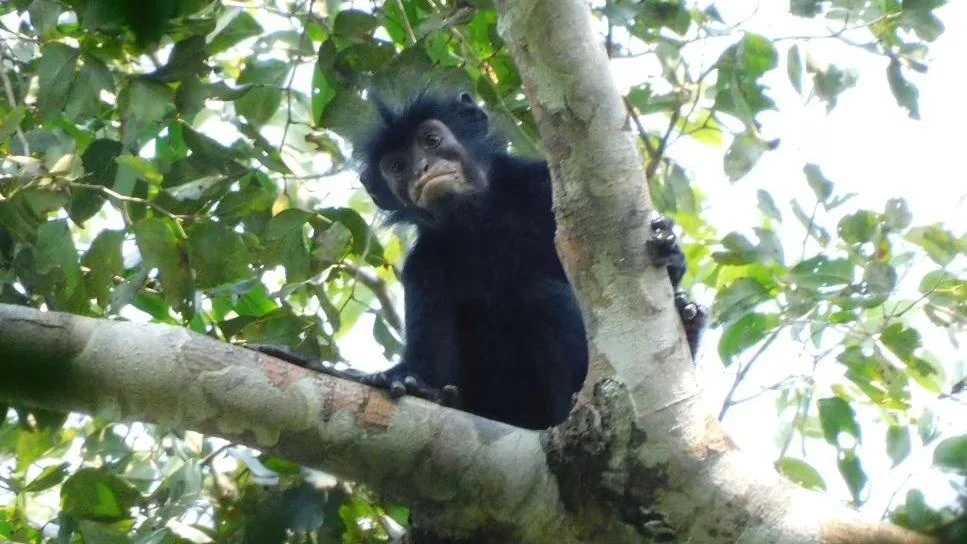
JAKARTA – In a milestone for biological science that underscores the deep mysteries still hidden within the world’s second-largest rainforest, researchers have officially identified a new species of primate in the Democratic Republic of Congo (DRC). Characterized by its striking orange lips and a vocalization described as a "thundering roar," the discovery of Colobus congoensis—known to local communities as the "Likweli"—marks a significant moment in modern primatology.
This finding represents only the fifth new monkey species to be identified in Africa over the last 75 years, highlighting the immense difficulty and importance of biodiversity surveys in the volatile yet ecologically rich Congo Basin.
Main Facts: The Anatomy of a New Species
The Colobus congoensis is a member of the Colobus genus, a group of Old World monkeys native to Africa that are typically known for their lack of thumbs and complex digestive systems suited for leaf-eating. However, the Likweli stands out from its cousins through a suite of unique physical and behavioral traits.
Physical Characteristics
The monkey is described as having a shimmering, jet-black pelage (fur) that contrasts sharply with its long, flowing white or cream-colored accents. Its most distinctive facial feature is its vibrant orange-to-vermillion lips and a surrounding facial pattern of orange and cream hues.
According to the research team, led by experts from Florida Atlantic University (FAU) and the City University of New York (CUNY) Graduate Center, the Likweli is notably smaller than other Colobus species. Adult specimens weigh approximately 6.8 kilograms (about 15 pounds). Despite its smaller stature, its skeletal structure is robust, featuring unique cranial and dental measurements that distinguish it from its closest relatives.
The "Roar"
Perhaps its most startling characteristic is its vocalization. Unlike the high-pitched chirps or whistles associated with many smaller primates, the Likweli possesses a deep, resonant roar. This "thundering" sound is used primarily for territorial signaling and communication across the dense, multi-layered canopy of the Congolese rainforest, where visibility is often limited to a few meters.
Geographical Range
The species appears to be endemic to a relatively small region of approximately 1,700 square kilometers within the DRC. The majority of its known habitat is concentrated within the boundaries of the Lomami National Park, a protected area that has become a sanctuary for rare and endangered megafauna.
Chronology: A Decade-Long Quest for Identification
The path to identifying Colobus congoensis was not an overnight success but rather a grueling 14-year odyssey involving field expeditions, local collaboration, and advanced laboratory analysis.
- 2008: The First Glimpse
The journey began in 2008 when a team of field researchers working in a remote sector of the DRC captured a series of grainy, unusual photographs of a primate that did not match the descriptions of any known species in the region. While the photos were intriguing, they lacked the clarity and biological evidence required for a formal scientific description. - 2009–2017: Barriers and Preparation
For nearly a decade, further investigation was hampered by the logistical challenges of the terrain and the political instability often associated with remote regions of the Congo. During this time, researchers consulted with local indigenous hunters and community leaders, who confirmed that the "Likweli" had been known to them for generations, though it remained a mystery to Western science. - 2018–2022: Intensive Observation
With better funding and improved access to the Lomami National Park, the research team launched an intensive observation phase. Over four years, they recorded 114 separate sightings. These observations allowed scientists to document the monkey’s social behavior, feeding habits, and—crucially—its vocalizations. - 2023–2024: Genetic and Morphological Validation
The final phase involved moving from the forest to the lab. Scientists conducted a comprehensive analysis of the monkey’s DNA, alongside a "morphometric" study of its skull and teeth compared to museum specimens of other Colobus monkeys. This data provided the "smoking gun" needed to declare it a separate species. - July 2026: Official Announcement
The study was formally published and peer-reviewed, with the results shared globally through major scientific outlets and news agencies like CNN.
Supporting Data: Genetic Divergence and Evolutionary History
The discovery of Colobus congoensis provides more than just a new name on a list; it offers a window into the ancient history of African geography and climate change.
The Genetic Split
DNA sequencing revealed that the Likweli’s closest relative is Colobus satanas (the Black Colobus), which is currently found over 1,200 kilometers away in West-Central Africa (primarily Gabon and Equatorial Guinea).
The genetic evidence suggests that these two species diverged from a common ancestor approximately 4 to 5 million years ago. This timeframe is significant because it coincides with a period of dramatic environmental shifts in Africa, where expanding and contracting forests likely isolated populations of primates, leading to "allopatric speciation"—the process by which new species evolve due to geographic isolation.
Morphological Distinctions
The research team utilized 3D scanning technology to compare the Likweli’s skull to its relatives. The data showed:
- Cranial Capacity: A distinct skull shape that accommodates different jaw muscle attachments, likely an adaptation to the specific vegetation found in the Lomami region.
- Dental Records: Tooth wear patterns suggest a diet that, while primarily folivorous (leaf-eating), may include harder seeds or fruits than those consumed by the Black Colobus.
Official Responses: Voices from the Scientific Community
The announcement has been met with excitement and a sobering call to action from the academic community.
Kate Detwiler, a professor of biological sciences at Florida Atlantic University and a lead author of the study, emphasized the evolutionary stakes. "The discovery of Colobus congoensis changes our understanding of African monkey evolution," Detwiler stated. "To find a lineage that split five million years ago and remained hidden from science until now is a testament to the vast, unexplored biological wealth of the Congo Basin."
Researchers from the City University of New York (CUNY) Graduate Center highlighted the role of local knowledge in the discovery. "We didn’t ‘discover’ this monkey in the sense that it was unknown to humanity; the local people have lived alongside the Likweli for centuries. Our role was to bridge the gap between traditional ecological knowledge and formal Western taxonomy."
Conservationists, however, have expressed immediate concern regarding the species’ future. "The fact that we are just now describing this species while it is already under threat is a tragedy we must avoid," said a spokesperson for the Lomami National Park project. "The data suggests it is already at a tipping point."
Implications: Conservation and the Future of the Congo Basin
The identification of Colobus congoensis carries heavy implications for environmental policy and conservation strategy in Central Africa.
Endangered Status
Based on the criteria of the International Union for Conservation of Nature (IUCN), researchers have proposed that the Likweli be classified as "Endangered." This recommendation is based on three primary factors:
- Limited Range: The species exists in a "pocket" of forest only 1,700 square kilometers in size. Any localized disaster, such as a major forest fire or a disease outbreak, could wipe out the entire population.
- Habitat Loss: Despite being within a national park, the surrounding buffer zones are under constant pressure from illegal logging and agricultural expansion.
- The Bushmeat Trade: The DRC faces significant challenges regarding the hunting of primates for food. The Likweli’s loud roar, while useful for communication, unfortunately makes it an easy target for hunters to locate.
The "Wallacean Deficit"
This discovery highlights the "Wallacean Deficit"—the gap between our knowledge of a species’ existence and our understanding of its distribution and ecology. If a primate as loud and visually striking as the Likweli could remain unclassified for so long, scientists argue that thousands of smaller mammals, birds, and insects in the Congo remain unknown.
A Call for Protection
The researchers conclude that the survival of Colobus congoensis is inextricably linked to the integrity of the Lomami National Park. They are calling for increased international funding to support park rangers and to develop sustainable economic alternatives for local communities, reducing the reliance on bushmeat hunting.
As the global community grapples with the "Sixth Mass Extinction," the Likweli stands as a symbol of hope—a reminder that the natural world still holds breathtaking secrets, provided we are wise enough to protect them before they vanish.
Reporting by: (vmp/fay)
Enriched and expanded for international journalistic standards.