Culinary Heritage in a Glass: The Timeless Appeal and Complete Guide to Making Makassar’s Iconic Es Pisang Ijo
JAKARTA — As the tropical sun reaches its peak, radiating waves of intense heat across urban landscapes, the quest for the ultimate refreshing dessert becomes a daily priority. While modern cafes and convenience stores offer a plethora of industrialized frozen treats, traditional Indonesian archipelago desserts continue to hold an unrivaled place in the hearts and palates of locals. Among the constellation of archipelago refreshments, few dishes evoke the vibrant colors, comforting textures, and rich cultural history quite like Es Pisang Ijo.
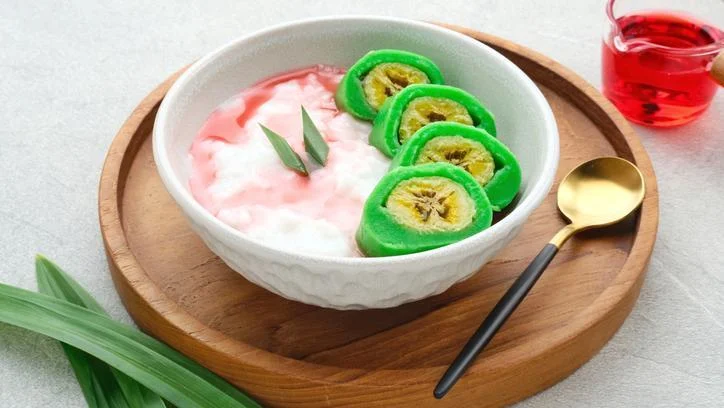
Hailing originally from the coastal city of Makassar in South Sulawesi, this beloved culinary masterpiece—historically known in local dialect as Unti Moncongbulo—is far more than a simple thirst-quencher. It is a harmonious symphony of flavors and textures: sweet, ripe bananas swaddled in a tender, emerald-green flour jacket, resting gracefully upon a bed of velvety, savory rice flour pudding (bubur sumsum), all brought together by a drenching of rich coconut milk, sweet red syrup, and a mountain of freshly shaved ice.
In recent years, the dessert has transcended its regional boundaries, transforming from a signature local delicacy found along the bustling streets of Losari Beach into a nationwide culinary phenomenon. Whether enjoyed as an afternoon snack (camilan) to combat the midday swelter or served as a decadent breaking-fast treat (takjil) during the holy month of Ramadan, Es Pisang Ijo remains an enduring testament to the ingenuity of traditional Indonesian gastronomy.
Main Facts: Deconstructing the Anatomy of Es Pisang Ijo
To truly appreciate Es Pisang Ijo, one must understand its fundamental components. The dish is a masterclass in culinary balance, where contrasting elements—sweet and savory, soft and chewy, warm cooking techniques and freezing cold temperatures—converge into a singular, cohesive bowl.
1. The Star Ingredient: Pisang (Bananas)
Not just any banana will do. Authentic recipes dictate the use of Pisang Raja (King banana), Pisang Kepok (Saba banana), or Pisang Tanduk (Horn banana). These specific varieties possess a dense flesh and a natural sweetness that holds its shape well when boiled or steamed, ensuring that the fruit does not turn mushy inside its vibrant green blanket.
2. The Emerald Wrapper (Adonan Hijau)
The visual signature of the dish is, of course, its green exterior. Traditionally, the dough is made from a simple mixture of rice flour, plain flour, coconut milk, sugar, and water. The distinctive emerald hue and intoxicating aroma traditionally come from natural extractions of suji leaves (Pleomele angustifolia) and pandan leaves. Modern adaptations sometimes utilize high-grade food coloring or pandan paste for convenience, but purists argue that the botanical extracts impart a subtle, earthy fragrance that cannot be artificially replicated.
3. Bubur Sumsum (Rice Flour Porridge)
Acting as the creamy, comforting foundation of the bowl, bubur sumsum is a smooth, porridge-like concoction made from rice flour, coconut milk, salt, and pandan leaves. Its subtle saltiness provides a brilliant counterpoint to the sweetness of the bananas and the accompanying syrups, grounding the dish and giving it a luxurious, melt-in-the-mouth consistency.
4. The Liquid Elements: Santan and Syrup
The assembly is drowned in a bath of freshly pressed coconut milk (santan), which adds richness and a nutty depth. Traditionally, it is paired with Sirup Pisang Ambon (a bright red, banana-flavored syrup popular in Indonesia) or simple red rose syrup. The vibrant red syrup contrasts sharply with the green bananas and white porridge, creating a visual presentation that is as striking as it is appetizing.
Chronology: The Journey of Es Pisang Ijo from Local Tradition to National Icon
The history of traditional foods in Indonesia is often passed down orally through generations, woven deeply into the social fabric of local communities. While the exact year of its inception remains lost to oral history, the evolution of Es Pisang Ijo tells a compelling story of cultural migration and commercial adaptation.
Era of Origin: The Coastal Roots of Makassar
Long before it was commercialized in food courts across Jakarta and Surabaya, Es Pisang Ijo was a home-cooked specialty in Makassar, South Sulawesi. Known locally as Unti Moncongbulo, it was prepared during festive occasions, family gatherings, and community celebrations. The use of bananas—abundant throughout the tropical landscape of Sulawesi—combined with coconut palms, made the dessert accessible to both coastal fishermen and inland farmers alike. Originally, the dish may have been served warm or at ambient temperature, utilizing natural ice only when merchants began trading blocks of ice down from the mountains or via early refrigeration techniques in the mid-20th century.
Mid-20th Century: The Urban Migration
As transportation networks expanded across Indonesia following independence, Bugis and Makassarese migrants moved to major economic hubs, particularly Jakarta, Bandung, and Surabaya. Bringing their culinary traditions with them, these diaspora communities opened small-scale food stalls (warung) and mobile carts (kaki lima). Es Pisang Ijo slowly transitioned from an exclusive regional dessert into a sought-after street food item, capturing the urban palate with its striking color and refreshing profile.
The 2000s–Present: Digital Media and Culinary Renaissance
With the advent of culinary tourism, food blogging, and social media platforms like Instagram and TikTok, traditional Indonesian desserts experienced a massive renaissance. Chefs and culinary entrepreneurs began experimenting with the classic formula. Today, one can find modern reinterpretations ranging from Es Pisang Ijo-flavored ice creams and pastries to high-end restaurant plating featuring artisanal elements. Despite these modern twists, the traditional bowl remains the gold standard, celebrated annually during culinary festivals and featured widely in national cooking shows.
Supporting Data: Recipe, Specifications, and Variations
For home cooks eager to recreate this slice of Makassar heritage in their own kitchens, the process requires patience, precision, and an appreciation for traditional techniques. Below is the comprehensive breakdown for crafting authentic Es Pisang Ijo for three portions.
Recipe Specifications
- Preparation & Cooking Duration: 45 Minutes
- Difficulty Level: Moderate
- Yield: 3 Portions
- Region of Origin: Makassar, South Sulawesi
- Category: Dessert / Refreshing Beverage
Ingredients List
For the Pisang Ijo Component:
- 3 ripe Pisang Raja or Pisang Kepok (steamed or boiled until cooked, then peeled)
- 100 grams rice flour
- 50 grams all-purpose flour
- 50 grams granulated sugar
- 200 ml thin coconut milk
- 100 ml pandan-suji leaf extract (or water mixed with a few drops of pandan paste)
- A pinch of salt
- Banana leaves or plastic wrap (for rolling, optional)
For the Bubur Sumsum Component:
- 100 grams rice flour
- 500 ml thin coconut milk (or a mix of water and thick coconut milk)
- ½ teaspoon salt
- 2 stalks of pandan leaves, knotted
For the Complementary Serving Elements:
- Thick coconut milk (boiled briefly with a pinch of salt to prevent spoiling)
- Red syrup (Pisang Ambon syrup or rose syrup)
- Abundant shaved ice or crushed ice
Optional Creative Additions:
- Diced jackfruit (nangka) for tropical fragrance
- Boiled tapioca pearls (mutiara tapioka) for added chewiness
- Toasted and chopped peanuts for a nutty crunch
- Condensed milk for an extra layer of sweetness
Step-by-Step Cooking Instructions
Mastering Es Pisang Ijo lies in achieving the correct elasticity of the green wrapper and the silky smoothness of the porridge. Follow these meticulous steps:
Step 1: Preparing the Banana Wrappers
- In a mixing bowl, combine the rice flour, all-purpose flour, granulated sugar, and salt.
- Gradually pour in the thin coconut milk and the pandan-suji leaf extract while whisking continuously to ensure no lumps form in the batter.
- Pour the smooth green batter into a non-stick pan over medium-low heat. Stir constantly with a wooden spatula until the mixture thickens, becomes translucent, and forms a cohesive, pliable dough. Remove from heat.
- Allow the dough to cool slightly until it is safe to handle. Divide the dough into three equal portions corresponding to your three prepared bananas.
Step 2: Wrapping the Bananas
- Take one portion of the green dough and flatten it thinly. You can use a piece of greased banana leaf or plastic wrap dusted with a little flour to prevent sticking.
- Place a cooked, peeled banana in the center of the flattened green dough.
- Gently mold and wrap the dough around the banana until the fruit is completely and evenly sealed. Smooth out any seams with your fingers.
- Repeat the process for the remaining bananas.
Step 3: Steaming the Pisang Ijo
- Prepare a food steamer and line the steamer basket with banana leaf or lightly oil it to prevent sticking.
- Arrange the wrapped bananas inside the steamer, leaving small gaps between them so they do not fuse together during the cooking process.
- Steam over medium heat for approximately 15 to 20 minutes until the green wrapper is thoroughly cooked, firm, and boasts a glossy finish.
- Remove from the steamer, set aside, and allow them to cool completely before slicing into diagonal bite-sized pieces.
Step 4: Making the Bubur Sumsum
- In a saucepan, combine the rice flour, salt, and thin coconut milk. Stir thoroughly until the flour is completely dissolved.
- Drop in the knotted pandan leaves to infuse the mixture with fragrance.
- Place the saucepan over medium-low heat, stirring constantly with a wooden spoon to prevent the bottom from burning or lumping.
- Continue cooking until the mixture thickens into a smooth, bubbling, glossy porridge. Remove from heat and set aside.
Step 5: Final Assembly and Presentation
- Prepare a clean serving bowl or tall glass.
- Spoon a generous amount of the warm or room-temperature bubur sumsum at the bottom of the vessel.
- Neatly arrange the sliced green bananas over the top of the porridge.
- Pile high with an abundant amount of shaved ice or crushed ice.
- Generously drizzle the top with thick coconut milk and vibrant red syrup (Sirup Pisang Ambon).
- Optional: Garnish with diced jackfruit, boiled tapioca pearls, or a sprinkle of crushed peanuts for elevated texture.
- Serve immediately while ice-cold.
Official Responses and Cultural Significance
The enduring popularity of traditional dishes like Es Pisang Ijo has drawn significant commentary from culinary historians, tourism officials, and cultural preservationists across Indonesia.
In recent statements regarding culinary diplomacy and regional tourism development, representatives from the Indonesian Ministry of Tourism and Creative Economy have repeatedly emphasized the economic and cultural value of traditional gastronomy. Officials note that iconic regional dishes such as Es Pisang Ijo act as powerful cultural ambassadors, drawing domestic and international tourists to South Sulawesi to experience authentic local flavors firsthand.
Furthermore, culinary experts and prominent chefs have lauded the resilience of traditional desserts in the face of modern, westernized culinary trends. Culinary authorities point out that while contemporary dessert culture often leans toward artificial flavorings and heavy dairy fats, dishes like Es Pisang Ijo rely on natural botanicals, plant-based starches, and fresh tropical fruits. This aligns closely with global shifts toward authentic, plant-forward, and culturally rich culinary experiences.
Cultural preservation groups in Makassar have also advocated for the documentation of traditional recipes across generations, ensuring that regional variations—such as adjustments in wrapping techniques or accompaniment choices—are celebrated rather than lost to commercial standardization. Local culinary associations regularly host cooking workshops and heritage food festivals to pass down the intricate skills required to balance the textures of the green wrapper and the porridge.
Implications: Economic, Social, and Culinary Impact
The widespread popularity and commercialization of Es Pisang Ijo carry profound implications across multiple sectors of Indonesian society, ranging from micro-enterprises to national food identity.
1. Empowerment of Micro, Small, and Medium Enterprises (MSMEs)
At the grassroots level, Es Pisang Ijo serves as a vital economic engine for countless small-scale food vendors, street food cart operators, and home-based catering businesses. Because the ingredients—rice flour, coconut milk, bananas, and sugar—are locally sourced and cost-effective, individuals with modest capital can enter the culinary market by opening specialized warung or stalls. This creates sustainable livelihoods for urban migrants and local families alike, particularly in bustling metropolitan centers like Jakarta, where demand for traditional street food remains exceptionally high.
2. Preservation of Agricultural Biodiversity
The demand for specific banana varieties (Pisang Raja and Pisang Kepok) underpins the agricultural supply chain in regions cultivating these crops. By maintaining a steady commercial demand for traditional produce, culinary traditions help safeguard agricultural biodiversity against the monoculture trends favored by industrial agriculture. Farmers are incentivized to continue cultivating indigenous banana cultivars that hold up best in traditional culinary preparations.
3. Strengthening National Culinary Identity
In an era of globalization dominated by international fast-food chains, traditional dishes serve as anchors of national identity. Es Pisang Ijo, alongside other archipelago treasures like Es Teler, Es Campur, and Klepon, reminds consumers of the rich tapestry of flavors born from Indonesia’s diverse ethnic landscapes. By embracing these dishes—whether through home cooking, street-side purchasing, or modern restaurant adaptations—younger generations maintain a tangible, delicious connection to their cultural roots.
Ultimately, Es Pisang Ijo is far more than a simple remedy for a hot afternoon. It is a vibrant cultural artifact, a meticulous culinary craft, and a unifying symbol of Indonesian hospitality and heritage that continues to cool, comfort, and captivate one bowl at a time.