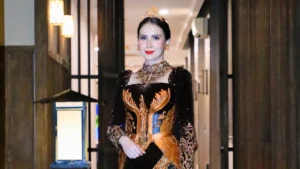
Masterclass on Stage: Soimah Reveals Pro-Level Microphone Techniques to Dangdut Academy 8 Contestants

Jakarta, October 15, 2026 – In the high-stakes environment of Dangdut Academy 8 (DA8), where vocal precision can be the thin line between advancing to the next round or facing elimination, the role of a mentor is paramount. During the latest broadcast, legendary performer and seasoned judge Soimah Pancawati provided a masterclass on one of the most overlooked aspects of live performance: professional microphone control.
Addressing the contestants, Soimah broke down the technical nuances of managing audio output when navigating the treacherous landscape of high-register notes. Her instruction served as a pivotal moment for the young akademia, offering insights that bridge the gap between amateur singing and seasoned stagecraft.
Main Facts: The Art of Microphone Discipline
The interaction began when host Gilang Dirga posed a technical inquiry regarding stage performance: How should a singer handle their microphone when reaching for high-pitched, powerful notes?
Soimah, known for her impeccable live vocal control, clarified that while the instinct to pull the microphone away from the mouth during high notes is a common practice among professional singers, it is not a "one-size-fits-all" rule.
"The microphone is an extension of your voice, not a crutch," Soimah emphasized. She explained that the primary reason performers pull the mic away—a technique known as ‘mic distancing’—is to prevent audio clipping and to manage the intensity of the sound pressure level (SPL) that hits the diaphragm of the microphone. However, she cautioned the contestants that this technique requires a profound understanding of one’s own vocal anatomy.
Chronology of the Instruction
The teaching moment unfolded during the live critique segment of the show. The contestants, who have been struggling with the dynamic shifts required for this season’s repertoire, were eager to learn how to maintain vocal clarity without sacrificing the emotional impact of their high notes.

- The Inquiry: Gilang Dirga initiated the discussion, noting that many audience members and budding singers often wonder why Soimah occasionally moves the microphone several inches away during her own performances.
- The Demonstration: Soimah invited a contestant to attempt a challenging vocal run. She monitored the volume and the proximity of the mic, correcting the contestant’s stance in real-time.
- The Theoretical Breakdown: Soimah explained that when a singer pushes for a high note, the natural volume increases significantly. If the microphone remains too close, the signal can become distorted or "peaky."
- The Practical Application: She demonstrated the "pull-away" motion, emphasizing that the movement must be fluid and rhythmic, matching the crescendo of the song rather than being a jarring, jerky movement.
- The Feedback: She concluded by reminding the akademia that technique should never override the soul of the performance. "If you are focusing too much on moving the mic, you lose the emotion of the lyric," she warned.
Supporting Data: Why Microphone Technique Matters
In professional live sound engineering, the relationship between a vocalist and their microphone is governed by the Inverse Square Law. As the distance between the source (the singer’s mouth) and the receiver (the microphone) increases, the sound intensity drops significantly.
For performers like those in DA8, mastering this distance is critical for three main reasons:
- Audio Integrity: Professional-grade microphones are highly sensitive. When a singer hits a high note with full force, they produce a massive amount of acoustic energy. Moving the mic away prevents "peaking"—where the audio signal exceeds the maximum capacity of the mixing board, resulting in a harsh, distorted sound.
- Dynamic Control: A singer who understands microphone technique can create a "dynamic range." By pulling the mic away on high notes and bringing it back close for intimate, lower-volume passages, the singer adds layers of texture to the song, making the performance more engaging for the audience.
- The "Pro" Aesthetic: Stage presence is not just about movement; it is about how the artist interacts with their equipment. A singer who struggles with mic proximity often looks frantic. A singer who masters it looks in command, projecting confidence even during the most difficult parts of a composition.
Official Responses and Industry Perspective
The segment has sparked widespread discussion among industry professionals, including audio engineers and vocal coaches associated with Indosiar.
"What Soimah did was provide a fundamental lesson in acoustics," said a veteran sound engineer who has worked with the production for several seasons. "Many young singers think that ‘louder is better.’ Soimah is teaching them that ‘clearer is better.’ When you have the ability to control the mic, you allow the sound engineer to do their job better, which ultimately makes the contestant sound more professional on air."
The contestants themselves expressed deep gratitude. One akademia noted that they had previously viewed the microphone simply as a tool to be held, rather than an instrument to be played. "Soimah’s lesson changed how I approach my rehearsals. I’m now focusing on my breath support and my physical posture, knowing that the mic will follow my lead," the contestant shared.
Implications for Future Performances
The implications of this masterclass extend far beyond a single episode of Dangdut Academy 8. By raising the standard of technical knowledge among its contestants, the show is essentially grooming the next generation of professional Indonesian vocalists.

Elevating the Competition
As the season progresses, viewers can expect to see a shift in how these contestants interact with their equipment. The "Soimah Method" will likely become a benchmark for the judges’ critiques moving forward. Contestants who fail to implement this technique may now face stricter scrutiny, as the expectation for professional-level audio control has been set.
Educational Value for Viewers
Beyond the competition, the segment provides immense value to the aspiring singers watching at home. In an era where digital audio processing and auto-tune are prevalent, Soimah’s focus on raw, manual technique serves as a reminder of the importance of traditional stage skills. It highlights that the "X-factor" in music often comes down to the small, disciplined details that distinguish a hobbyist from a star.
The Evolution of the Dangdut Genre
Dangdut is a genre defined by its intensity and vocal gymnastics. As the genre continues to modernize and gain international recognition, the technical standards for its performers must evolve accordingly. Soimah’s intervention is a sign of the genre’s maturation. By emphasizing the nuances of performance—rather than just the raw power of the voice—the industry is signaling a shift toward a more sophisticated, globalized standard of musical excellence.
Conclusion
The lesson provided by Soimah on October 15, 2026, was more than just a tip on how to hold a piece of hardware; it was a profound insight into the discipline of artistry. By teaching the akademia of Dangdut Academy 8 to treat the microphone with respect and intent, she has equipped them with a tool that will serve them long after the competition concludes.
As the contestants continue their journey toward the final stage, the ability to marry raw vocal talent with refined physical technique will be their greatest asset. For the audience, it promises a more polished, professional, and ultimately more emotional viewing experience. In the high-stakes world of live television, it is these subtle masterclasses that ensure the music remains at the heart of the spectacle.
As Soimah wisely noted, the ultimate goal is not to hide the voice, but to deliver it to the audience in its most perfect, resonant form. The journey of these akademia is far from over, but with the guidance of veterans like Soimah, they are undoubtedly on the right path to greatness.