Vivo X Fold 6 Officially Unveiled: Redefining the Foldable Smartphone Landscape with Massive Battery Tech and Zeiss Optics
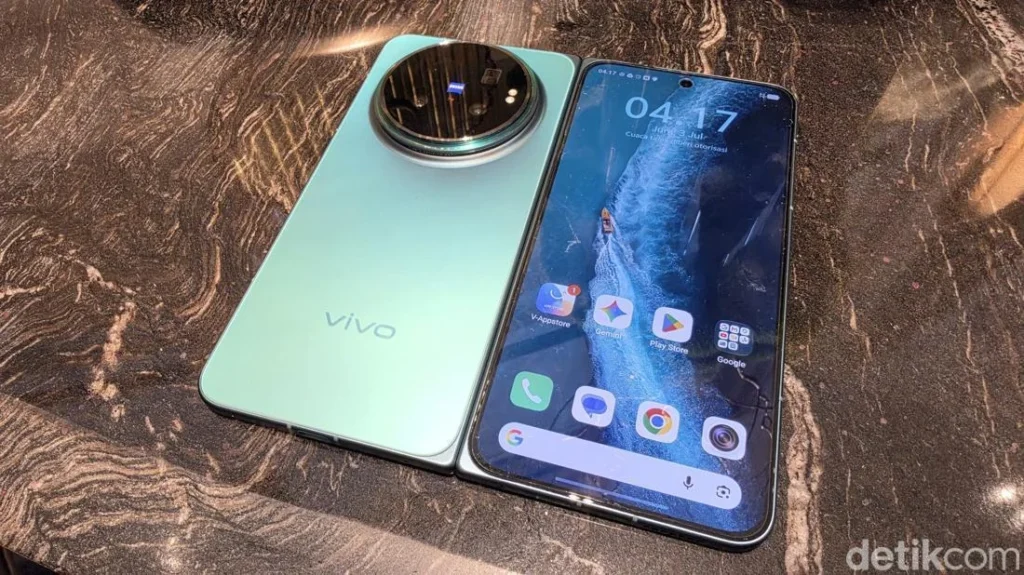
BEIJING — The foldable smartphone market has officially entered a new era of maturity and capability. In July 2026, tech giant Vivo made a resounding statement in the high-end mobile segment with the global introduction of the Vivo X Fold 6. Breaking past the traditional limitations that have long plagued foldable devices—namely subpar battery endurance, fragile frames, and software optimization hurdles—Vivo’s latest flagship delivers a comprehensive package designed to rival, and perhaps surpass, the best conventional candy-bar flagships on the market.
Packed with cutting-edge innovations including a monstrous 7,000 mAh battery, a hyper-vibrant Samsung M14 main display, a powerhouse MediaTek processor, and advanced multi-window multitasking software, the Vivo X Fold 6 sets a lofty new industry benchmark.
1. Main Facts: Core Specifications and Feature Highlights
The Vivo X Fold 6 is not merely an iterative update over its predecessor; it represents a generational leap in engineering. Every vital component—from the hinge and display panels to the internal silicon and camera array—has been re-architected to deliver uncompromising performance.
Display Technology: Immersive and Bright
At first glance, the device balances ergonomics with expansive screen real estate:
- Cover Display: A sleek 6.51-inch BOE LTPO AMOLED panel featuring a Full HD+ resolution of 2,528 × 1,120 pixels. It supports a smooth 120Hz refresh rate and Dolby Vision, ensuring that everyday interactions while the phone is folded remain crisp and fluid.
- Main Folding Display: Unfolding the device reveals an 8.02-inch Samsung M14 LTPO AMOLED panel boasting a 2K+ resolution (2,504 × 2,312 pixels). It features an adaptive refresh rate ranging from 1 to 120Hz, HDR10+, Dolby Vision, and an astonishing peak brightness of 5,000 nits, ensuring legibility even under direct, harsh sunlight.
Performance and Power
Under the hood, Vivo has bypassed conventional choices by outfitting the X Fold 6 with the MediaTek Dimensity 9500 Super Edition. Built on an ultra-efficient 3nm architecture and paired with the Arm Mali-G1 Ultra MC12 GPU, this chipset effortlessly handles demanding workflows, heavy 3D gaming, and complex artificial intelligence tasks.
Memory and storage configurations are equally generous, offering 12GB or 16GB of LPDDR5X RAM alongside high-speed UFS 4.0 storage options spanning 256GB, 512GB, and a massive 1TB.
Breakthrough Battery and Charging Ecosystem
Historically, foldable phones have had to compromise on battery capacity due to their thin chassis constraints. Vivo has shattered this paradigm by embedding a colossal 7,000 mAh battery into the X Fold 6. This is supported by:
- 80W FlashCharge (wired)
- 40W Wireless Charging
- Reverse Wireless Charging capabilities, turning the phone into a power bank for accessories.
Professional Zeiss Imaging Suite
Photography on foldables is frequently delegated to secondary status, but the Vivo X Fold 6 changes the narrative through its continued collaboration with Zeiss:
- Main Camera: A massive 200 MP primary sensor (Samsung HPB, 1/1.4-inch, f/1.68 aperture) equipped with Optical Image Stabilization (OIS).
- Telephoto Camera: A 50 MP sensor utilizing a Sony LYT602 sensor, featuring 3x optical zoom and a teleconverter equivalent to 200mm.
- Ultrawide Camera: A sharp 50 MP secondary sensor for sweeping landscapes.
- Selfie Cameras: Dedicated 20 MP shooters housed on both the cover and main display panels.
2. Chronology: The Road to the Vivo X Fold 6 Launch
The journey toward the release of the Vivo X Fold 6 has been meticulously calculated, reflecting the rapid maturation of flexible OLED technology and supply chain advancements over the past several years.
- Late 2024 – Early 2025: Industry whispers began circulating regarding supply chain procurement for higher-density silicon-carbon battery cells. Analysts noted that Vivo was heavily investing in research to bypass the 5,000 mAh threshold typical of foldables.
- Mid 2025: Development of the MediaTek Dimensity 9500 architecture reached its tape-out phase, with Vivo securing early access to the "Super Edition" variant tailored specifically for high-performance multitasking devices.
- Q1 2026: Leaks emerged regarding the structural redesign of the X Fold series. Industry insiders highlighted the reduction of the device’s profile, aiming for a wafer-thin frame despite the massive capacity increase of internal components.
- June 2026: Vivo officially teased the arrival of its next-generation foldable, emphasizing software innovations specifically designed for large canvas displays.
- July 2026: The official launch event takes place in China, revealing the full hardware specifications, color variants, global pricing tiers, and the debut of OriginOS 6 Fold.
3. Supporting Data: Dimensions, Durability, and Pricing
Physical Dimensions and Build Quality
Achieving a 7,000 mAh battery usually results in a brick-like device. However, Vivo’s structural engineering has kept the X Fold 6 remarkably slim:
- Open Dimensions: 157.16 × 145.66 × 4.4 mm
- Closed Dimensions: 157.16 × 74.26 × 9.4 mm
- Color Ways: Available in three sophisticated, color-matched finishes—Blue Hole, Salt Lake, and Polar Night.
Durability has also received a massive upgrade. The device carries an IP5X rating for dust resistance, alongside industry-leading IPX8 and IPX9 water-resistance certifications, allowing the phone to withstand high-pressure, high-temperature water jets—a rarity in the foldable category.
Official Pricing Structure (China Market)
Vivo has positioned the X Fold 6 competitively within the ultra-premium tier. The official pricing breakdown is as follows:
- 12GB RAM + 256GB Storage: 7,999 yuan (~approximately Rp 18 million)
- 12GB RAM + 512GB Storage: 8,999 yuan (~approximately Rp 20.2 million)
- 16GB RAM + 512GB Storage: 9,999 yuan (~approximately Rp 22.5 million)
- 16GB RAM + 1TB Storage: 10,999 yuan (~approximately Rp 24.8 million)
4. Software Innovation: OriginOS 6 Fold and Atomic Workbench
Hardware is only half the battle in the foldable ecosystem. Recognizing that large inner screens require specialized software interfaces to truly shine, Vivo has introduced OriginOS 6 Fold.
At the heart of this new operating system is the Atomic Workbench. Designed for power users, the Atomic Workbench fundamentally transforms how multitasking is handled on a mobile device. Unlike traditional split-screen implementations that force apps into fixed ratios or cause layout bugs, Atomic Workbench allows multiple demanding applications to run simultaneously and fluidly in a desktop-class windowing environment.
Users can effortlessly drag and drop text, images, and files between active applications across the expansive 8.02-inch canvas. Combined with optimizations for the MediaTek Dimensity 9500 Super Edition, the software ensures zero perceptible lag, even when three or four heavy applications—such as video editing software, web browsers, and chat clients—are running concurrently.
5. Industry Implications and Outlook
The launch of the Vivo X Fold 6 sends ripples through the global smartphone industry, carrying several significant implications for competitors and consumers alike.
Redefining Consumer Expectations for Battery Life
For years, consumers shopping for foldables had to accept a trade-off: gorgeous large screens and portability in exchange for mediocre battery life that rarely survived a full workday under heavy use. By successfully integrating a 7,000 mAh battery into a chassis measuring just 9.4 mm thick when closed, Vivo has effectively removed this compromise. Competitors like Samsung, Honor, and Xiaomi will now face immense pressure to accelerate their own solid-state or high-density silicon battery developments to match Vivo’s standard.
Pressuring the Traditional Flagship Market
As foldables become thinner, more durable (thanks to IPX9 ratings), and equipped with uncompromised camera systems like the Zeiss-tuned 200 MP setup on the X Fold 6, the boundary separating traditional candy-bar phones from foldables continues to blur. Consumers who were previously hesitant due to fragility or poor camera performance now have fewer reasons to avoid the foldable form factor.
The Rise of MediaTek in Ultra-Premium Tiers
Historically, Qualcomm’s Snapdragon series has dominated the ultra-premium foldable segment. Vivo’s deployment of the MediaTek Dimensity 9500 Super Edition signals growing manufacturer trust in MediaTek’s silicon capabilities at the absolute highest end of the market, promising a fierce rivalry in processing power and thermal efficiency moving forward.
Conclusion
The Vivo X Fold 6 represents a watershed moment for foldable smartphones. By refusing to compromise on battery capacity, durability, camera quality, or software multitasking, Vivo has delivered a device that feels less like an experimental gadget and more like the ultimate, definitive mobile workstation. As it rolls out to global markets following its Chinese debut, the X Fold 6 is poised to capture significant market share and dictate the design philosophy for the next generation of mobile computing.