Tragedy in the Highlands: Armed Attack Claims the Lives of Three Jayawijaya Agriculture Office Employees on Humanitarian Mission
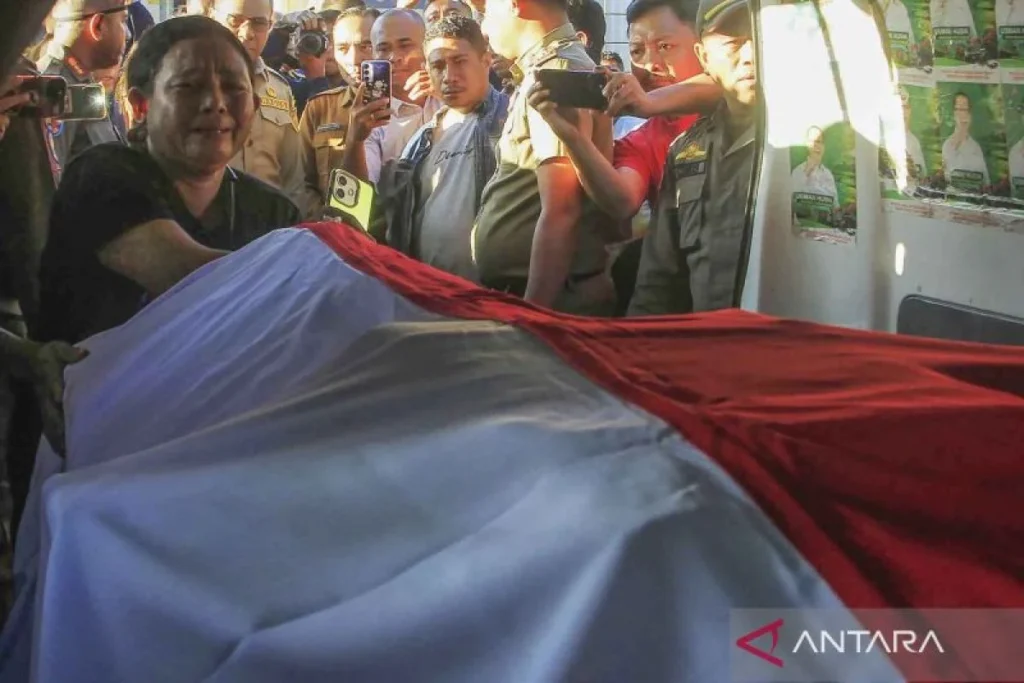
JAKARTA — In a brutal reminder of the persistent security challenges facing civil servants in remote regions of Indonesia’s easternmost provinces, three employees of the Jayawijaya Agriculture Office in Highland Papua were killed on Wednesday, September 9, 2026. The victims, who were traveling to distribute vital livestock and agricultural aid to local communities, fell victim to an ambush orchestrated by an armed criminal group in Muliama District.
The tragedy has sent shockwaves through government ministries in Jakarta and local administrations across Papua, prompting immediate calls for thorough investigations, heightened security for field personnel, and sweeping condemnations from high-ranking officials. The incident underscores the severe physical risks that civil servants often navigate to deliver basic developmental and humanitarian aid to marginalized and remote populations.
Main Facts of the Incident
The deadly ambush took place as a convoy of vehicles carrying personnel from the Jayawijaya Agriculture Office made its way through the rugged terrain of Muliama District. The team was en route to Kimbim District to execute a routine governmental assignment: the distribution of livestock seeds and agricultural provisions intended to bolster local food security and empower indigenous farming communities.
Instead of completing their humanitarian mission, the delegation was ambushed by unidentified armed assailants. The sudden and intense assault left three members of the convoy dead from gunshot wounds.
The victims have been formally identified as:
- Aprida Rapi, 49, Head of the Livestock Division at the Jayawijaya Agriculture Office.
- Drh. Alfonsius Albinus Mehan, 35, a dedicated veterinarian working under the Agriculture Office.
- Wili Mbuik, a local government employee and recently appointed Candidate Civil Servant (CPNS) embarking on his career in public service.
In the immediate aftermath of the assault, the Indonesian National Police deployed forensic and tactical units to secure the crime scene, evacuate the victims, and initiate a comprehensive manhunt for the perpetrators. Investigators at the scene recovered crucial forensic evidence, including three bullet casings of differing calibers, suggesting the involvement of multiple shooters utilizing varied firearms.
Chronology of Events
While exact timelines are still being pieced together by law enforcement authorities, the sequence of events leading up to and following the tragedy highlights the dangers inherent in field operations within the Papua Pegunungan (Highland Papua) region.
The Departure
On the morning of Wednesday, September 9, 2026, the team from the Jayawijaya Agriculture Office departed from Wamena, the administrative capital of Jayawijaya Regency. Spirits were high as the team packed their vehicles with livestock seeds, breeding pairs, and agricultural supplies. Their designated destination was Kimbim District, where local farmers awaited the much-needed resources designed to enhance regional livestock production.
The Ambush in Muliama District
As the convoy transited through Muliama District—a zone known for its isolated geography and complex security dynamics—they encountered a roadblock and subsequent ambush. According to preliminary police reports, the attackers opened fire without warning from concealed positions along the roadside. The surprise nature of the attack left the civil servants with minimal opportunity to evade or return fire.
The violence claimed the lives of Aprida Rapi, Alfonsius Albinus Mehan, and Wili Mbuik on the spot, turning what was meant to be a routine day of public service into a scene of devastation.
Immediate Response and Evacuation
Upon receiving distress calls, local law enforcement units, backed by security forces, mobilized quickly to secure the perimeter. However, due to the challenging topography and security risks, initial tactical movements required immense caution. The bodies of the victims were subsequently recovered and transported to Wamena for medical examinations, autopsies, and preparation for repatriation or local burial rites.
Concurrently, police launched an intensive criminal investigation, combing through the Muliama crime scene for ballistic and physical evidence that could unmask the perpetrators and determine the exact affiliation of the armed group responsible.
Profiles of the Fallen Civil Servants
The loss of these three individuals represents not only a profound human tragedy for their respective families, but also a devastating blow to the institutional capacity of the Jayawijaya Agriculture Office. Each victim brought unique expertise, dedication, and a spirit of national service to the highlands of Papua.
1. Aprida Rapi: A Dedicated Bureaucrat and Leader
Aprida Rapi, 49, was a cornerstone of agricultural administration in Jayawijaya. Serving as the Head of the Livestock Division, she was responsible for conceptualizing and executing policies aimed at improving animal husbandry and rural livelihoods across the regency.
Originally born in Makale, Tana Toraja Regency, South Sulawesi, Aprida chose to build her life and career in Wamena, dedicating decades of her existence to public service in Papua. Known among her peers as a diligent and compassionate leader, she personally oversaw field operations to ensure that government resources reached the grassroots level. Her commitment to her duties ultimately placed her on the front lines of development, where she tragically lost her life.
2. Drh. Alfonsius Albinus Mehan: The Far-Traveled Veterinarian
Dr. Alfonsius Albinus Mehan, 35, represented the vital bridge between modern veterinary science and traditional farming communities in Papua. Hailing from Sikka Regency in East Nusa Tenggara (NTT), Alfonsius traveled thousands of miles from his home island to apply his professional training in the highlands of Western New Guinea.
As a government veterinarian, Alfonsius played an indispensable role in maintaining livestock health, preventing disease outbreaks, and educating local farmers on modern breeding techniques. His willingness to leave behind his home province to serve in a high-risk, remote region highlights the profound selflessness shared by many civil servants across Indonesia’s outer islands. Following the attack, his remains were handled by local authorities in Wamena, plunging his colleagues and family in Sikka into deep mourning.
3. Wili Mbuik: A Young Life of Promise Cut Short
Wili Mbuik was at the very beginning of what promised to be a long and honorable career in public administration. Hailing from Rote Ndao Regency, also in East Nusa Tenggara, Wili had recently been accepted as a Candidate Civil Servant (CPNS) within the regional government of Jayawijaya.
Eager to prove his dedication, Wili threw himself into the demanding realities of regional development in Highland Papua. Assigned to support agricultural initiatives, he accompanied veteran officials into the field to gain hands-on experience in community outreach. His life was cut tragically short before he could fully realize his potential, leaving behind a grieving family in Rote Ndao and a deeply shaken local government administration in Jayawijaya.
Official Responses and Condolences
The brutal execution of unarmed civil servants performing humanitarian and developmental duties has drawn widespread condemnation from national and regional leaders, human rights advocates, and government ministries.
Ministry of Agriculture and Central Government Action
Minister of Agriculture Andi Amran Sulaiman expressed his profound sorrow and deep condolences over the martyrdom of the three agricultural officials. In an official statement, Minister Amran emphasized that the victims were peace-pioneers whose sole objective was to uplift the economic standing of rural Papuan families through agricultural and livestock assistance.
The Minister urgently appealed to security apparatuses to prioritize the safety and security of field personnel operating in vulnerable or conflict-prone regions. He asserted that development cannot proceed without guaranteed protection for the educators, health workers, and agricultural experts who form the backbone of state presence in remote areas.
Institutional Demands for Justice
The Ministry of Human Rights (KemenHAM) joined the chorus of outrage, formally demanding a comprehensive, transparent, and swift investigation into the killings. KemenHAM stressed that targeting unarmed state employees engaged in poverty alleviation and social welfare delivery constitutes a severe violation of human rights and humanitarian norms.
Regional administrations have also voiced solidarity. Notably, the Provincial Government of East Nusa Tenggara (NTT) issued a stern condemnation of the attack, given that two of the fallen victims—Alfonsius Albinus Mehan and Wili Mbuik—hailed from NTT. Provincial leaders called upon federal security forces to bring the perpetrators to justice swiftly to ensure closure for the grieving families.
Law Enforcement and Security Updates
Papua Regional Police and local Jayawijaya law enforcement agencies have redoubled their efforts to track down the armed faction responsible for the ambush. Investigators confirmed the recovery of three spent bullet casings representing two distinct calibers from the crime scene in Muliama. This forensic detail is currently being analyzed by ballistics experts to match the ammunition with known weapons caches held by regional armed groups.
Authorities are also working to determine whether the attack was opportunistic or a targeted strike against state infrastructure. Concurrently, regional security commanders have issued advisories urging citizens and officials to remain vigilant, particularly amid heightened tensions surrounding sensitive commemorative dates in the region, such as the so-called "Black September" narratives that frequently trigger localized security alerts.
Broader Implications for Regional Development and Security
The tragedy in Muliama District highlights a complex dilemma at the heart of Indonesia’s governance model in Papua: the persistent tension between the state’s mandate to accelerate regional development and the harsh security realities on the ground.
The Human Cost of State Presence
For decades, the central government has poured vast resources into infrastructure, education, health, and agriculture in Papua and Highland Papua to bridge the socioeconomic gap with western Indonesia. However, civil servants, teachers, medical professionals, and agricultural extension workers frequently bear the brunt of local conflicts. When armed groups target developmental workers, the immediate consequence is a chilling effect on public service delivery. Fear of violence can lead to temporary or permanent service vacuums, directly harming the indigenous communities who rely on these programs for survival and advancement.
The Imperative for Integrated Security and Community Engagement
Experts and policy analysts argue that securing Papua’s civil servants requires a dual-track strategy. On one hand, intelligence-led law enforcement operations must dismantle armed criminal groups and hold perpetrators accountable to deter future violence. On the other hand, civil-military cooperation must be refined to ensure that field missions undertaken by civilian agencies receive adequate security escorts without militarizing humanitarian and developmental outreach.
Furthermore, the tragedy underscores the multicultural fabric of modern Papua’s civil service. As demonstrated by the backgrounds of Aprida Rapi (from South Sulawesi), Alfonsius Albinus Mehan, and Wili Mbuik (both from East Nusa Tenggara), the machinery of local government in Papua relies on citizens from across the Indonesian archipelago working hand-in-hand with indigenous Papuans. Attacks targeting individuals based on their governmental status threaten to fracture this inter-ethnic solidarity, making a unified national response all the more imperative.
Conclusion
As families mourn in Wamena, Sikka, Rote Ndao, and Tana Toraja, the memory of Aprida Rapi, Alfonsius Albinus Mehan, and Wili Mbuik serves as a solemn testament to the sacrifices made in the name of public service. The pursuit of justice for their deaths is not merely a legal obligation for the Indonesian National Police; it is a vital prerequisite for restoring faith in the rule of law and ensuring that the promise of development can safely reach every corner of Papua’s breathtaking, yet perilous, highlands.