
Guardians of the Forest: How Malang’s Inclusive Education Empowers Disability Communities in Elephant Conservation
By Editorial Staff
In a vibrant room at the Malang Creative Center, the atmosphere shifted from typical urban hustle to a world of wonder. A performer named Kak Acan, dressed in a whimsical, oversized elephant costume, danced gracefully before an audience of 50 children with various disabilities. As the storytelling began, the room fell into a captivated silence. Standing beside the storyteller, Kak Arum performed fluid, expressive movements—translating every nuance of the narrative into Indonesian Sign Language (BISINDO), ensuring that the deaf participants were not merely spectators, but active participants in the unfolding journey.
This heartwarming scene was part of a special commemoration of World Elephant Day, a collaborative effort spearheaded by the Difabel Pecinta Alam (Difpala), Lingkar Sosial, and Geopix. While the event featured poetry, music, and scripture recitations, its core objective was far more profound: to bridge the gap between human society—specifically marginalized communities—and the urgent, often complex, world of wildlife conservation.
The Tale of Gogo and Gigi: Simplifying the Complex
The centerpiece of the event was the story of Gogo and Gigi, two young elephants separated by the terrifying sound of poachers’ gunfire. The narrative followed Gogo’s arduous journey through dense forests, treacherous rivers, and sprawling hills to find his sibling. Through the eyes of these two elephants, the children learned of the struggles faced by wildlife, culminating in a triumphant reunion with their herd.
When Kak Acan posed the pivotal question, "Where is the home of Gogo and Gigi?" the room erupted in a unified, enthusiastic response: "The forest!"
This simple exchange carried a heavy, necessary truth. It served as a gentle but firm corrective to the common misconception that animals belong in zoos or circuses. Through the medium of storytelling, children who might otherwise feel disconnected from nature were empowered to understand the intrinsic link between animal welfare, habitat integrity, and the mounting threats posed by human encroachment.
Chronology of an Inclusive Movement
The integration of disability advocacy and environmental activism is not a new phenomenon for the organizers involved. Difpala, an organization known for its adventurous spirit, has long bridged the gap between outdoor exploration and inclusivity.
Historically, Difpala has championed the "Tuli Mendongeng" (Deaf Storytelling) program, which utilizes professional sign language interpreters to bring literature and education to those who are hard of hearing. Their activities go beyond classroom settings; the group is actively involved in mountain hiking, reforestation efforts, and waste management initiatives in the highlands of East Java.
By hosting this event at the Malang Creative Center, the organizers signaled a strategic shift. They are moving their focus from local mountain conservation to the broader, more urgent crisis facing Indonesia’s megafauna, particularly the Sumatran elephant. This evolution is also visible in their "inclusive forest school" at Mount Wedon in Lawang, Malang. Here, teenagers with disabilities are provided a sanctuary to play, learn, and engage with the natural world, fostering a sense of stewardship that is rarely extended to the disabled community.
The Ecological Imperative: Why Gajah Matters
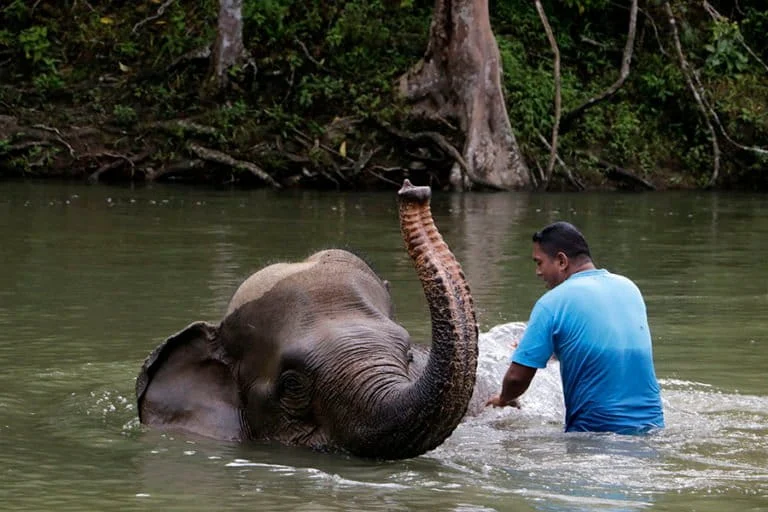
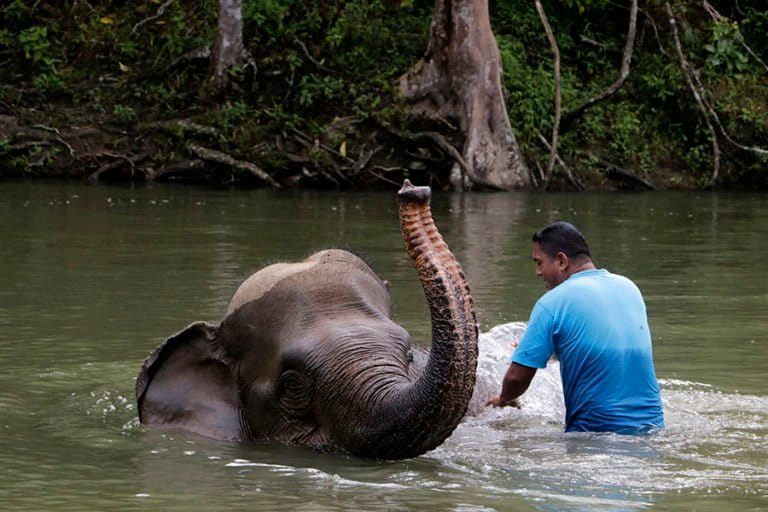
Annisa Rahmawati, a Senior Wildlife Campaigner at Geopix, emphasizes that the plight of the elephant is not just a tragedy for the species, but a disaster for the entire ecosystem. "Gajah (elephants) are the gardeners of the forest," she explains. Due to their massive size and diet, they roam vast distances, consuming fruits and vegetation. Through their digestion and movement, they act as primary seed dispersers, effectively regenerating forest cover across the archipelago.
Beyond their ecological role, elephants are woven into the very fabric of Nusantara—the Indonesian archipelago. They appear in ancient relief carvings, royal lore, and cultural ceremonies. Yet, this historic reverence has been eclipsed by modern-day brutality. The encroachment of palm oil plantations, habitat fragmentation, and violent human-elephant conflicts have pushed these "gardeners" to the brink of extinction.
Supporting Data: A Species in Decline
The statistical reality of the Sumatran elephant population is a clarion call for immediate action. Data from the 1980s suggested a relatively robust population of between 2,800 and 4,800 individuals. However, by 2019, the Forum Konservasi Gajah Indonesia estimated that the numbers had plummeted to a dire 1,087–1,606 individuals.
Burhanuddin, a renowned conservation expert from IPB University, provides a sobering perspective: the Sumatran elephant population has shrunk by more than 70 percent over the span of just three generations. Their habitat has been fractured into isolated "pockets," primarily in Aceh, Riau, Jambi, Bengkulu, and Lampung.
The threat is not limited to external human pressure. Research conducted by the Faculty of Veterinary Medicine at Universitas Gadjah Mada, in collaboration with the Eijkman Institute for Molecular Biology, has uncovered a hidden internal crisis. Examinations of captive elephant populations reveal high prevalences of parasitic infections, bacterial strains, and fungal diseases—problems often exacerbated by the stress of limited habitats and poor environmental health.
Official Responses and Strategic Shifts
Kertaning Tyas, a representative of Lingkar Sosial, believes that storytelling is the most effective tool to bypass the fatigue often associated with "serious" environmental education. By framing the conversation through characters like Gogo and Gigi, the organizers have turned a bleak conservation report into a relatable, inclusive dialogue.
"World Elephant Day serves as a critical momentum to increase public awareness regarding the protection of Indonesian elephants and their habitats," Tyas noted. "We want to ensure that people with disabilities are not just passive recipients of aid, but active participants in the preservation of our planet."
The message is clear: protection can no longer be confined to national parks or restricted "zones." Because elephant corridors often overlap with human settlements and agricultural zones, conservation must become a community-wide, inclusive effort.
Broader Implications: A Model for the Future
The success of the Malang event suggests a new blueprint for environmental activism in Indonesia. By merging the rights of the disabled community with the rights of endangered species, the organizers have created a symbiotic movement.
- Accessibility as a Strategy: By employing sign language interpreters and inclusive venues, environmental groups can tap into a vast, untapped demographic of advocates who are often overlooked in mainstream media.
- De-mystifying Science: Complex biological and ecological concepts—such as habitat fragmentation or seed dispersal—become digestible when presented as narrative arcs.
- Inclusive Forest Schools: The success at Mount Wedon provides a template for other regions. Providing disabled youth with direct access to nature is the most effective way to foster a generation of future conservationists.
As the event concluded with the distribution of prizes to children who correctly answered questions about the forest, there was a palpable sense of hope. The children were no longer just observers; they were the new custodians of a message.
The story of Gogo and Gigi serves as a reminder that the health of our forests is intrinsically linked to the health of our society. When we exclude segments of our population from the conversation, we weaken our ability to protect the wild. Conversely, when we make conservation inclusive—when we use language that everyone can understand and spaces that everyone can enter—we turn a desperate struggle for survival into a collective, sustainable effort for the future of the Sumatran elephant and the forests they call home.
As the world continues to grapple with the climate crisis and biodiversity loss, the model pioneered in Malang stands as a testament to the power of empathy, education, and the simple, undeniable beauty of a story well told. The path to conservation is not just through policies and legislation, but through the hearts and minds of every citizen, regardless of their physical abilities. In the end, the forest belongs to all of us—and it is the responsibility of all of us to ensure that the elephants continue to roam.







