Beyond the Smoke: Why High-Level Rhetoric Fails to Quell Indonesia’s Perennial Forest Fires
As thick, acrid haze continues to shroud vast swathes of Kalimantan and Sumatra, a growing chorus of environmentalists, legal experts, and civil society organizations is challenging the efficacy of the Indonesian government’s response to the annual forest and land fire (karhutla) crisis. The recurring spectacle of high-ranking officials descending upon disaster zones for short, high-profile visits has been dismissed by critics as a "classic, hollow cycle" that prioritizes political optics over substantive systemic change.
The frustration stems from a perceived disconnect: while state resources—including 53 aerial firefighting assets and extensive Weather Modification Technology (TMC) operations—are deployed, the root causes of the fires remain largely unaddressed. As the 2026 fire season reaches a critical threshold, the debate has shifted from mere disaster management to a fierce demand for accountability, transparency, and a fundamental overhaul of how the state handles the nexus between corporate interests and environmental destruction.
The Cycle of Administrative Tourism
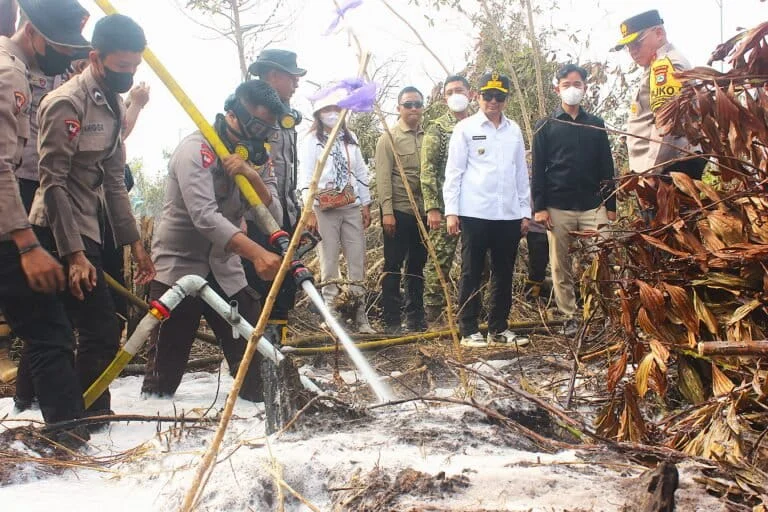
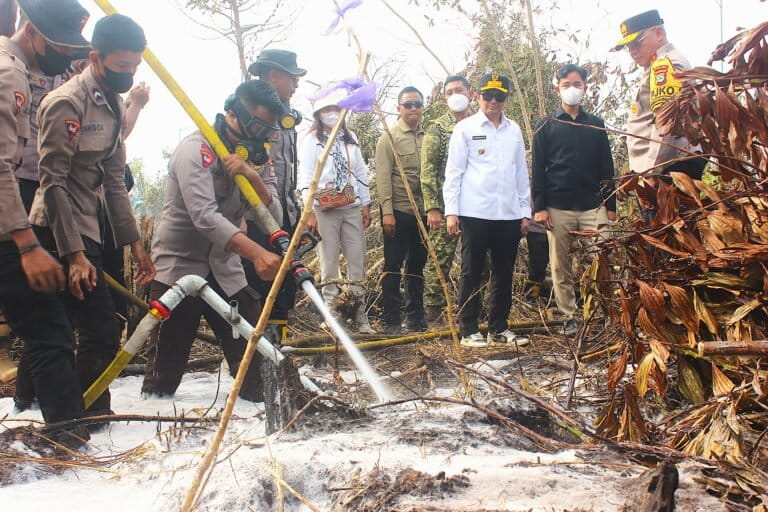
In mid-September 2026, Vice President Gibran Rakabuming Raka visited the Bumi Lambung Mangkurat region in South Kalimantan to inspect the emergency response to the fires. The visit, which lasted less than five minutes in public view, was characterized by a brief apology to the local residents and a stern directive for law enforcement to take firm action.
"I urge the police to enforce the law—please be firm," the Vice President stated before departing for the disaster site near Syamsudin Noor International Airport.
However, for local activists, this visit was emblematic of a broader, ineffective approach. Muhamad Pazri, Chair of the Indonesian Legal Education Foundation (YEHI), describes the situation as a "sociological naivety" on the part of the central government. According to Pazri, the pattern is predictable: as fire hotspots surge and air quality plummets, a cavalcade of ministers and officials arrives, generates media headlines, and departs, leaving behind the same structural vulnerabilities that ignited the crisis in the first place.
The government’s tendency to blame the fires exclusively on "natural phenomena"—citing Super El Niño, extreme heat, low humidity, and the inherent flammability of peatlands—is viewed by critics as a convenient narrative to obscure human-driven negligence.
Chronology of a Recurring Crisis
The 2026 fire season began showing signs of escalation as early as August. Satellite monitoring from the Ministry of Forestry’s Sipongi platform indicated that the fires were not merely random, but followed patterns that suggested human activity.
- Late August 2026: Significant fire outbreaks in West Kalimantan trigger alarm as peatlands begin to burn deep underground, making traditional fire suppression efforts largely ineffective.
- Early September 2026: Fire hotspots across South Kalimantan reach a critical level. Eight districts declare a state of emergency, including Banjar, Banjarbaru, and Tanah Bumbu.
- September 10, 2026: The Vice President and the Minister of Forestry conduct an official inspection. Public sentiment begins to sour as citizens question the financial cost of such high-level visits compared to the tangible results on the ground.
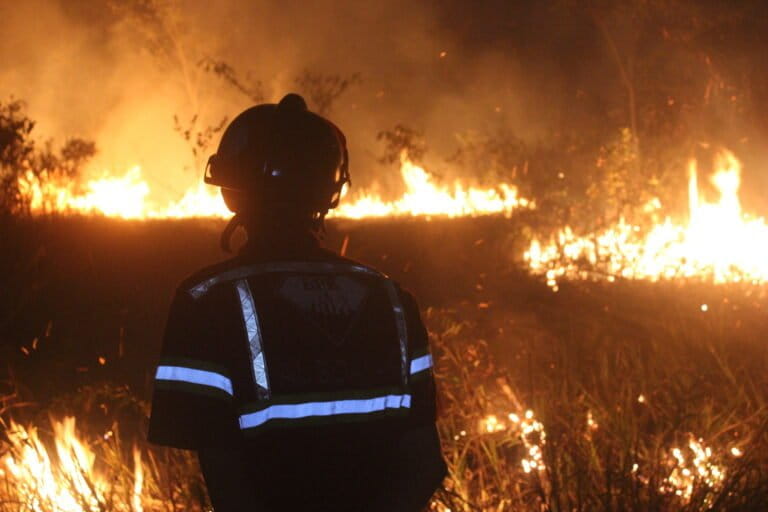
- Mid-September 2026: Local authorities report over 20,000 hectares burned in South Kalimantan alone. As of this writing, while surface fires have been suppressed, subterranean peat fires continue to smolder, creating persistent hazardous air quality.
Data and Disparity: The Human Factor
The scientific reality is clear: while peatlands are highly flammable, they require a "source of ignition" to catch fire. Environmental organizations argue that relying on weather patterns to explain the crisis ignores the role of land management and industrial activity.
Data from the Regional Disaster Management Agency (BPBD) in South Kalimantan paints a grim picture. As of September 10, the total area scorched reached 20,206.06 hectares. Banjar Regency suffered the most, with 5,100 hectares destroyed, followed closely by Banjarbaru.
"Science proves that dry peat is vulnerable, but it still needs a trigger," says Pazri. "We must set aside prejudice and let the data and the law speak. We need to track where the fires started, how they spread, and which human activities were involved."
The legal framework is robust on paper. Article 69, paragraph (1) of Law No. 32/2009 on Environmental Protection and Management (PPLH) strictly prohibits land clearing through burning. Furthermore, the law includes provisions for strict liability—where corporations are held responsible for damages occurring within their concessions regardless of intent. Yet, critics argue that the enforcement of these laws is often selective, frequently targeting small-scale farmers while leaving large, influential corporations largely untouched.
Official Responses and the "Small-Scale" Narrative
The South Kalimantan Regional Police (Polda) have reported five arrests and are processing 11 investigation files related to the fires. Kombes Pol. Nur Khamid, the Head of Public Relations for the regional police, stated that the investigations are ongoing and could expand to include corporate entities.
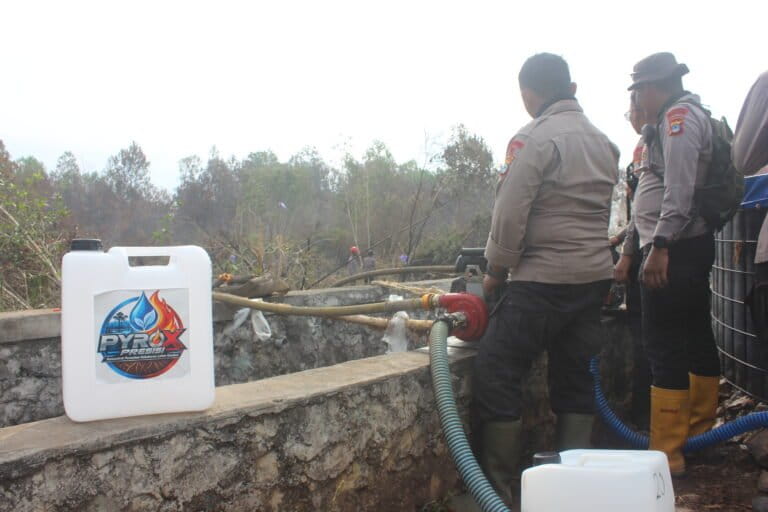
However, the current narrative provided by law enforcement has drawn criticism for focusing heavily on small-scale farmers. "The suspects we have detained are largely individuals," Nur Khamid noted. "Many use rudimentary methods—a match or a piece of cloth soaked in fuel—to clear their own land. It is a local tradition, but it is prohibited."
When pressed about the involvement of large corporations—a recurring demand from NGOs like WALHI—the police maintain a cautious stance. "We are handling corporate cases, but we need valid data before we can release names. We cannot risk misidentifying entities or the number of cases without a complete, verified investigation," Khamid added.
This hesitation is precisely what civil society groups find problematic. Raden Rafiq, Executive Director of WALHI South Kalimantan, argues that focusing on the "traditional farmer" is a distraction from the larger, industrial-scale land clearing that contributes to the majority of the massive haze events.
Implications: A Call for Systemic Reform
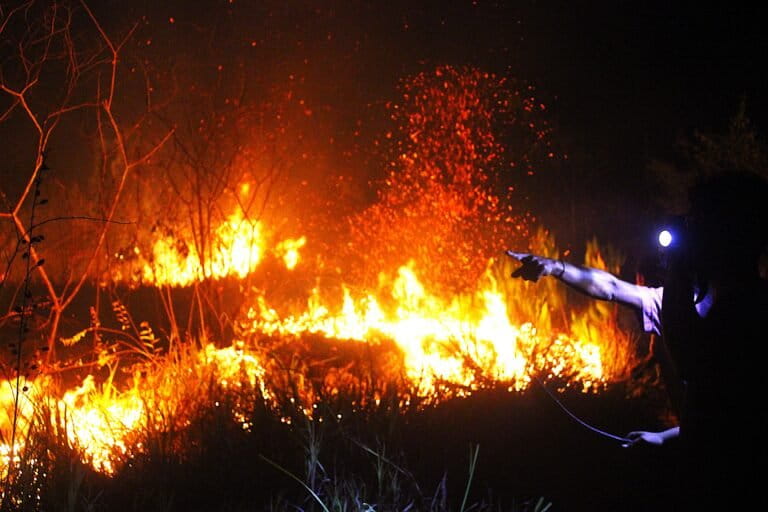
The implications of the 2026 fire season go far beyond the immediate destruction of forest cover. The crisis has profound effects on public health, biodiversity, and the national economy.
1. The Erosion of Trust
When the state prioritizes ceremonial visits over transparent investigations, public trust in environmental governance erodes. "We don’t need apologies," says Rafiq. "We need tangible proof that the perpetrators, especially those with the power to clear thousands of hectares, are being brought to justice."
2. The Need for Integrated Management
The current firefighting strategy—relying on water bombing and TMC—is a temporary stopgap. Experts argue for a shift toward preventative, long-term landscape management. This includes restoring hydrological balance in peatlands, closing drainage canals that lead to land drying, and enforcing strict "no-burn" policies within industrial concessions.
3. The Demand for Transparency
The lack of real-time, public access to data regarding which companies own the land where fires have occurred remains a major obstacle. Without a transparent, searchable database of land concessions overlaid with active hotspot data, the public remains in the dark about who is actually responsible for the smoke that suffocates them.
4. Re-evaluating Land Use
The recurring nature of the fires necessitates a fundamental question: Is the current land-use policy in Kalimantan and Sumatra sustainable? With millions of hectares allocated to concessions, the pressure on the environment is reaching a breaking point. Experts are calling for an immediate moratorium on further clearing and a thorough audit of existing permits.
Conclusion: Beyond Rhetoric
The 2026 forest fire crisis in Indonesia serves as a sobering reminder that administrative power is no substitute for environmental stewardship. As long as the government treats these disasters as seasonal, unavoidable accidents rather than symptoms of a broken regulatory and enforcement system, the cycle of smoke and suffering will persist.
For the people of Kalimantan and Sumatra, the message to Jakarta is clear: they are no longer satisfied with the arrival of high-level officials and formal apologies. They demand the courage to confront the powerful, the technical capacity to manage the landscape effectively, and the integrity to enforce the law without fear or favor. Until then, the fires will likely continue to burn, not because of the weather, but because the system is designed to overlook the culprits at the heart of the flames.