
The Battle for Flores: Archdiocese of Ende Challenges "Geothermal Island" Status in Supreme Court
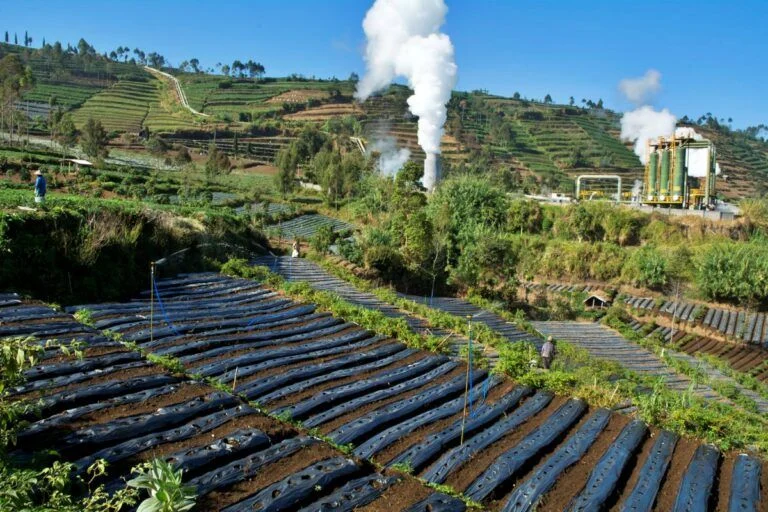
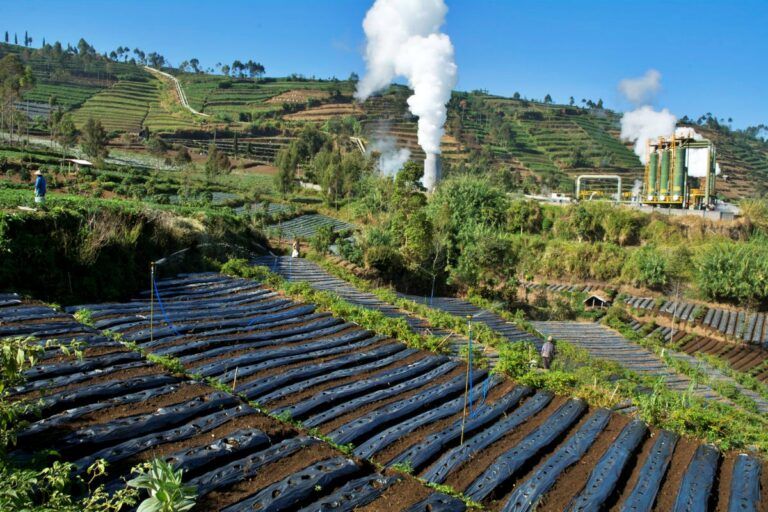
The rugged, volcanic landscape of Flores, an island renowned for its breathtaking topography and rich biodiversity, has become the epicenter of a high-stakes legal battle. On September 4, 2026, the Archdiocese of Ende, led by the Commission for Justice, Peace, and Integrity, formally registered a judicial review with the Supreme Court of Indonesia (Case No. 43 P/HUM/2026). This legal challenge targets the government’s designation of Flores as a "Geothermal Island" and seeks to annul specific Ministry of Energy and Mineral Resources (ESDM) decrees governing working areas in Sokoria and Mataloko.
The lawsuit represents a rare and powerful collision between the state’s aggressive push for renewable energy transition and the local communities’ fight for ecological sovereignty, water security, and the right to meaningful public participation.
The Legal Core: Challenging State Decrees
At the heart of the litigation are three pivotal Ministerial Decrees that the Archdiocese argues were issued without proper procedural rigor, transparency, or consideration for the socio-ecological fabric of the island:
- SK 0539 K/30/MEM/2012: Regarding the determination of the Sokoria Geothermal Working Area (WKP).
- SK 1152/K/30/MEM/2011: Regarding the determination of the Mataloko WKP.
- SK 2268 K/30/MEM/2017: The overarching decree that branded Flores as a "Geothermal Island."
Azas Tigor Nainggolan, legal counsel for the Archdiocese, emphasizes that these decrees are not merely bureaucratic markers; they are transformative policies that fundamentally alter land use and ecosystem management. "Any policy that modifies headwaters, land usage, and ecosystems must be conducted with extreme caution, grounded in scientific rigor, transparency, and deep, inclusive community consultation," Tigor stated.
The legal team has identified three primary pillars for their challenge:
- The Right to Information: Local communities have been systematically denied access to the full text of these decrees, knowing only of their existence through auction announcements.
- Lack of Meaningful Participation: The process failed to move beyond formal, top-down "consultations," ignoring the legal requirement for communities to understand risks and offer consent before projects are finalized.
- Absence of Comprehensive Environmental Impact Assessments (Amdal): The government proceeded without transparent, site-specific, and cumulative environmental assessments, despite Flores’s high susceptibility to droughts and geological instability.
A Chronology of Contention
The path to the Supreme Court was not sudden; it was paved with years of frustration and administrative dead-ends.
- 2011–2017: The Ministry of ESDM issues the three decrees, officially setting the stage for Flores to become a national hub for geothermal power.
- 2019: Persistent complaints arise from residents in Mataloko regarding water contamination and the emergence of hot mud vents near their homes, which they attribute to geothermal drilling.
- February 23, 2026: The Archdiocese of Ende formally submits a primary administrative objection to the Directorate General of New and Renewable Energy (EBTKE), demanding transparency and access to project documentation.
- April 28, 2026: Despite promises of transparency from the Ministry, no documents were released, forcing the Archdiocese to file a second administrative objection.
- September 4, 2026: Having exhausted administrative remedies, the Archdiocese files the judicial review (43 P/HUM/2026) with the Supreme Court.
- October 8, 2026: A coalition of civil society organizations, including YLBHI, WALHI, and Trend Asia, files an amicus curiae (friend of the court) brief to support the Archdiocese’s petition.
Scientific and Ecological Concerns: The Hidden Cost of "Clean" Energy
The Ministry of ESDM estimates that Flores holds nearly 1,000 megawatts of geothermal potential. However, critics argue that the "Geothermal Island" label is a dangerous simplification of a complex landscape.
The Water Crisis
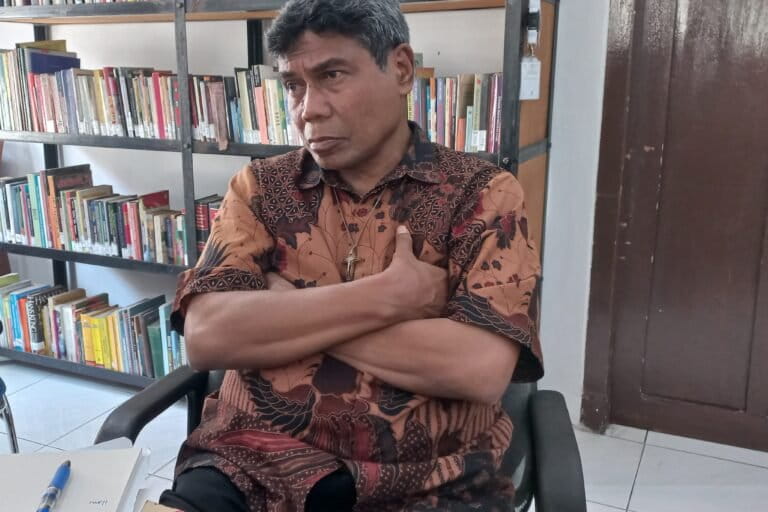
Uskup Agung Ende, Paulus Budi Kleden, has been vocal about the existential threat these projects pose to the island’s water security. Geothermal extraction is notoriously water-intensive. According to data from the U.S. Department of Energy’s Argonne National Laboratory, a single geothermal well can require between 42 million and 55 million liters of water for the drilling phase alone.
In a region where agriculture is the primary livelihood and water scarcity is already a seasonal reality, the diversion of water for industrial use is seen as a direct attack on the survival of local farmers. "If the already scarce water is diverted for geothermal operations, the community will suffer immense hardship," Budi Kleden warned.
Geological Instability
Flores is part of a high-risk volcanic zone. The 2024–2029 Regional Medium-Term Development Plan (RPJMD) for East Nusa Tenggara (NTT) explicitly notes the region’s vulnerability to earthquakes and volcanic eruptions. Critics argue that forcing large-scale industrial infrastructure into these zones without adequate, site-specific safety studies is a recipe for disaster.
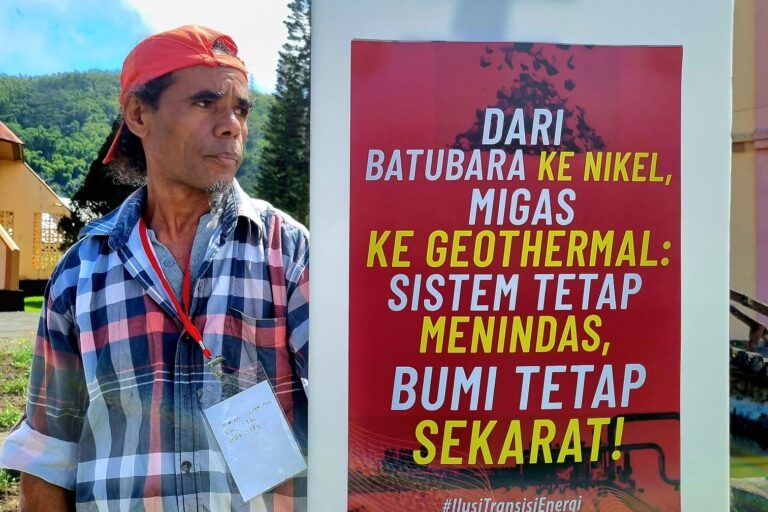
Antoni, a resident of Mataloko, describes the reality on the ground: "After the geothermal plant began operations, hot mud began to spew on our land and near our houses. Yet, the company dismisses these as ‘natural disasters’ rather than consequences of their activities."
Support from the Frontlines: The Amicus Curiae Brief
The filing of the amicus curiae by a broad coalition of civil society groups highlights the national significance of this case. Edy Kurniawan, Advocacy Manager for the Indonesian Legal Aid Foundation (YLBHI), emphasized that the "energy transition" should not be used as a "blank check" for state overreach.
"Renewable energy is not a license to violate human rights or disregard the environment," Kurniawan stated. "The state remains obligated to protect the public’s right to determine the future of their own land."
Renie Aryandani of Trend Asia pointed to the systemic injustice inherent in the government’s approach. "There is no meaningful public involvement. The label of ‘renewable energy’ does not automatically equate to ‘justice.’ We are seeing islands being forced to bear the ecological and social costs for the industrial demands of the central government," she argued.
Official Responses and the "Energy Transition" Narrative
The government’s position remains largely centered on the imperative of the national energy transition and the urgent need to phase out coal-fired power plants. The Ministry of ESDM has maintained that geothermal power is a "baseload" renewable energy source, essential for achieving Indonesia’s Net Zero Emission (NZE) targets.
However, the Ministry has faced criticism for its lack of transparency. Despite official promises to provide the Archdiocese with access to the full documentation regarding the Sokoria and Mataloko working areas, these documents remain elusive. Legal experts argue that "meaningful participation," as required by Law No. 32 of 2009 on Environmental Protection and Management, is impossible when the government withholds the technical and legal data upon which its decisions are based.
Implications: A Precedent for Indonesia’s Future
The Supreme Court’s ruling on Case No. 43 P/HUM/2026 will carry profound implications for the future of energy development in Indonesia.
- Redefining Procedural Fairness: A victory for the Archdiocese would set a strict legal precedent requiring the government to adhere to high standards of transparency and public participation before designating "national strategic zones."
- The "Island-Wide" Development Model: If the court rules in favor of the petitioners, it could force a rethink of the "Geothermal Island" policy, potentially shifting the government away from blanket designations toward more localized, community-led energy solutions.
- Strengthening Environmental Law: The case reinforces the applicability of the 2009 Environmental Law in curbing top-down development projects, ensuring that "green" projects are subjected to the same, if not more, scrutiny than conventional industrial projects.
The Human Toll
Ultimately, the struggle is about more than megawatts; it is about the right to reside in one’s ancestral home without the fear of environmental degradation. As Mistin, a resident of Laja Village in Manggarai, noted, the local community was left in the dark as pipes were laid across their lands. "We are disappointed because these projects proceed without the knowledge of the people," she said.
As the legal proceedings continue in Jakarta, the eyes of the nation remain fixed on Flores. Whether the Supreme Court sides with the Archdiocese’s call for environmental and procedural justice, or upholds the government’s push for rapid energy expansion, the case has already succeeded in bringing the human and ecological costs of the energy transition to the forefront of the national discourse.
The Archdiocese of Ende, standing as a voice for the marginalized, has made its stance clear: the transition to a sustainable future cannot be built on the ruins of the local community’s right to live, farm, and thrive on their own land. For the people of Flores, the quest for "clean energy" must start with a "clean" and transparent process.







