The Race Against Time: Decoding the Critical Role of the ‘Golden Period’ in Medical Emergencies
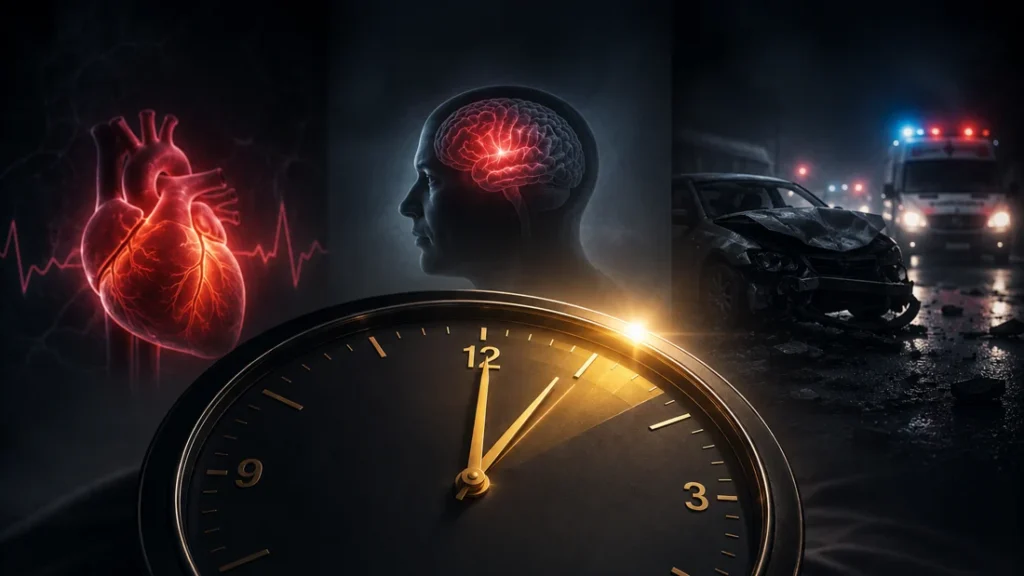
Jakarta – In the high-stakes world of emergency medicine, time is not merely a measurement; it is the fundamental currency of life. When a patient faces a critical medical event, the clock begins ticking the very second the first symptom manifests. Whether it is a stroke, a cardiac arrest, or a severe trauma, the difference between a full recovery and permanent disability—or even death—often hinges on a narrow, vital window of time known as the "Golden Period."
Medical experts emphasize that in these scenarios, even a delay of just a few minutes can lead to irreversible organ damage, severe complications, and a drastically diminished quality of life. Understanding the mechanics of the Golden Period is essential for the public, as timely intervention remains the single most effective tool in modern medicine.
Understanding the Golden Period: Why Every Second Counts
The concept of the "Golden Period" refers to the initial timeframe following a traumatic injury or a sudden medical emergency during which prompt medical intervention offers the highest probability of a positive outcome. During this phase, physiological processes are at a tipping point; the body is struggling to maintain homeostasis, and the medical team’s role is to stabilize the patient before the damage becomes catastrophic.
For conditions like stroke, heart attacks, and severe physical trauma, the Golden Period is not just a theoretical concept—it is a race against cellular decay. As minutes pass without intervention, the metabolic demands of oxygen-starved organs exceed their supply, leading to a cascade of cellular death.
The Neurological Crisis: Stroke and the Door-to-Needle Benchmark
Stroke remains one of the most time-sensitive medical conditions. According to dr. M. Yoga Riyananda Isioni, Sp.N, a neurologist at Mayapada Hospital Jakarta Timur, the urgency in treating stroke patients cannot be overstated.
"When blood flow to the brain is interrupted, brain cells begin to die rapidly due to oxygen deprivation," explains Dr. Yoga. "This is why symptoms such as facial drooping, weakness or numbness on one side of the body, slurred speech, or sudden loss of balance must never be ignored. The faster we can deliver thrombolytic therapy to dissolve the clot, the greater the chances of salvaging brain tissue."
In the medical community, the efficiency of a hospital’s stroke response is measured by the "door-to-needle" time. This metric tracks the duration from the moment a patient arrives at the emergency room to the moment they receive life-saving clot-busting medication. The international gold standard for this process is less than 60 minutes. Every minute saved within that hour significantly improves the patient’s long-term functional independence.
The Cardiac Threshold: Managing the Silent Killer
While strokes ravage the brain, heart attacks—or myocardial infarctions—attack the body’s engine. dr. Filemon W. Sondakh, Sp.JP, FIHA, a cardiologist at Mayapada Hospital Jakarta Timur, notes that the heart muscle is highly susceptible to ischemia, or the restriction of blood supply.
"A heart attack occurs when the blood flow to the heart muscle is blocked, leading to immediate tissue injury," says Dr. Filemon. "Symptoms like crushing chest pain that radiates to the shoulders, arms, neck, or back, often accompanied by shortness of breath, cold sweats, or nausea, require immediate medical assessment."
Similar to the stroke protocol, cardiology departments utilize a "door-to-balloon" metric. This refers to the time elapsed from hospital arrival to the successful mechanical opening of the blocked artery via an angioplasty (balloon) procedure. The standard for this intervention is 90 minutes. Achieving this target requires seamless coordination between emergency room staff, cardiologists, and the catheterization lab team.
Trauma and the Multisystem Emergency
Beyond cardiac and neurological events, the Golden Period is a critical factor in trauma care—whether caused by vehicle accidents, falls from heights, or severe industrial injuries. Unlike chronic conditions, trauma often involves multisystem failure, massive hemorrhage, and airway obstruction.
In such cases, the "Golden Hour" concept is most starkly applied. If a patient suffering from major trauma is transported to a facility capable of definitive care within the first 60 minutes, their survival rate increases exponentially. The objective is to stop the "leaks" (bleeding), secure the "pipes" (airway), and maintain the "pump" (circulatory support).
The success of these interventions relies heavily on the readiness of the medical facility. A hospital’s ability to provide rapid diagnostic imaging (CT scans), immediate blood transfusion, and emergency surgical intervention often determines whether a patient survives the initial trauma phase.
Institutional Readiness: The Role of 24/7 Emergency Services
Recognizing that timing is the primary variable in survival, modern medical facilities have evolved their infrastructure to minimize delays. Mayapada Hospital Jakarta Timur (MHJT), for instance, has implemented a robust "Emergency 24/7" service model designed specifically to accommodate the strict timelines of the Golden Period.
The Multidisciplinary Advantage
Effective emergency response is rarely the work of a single physician. It requires a synchronized effort from a multidisciplinary team. At MHJT, the collaboration involves:
- Neurologists and Cardiologists: For specialized, time-sensitive interventions.
- Emergency Medicine Physicians: To perform the initial assessment and stabilization.
- Surgeons and Anesthesiologists: To provide surgical backup when non-invasive measures are insufficient.
- Radiologists: To provide rapid, accurate imaging that guides the treatment strategy.
By having these specialists "standby on-site" 24 hours a day, the hospital eliminates the "call-in" delay that can often cost a patient their life.
International Standards and Protocols
The integration of medical protocols ensures that every patient receives a standardized, high-quality level of care. These protocols serve as a blueprint for the team, ensuring that diagnostic tests are prioritized, medications are prepared in advance, and the operating room is ready the moment a diagnosis is confirmed. This adherence to international benchmarks—such as the 60-minute door-to-needle and 90-minute door-to-balloon targets—is the backbone of modern survival statistics.
The Implications of Public Awareness and Preparedness
While hospital infrastructure is vital, the first link in the survival chain is the patient or their family. Awareness of the symptoms of a stroke or a heart attack is the most significant factor in shortening the total time to treatment.
Many patients lose precious minutes by "waiting to see if symptoms pass" or attempting to treat the condition with home remedies. Public health experts urge the community to adopt a "zero-delay" mindset:
- Recognize the Signs: Use the FAST (Face, Arm, Speech, Time) acronym for strokes.
- Act Immediately: If symptoms appear, call for professional emergency transport rather than driving the patient yourself, as ambulances can often communicate ahead with the hospital to prime the emergency team.
- Utilize Technology: Digital tools are becoming increasingly important. Applications like MyCare allow patients to access emergency call features directly, while wearable health monitors provide data that can help track personal vitals like heart rate, BMI, and physical activity, allowing for a better understanding of one’s cardiovascular health before an emergency occurs.
Conclusion: Bridging the Gap Between Emergency and Recovery
The Golden Period is an unforgiving window. It represents the limit of the human body’s ability to survive systemic failure. However, as medical technology and hospital protocols improve, that window is becoming better managed.
The integration of 24/7 specialized care, multidisciplinary team collaboration, and the strict adherence to international time-bound protocols creates a safety net that has saved countless lives. For the residents of Jakarta, the availability of specialized emergency services at institutions like Mayapada Hospital Jakarta Timur provides a critical defense against the unpredictability of medical crises.
For those requiring urgent assistance, services remain accessible through:
- Call Center: 150770
- WhatsApp: 0817-17-150770
- Emergency Call: 150990
- Digital Access: The MyCare app’s dedicated emergency feature.
Ultimately, while medical professionals provide the expertise, the public holds the responsibility of recognizing the urgency. In the fight against time, awareness is the first line of defense, and rapid action is the only path to survival.