Critical Vision Warnings: Ministry of Health Issues Urgent Alert on Six Red Flag Symptoms Requiring Immediate Eye Exams
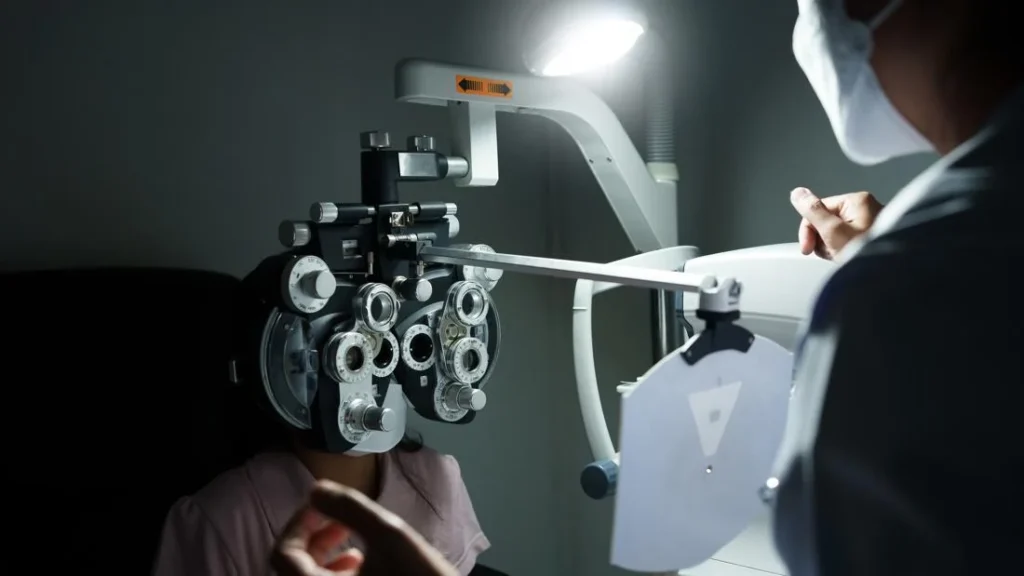
JAKARTA — In a stern public health advisory, Indonesia’s Ministry of Health has issued an urgent warning regarding sudden and unusual changes in vision. Authorities have underscored that symptoms such as sudden blurring, persistent redness, or unexpected flashes of light should never be brushed off as mere fatigue or minor irritations. These sudden ocular shifts often serve as vital warning signs of severe underlying medical conditions that demand immediate professional evaluation and intervention.
The advisory was formally emphasized during a media briefing leading up to World Sight Day 2026. Highlighting the irreplaceable value of human eyesight, health officials urged the public to abandon the dangerous habit of delaying eye examinations until vision deteriorates to a debilitating stage. Instead, proactive vigilance and early medical consultation are being championed as the ultimate defense against preventable blindness and permanent visual impairment.
Main Facts: The Anatomy of Ocular Emergencies
The human eye is an intricate and delicate organ, heavily reliant on a complex network of blood vessels, nerves, and transparent tissues to capture and process light. When minor disruptions cascade into major structural or functional failures, the eye often sends out distinct distress signals.
According to the Ministry of Health, ignoring these warning signs can transition a treatable condition into a permanent disability. Ocular emergencies—ranging from acute retinal detachments and sudden spikes in intraocular pressure to chemical burns and neurological events—manifest through specific, unmistakable symptoms. Recognizing these "red flags" bridges the gap between preserving lifelong sight and suffering irreversible vision loss.
Plt. Director General of Disease Prevention and Control at the Indonesian Ministry of Health, Dr. Andi Saguni, MA, stressed that visual impairments do not discriminate by age or lifestyle. However, a significant portion of these disorders can be successfully managed, corrected, or entirely prevented if individuals cultivate an active awareness of their ocular health.
"Visual impairment can happen to anyone. However, many vision disorders can be prevented, detected early, or corrected if the public has the awareness to undergo regular examinations," Dr. Andi stated during the briefing.
Chronology and Context: The Road to World Sight Day 2026
The Ministry’s heightened focus on eye health forms a cornerstone of the nationwide public health campaigns leading up to World Sight Day 2026. In recent years, public health trends have indicated an alarming rise in late-stage diagnoses for conditions such as glaucoma, diabetic retinopathy, and age-related macular degeneration.
The Evolution of Public Health Policy on Vision
- Initial Phase: Historically, public health policies in Indonesia prioritized infectious diseases, maternal mortality, and basic nutritional deficits, often leaving non-communicable diseases—including sensory impairments—on the periphery.
- The Shift: With shifting demographics, an aging population, and an increase in screen-time-related digital eye strain alongside metabolic disorders like diabetes, the Ministry of Health recognized a mounting silent crisis.
- World Sight Day 2026 Briefing: The recent media briefing marked a pivotal strategic pivot. Rather than merely promoting general wellness, the Ministry escalated its messaging to target acute, high-risk "red flags," categorizing them alongside other medical emergencies like cardiac events or strokes.
This chronological escalation from passive awareness campaigns to active, emergency-oriented clinical warnings reflects a broader global shift in ophthalmology: treating sudden vision loss as a medical emergency equivalent to any other life-threatening crisis.
Supporting Data and Medical Insights: The Six Red Flags
To empower the public, the Ministry of Health has isolated six distinct red flag symptoms. Medical professionals advise that experiencing any of these phenomena warrants an immediate trip to an optometrist, ophthalmologist, or emergency room, rather than a wait-and-see approach.
1. Sudden Vision Loss
When vision abruptly blurs, dims, or vanishes entirely in one or both eyes, it is a medical emergency.
- Clinical Significance: Sudden vision loss is rarely caused by simple tiredness. It often points to acute vascular blockages in the retina (such as retinal artery occlusion), optic neuritis, or acute-angle closure glaucoma.
- Action Required: Do not wait to see if the vision clears up overnight. Immediate evaluation by a specialist is critical to restore blood flow or reduce pressure before permanent optic nerve damage occurs.
2. Red Eyes Accompanied by Severe Pain
Red eyes are common, frequently stemming from allergies, minor dust particles, or conjunctivitis. However, the clinical picture changes drastically when redness is paired with severe ocular pain, throbbing headaches, nausea, or vomiting.
- Clinical Significance: This triad of symptoms—redness, intense pain, and gastrointestinal distress—is a textbook presentation of acute angle-closure glaucoma, a dangerous spike in eye pressure that can destroy optic nerve fibers within hours.
- Action Required: Avoid self-medicating with over-the-counter eye drops, which may worsen the condition depending on the root cause. Seek urgent medical care.
3. A Sudden Surge in Floaters, Light Flashes, or Shadowy Curtains
Most people experience occasional "floaters"—tiny specks, threads, or cobwebs drifting across their field of vision. These are typically harmless bits of gel or cellular debris inside the vitreous humor. However, a sudden, dramatic change demands caution.
- Clinical Significance: If floaters multiply exponentially overnight, accompanied by sudden flashes of light (photopsia) or a dark shadow resembling a curtain descending over part of the visual field, it strongly indicates a retinal tear or detachment.
- Action Required: Retinal detachment requires immediate surgical intervention. Delaying treatment can lead to permanent detachment of the macula, resulting in permanent blindness.
4. Ocular Trauma or Chemical Exposure
Physical accidents—ranging from blunt force trauma during sports to sharp objects piercing the globe—are clear emergencies. Yet, chemical exposures are among the most time-sensitive crises.
- Clinical Significance: Acids and alkaline substances (such as household cleaners, industrial chemicals, or even certain cosmetics) can rapidly penetrate the cornea, causing severe chemical burns, tissue necrosis, and permanent scarring.
- Action Required: If chemicals enter the eye, immediately flush the eye with a continuous stream of clean, running water for at least 15 to 20 minutes before seeking emergency department care. Never rub the eyes, and do not attempt to neutralize alkaline chemicals with acids or vice versa, as the exothermic reaction can cause further thermal burns.
5. White Spots on a Child’s Pupil or Strabismus (Crossed Eyes)
Children rarely complain about vision problems because they often assume how they see is how everyone sees. Consequently, parents must act as vigilant observers.
- Clinical Significance: A whitish reflection or spot on the pupil (leukocoria)—especially if it appears repeatedly in flash photographs—can be an indicator of retinoblastoma, a rare and aggressive malignant tumor of the retina that typically develops in early childhood. Similarly, newly developed strabismus (crossed or unaligned eyes) or a persistent squint can signal underlying neurological or visual processing defects.
- Action Required: Pediatric evaluations are mandatory. Early detection of retinoblastoma is life-saving, while correcting amblyopia (lazy eye) or strabismus early ensures proper visual cortex development.
6. Sudden-Onset Double Vision (Diplopia)
Seeing a single object appear as two distinct images is a jarring symptom that must not be ignored.
- Clinical Significance: While chronic double vision can be caused by uncorrected refractive errors or cataracts, sudden-onset diplopia is often neurological or vascular in origin. It can signal cranial nerve palsies, microvascular infarctions, or even cerebrovascular events (strokes) affecting the brainstem.
- Action Required: If double vision is accompanied by a severe headache, facial drooping, numbness, weakness in the limbs, or slurred speech, it must be treated as a neurological emergency.
Official Responses and Strategic Mandates
The Ministry of Health’s proactive stance underscores a broader philosophy: ocular health is an integral component of overall human capital and national productivity. Dr. Andi Saguni reiterated that public awareness must translate into continuous clinical engagement.
"Don’t wait for your eyes to have problems. Recognize the signs of visual impairment, undergo regular screenings and examinations, and immediately follow up if an abnormality is found," Dr. Andi emphasized.
Addressing High-Risk Demographics
The Ministry’s strategic blueprint does not rely solely on emergency response; it emphasizes systematic prevention. Regular, scheduled eye examinations are non-negotiable for specific high-risk groups:
- Diabetic Patients: Diabetes is a leading cause of preventable blindness through diabetic retinopathy. Routine fundus examinations help detect fragile, leaking blood vessels long before symptoms arise.
- Individuals with a Family History of Glaucoma: Glaucoma—often called the "silent thief of sight"—damages the optic nerve slowly and painlessly, usually starting with peripheral vision loss. Genetic predisposition mandates baseline and annual screenings.
- Pediatric Populations: Routine school-age vision screenings are vital to ensure that undetected refractive errors do not impair learning capacities and long-term cognitive development.
Implications: The Cost of Complacency
The societal and economic implications of unaddressed vision loss are profound. Globally, visual impairment restricts educational attainment, limits employment opportunities, increases the risk of accidental injuries (such as falls in the elderly), and places a heavy caregiving and financial burden on families and healthcare systems.
By framing sudden ocular changes as genuine medical red flags, the Indonesian Ministry of Health aims to shift cultural attitudes toward eye care. In a medical landscape where minutes can mean the difference between full recovery and permanent darkness, abandoning complacency is not merely a recommendation—it is an absolute necessity.
Citizens experiencing any of the six outlined symptoms are urged to bypass routine optical shops and proceed directly to qualified ophthalmologists or hospital emergency departments. When it comes to human vision, hesitation is the ultimate hazard, and early action remains the ultimate safeguard.