Overcoming Fear and Financial Barriers: Retno Subarini’s Inspiring Journey to Clear Vision Through Free Cataract Surgery in Indonesia
JAKARTA — The prospect of eye surgery often evokes a deep sense of dread. For many patients, the mere thought of surgical instruments near the eye triggers intense anxiety, causing them to postpone critical medical interventions. However, the lived experiences of patients who have successfully navigated the process can serve as a powerful antidote to fear.
Retno Subarini, a 68-year-old housewife from Jakarta, once shared those exact fears. Today, she stands as an inspiring advocate for eye health, having successfully undergone cataract surgery on both of her eyes. Her story offers a reassuring message to millions of older adults suffering from visual impairments: cataract surgery is not only entirely painless, but it can also be accessed completely free of charge through Indonesia’s national health insurance scheme.
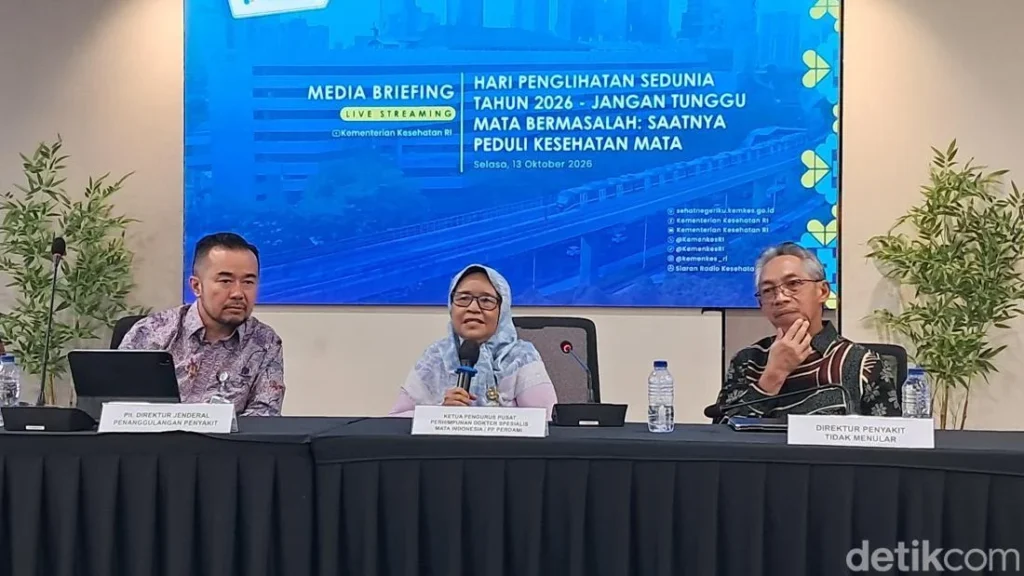
Sharing her inspiring journey during a media briefing leading up to World Sight Day 2026 at the Ministry of Health in Jakarta, Retno dismantled common misconceptions surrounding the procedure. Her testimony highlights the seamless integration of primary healthcare services, specialized medical interventions, and government-backed financial protection that makes sight-saving treatments accessible to everyday citizens.
The Chronology of Retno’s Medical Journey
Retno’s path to restored vision began long before she set foot in an ophthalmology clinic. Managing her health has been a structured routine for over a decade; she has a documented medical history of hypertension, for which she has been receiving regular, disciplined treatment since 2014.
By 2019, Retno began noticing a gradual decline in her eyesight—a common sign of aging lenses becoming clouded. Recognizing the importance of timely medical evaluation, she initiated her healthcare journey at her local community health center, known locally as Puskesmas. Seeking care at the Puskesmas Setiabudi in South Jakarta, she underwent preliminary assessments before being formally referred to an ophthalmology specialist for a comprehensive evaluation.
Upon meeting with the eye specialist, Retno was given a thorough explanation of her condition. The physician outlined the various management options available for cataracts, ranging from conservative approaches to surgical intervention. After carefully weighing her options and understanding the progressive nature of cataracts, Retno made the proactive decision to undergo surgery.
The medical intervention was executed in a staged approach to ensure maximum safety and comfort. Her right eye was operated on first. Following a successful procedure, proper post-operative care, and adequate healing time, she returned about five weeks later to undergo the same corrective surgery on her left eye. Today, both procedures are part of her past, replaced by sharp, clear vision and a newfound passion for encouraging others to confront their medical fears.
Breaking Down the Financial Barrier: Rp 0 Under BPJS Kesehatan
One of the most remarkable aspects of Retno’s narrative is the financial accessibility of the procedures. For many families across Indonesia, the cost of specialized surgeries can be a prohibitive barrier, often forcing individuals to live with debilitating conditions out of economic necessity.
However, Retno’s experience underscores the transformative impact of the Health Care and Social Security Agency (Badan Penyelenggara Jaminan Sosial / BPJS Kesehatan) and the broader National Health Insurance (Jaminan Kesehatan Nasional / JKN) scheme.
"Using BPJS, Alhamdulillah [Praise be to God]," Retno shared during the press conference on Tuesday, October 13, 2026, describing the administrative and clinical process as remarkably smooth from the initial Puskesmas visit to the final hospital discharge.
When asked about the financial burden of the surgery, Retno was unequivocal in her response, emphasizing that universal health coverage effectively eliminated all out-of-pocket expenses.
"It all went smoothly, zero rupiah," she affirmed.
Retno’s case illustrates how comprehensive public healthcare financing empowers vulnerable populations—particularly seniors—to access advanced medical care without falling into financial distress. While the procedures, administrative steps, and medical devices strictly adhere to the regulatory frameworks and coverage limits set by the JKN program, her experience demonstrates that the system functions effectively when patients utilize primary care channels correctly.
Dispelling the Myth of Surgical Pain
Beyond financial constraints, psychological barriers remain a formidable obstacle in ophthalmology. The fear of pain during eye operations frequently causes patients to delay treatment until their vision has deteriorated severely.
Retno admitted that before her surgery, she frequently discussed her upcoming procedures with peers who faced similar eye ailments. To her surprise, many of her friends were paralyzed by apprehension, choosing to endure blurry vision rather than face the operating room.
"Some of my friends are still afraid," Retno noted.
Drawing from her personal experience, Retno made it her mission to correct these misconceptions. She realized that the anxiety surrounding eye surgery is largely unfounded, driven by imagination rather than clinical reality. When asked what the surgery actually felt like, her description was strikingly casual and reassuring.
"It doesn’t hurt at all. I felt a little bit of tickling and itching, that’s all. Absolutely no pain whatsoever," she recalled.
Following each procedure, Retno adhered strictly to the post-operative care guidelines provided by her medical team, attending routine check-ups to monitor her recovery. Her smooth rehabilitation process transformed her into an informal health ambassador, consistently urging her peers not to panic or hesitate when medical professionals recommend cataract treatment.
Expert Perspectives: The Silent Threat of Untreated Cataracts
Retno’s personal triumph over cataracts aligns directly with broader public health concerns voiced by top medical authorities in Indonesia. Prof. dr. Budu, PhD, Sp.M(K), M.Med.Ed., Chairperson of the Central Board of the Indonesian Ophthalmologists Association (PERDAMI), has repeatedly emphasized the urgent need for public awareness regarding age-related vision loss.
According to Prof. Budu, cataracts remain one of the leading causes of preventable blindness among individuals aged 50 and above. The condition develops progressively as the natural protein structure within the eye’s crystalline lens breaks down, causing the lens to become opaque or cloudy. As the cloudiness thickens, light passing through the retina is scattered and blocked, leading to a steady, painless decline in visual acuity.
Medical science has established that eye drops or dietary supplements cannot reverse established cataracts. Surgical replacement of the clouded natural lens with a clear artificial intraocular lens remains the only definitive, highly effective treatment.
"Therefore, if you begin experiencing visual disturbances, it is strongly advised to immediately have your eyes examined at a healthcare facility," Prof. Budu stated.
Early clinical evaluations allow ophthalmologists to accurately assess the density and progression of the cataract, ruling out other underlying eye pathologies and determining the precise timing for surgical intervention.
Furthermore, PERDAMI continues to collaborate closely with the government and healthcare providers to ensure that cataract surgery remains a core component of accessible public health services under the JKN framework. Patients are encouraged to utilize local community health centers as their first point of contact to understand referral pathways, preparatory steps, and comprehensive post-operative recovery protocols.
Public Health Implications and Moving Forward
The story of Retno Subarini serves as a microcosm of both the achievements and the ongoing challenges within Indonesia’s healthcare landscape. As the nation faces an aging demographic shift, the prevalence of age-related non-communicable diseases and sensory impairments—such as cataracts and glaucoma—is projected to rise.
The successful management of Retno’s condition highlights several critical implications for public health policy and community outreach:
- The Power of Primary Care Integration: Retno’s journey proves that the tiered referral system—starting from a local Puskesmas to a specialized hospital ophthalmology unit—functions as intended when patients seek care early. Strengthening primary health facilities to screen for visual impairments is vital for catching cases before they advance to functional blindness.
- Mitigating Psychological Barriers: Public health campaigns must actively address the fear of surgery. Testimonials from real patients like Retno are invaluable tools in health communication. By humanizing medical procedures and replacing clinical jargon with relatable experiences, health authorities can reduce patient anxiety and encourage proactive health-seeking behavior.
- Sustaining Financial Protection: The zero-rupiah cost experienced by Retno highlights the profound social value of the BPJS Kesehatan system. Ensuring the financial sustainability of the JKN program is essential to maintaining free access to sight-restoring surgeries for low-income and elderly populations.
- Shifting Cultural Attitudes Toward Aging: Too often, declining vision in older adults is dismissed as an inevitable consequence of aging rather than a treatable medical condition. Raising awareness helps reframe vision loss as a manageable health issue, empowering seniors to claim their right to a high quality of life.
Ultimately, Retno Subarini’s experience stands as a powerful reminder that fear and financial worry should never dictate a person’s quality of life. Her journey from dim, blurred vision to absolute clarity demonstrates the life-changing potential of timely medical intervention, universal healthcare coverage, and courage in the face of the unknown. For anyone hesitating to address their declining vision, Retno’s message is clear: do not wait until darkness closes in—seek out information, consult your doctor, and take that first step toward a brighter, clearer future.