
BYD Launches Massive Global Hiring Spree as Export Dominance Soars
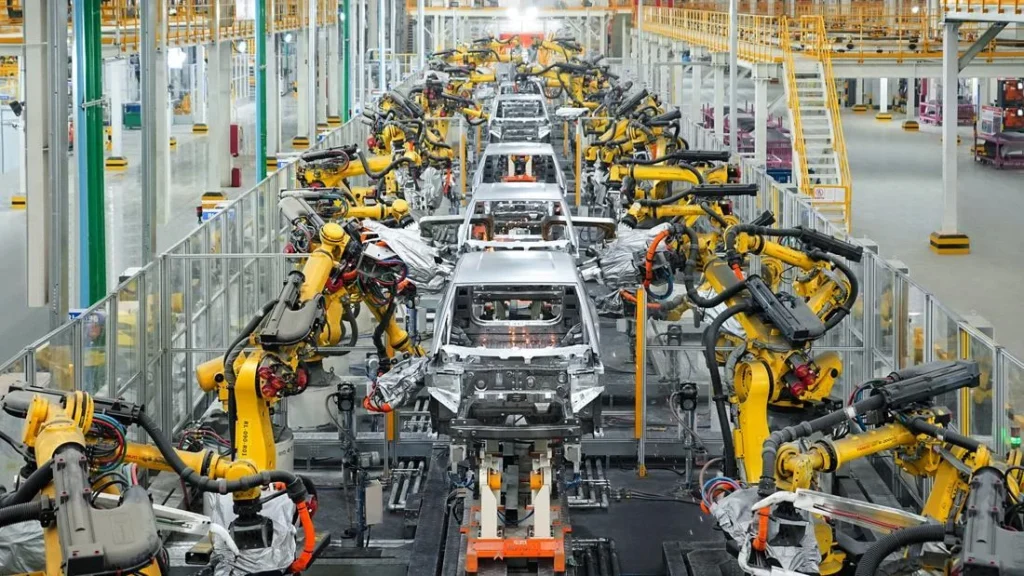
JAKARTA – Chinese automotive giant BYD, the world’s leading manufacturer of new energy vehicles (NEVs), has officially initiated a massive recruitment drive, signaling an aggressive expansion of its manufacturing capacity. The company is currently seeking to fill more than 9,000 job openings at its specialized facilities in the Shenzhen-Shantou Special Cooperation Zone in China, a move necessitated by an unprecedented surge in international demand for its electric and hybrid vehicles.
1. The Scale of Recruitment: Strengthening the Manufacturing Backbone
The current hiring initiative is concentrated across two of BYD’s pivotal production hubs: the Ebu component plant and the state-of-the-art Xiaomo vehicle assembly facility. As global markets pivot toward sustainable transportation, BYD is scaling up its workforce to ensure that supply chain capabilities match the skyrocketing sales figures.
According to data reported by Carnewschina, the recruitment breakdown reflects the company’s focus on both high-volume assembly and specialized technical production:
- Xiaomo Facility: The company requires approximately 4,800 new employees to handle sheet metal work, interior upholstery, and logistics/warehouse operations. Additionally, the facility’s "Division 15" is seeking 1,200 personnel to fill roles as assembly operators, welding technicians, and foam-molding specialists.
- Ebu Component Plant: This facility is recruiting 2,000 new workers to serve as general operators, precision machine adjusters, and expert welders.
The remaining vacancies are spread across support and specialized technical roles, ensuring that the company maintains its high standards of quality control while increasing throughput.
Compensation Structure
BYD has implemented a tiered compensation strategy to attract both entry-level talent and seasoned professionals. Entry-level general operators can expect a starting monthly salary of approximately 5,000 yuan (roughly IDR 13 million). At the higher end of the spectrum, specialized senior technicians and engineers can command monthly salaries ranging from 15,000 to 20,000 yuan (approximately IDR 39 million to IDR 52 million), reflecting the company’s commitment to retaining high-level expertise.
2. Chronology of Growth: From Domestic Leader to Global Powerhouse
The current recruitment wave is not an isolated event; it is the culmination of a multi-year strategy to transition from a China-centric manufacturer to a dominant global automotive force.
- 2025 Milestones: The previous year served as a watershed moment for BYD. The company recorded an explosive 145% increase in exports of passenger vehicles and pickups, reaching a total of 1.05 million units sold internationally.
- H1 2026 Momentum: The upward trajectory has shown no signs of slowing down in the first half of 2026. Export sales reached approximately 789,400 units, a 70% increase compared to the same period in 2025.
- The 2026 Target: BYD has set an ambitious internal target of reaching 1.5 million units in total export sales by the end of the year, a figure that necessitates the rapid expansion of their manufacturing labor force currently underway in the Shenzhen-Shantou zone.
3. Global Localization Strategy: Beyond China’s Borders
BYD’s aggressive hiring in China is merely one pillar of its broader strategy to localize production. By establishing manufacturing bases in key markets, the company aims to circumvent trade barriers, reduce logistics costs, and tailor its vehicles to local consumer preferences.
Brazil
The success of this strategy is best exemplified in Brazil, where BYD recently celebrated the production of its 100,000th new energy vehicle. The facility now employs a local workforce of over 5,500 people, proving that BYD’s business model is successfully translating into job creation in international markets.
Europe: The Hungarian Frontier
Europe remains a critical theater for BYD. The company is currently deep in the construction of its first passenger vehicle manufacturing plant in Szeged, Hungary. This facility is expected to serve as the gateway for BYD’s expansion into the European Union, positioning the company to compete directly with legacy European manufacturers on their own turf.
Thailand: The Southeast Asian Hub
Thailand serves as the primary blueprint for BYD’s regional strategy in Southeast Asia. Located in Rayong, this facility is the company’s first full-scale passenger vehicle production plant outside of China. It currently churns out five distinct models: the BYD Dolphin, Atto 3, Seal 5 DM-i, Sealion 5 DM-i, and Sealion 6 DM-i. This diversity of production underscores BYD’s ability to scale quickly across different vehicle platforms.
4. The Indonesian Context: Developments in Subang
As BYD expands its global footprint, Indonesia is emerging as a vital node in its regional operations. The company has invested significantly in a facility in Subang, West Java, which is already functional and contributing to the brand’s presence in the archipelago.
Official Statements from BYD Motor Indonesia
Luther Panjaitan, Head of PR & Government Relations at PT BYD Motor Indonesia, confirmed in recent discussions that the Subang facility is no longer a theoretical project but an operational manufacturing hub.
"As you can see, some of the vehicles being used for test drives are already produced at that facility," Panjaitan noted during a press briefing in June.
Regarding the localized assembly of new models, specifically the BYD M6 DM (Dual Mode), Panjaitan provided strong indications that the vehicle is part of the local production roadmap. While stopping short of a formal, legally binding announcement, he emphasized the strategic intent behind the move.
"I cannot speak officially at this moment, but it should be [produced locally]. The M6 DM was specifically prepared for the Indonesian market, equipped and fitted with components produced within Indonesia," Panjaitan stated. This aligns with the Indonesian government’s local content requirements (TKDN), which are designed to foster a domestic electric vehicle ecosystem.
5. Implications: What This Means for the Automotive Industry
The sheer scale of BYD’s 9,000-person recruitment drive carries several profound implications for the global automotive landscape:
Supply Chain Resilience
By rapidly scaling their workforce, BYD is insulating itself against the supply chain bottlenecks that have plagued the industry since 2020. Having a robust internal workforce for both components (Ebu) and final assembly (Xiaomo) allows for greater vertical integration, which is a significant competitive advantage over traditional automakers who rely heavily on third-party suppliers.
The EV Price War
The massive investment in labor and facility capacity suggests that BYD intends to maintain its aggressive pricing strategy. By achieving economies of scale through high-volume production, BYD continues to exert downward pressure on the prices of electric vehicles, effectively forcing competitors to either lower their margins or innovate faster to survive.
Shift in Global Manufacturing
The transition from "Made in China" to "Made for the World" is the most significant takeaway from BYD’s current expansion. By establishing hubs in Brazil, Hungary, Thailand, and Indonesia, BYD is successfully navigating the complexities of global trade. The company is shifting from being a Chinese exporter to a multinational entity that manufactures vehicles close to its customers.
The Talent War
The recruitment of 9,000 employees is a stark reminder that the transition to EVs is not just a technological challenge but a human capital one. As traditional automakers struggle to pivot their labor forces toward software-defined vehicles and battery assembly, BYD’s ability to attract and train thousands of workers simultaneously highlights the competitive gap in the industry.
Conclusion
BYD’s massive hiring initiative in the Shenzhen-Shantou zone is a clear signal that the company’s growth is far from plateauing. With a firm grasp on domestic production efficiency and an aggressive, well-executed international expansion strategy, BYD is positioning itself to lead the global transition to new energy vehicles. As the Subang facility in Indonesia begins to ramp up production of locally-tailored models like the M6 DM, it is evident that BYD’s influence will only continue to deepen, reshaping the automotive industry one factory at a time.