The B50 Paradox: How Indonesia’s Green Energy Ambitions Threaten the Future of Sumatran Biodiversity
By Investigative Desk
The Indonesian government’s aggressive pursuit of energy independence, centered on the mandatory B50 biodiesel program, has placed the nation at a precarious crossroads. While the policy—which requires a 50% blend of palm-oil-derived biodiesel in all diesel fuel—is framed as a cornerstone of national energy sovereignty, it is simultaneously accelerating an environmental crisis. In Sumatra, this ambition is colliding head-on with critical forest restoration efforts, effectively prioritizing short-term industrial quotas over the long-term biological health of the archipelago.
The Mandate vs. The Ecosystem
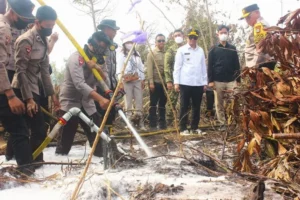
Effective July 2026, the B50 mandate demands a massive, consistent supply of Crude Palm Oil (CPO). To meet this demand, the government has turned to existing land assets, including large swaths of confiscated forest areas. In North Sumatra, this has created a systemic failure where land that should have been returned to its natural state as protected forest or wildlife habitat is instead being repurposed for industrial palm oil production.
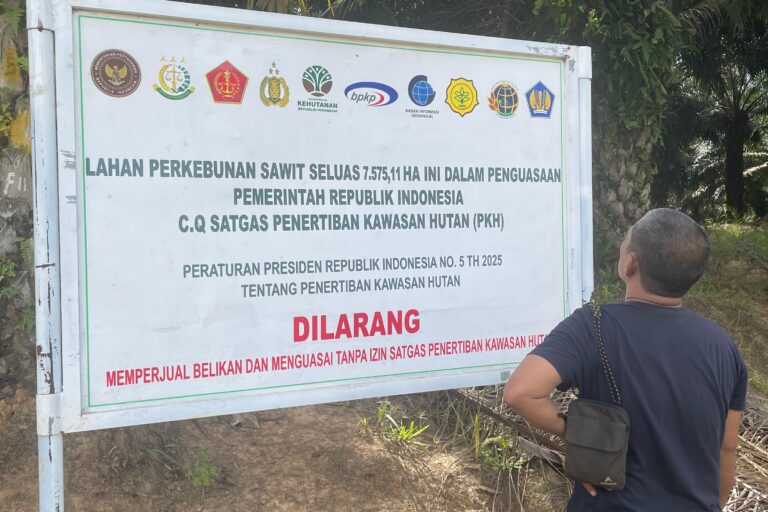
The Satuan Tugas Penertiban Kawasan Hutan (Satgas PKH)—the government’s task force for forest area regulation—has controversially handed over more than 22,000 hectares of previously confiscated forest land to PT Agrinas Palma Nusantara. This land, which encompasses designated conservation areas, protected forests, and limited production forests, was originally slated for restoration. Instead, it is being utilized as a high-output plantation to feed the insatiable appetite of the B50 program.
Chronology of a Policy Conflict
The tension between energy goals and ecological conservation has been building for years. The timeline of this conflict reveals a consistent trend of administrative decisions favoring industrial expansion over environmental recovery:
- Pre-2026: Growing pressure for energy security leads to the formulation of the B50 mandate. Environmental NGOs raise alarms about potential deforestation.
- January–May 2026: Production ramps up. PT Agrinas Palma Nusantara reports processing tens of thousands of tons of CPO, sourced partially from contested lands in North Sumatra.
- July 1, 2026: The official start of the B50 mandate. The policy immediately triggers increased pressure to convert land, with experts warning that restoration projects are effectively paralyzed.
- July 2026: Public and expert outcry intensifies as reports confirm that confiscated lands—which were meant to be reforested—are being integrated into the state’s energy production chain.
Biological Consequences: The Loss of the Sumatran Wild
The decision to maintain these forest areas as monoculture palm oil plantations carries profound biological implications. Alif Ramadhan, a lead analyst with the Wildlife Crime Response Unit (WCRU), describes the government’s stance as a "crushing blow" to biodiversity conservation.

"The loss of natural vegetation cover in such a vast area is systematically eroding the habitats of critically endangered species," Ramadhan explains. "We are effectively sealing the fate of the Sumatran tiger (Panthera tigris sumatrae), the Tapanuli orangutan (Pongo tapanuliensis), the Malayan tapir (Tapirus indicus), and the sun bear (Helarctos malayanus). Their remaining corridors are being fragmented and erased."
Beyond the physical displacement of wildlife, the environmental degradation is deep-seated. The reliance on chemical fertilizers and pesticides necessary for commercial palm oil production poses a severe risk of soil and water contamination. Furthermore, a palm oil plantation is a poor substitute for a primary tropical forest in terms of carbon sequestration. The transition from a diverse, high-functioning forest ecosystem to a simplified plantation results in a drastic decline in the land’s ability to act as a carbon sink, further exacerbating the impacts of climate change at the micro-level.
Data and Projections: A Looming Disaster
The quantitative projections provided by the Clean Transition Coalition paint a grim picture for the future of Indonesia’s landscape. Their modeling suggests that the B50 mandate will necessitate the expansion of palm oil plantations by approximately 5.36 million hectares nationwide by 2039. Of this total, the potential for deforestation of natural forests stands at a staggering 1.5 million hectares.
For North Sumatra, the outlook is particularly dire. With a total land area of approximately 7.3 million hectares, the projected deforestation due to the B50 policy could potentially impact up to 20% of the province’s landmass. To put this in perspective, that is an area equivalent to half of the Deli Serdang Regency or the entirety of Medan city.
Forest Watch Indonesia has provided data corroborating these fears, noting that in the last five years alone, the expansion of palm oil has already consumed 424,000 hectares of natural forest. Without a drastic pivot in policy, these numbers are expected to accelerate.
Official Responses: The Operator’s Perspective
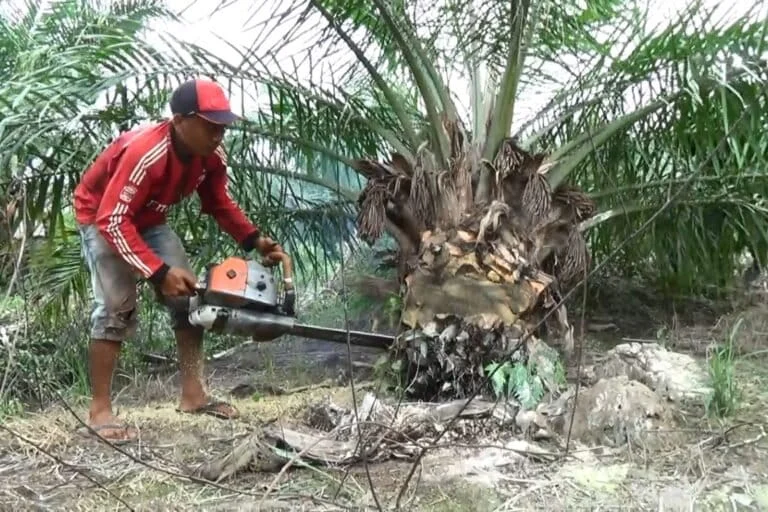
When contacted regarding the environmental concerns, PT Agrinas Palma Nusantara provided a perspective centered on state efficiency and energy security. Sukarnoto, the company’s head representative for the Sumatra-Aceh region, clarified that the 22,339 hectares under their control are being managed as part of a national directive to support the B50 mandate.
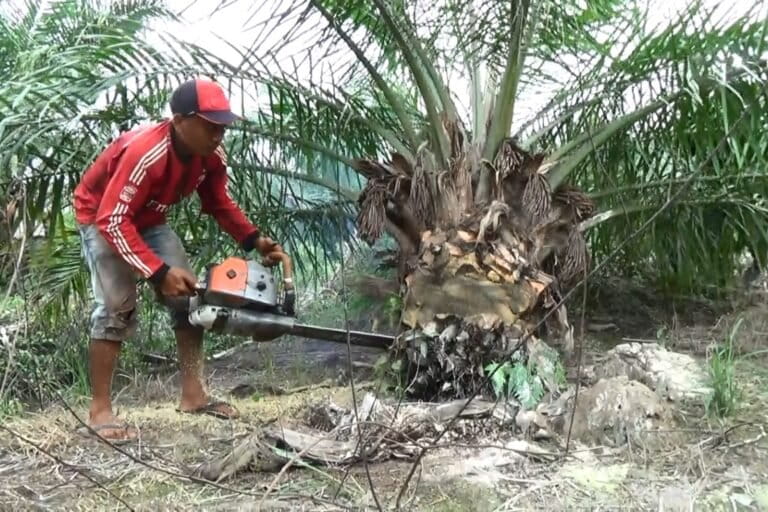
"Our role is not to simply possess land, but to act as a state operator," Sukarnoto stated. "We are maintaining these assets to ensure the success of the national energy self-sufficiency program and reduce our reliance on imports."
According to Sukarnoto, the company currently manages 9,000 hectares of the confiscated land, producing at least 10,000 tons of fresh fruit bunches (FFB) per month, which translates to roughly 1,900 tons of CPO. He noted that if they were to fully utilize the entire 22,339-hectare allocation, their output could reach 3,500 tons of CPO per month.
When asked about the potential for reforestation, Sukarnoto was non-committal. "The decision rests entirely with the government," he said. He further explained that for lands where trees have reached the end of their productive life—typically around 25 years—the company is considering a transition to food crops, such as soybeans, corn, and cassava, to support national food security. However, he emphasized that there is currently no plan to revert these lands to their original forest function.
The Failure of Governance and Legal Enforcement
The controversy surrounding the Satgas PKH highlights a critical failure in the rule of law. Critics argue that the task force has effectively legitimized environmental damage. By handing over confiscated lands—which were previously used for illegal plantations—to another entity without strict conditions for ecological restoration, the government has missed a vital opportunity to reverse environmental degradation.
"The inability of the state to rehabilitate these lands signals a weakness in spatial planning enforcement," says Ramadhan. "By allowing these areas to continue as plantations, the state is effectively prioritizing the economic utility of the soil over its ecological value. We are seeing a pattern where the institutions intended to resolve land conflicts are instead becoming facilitators of continued ecological loss."
The situation is most critical in areas like Labuhanbatu and Batangtoru. These regions serve as essential ecological corridors for the survival of the Sumatran tiger and the Tapanuli orangutan. The continued operation of plantations in these areas, even under the banner of "green energy," acts as a barrier to the movement of these species and limits their capacity for long-term survival.
Implications: A Sustainable Future or Ecological Debt?
The path forward for North Sumatra is narrow. The province stands at a juncture where it must choose between the immediate gratification of energy quotas and the long-term health of its natural resources. If the B50 program continues in its current form, the environmental cost will be paid in the currency of lost biodiversity, contaminated water tables, and a diminished capacity to mitigate climate change.
The "green" label attached to biodiesel is currently failing the test of reality. While the B50 mandate may reduce emissions from tailpipes, the carbon footprint of its production—driven by the loss of primary forests—suggests that the program is not as sustainable as its proponents claim.
As the government pushes forward, the silence regarding restoration is the most telling aspect of the policy. Without a clear commitment to reforesting exhausted lands and protecting existing high-conservation-value areas, the B50 program risks becoming a legacy of ecological destruction. For the people of Sumatra and the wildlife that call the island home, the "energy transition" is currently a journey away from the forests that sustain them, and toward an industrial landscape that leaves little room for nature to recover.
In the final analysis, the challenge is clear: Can Indonesia innovate its way to energy independence without liquidating its natural capital? Based on the current trajectory in North Sumatra, the answer remains a concerning "no." Unless legal mechanisms are strengthened to mandate restoration and halt expansion in critical areas, the province is poised to witness the quiet extinction of its most iconic species, sacrificed at the altar of energy policy.