Sultan Zainal Abidin Syah: The "Guardian of the East" Finally Honored as a National Hero of Indonesia
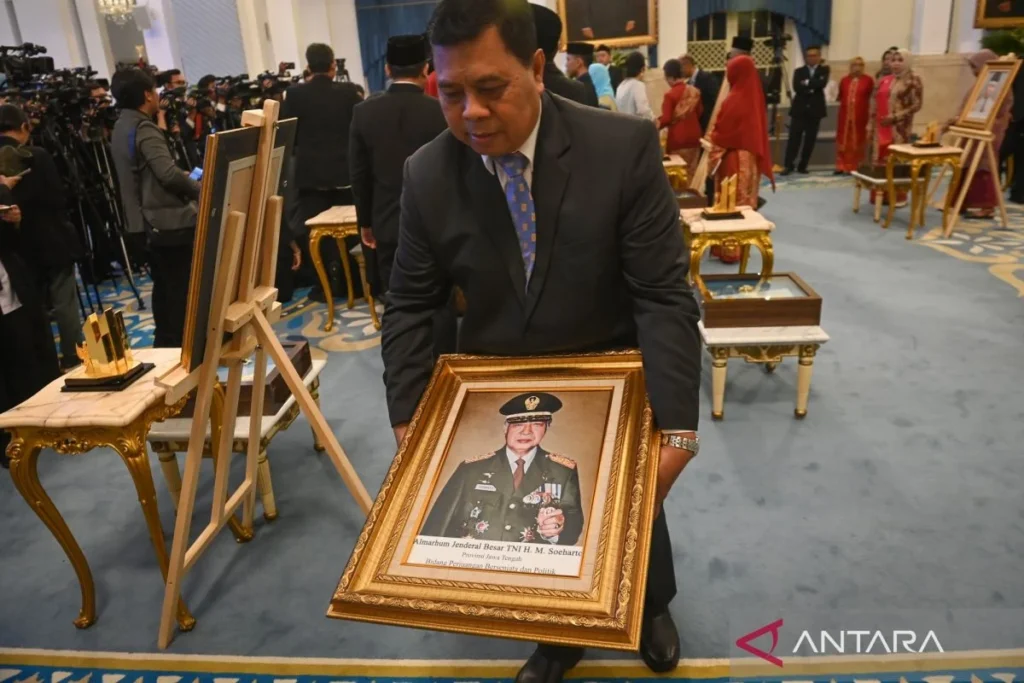
JAKARTA – In a solemn ceremony held at the State Palace on Monday, November 10, 2025, to commemorate National Heroes Day, President Prabowo Subianto officially conferred the title of National Hero upon ten distinguished figures who shaped the trajectory of the Indonesian nation. Among the honorees, whose contributions span decades of struggle and state-building, stands the late Sultan of Tidore, Sultan Zainal Abidin Syah.
Recognized for his monumental contributions in the fields of political struggle and diplomacy, Sultan Zainal Abidin Syah’s legacy is inextricably linked to the territorial integrity of the Republic of Indonesia. As a pivotal figure in the post-independence era, he served as the "Guardian of the East," ensuring that Irian Barat—modern-day Papua—remained an indivisible part of the Unitary State of the Republic of Indonesia (NKRI).
The conferment was formalized under Presidential Decree (Keppres) Number 116/TK/Year 2025, marking the culmination of years of advocacy by historians, the Tidore community, and the Indonesian government to recognize a leader whose strategic vision preserved the nation’s eastern frontier.
The Strategic Architect of Sovereignty
Sultan Zainal Abidin Syah, also known historically as Sultan Zainal Abidin Alting Syah, was not merely a traditional monarch; he was a shrewd political tactician and an intellectual who understood that the future of the Indonesian archipelago depended on its geopolitical unity.
Born in 1912 in Soa-Sio, Tidore, North Maluku, Zainal Abidin’s life spanned the transition from colonial subjugation to the birth of a sovereign republic. His upbringing was marked by a synthesis of traditional royal values and modern administrative education. He received his foundational education in Ternate at a Dutch school for indigenous elites, before excelling at the Meer Uitgebreid Lager Onderwijs (MULO) in Batavia—the center of Dutch colonial administration.
His commitment to public service led him to the Opleidings Scholenvoor Inlandsche Ambtenaren (OSVIA) in Makassar, Sulawesi, in 1934. His early career as an ambtenaar (civil servant) saw him holding administrative positions in Ternate, Manokwari, and Sorong. These years in Papua were not merely administrative postings; they provided him with an intimate knowledge of the region, its people, and its historical ties to the Sultanate of Tidore—knowledge that would later become his most potent diplomatic weapon.
A Chronology of Unwavering Resistance
The trajectory of Sultan Zainal Abidin Syah’s life was fundamentally altered by the arrival of the Japanese occupation and the subsequent proclamation of Indonesian independence in 1945. His journey to becoming a national hero can be traced through several critical junctures:
1. The Crucible of Occupation (1942–1947)
During the Japanese occupation, the Sultan’s resistance to foreign dominance led to his exile in Jailolo, Halmahera Barat. His steadfastness during this period earned him the deep respect of his people. Upon his return and formal installation as the Sultan of Tidore in 1947, he immediately repositioned the Sultanate as a bulwark against lingering Dutch attempts to fragment the archipelago.
2. The Diplomatic Defiance (1949)
Perhaps his most defining moment occurred during the lead-up to the Round Table Conference (KMB) in 1949. While the Dutch sought to carve out territories from the newly formed Republic, Sultan Zainal Abidin Syah stood as the sole voice of defiance among 51 parliamentarians. He argued unequivocally that Irian Barat was historically and culturally part of the Tidore Sultanate, and therefore, part of Indonesia. His refusal to concede the territory was a masterstroke of diplomatic resistance that prevented the immediate loss of the eastern region.
3. The Province of Struggle (1956)
Recognizing the Sultan’s legitimacy and his influence in the East, President Sukarno announced the establishment of the "Province of Struggle for Irian Barat" on August 17, 1956. With Soa-Sio, Tidore, serving as the temporary capital, the Sultan was appointed as the first Governor of Irian Barat on September 23, 1956, via Presidential Decree No. 142/1956.
4. Trikora and the Final Integration (1961–1962)
As tensions with the Netherlands escalated, the Sultan continued his service at the Department of Home Affairs, assisting the Mandala Command in Makassar. His role was crucial in the success of the Tri Komando Rakyat (Trikora) operation, which aimed at the full liberation and integration of West Papua. In 1962, he was officially appointed as the permanent Governor of Irian Barat, cementing his status as the architect of Papua’s integration into the Indonesian fold.
Supporting Data: The Historical Ties of Tidore
The Sultan’s claim regarding Irian Barat was not mere rhetoric; it was grounded in centuries of maritime history. The Sultanate of Tidore held administrative and cultural influence over the Bird’s Head Peninsula of Papua for centuries. By asserting these ties, Sultan Zainal Abidin Syah utilized history to combat colonial divide-and-rule tactics.
Historical records indicate that the "Province of Struggle" was a necessary political vehicle. By establishing an administrative seat in Tidore, the Indonesian government created a "government in waiting," effectively countering the Dutch narrative that West Papua was a separate political entity. The Sultan’s role as the bridge between traditional authority and the modern Indonesian bureaucracy proved essential in winning the loyalty of the Papuan people during a volatile period of regional transition.
Official Responses and Public Sentiment
The ceremony at the State Palace was attended by state officials, descendants of the heroes, and national historians. President Prabowo Subianto, in his address, emphasized that the recognition of these ten figures was a "national mandate to remind the younger generation that the foundation of our republic was built on the sweat, blood, and intellectual fortitude of our ancestors."
The Ministry of Social Affairs, which oversees the nomination process for National Heroes, highlighted the Sultan’s unique contribution. "Sultan Zainal Abidin Syah represents a rare blend of traditional leadership and modern nationalism," a ministry spokesperson noted. "He did not just serve the state; he defended its very geography during its most vulnerable moments."
In Tidore, the news of the official recognition was met with profound celebration. For decades, the local community had championed the cause, citing his role in keeping the nation whole. His remains, which were moved from Ambon to the Sonyine Salaka Kedaton in Soa-Sio in 1986, remain a site of pilgrimage, symbolizing the Sultan’s final return to his people.
Implications: A Lesson in Sovereignty for the Future
The elevation of Sultan Zainal Abidin Syah to the pantheon of National Heroes has several significant implications for Indonesia:
- Reaffirming Territorial Unity: At a time when national unity is constantly challenged, honoring the Sultan sends a strong signal regarding the historical and legal legitimacy of Indonesia’s borders, particularly concerning the Papua region.
- Celebrating Regional Contributions: The move underscores the role of traditional monarchies and regional leaders in the formation of the modern Indonesian state, moving away from a Java-centric historical narrative.
- Educational Integration: The inclusion of his biography in the national curriculum will provide students with a deeper understanding of the "diplomatic war" that accompanied the military struggle for independence.
Sultan Zainal Abidin Syah passed away on July 4, 1967, in Ambon. He left behind a legacy not just as a monarch, but as a statesman who understood that sovereignty is not merely claimed—it is maintained through consistent, courageous, and intelligent action. Today, the street bearing his name in Tidore stands as a quiet witness to the man who ensured that the sun would continue to rise over a unified Indonesian nation in the East.
As Indonesia looks toward the future, the recognition of the "Guardian of the East" serves as a poignant reminder that the cost of freedom is constant vigilance, and the survival of the nation depends on those who, like Sultan Zainal Abidin Syah, place the integrity of the state above all else.