Ministry of Agriculture Secures Unqualified Audit Opinion, Maximizing Budget to Empower Farmers and Achieve Food Self-Sufficiency
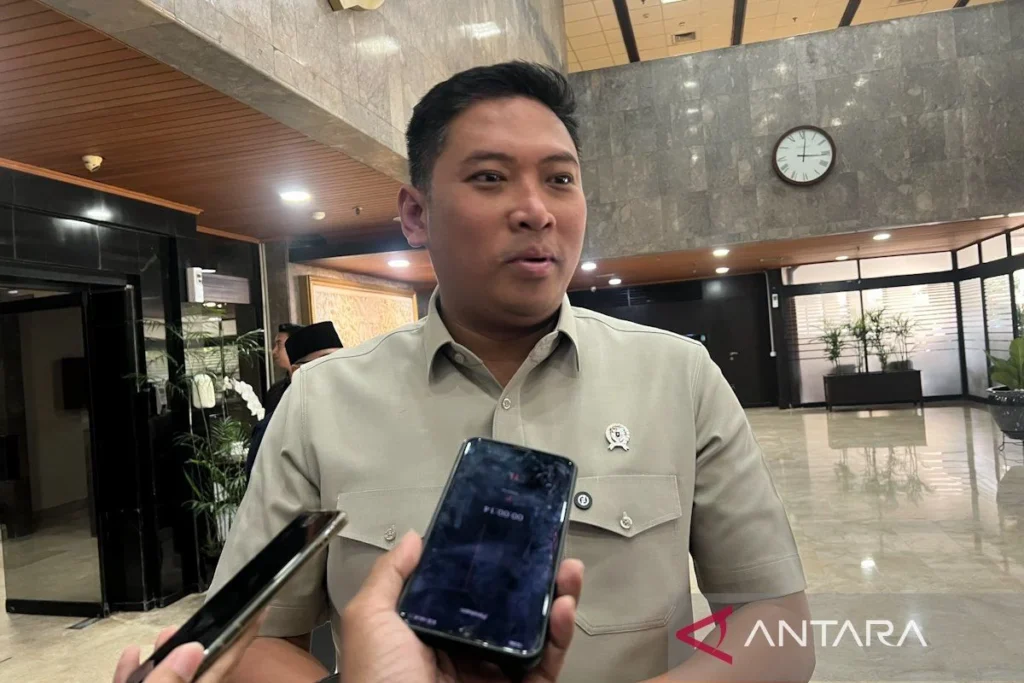
JAKARTA — The Indonesian Ministry of Agriculture (Kementerian Pertanian) has reaffirmed its commitment to directing state funds toward the grassroots level, ensuring that public spending directly improves farmer welfare and accelerates the nation’s journey toward sustainable food self-sufficiency.
Speaking during a high-level working meeting with the House of Representatives (DPR RI), Vice Minister of Agriculture (Wamentan) Sudaryono emphasized that the ministry’s financial management is heavily geared toward high-impact strategic programs designed to bolster food security, optimize local production, and eliminate structural inefficiencies in the agricultural sector.
1. Main Facts: Clean Governance Meets Financial Growth
The Ministry of Agriculture has successfully maintained its highly coveted Unqualified Opinion (Wajar Tanpa Pengecualian or WTP) from the Audit Board of the Republic of Indonesia (BPK RI) for its Fiscal Year (FY) 2025 financial statements. This rating is the highest audit grade awarded by the state auditor, indicating that the ministry’s financial statements are presented fairly, transparently, and in all material respects in accordance with Indonesian Government Accounting Standards.
In addition to this administrative triumph, the ministry reported a substantial surge in its state-revenue performance. For the fiscal year ending December 31, 2025, the Ministry of Agriculture recorded a total realization of state revenue amounting to IDR 501 billion. This represents a significant year-on-year increase of 43.79 percent compared to the previous fiscal year.
On the expenditure side, the ministry efficiently utilized IDR 25.09 trillion of its budget allocation. These funds were deployed to accelerate various national strategic programs, ranging from irrigation rehabilitation and seed distribution to animal disease control and food estate developments.
Furthermore, the ministry’s balance sheet has grown stronger. As of late 2025, the total assets under the ministry’s management were valued at IDR 86.16 trillion, with total equity rising to IDR 83.39 trillion—marking a robust 5.9 percent increase from the prior year.
2. Chronology: Legislative Oversight and Strategic Reporting
The financial and operational milestones were formally presented during a working meeting (Rapat Kerja) convened by Commission IV of the House of Representatives (DPR RI) in Jakarta. Commission IV, which oversees agriculture, forestry, marine affairs, fisheries, and food security, plays a pivotal role in checking and balancing the executive branch’s programs.
[FY 2025 Execution] ──> [BPK Audit & WTP Award] ──> [DPR Commission IV Review] ──> [FY 2027 Strategic Planning]The sequence of events leading to this legislative review unfolded as follows:
Step 1: Execution of the FY 2025 Budget
Throughout 2025, the Ministry of Agriculture focused heavily on implementing strategic interventions aimed at increasing national crop yields, expanding agricultural infrastructure, and protecting local livestock from infectious diseases.
Step 2: BPK Audit Process
Following the close of the fiscal year, the Audit Board of the Republic of Indonesia (BPK) conducted a comprehensive audit of the ministry’s financial records, internal controls, and asset management systems. The rigorous auditing process culminated in the BPK awarding the ministry another WTP status, validating the integrity of its financial reporting.
Step 3: Submission to Commission IV of the DPR RI
On Monday, Vice Minister Sudaryono, representing the Ministry of Agriculture, attended the parliamentary working meeting. The primary agenda was the formal presentation of the FY 2025 Financial Report alongside preliminary discussions regarding the ministry’s Work Plan and Budget (Rencana Kerja dan Anggaran) for the upcoming FY 2027 cycle.
Step 4: Parliamentary Deliberation and Endorsement
Members of Commission IV analyzed the audit results, questioned the ministry’s representatives on resource allocation efficiency, and subsequently offered their evaluations and formal commendations for the ministry’s fiscal performance and transparency.
3. Supporting Data: A Deep Dive into the Balance Sheet
The Ministry of Agriculture’s financial strength in FY 2025 is backed by concrete data points that highlight both revenue growth and prudent asset management:
| Financial Indicator | FY 2024 / Previous | FY 2025 | Year-on-Year Change (%) |
|---|---|---|---|
| Realized Revenue | IDR 348.4 billion (est.) | IDR 501.0 billion | +43.79% |
| Total Expenditure | N/A | IDR 25.09 trillion | N/A |
| Total Assets | N/A | IDR 86.16 trillion | Positive Growth |
| Total Equity | IDR 78.74 trillion (est.) | IDR 83.39 trillion | +5.90% |
Key Drivers of Revenue Growth
The dramatic 43.79 percent increase in non-tax state revenue (Penerimaan Negara Bukan Pajak or PNBP) was primarily driven by two key factors:
- Foot-and-Mouth Disease (PMK) Vaccine Sales: Following intensive domestic production and distribution efforts to protect national livestock, the sale and distribution of PMK vaccines generated significant, structured revenue for the ministry’s veterinary laboratories and public service agencies (BLU).
- Recovery of Prior-Year Expenditures: Improved administrative discipline allowed the ministry to reclaim unused or incorrectly allocated funds from previous fiscal years, returning them to the active state treasury.
Asset and Equity Accumulation
The ministry’s total assets reached IDR 86.16 trillion by December 31, 2025. This vast asset portfolio includes agricultural machinery distributed to local cooperatives, modernized irrigation networks, laboratory facilities, and state-owned research stations. The 5.9 percent growth in equity to IDR 83.39 trillion reflects the government’s sustained capital investment in the modernization of the country’s agricultural backbone.
4. Official Responses: Executive Commitment and Legislative Praise
The working meeting fostered a constructive dialogue between the executive branch and lawmakers, with both sides emphasizing that financial transparency must translate into tangible prosperity for Indonesian farmers.
The Executive Branch: Welfare over Bureaucracy
Vice Minister of Agriculture Sudaryono made it clear that while administrative accolades are welcome, the true metric of success lies in the field.
"The most important thing is that the budget we manage truly provides concrete benefits for our farmers, increases food production, strengthens our overall food security, and supports the realization of sustainable food self-sufficiency," Sudaryono stated in an official release.
He added that the WTP status is not merely a bureaucratic trophy:
"The WTP predicate is not just an administrative achievement; it is clear proof that the financial governance within the Ministry of Agriculture is becoming cleaner, more transparent, and strictly results-oriented. It represents the hard work of our entire staff to ensure every single rupiah of state funds is directed precisely to strengthen the national agricultural sector."
The Legislative Branch: Commendation and Encouragement
Members of DPR RI Commission IV expressed strong support for the ministry’s fiscal discipline and operational transparency.
Ketut Suhendra, a member of Commission IV, praised the ministry’s ability to maintain high accounting standards amid the complex challenges of managing nationwide agricultural programs.
"We highly appreciate the consistency of the Ministry of Agriculture in maintaining the WTP opinion. This achievement is the direct result of hard work across all levels of the ministry to strengthen internal control systems and step up supervision, thereby safeguarding the quality of state governance," Suhendra remarked.
Echoing these sentiments, fellow Commission IV member Muhammad Habibur Rochman pointed out that the ministry successfully balanced strict compliance with impressive financial growth.
"Not only did the ministry retain its WTP status from the BPK for the FY 2025 report, but it also managed to boost its state revenue by 43.79 percent to reach IDR 501 billion. This is an outstanding dual achievement that deserves our highest appreciation," Rochman noted.
5. Implications: Translating Fiscal Health into Food Sovereignty
The positive financial report and clean audit rating carry profound implications for the future of Indonesian agriculture, economic policy, and rural development.
┌────────────────────────┐     ┌────────────────────────┐     ┌────────────────────────┐
│  WTP Audit & Clean     │ ──> │ Stable Funding & High  │ ──> │ Accelerating B50,      │
│  Financial Governance  │     │ Investor/Public Trust  │     │ Irrigation & Welfare   │
└────────────────────────┘     └────────────────────────┘     └────────────────────────┘
Boosting Public and Investor Confidence
A clean bill of health from the BPK minimizes the risk of budget leaks and corruption. This high level of fiscal integrity builds confidence among international development partners, private investors, and local farmers. When the state budget is managed transparently, it becomes easier for the government to secure strategic partnerships and scale up agricultural technology investments.
Accelerating Strategic Food Programs
With a stable, well-managed budget of IDR 25.09 trillion, the Ministry of Agriculture is well-positioned to execute critical infrastructure projects. This includes the rapid acceleration of irrigation network developments to protect farmers against unpredictable climate patterns, such as El Niño, thereby ensuring year-round crop productivity.
Safeguarding Smallholders and Domestic Markets
The ministry’s strong fiscal position enables it to act decisively to protect smallholders. Armed with clean administrative processes, the ministry can easily deploy targeted interventions—such as cracking down on unfair trade practices that harm poultry and egg farmers, stabilizing the price of essential fertilizers, and guaranteeing fair purchase prices for rice and other staple crops.
Aligning with Broad National Visions
The ministry’s financial stability directly supports President Prabowo Subianto’s broader national agenda, which places a heavy emphasis on food and energy sovereignty.
- Food Self-Sufficiency: By directing resources toward domestic production, Indonesia is actively reducing its reliance on food imports, insulating the local economy from global supply chain shocks.
- Energy Independence (B50 Biodiesel): The push for agricultural modernization also feeds into the country’s energy programs. Boosting agricultural yields—specifically in palm oil and other bio-feedstocks—is critical to accelerating the implementation of the B50 biodiesel program, creating a powerful synergy between the agricultural and energy sectors.
Ultimately, the Ministry of Agriculture’s FY 2025 performance proves that clean governance and aggressive development goals can go hand-in-hand. By maintaining absolute transparency in its books, the ministry is successfully redirecting the wealth of the state back into the soil, ensuring that the farmers who feed the nation are the primary beneficiaries of its economic growth.