
Drought Resilience in the Face of Climate Change: Is Breadfruit the Future of Food Security?
By [Your Name/Editorial Desk]
As the global climate crisis intensifies, Indonesia finds itself at the frontline of an increasingly precarious environmental reality. According to the latest forecasts released by the Meteorology, Climatology, and Geophysics Agency (BMKG) on September 14, 2026, the nation is grappling with a severe and widening drought. Approximately 81 percent of Indonesia’s seasonal zones have officially entered the dry season, creating a landscape of parched soil and strained resources. With 1,637 monitoring stations reporting over 60 consecutive days without a single drop of rain, the agricultural sector is facing an unprecedented crisis.
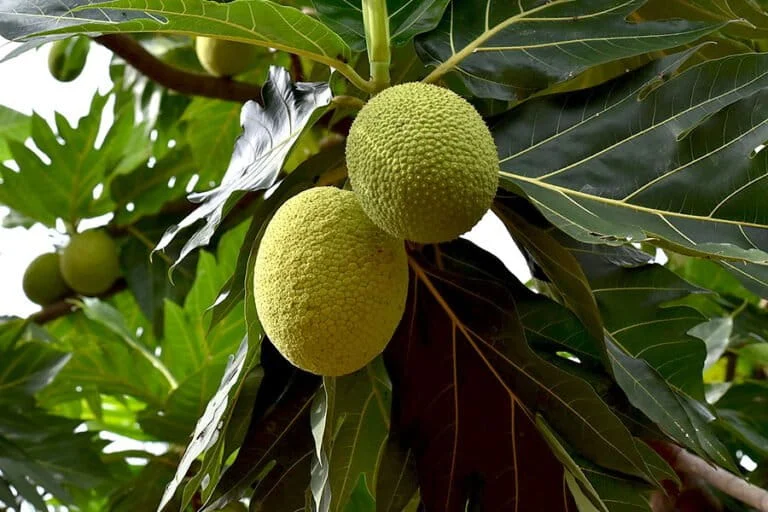
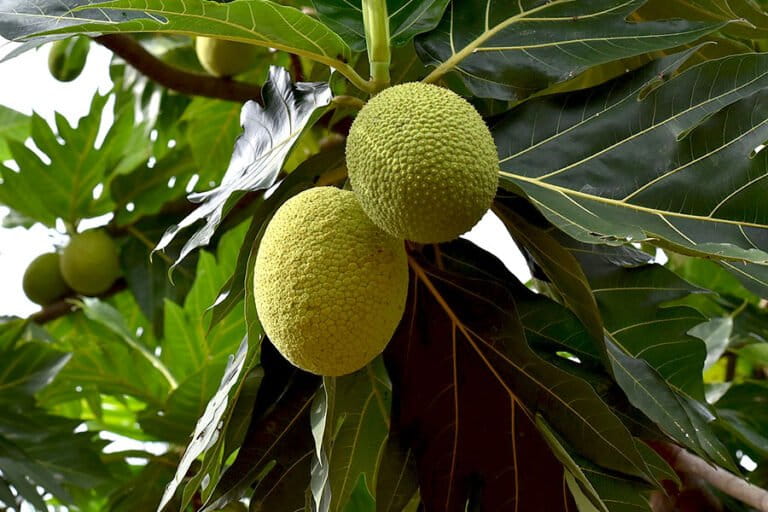
The Ministry of Agriculture has confirmed that as of mid-September, approximately 50,000 hectares of farmland have been devastated by drought. This situation has brought into sharp focus the vulnerability of the country’s food production system—specifically, the over-reliance on water-intensive crops like paddy rice in regions lacking adequate irrigation. In this high-stakes environment, researchers are increasingly turning their gaze toward a promising, yet often overlooked, candidate for climate-resilient agriculture: the breadfruit (Artocarpus altilis).
The Anatomy of a Climate Crisis
The current meteorological data paints a grim picture for Indonesia’s agricultural heartlands. The persistence of the dry season, exacerbated by shifting climate patterns, has pushed farmers to their limits. Rain-fed agricultural lands (lahan tadah hujan), which rely exclusively on seasonal precipitation, are the most heavily impacted. Without access to formal irrigation networks, these areas are effectively defenseless against prolonged dry spells.
The human and economic toll of this drought is substantial. When 50,000 hectares of land fail to produce, it does not merely represent a loss of revenue; it threatens local food security, disrupts supply chains, and places immense pressure on the price of staple commodities. As the crisis deepens, the agricultural community is searching for viable alternatives—crops that can survive, and even thrive, when the skies remain stubbornly clear.
Breadfruit: A Sustainable Solution to Water Scarcity
Amidst the gloom of crop failures, the breadfruit tree has emerged as a beacon of potential. Unlike rice, which requires intensive water management and must be replanted every season, breadfruit is a hardy, perennial tree. Once established, it acts as a permanent fixture in the landscape, capable of producing fruit year after year without the need for constant soil disturbance.
Scientific studies suggest that well-established breadfruit trees exhibit remarkable physiological resilience. Research indicates that these trees can survive periods of drought lasting three to four months. This durability makes them an ideal candidate for reforestation and agroforestry initiatives in regions where water is becoming a luxury. However, researchers caution that this resilience is not a panacea; breadfruit is not a "magic plant" that can survive in any condition, and careful site selection remains critical for success.
Regional Insights: From Maluku to Central Java
The versatility of breadfruit is backed by empirical research conducted across the Indonesian archipelago.
The Kei Kecil Breakthrough
A notable study conducted by researchers at Pattimura University in the Kei Kecil Islands, Southeast Maluku, provides compelling evidence of the tree’s adaptability. Lead researcher Amat Reniwurwarin and his team observed that breadfruit trees in this region continued to thrive despite the onset of a harsh, extended dry season. Their findings conclude that the breadfruit variety in the Kei Islands is inherently tolerant to drought stress, offering a model for how the species adapts to localized climate pressures.
Mapping the Future in Central Java
Complementing the field studies in Maluku, a team from the University of Indonesia has taken a macro-analytical approach, mapping the suitability of land for breadfruit cultivation across Central Java. By utilizing sophisticated climate modeling, the researchers identified that approximately 28.35 percent of the province’s landmass is currently suitable for breadfruit production.
Crucially, the study does not merely look at the present. It incorporates climate change scenarios to project how land suitability will shift in the coming decades. While the results highlight immense potential for diversifying the agricultural output of Central Java, the researchers emphasize that these statistics must be interpreted with nuance. Local soil quality, topography, and existing ecosystem dynamics remain the deciding factors for any successful planting initiative.
Global Perspectives: Resilience in a Changing Climate
The conversation surrounding breadfruit is not confined to Indonesia. A pivotal study published in the journal PLOS Climate has analyzed the potential for breadfruit cultivation on a global scale. The researchers found that the geographic regions suitable for breadfruit cultivation are expected to remain relatively stable, even under severe climate change scenarios.
This stability stands in stark contrast to traditional cereal crops, which are increasingly susceptible to heat stress and unpredictable rainfall. The PLOS Climate study highlights several key advantages of the breadfruit:
- Longevity: A single tree can live and produce fruit for over 50 years, providing a consistent, multi-generational food source.
- Carbon Sequestration: As a perennial tree, breadfruit contributes to carbon capture, helping to mitigate the very climate change that threatens other crops.
- Reduced Labor: Because they do not require annual replanting, breadfruit trees reduce the physical and financial labor burden on farmers.
Integrating Breadfruit into Modern Agroforestry
The potential of breadfruit is best realized when integrated into a diversified agricultural system. Rather than creating vast, water-hungry monocultures, agricultural experts advocate for the inclusion of breadfruit in "mixed gardens" or agroforestry models.
In this system, breadfruit trees grow alongside other indigenous crops, creating a canopy that protects the soil from direct sun exposure and preserves soil moisture. This polyculture approach provides a buffer against total crop failure. If one type of crop suffers due to a specific pest or weather event, the breadfruit remains as a fallback, ensuring that the farmer has a source of nutrition and income.
However, the transition to such systems requires a shift in mindset. It demands that policymakers and farmers move away from the "single-answer" approach—the idea that one crop can solve all of a nation’s hunger problems—and instead embrace a landscape-based approach where crops are selected based on their specific compatibility with the local environment.
Official Responses and Strategic Implications
As the Ministry of Agriculture and other government agencies assess the damages from the 2026 drought, the integration of drought-resistant crops like breadfruit is becoming a policy priority. The current strategy involves:
- Strategic Selection: Government agricultural extensions are beginning to emphasize that breadfruit should be promoted in regions identified by research—such as parts of Central Java and the Maluku islands—where the climate profile matches the tree’s needs.
- Technical Support: Providing farmers with better data regarding soil health and water retention to ensure that breadfruit saplings are planted in environments where they can reach maturity.
- Food Diversification: Aligning with the national goal of reducing dependence on rice, the government is looking at breadfruit as a high-carbohydrate, nutrient-dense substitute that can bolster food security.
Looking Forward: A Balanced Approach
The data is clear: the climate is changing, and the old ways of farming are facing an existential threat. Breadfruit represents a scientifically backed, long-term solution to the challenges posed by drought. Yet, it is not a "plug-and-play" solution.
The successful implementation of breadfruit as a staple crop requires a multifaceted approach:
- Research-Driven Implementation: We must continue to map land suitability with high precision to avoid wasting resources on unsuitable terrain.
- Community Engagement: Farmers must be educated on the management of perennial tree crops, which require different techniques than seasonal crops.
- Economic Incentives: Developing a market for breadfruit products (flour, chips, fresh fruit) is essential to ensure that farmers have a reliable income stream.
In conclusion, as Indonesia navigates the current, severe drought, the breadfruit tree stands as a symbol of endurance. By blending traditional knowledge with modern climate modeling, the nation can build a more resilient food system—one that does not merely survive the dry seasons of the future, but remains productive in spite of them. The path forward is not found in a single seed, but in the intelligent, diversified, and sustainable cultivation of crops that respect the changing nature of our planet.







