BGN Reevaluates Multi-Billion Rupiah Incentive Scheme for ‘Makan Bergizi Gratis’ Program

JAKARTA – The Badan Gizi Nasional (BGN), Indonesia’s newly empowered National Nutrition Agency, is currently undertaking a comprehensive audit of the financial architecture underpinning the government’s flagship Makan Bergizi Gratis (MBG) or Free Nutritious Meal program. At the heart of this review is a controversial incentive scheme that previously promised a daily payment of IDR 6 million to every Satuan Pelayanan Pemenuhan Gizi (SPPG)—the operational kitchen units tasked with distributing meals.
As the agency transitions under new leadership, officials have signaled that the previous administration’s fiscal approach lacked the necessary oversight, fairness, and adherence to principles of good governance.
Main Facts: The IDR 6 Million Daily Incentive Dilemma
The primary point of contention revolves around the calculation method used to determine the financial support provided to kitchen units. Under the previous mandate, each SPPG was entitled to an incentive of IDR 6 million per day.
The crux of the controversy lies in the duration of these payments. The prior calculation mandated that payments be issued for 313 days annually. This figure was derived by taking the 365 days of a calendar year and subtracting only the 52 Sundays. Consequently, the incentive remained active during major national holidays, including Eid al-Fitr, Eid al-Adha, Christmas, and extended school holidays, regardless of whether the kitchens were operational or if students were present to receive the meals.
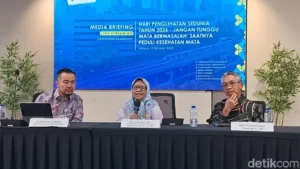
Agustina Arumsari, the Vice Head of the BGN, openly criticized this model during a working meeting with Commission IX of the House of Representatives (DPR RI). She emphasized that the logic of paying for operational costs during periods when schools are closed and no meals are being prepared defies basic fiscal common sense.
Chronology: From Policy Inception to Internal Audit
To understand the current impasse, one must look at the evolution of the MBG program’s administrative structure:
1. The Establishment Phase
When the MBG program was first conceptualized, the government sought to incentivize private sector and institutional partners to take on the massive risk of setting up kitchens. The logic was that partners were responsible for the full spectrum of operations—from initial construction and infrastructure development to the daily procurement of ingredients and staffing. The IDR 6 million daily incentive was positioned as a risk-mitigation tool and a financial safety net to ensure partners remained solvent.
2. The Shift in Leadership
Following a change in the BGN’s leadership, the incoming administration initiated a rigorous review of all existing policies. This was not merely a change in personnel but a shift in fiscal philosophy. The new leadership identified that the rapid, large-scale rollout of the program had left certain contractual obligations "untethered" from actual operational reality.
3. The Parliamentary Scrutiny
In mid-July 2026, the BGN leadership appeared before Commission IX of the DPR RI. The session served as a turning point where the agency publicly admitted that the previous incentive framework required an immediate overhaul to align with state budgetary discipline and good governance.
Supporting Data: Fiscal Efficiency and Operational Realities
The debate over the IDR 6 million incentive is symptomatic of a broader challenge: balancing the massive logistical needs of a nationwide feeding program with the realities of the state budget.
The Mathematics of the Incentive
The previous administration’s insistence on a 313-day payment cycle was based on the premise that fixed costs for kitchen maintenance remain constant. However, the BGN’s current assessment suggests that this approach fails to differentiate between "fixed capital costs" and "variable operational costs."
- Fixed Costs: Depreciation of kitchen equipment, facility rent, and long-term contracts.
- Variable Costs: Ingredients, labor, transportation, and fuel.
The BGN argues that paying a flat rate during periods of zero output (such as long holidays) essentially amounts to a state-funded subsidy for idle assets. From a taxpayer’s perspective, paying for full-scale operations during school closures constitutes a significant fiscal inefficiency.
The Burden of Risk
Proponents of the original incentive structure—largely from the previous leadership—argued that the burden of risk was entirely on the private partners. If a partner builds a kitchen that is only used for 200 days, their ROI (Return on Investment) is diminished. By spreading the incentive over 313 days, the government ensured that partners could recoup their capital investments faster, thereby encouraging more entities to join the program. The current leadership, however, believes this can be achieved through more transparent and performance-based contracts rather than a "blanket" daily payment.
Official Responses: Seeking a Middle Ground
The BGN leadership has been careful to balance criticism of past policies with institutional respect.
"We are not here to dismantle the work of our predecessors, but to refine it," Agustina Arumsari stated. "We respect the decisions made as official agency policy, but as we move forward, we must ensure that every rupiah spent passes the test of good governance and fairness."
Minister of State Secretary Prasetyo Hadi echoed this sentiment, emphasizing the necessity of an accurate fiscal audit. "The process of re-evaluation is aimed at ensuring that the total budget required for the MBG program is calculated with precision. Our goal is to achieve efficiency in state spending without compromising the quality of nutrition provided to the children," Hadi noted.
The government is now moving toward a performance-based model. Under this proposed framework, incentives would be tied more closely to actual meal distribution metrics rather than a static calendar-based payment system.
Implications: The Future of the MBG Program
The fallout of this audit will likely have several long-term implications for the program and the Indonesian government’s fiscal policy:
1. Increased Scrutiny on Public-Private Partnerships (PPP)
The MBG program relies heavily on external partners. If the BGN moves to tighten the incentive structure, some smaller partners may find the margins too thin. This creates a risk: if the incentive is reduced too drastically, the quality of the meals or the willingness of partners to participate could decline. The government must strike a delicate balance between fiscal prudence and maintaining a robust supply chain.
2. Strengthening Oversight
The BGN’s move signals to the public that the government is serious about cleaning up the administrative hurdles that have plagued the MBG program. This builds public trust, which is essential for a program of this magnitude. By demonstrating that they are willing to challenge established, potentially wasteful practices, the BGN is positioning itself as a more accountable institution.
3. Long-term Budgetary Sustainability
The MBG is a multi-year, multi-trillion rupiah commitment. By optimizing the incentive scheme, the government can potentially save billions of rupiah in the long run. These savings could be reallocated toward increasing the nutritional value of the meals, expanding the reach of the program to more remote regions, or upgrading the technology used for monitoring food safety.
4. Setting a Precedent for State Agencies
This case serves as a benchmark for other state-run programs. It highlights the importance of transitioning from "emergency-style" rapid implementation to "sustainability-style" long-term governance. The transition from the previous administration’s "get it done at all costs" approach to the current administration’s "get it done right and efficiently" approach will likely become a recurring theme in national policy discussions.
Conclusion
The reevaluation of the IDR 6 million incentive for SPPG units is more than a technical correction; it is a fundamental shift in how the government handles its most ambitious social welfare project. While the previous incentive structure may have been intended to expedite the program’s rollout, it left the government vulnerable to criticisms of inefficiency.
As the Badan Gizi Nasional continues its audit, the focus will remain on whether they can maintain the pace of the MBG program while trimming the fiscal fat. The success of this transition will define the program’s long-term viability and its ability to deliver on the promise of a better-nourished generation of Indonesians. For now, the agency remains in a "wait and see" mode, recalibrating its instruments to ensure that the path ahead is paved with fiscal responsibility and clear-eyed strategic planning.