
Beyond the Sun: Unraveling the Enigmatic Behavior of the Celebes Black-Tailed Ratsnake
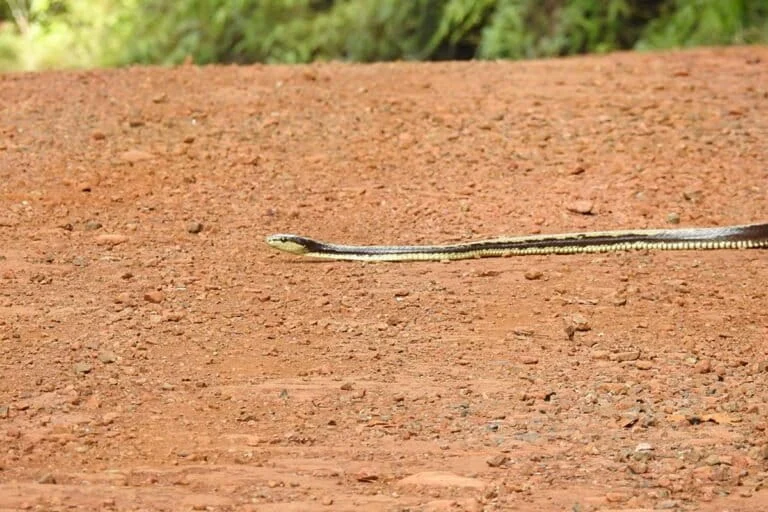
In the rugged landscapes of Morowali, Central Sulawesi, a seemingly routine morning for a biodiversity surveyor turned into a curious case of reptilian behavior. At approximately 9:00 AM local time, Annisa Ramdani, a specialist in biodiversity surveys and a Master’s graduate in Biology from the Universitas Nasional (UNAS), encountered a creature that would spark a broader scientific discussion on the complex lives of cold-blooded animals.
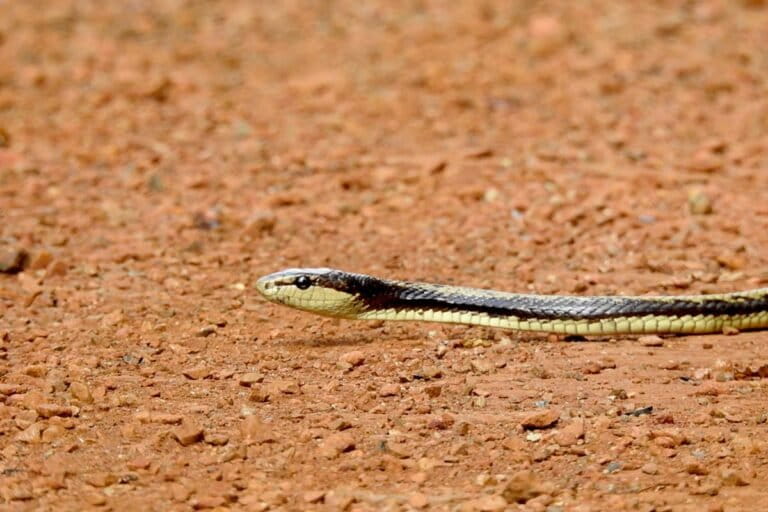
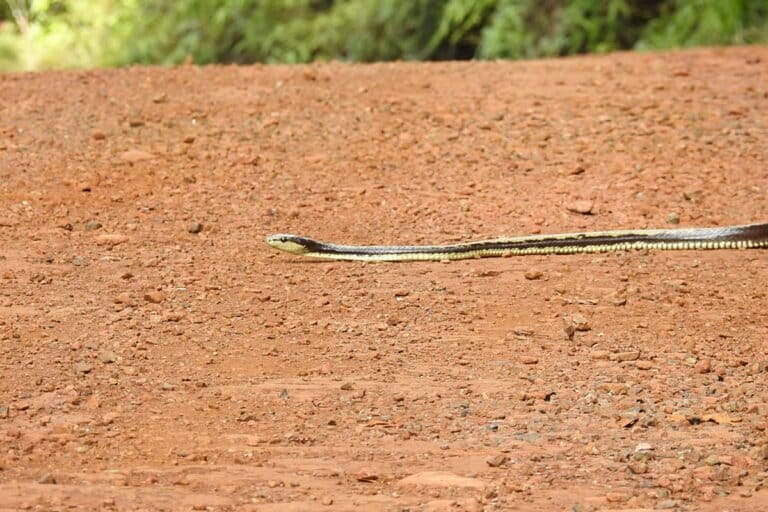
Lying on the asphalt of a road, rather than nestled in its typical arboreal habitat, was a Gonyosoma jansenii, commonly known as the Celebes black-tailed ratsnake. The sight was striking: an animal evolved for life among the branches was caught out in the open, exposed to the intense morning heat. While the immediate assumption—for a layman and even a seasoned researcher—might be that the snake was simply "basking," the reality of reptilian physiology and ecological adaptation suggests a much more nuanced narrative.
A Chance Encounter in Morowali
The encounter occurred during a field survey aimed at documenting the rich biodiversity of the Central Sulawesi region. For Ramdani, such sightings are never merely incidental; they are vital data points that contribute to a larger map of species distribution and environmental health.
"It looked as though the snake was basking," Ramdani noted during an interview in late September 2026. However, her professional training immediately flagged an anomaly. Gonyosoma jansenii is widely recognized by herpetologists as an arboreal specialist. Its physiology and behavior are fine-tuned for navigating foliage, hunting in trees, and utilizing canopy cover for camouflage and safety. Finding one sprawled across a road—a stark departure from its ecological niche—raised questions: Was this a desperate attempt to regulate its body temperature, or was there an underlying ecological stressor forcing this rare snake into such a vulnerable position?
The Science of Thermoregulation: More Than Just "Sunbathing"
To understand why the Celebes black-tailed ratsnake might be found on a hot road, one must first look at the science of ectothermy. Unlike mammals, which generate internal body heat through metabolism, snakes rely on their environment to regulate their physiological processes. This is known as behavioral thermoregulation.
Basking is often simplified as the act of lying in the sun, but in ecological terms, it is a sophisticated survival strategy. A 2024 study published in Global Ecology and Biogeography by Dubiner et al. provides a comprehensive framework for this behavior. By analyzing over 20,000 individuals across 210 species in 25 countries, the researchers demonstrated that a reptile’s body temperature is not merely a product of direct sunlight, but a complex interaction between ambient air temperature, substrate temperature, and the animal’s own behavioral choices.
The ground—or in this case, the road—acts as a thermal battery. Asphalt, having high thermal mass, absorbs solar radiation and re-radiates it, creating a microhabitat that can be significantly warmer than the surrounding vegetation. If the snake was indeed basking, it may have been seeking the thermal energy stored in the substrate to speed up its digestion or prepare for reproductive cycles. However, this strategy comes at a high cost: exposure to predators and human-related hazards.
Chronology of the Observation
- 09:00 WITA: Annisa Ramdani observes the Gonyosoma jansenii on a road in Morowali, Central Sulawesi, while en route to a biodiversity survey site.
- Initial Assessment: The researcher notes the snake’s position and behavior, identifying it as a potential case of basking in the morning sun.
- Documentation: Realizing the significance of the sighting, Ramdani records visual data of the snake, noting its position in an open, non-vegetated area.
- Reflection: Post-observation, the discrepancy between the snake’s natural arboreal habits and its terrestrial location becomes a subject of professional inquiry.
- Expert Consultation: The observation is shared with researchers to determine if this behavior is anomalous or indicative of broader environmental changes in the region.
Expert Perspectives: Deciphering the Behavior
The incident in Morowali has prompted a dialogue among experts regarding the reliability of interpreting such sightings. Maula Haqul Dafa, a researcher and skills trainer at the Sioux Ular Indonesia Foundation, cautions against hasty conclusions.
"You cannot simply conclude that it is basking based on a single snapshot," Dafa explains. "We have to consider the environmental context and the snake’s activity prior to being spotted."
Dafa emphasizes that for a species like Gonyosoma jansenii, which is inherently arboreal, being on the ground is a significant behavioral deviation. "Usually, they are not on the ground," he asserts. Dafa suggests that the snake might have been in the middle of a transition—moving between foraging grounds or reacting to a disturbance in its canopy habitat.
Furthermore, the identification of the species itself requires precision. While visual identification is a starting point, individual variations in coloration—often seen in snakes—can lead to confusion. Dafa points out that definitive identification of such rare or under-studied species often requires rigorous morphological examination, such as scale counting, to ensure the specimen is indeed Gonyosoma jansenii.
The Knowledge Gap: The Mystery of the Celebes Ratsnake
The difficulty in interpreting this single encounter highlights a broader issue: the scarcity of scientific data on the Celebes black-tailed ratsnake. Ganjar Cahyadi, a curator at the Museum Zoologi, Institut Teknologi Bandung (ITB), notes that Gonyosoma jansenii remains one of the more elusive species in terms of comprehensive ecological study.
The lack of longitudinal data makes it challenging for scientists to determine whether such sightings are increasing due to habitat fragmentation, climate-driven behavioral shifts, or simply increased human presence in previously undisturbed areas.
In Indonesia, studies like the one conducted by Sepsamli and Hidayat (2026) in the Hutan Kemuning, Central Java, have begun to shed light on how seasonal changes impact reptile communities. Their research underscores that microclimates—the specific temperature and humidity conditions in a tiny, localized area—dictate when a snake will be active and when it will retreat. If the climate in Morowali is experiencing shifts in humidity or ambient temperature, the snakes may be forced to abandon their traditional niches to find the specific thermal conditions they require to survive.
Broader Implications: Biodiversity and Habitat Connectivity
The presence of a snake on a road is not just an individual anomaly; it is a signal of the intersection between wildlife and human infrastructure. As roads carve through once-continuous forests, animals are increasingly forced to cross open, dangerous terrain.
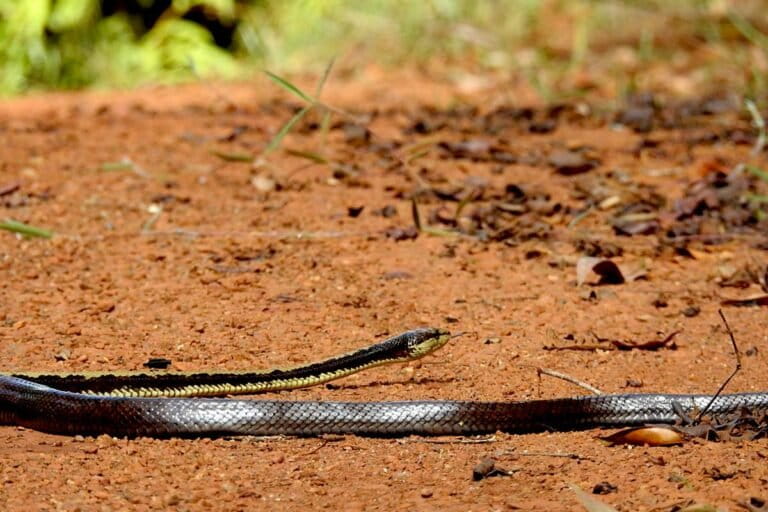
For an arboreal snake, a road is a death trap. It is a surface that lacks the protective cover of leaves and branches, leaving the animal exposed to vehicles and predators. The fact that the snake was found on the road raises urgent questions about the impact of road development on the connectivity of the Celebes habitat. If these snakes are being forced to the ground to thermoregulate or migrate, the survival rate of the population could be under threat.
Furthermore, the documentation by researchers like Ramdani is crucial for conservation. Without these ground-level observations, the scientific community would remain blind to the daily struggles of these species. Each image captured and each location recorded provides a piece of the puzzle that helps conservationists lobby for better wildlife corridors and more thoughtful infrastructure development.
Conclusion: A Call for Continued Vigilance
The encounter in Morowali serves as a poignant reminder that nature is often more complex than our standard textbooks suggest. While the temptation to categorize the snake’s behavior as "basking" is high, the reality likely involves a blend of physiological necessity, environmental pressure, and perhaps even the unintended consequences of human encroachment on natural habitats.
As researchers like Annisa Ramdani and experts like Maula Haqul Dafa continue to study the reptilian inhabitants of Indonesia, the focus must shift toward a deeper, more systematic understanding of these creatures. We are only beginning to scratch the surface of how species like Gonyosoma jansenii adapt to a rapidly changing world. The path forward requires not just observation, but a concerted effort to protect the microhabitats that these animals depend on—whether they are high in the canopy or, occasionally, crossing the paths we build through their homes.
References
- Dubiner, S., et al. (2024). A global analysis of field body temperatures of active squamates in relation to climate and behaviour. Global Ecology and Biogeography, 33(4), e13808.
- Sepsamli, L., & Hidayat, I. (2026). Variasi musiman komunitas reptil di Hutan Kemuning, Jawa Tengah. Jurnal Hutan Tropika, 21(1).







