
The Silent Crisis: Indonesia Faces Record-Breaking Malaria Surge Amidst Climate Instability
Introduction: A Public Health Emergency
In a concerning development for Southeast Asia’s largest economy, Indonesia is grappling with an unprecedented surge in malaria cases. According to data released by the Indonesian Ministry of Health, the nation has witnessed a staggering 69% increase in malaria infections over the past two years. Between 2023 and 2025, the number of confirmed cases climbed from 418,546 to 706,297—a figure that marks the highest incidence rate in the country’s recorded history.
This alarming trajectory has prompted urgent calls for a paradigm shift in how the nation manages vector-borne diseases. As the climate becomes increasingly erratic, the nexus between environmental shifts, urbanization, and public health has moved to the forefront of national discourse. A groundbreaking study published in the prestigious journal Science Advances (2026) highlights that the battle against malaria and dengue fever (DBD) can no longer be fought in isolation; it requires a holistic approach that integrates ecological management, advanced medical interventions, and robust climate policy.
The Chronology of an Escalating Crisis
To understand the current situation, one must look at the recent timeline of disease prevalence in the archipelago. For much of the last century, Indonesia had been on a promising path toward malaria elimination. Through sustained investments in medical infrastructure and mosquito control, the country successfully reduced its malaria burden, bringing hope that the disease could be eradicated in high-risk zones.
However, the period between 2023 and 2025 shattered these expectations. The rapid rise from roughly 418,000 cases to over 706,000 represents a systemic failure to account for the accelerating pace of environmental change.
While malaria was once contained, the emergence of the 2023-2025 spike coincides with more frequent and intense climate phenomena. Experts point out that the influence of climate change on disease transmission is non-linear. It is not merely a matter of rising temperatures; it is about the shifting patterns of rainfall and humidity that create "Goldilocks zones" for mosquitoes—environments that are perfectly suited for the breeding cycles of both Anopheles (malaria-carrying) and Aedes (dengue-carrying) mosquitoes.
Scientific Insights: The Monash University Findings
The study published in Science Advances by researchers from Monash University provides the most comprehensive analysis of this crisis to date. The research team, led by Toby Cumming from the Health and Climate Initiative at the Monash School of Public Health and Preventive Medicine, examined the intricate interplay between ecology, epidemiology, and socioeconomic conditions.
The Climate-Vector Nexus
"Climate change is driving a rise in temperatures and shifting rainfall patterns, which are expanding the geographical range where Anopheles and Aedes mosquito populations can thrive," says Cumming.
The research underscores that while malaria and dengue are both vector-borne, their ecological drivers differ. Malaria transmission, which had been in decline for decades, is now being reinvigorated by environmental shifts that push mosquitoes into new, previously temperate altitudes. Conversely, dengue fever is being exacerbated by a different set of variables, primarily rapid and unplanned urban growth.
The Urbanization Factor
Associate Professor Henry Surendra, representing Monash University Indonesia, highlights a critical disparity in how these diseases manifest. "Effective mosquito control and medical therapies were once sufficient to drive down malaria," notes Surendra. "However, the modern challenge is dengue. Rapid urbanization creates dense pockets of human activity where Aedes mosquitoes flourish. Unlike malaria, which has well-established treatments, dengue remains a complex challenge without a specific, universally accessible ‘cure,’ placing a heavy burden on healthcare systems."
Supporting Data and Regional Vulnerabilities
The current crisis is not uniform; its intensity varies significantly across Indonesia’s diverse geography. The research team is currently conducting granular investigations in East Kalimantan, a region characterized by its high biodiversity and ongoing land-use changes.
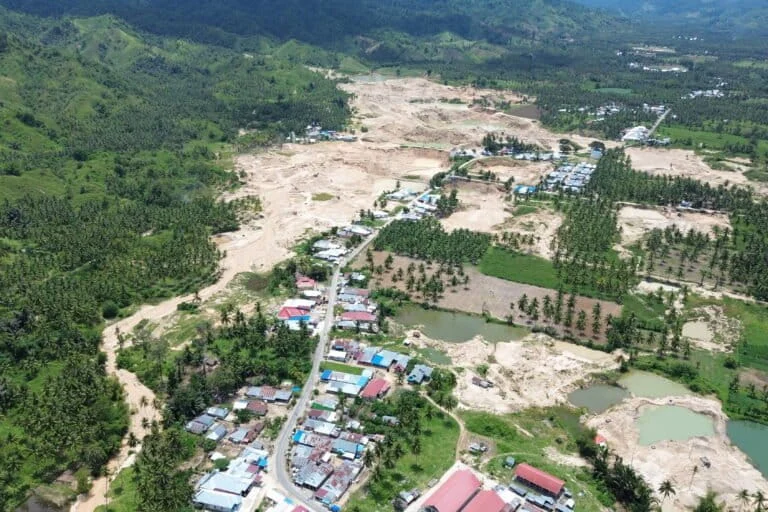
In these regions, the intersection of deforestation, illegal mining—which often leaves behind stagnant water pits—and changing weather patterns creates a perfect storm. The photograph accompanying the research highlights the reality on the ground: malaria outbreaks are frequently concentrated in settlements adjacent to illegal gold mining sites. These sites act as incubators for mosquito larvae, demonstrating that the disease is not just a biological issue, but one deeply rooted in land management and environmental law enforcement.
Globally, the situation is equally grim. Cumming warns against complacency, noting that global malaria cases have risen by 8.5% over the last decade. This is not merely an Indonesian phenomenon but a global resurgence that demands a synchronized international response.
Official Responses and Strategic Interventions
The Indonesian Ministry of Health, in partnership with academic institutions like Monash University, is currently scaling up its response. The strategy is twofold: aggressive vector control and the deployment of cutting-edge biotechnology.
The Wolbachia Initiative
One of the most promising avenues for controlling dengue is the implementation of Wolbachia-infected mosquitoes. By introducing this naturally occurring bacterium into the Aedes population, the mosquitoes’ ability to transmit the dengue virus is significantly reduced. This biological intervention is seen as a major milestone in modern public health, shifting the strategy from reactive insecticide spraying to proactive ecological engineering.
Integrated Policy Approaches
The government is now moving toward a multi-sectoral approach that includes:
- Climate-Adaptive Health Systems: Integrating meteorological data into public health warnings to predict outbreaks before they peak.
- Environmental Remediation: Stricter regulation of land use, particularly in mining and agricultural sectors, to eliminate artificial breeding grounds.
- Enhanced Surveillance: Strengthening the reporting mechanisms at the village and district levels to ensure that early warning signs of a spike are met with immediate local action.
Implications for the Future
The 69% surge in malaria cases serves as a sobering reminder of the "hidden costs" of climate change. Public health is inextricably linked to the health of the ecosystem. If Indonesia is to reverse this trend, it must move beyond traditional health interventions and adopt a "One Health" approach—an integrated effort that recognizes the health of people is connected to the health of animals and the environment.
The Necessity of Global Cooperation
The research emphasizes that curbing these diseases requires a coordinated effort to reduce greenhouse gas emissions. As long as the climate continues to shift, the habitable range for vectors will continue to expand. The "non-linear" nature of this threat means that even small changes in global temperature can lead to exponential increases in disease transmission.
A Call to Action
As Toby Cumming succinctly puts it: "We must increase our prevention and mitigation efforts." This means:
- Continued Funding: Sustained financial support for research into vaccines and vector-control technologies.
- Infrastructure Investment: Improving drainage and sanitation in rapidly growing urban centers to deprive mosquitoes of breeding habitats.
- Community Engagement: Empowering local communities to take ownership of their immediate environment, such as eliminating stagnant water and participating in vaccination drives.
Conclusion
The record-breaking rise in malaria cases in Indonesia is a wake-up call for the global community. It highlights the fragility of hard-won public health gains in the face of a changing climate. While the challenges are immense—ranging from the complexities of urban development to the unpredictable nature of ecological shifts—the path forward is clear.
By combining rigorous scientific research, innovative biotechnological interventions like Wolbachia, and a steadfast commitment to environmental policy, Indonesia can hope to stem the tide of this outbreak. However, success will depend on the ability of policymakers, scientists, and the public to work in concert, recognizing that in the fight against vector-borne diseases, the environment is the most important player of all.
As we look toward the remainder of the decade, the lessons learned in the jungles of Kalimantan and the laboratories of Monash will prove vital not only for Indonesia but for every nation struggling to keep the ancient threat of malaria and the modern scourge of dengue at bay. The time for reactive measures has passed; the era of proactive, climate-informed public health must begin.







