
Beyond Restoration: The Fragile Resilience of Indonesia’s Mangroves and Peatlands
Introduction: The Myth of Automatic Recovery
In the coastal fringes of East Lampung, a silent tragedy is unfolding. Mangrove forests that had once staged a remarkable natural comeback are now succumbing to mass mortality—a phenomenon known as dieback. This ecological collapse in a region once heralded as a success story for coastal recovery serves as a sobering reminder: nature’s capacity to heal is not infinite, and our reliance on "natural restoration" may be built on shifting sands.
As the world gathers for the 17th Conference of the Parties (COP17) to the Convention on Biological Diversity (CBD) in October 2026, global attention is fixed on the Kunming-Montreal Global Biodiversity Framework. The target is ambitious: at least 30% of degraded ecosystems must be under effective restoration by 2030. Yet, the reality on the ground in Indonesia suggests that simply leaving nature alone or planting trees is insufficient if we do not account for the compounding pressures of climate change and environmental mismanagement.
Chronology of a Coastal Crisis: From Prosperity to Decay
The history of the Muara Sekampung Protected Forest is a microcosm of Indonesia’s struggle to balance economic development with ecological preservation.
In the 1990s, the region was decimated by rapid aquaculture expansion and the subsequent loss of protective mangrove buffers. The result was catastrophic: severe erosion and tidal flooding that washed away not only shrimp farms but entire coastal settlements. For years, the land remained scarred and vulnerable.
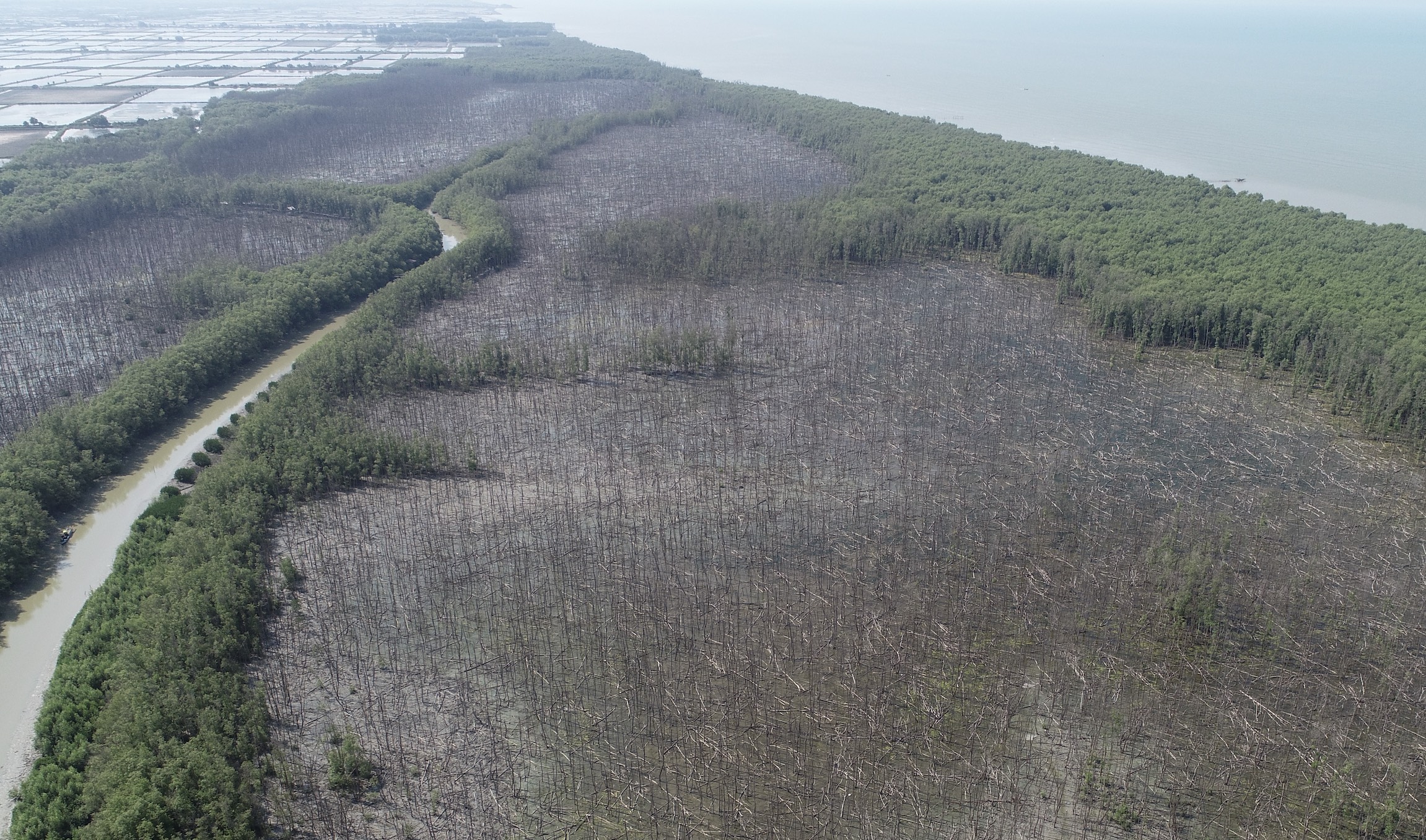
However, around 2007, a glimmer of hope emerged. Without significant human intervention, Avicennia mangrove species began to reclaim the coastline. By the mid-2010s, roughly 500 hectares of lush, green canopy had returned, stabilizing the soil and providing a nursery for marine life. But this recovery was short-lived. In recent years, researchers have observed a disturbing trend of mass mortality. The trees are standing, but they are dead. This dieback has prompted urgent inquiries: Is the environment in the region changing so rapidly that the very species that once thrived there can no longer survive?
Scientific Investigation: The "Living Laboratory" Approach
To solve this puzzle, researchers at the IPB University’s Centre for Applied Research in Nature-based Solutions (I-CAN) have initiated a "Living Laboratory" project. By studying both the mangrove systems in Lampung and the peatlands in Jambi, they are attempting to quantify the limits of ecosystem resilience.
The findings in East Lampung are complex. It is not a single factor killing the mangroves, but a synergistic cocktail of environmental stressors. First, massive sedimentation has altered the topography and the hydrology of the area, changing how water moves through the root systems. Second, the increasing frequency and intensity of global climate oscillations—specifically the El Niño–Southern Oscillation (ENSO) and the Indian Ocean Dipole (IOD)—have caused erratic rainfall patterns.
When the land remains flooded for too long, the mangrove roots are suffocated by a lack of oxygen. Conversely, when the land dries out, the oxidation of pyrite in the soil leads to extreme acidification, creating a toxic environment that stunts and kills the flora.
The Peatland Paradox: Jambi’s Cycle of Fire
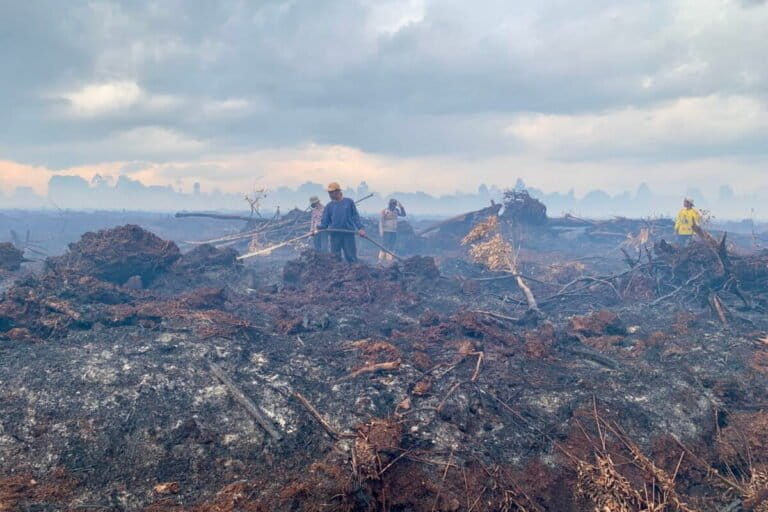
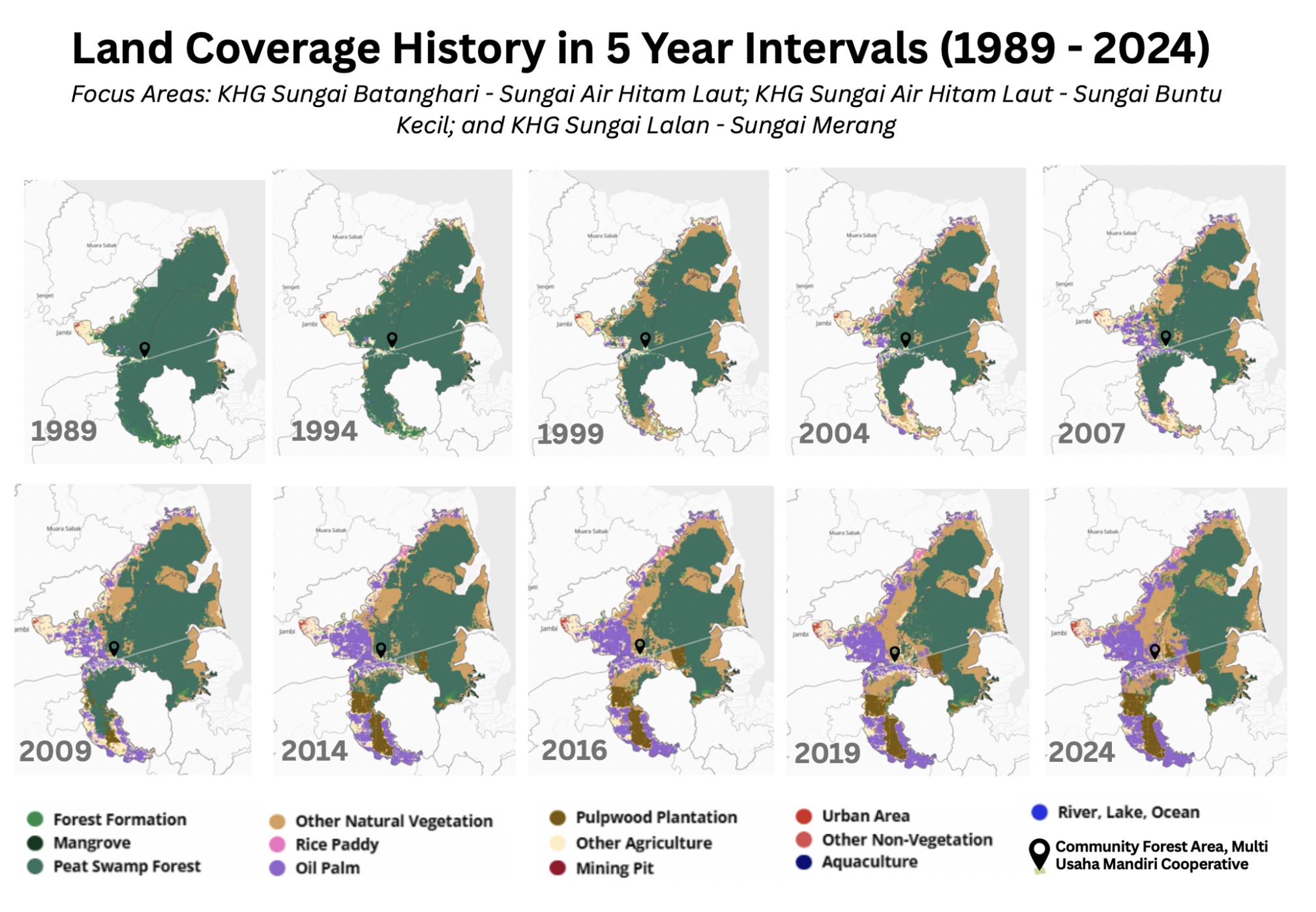
While Lampung’s mangroves are drowning in a changing hydrological cycle, the peatlands of Sungai Gelam, Jambi, face a different, more fiery adversary. This region has been plagued by recurring forest and peatland fires in 2019, 2023, and 2026.
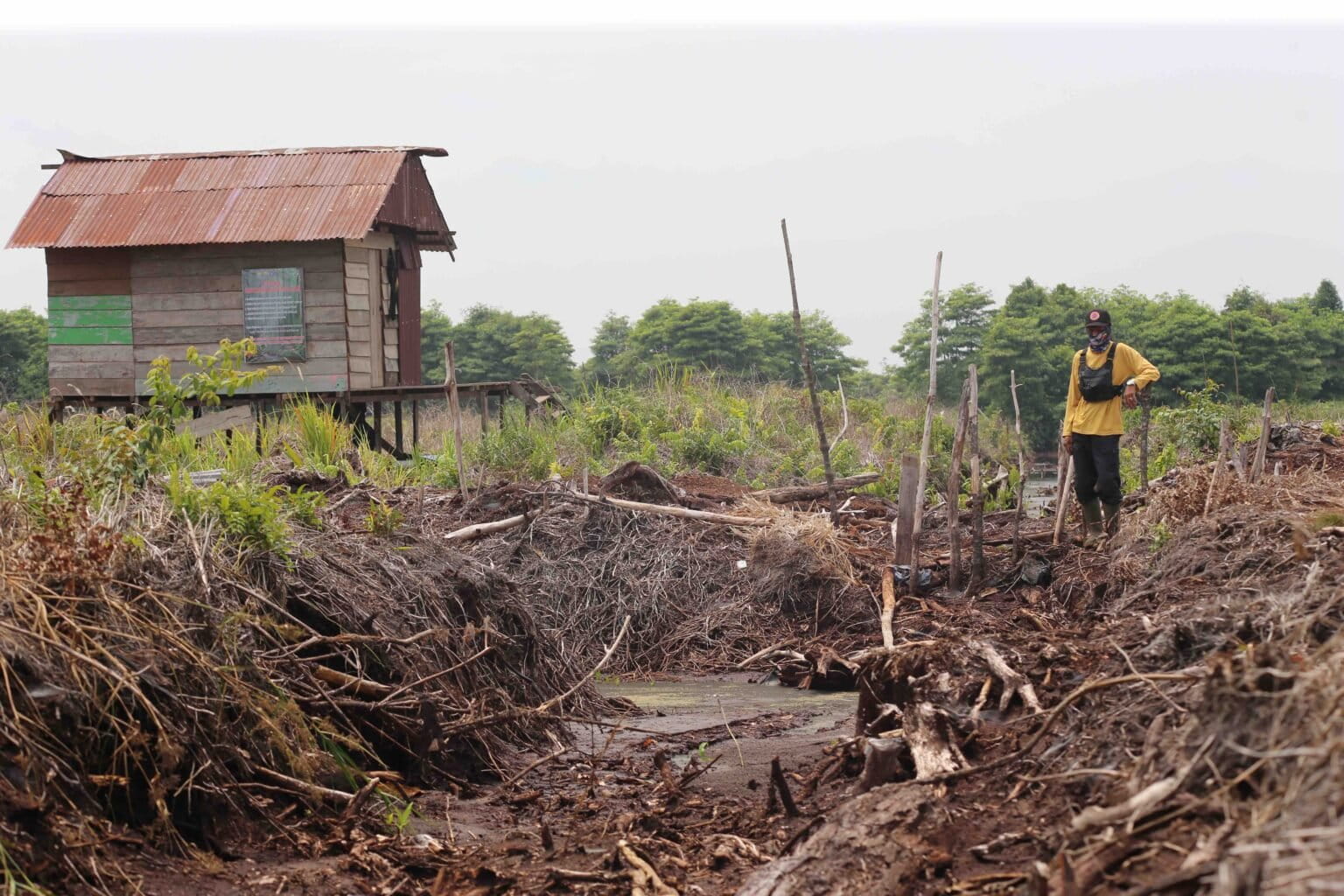
The fundamental issue in Jambi is the drainage of deep peat landscapes via large canals, usually dug to facilitate palm oil plantations. Once the water table drops, the dry peat becomes a tinderbox. However, the I-CAN researchers discovered something surprising: beneath the blackened surface of the fire-scarred landscape, life persists.
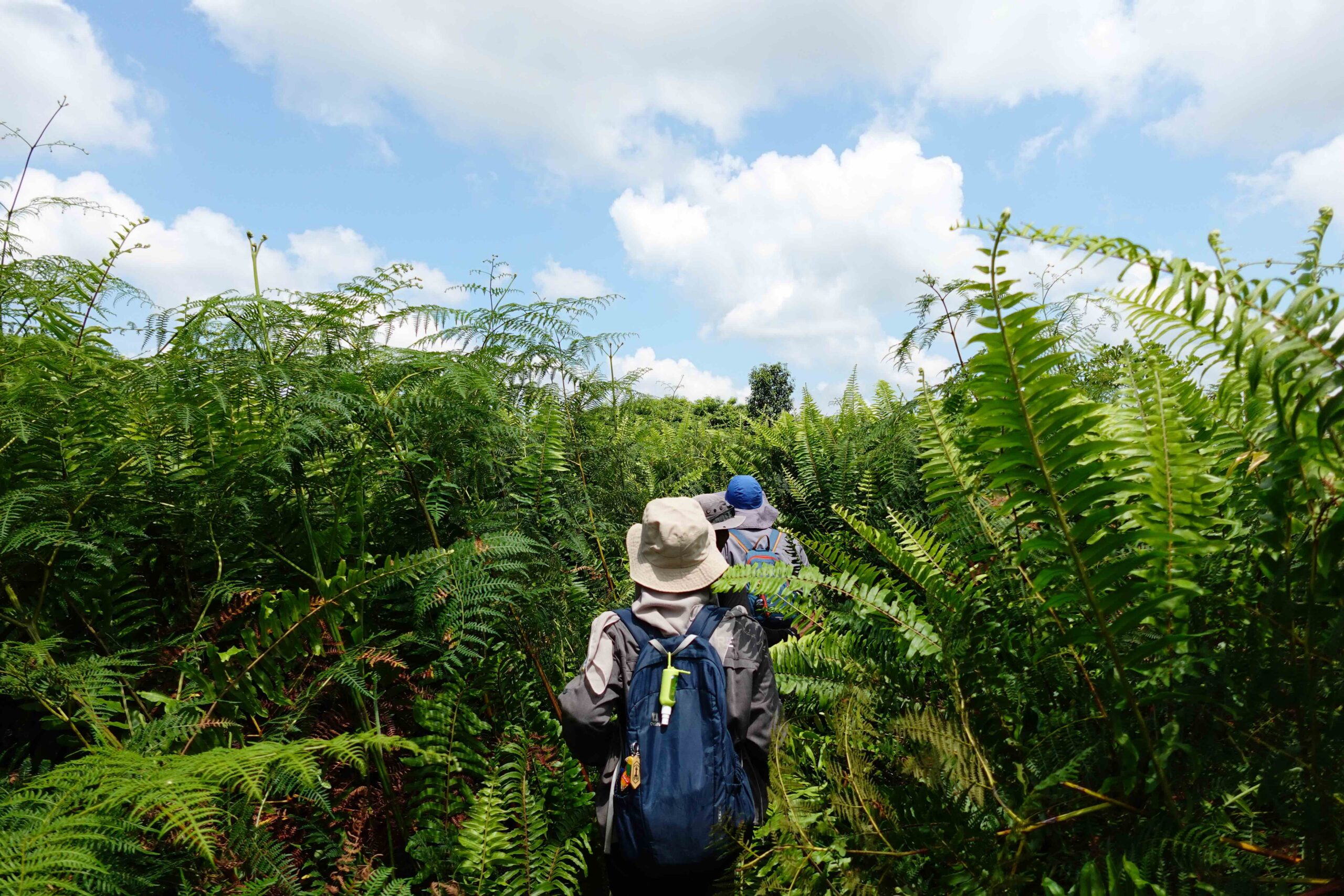
Studies revealed the presence of arbuscular mycorrhizal fungal spores up to 90 centimeters deep. These fungi, which exist in symbiosis with plant roots, are the "hidden architects" of forest recovery. Furthermore, the remaining patches of forest continue to support at least 22 species of birds, including the majestic Crested Serpent Eagle (Spilornis cheela). Local reports even suggest that the area serves as a transit corridor for the critically endangered Sumatran Tiger.
Socio-Economic Implications: The Human Factor
Restoration is as much a human challenge as it is a biological one. In Pangkal Babu, Jambi, the restoration of mangroves has been linked to economic prosperity. Ecotourism in the area generated over Rp70 million in 2024 and nearly Rp85 million in the first seven months of 2025 alone. This proves that a healthy, restored ecosystem can be a direct driver of local livelihoods.
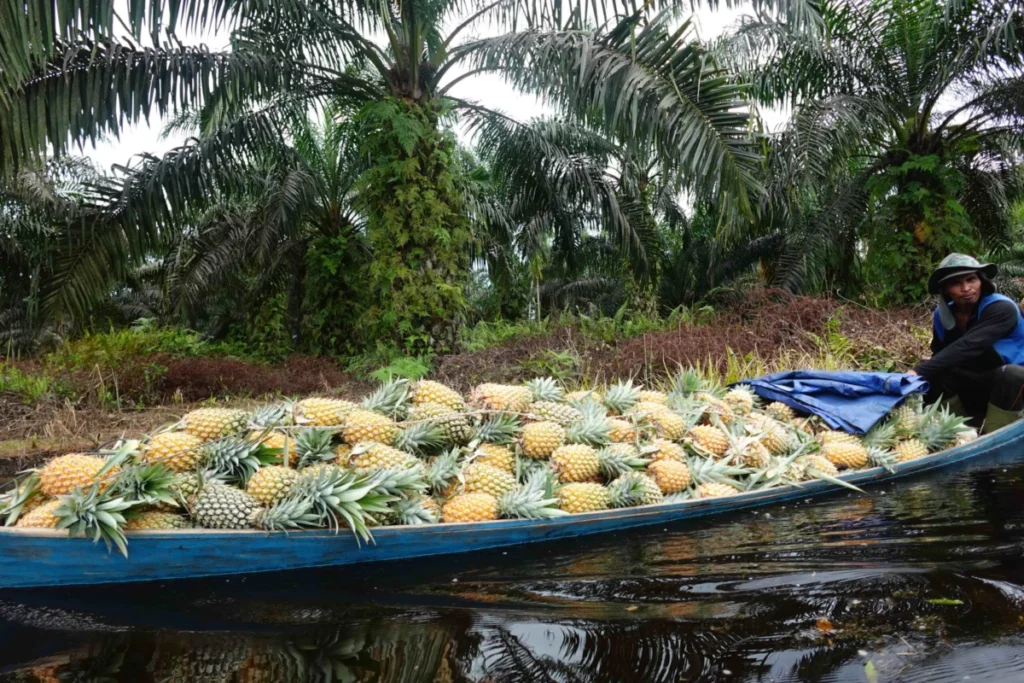
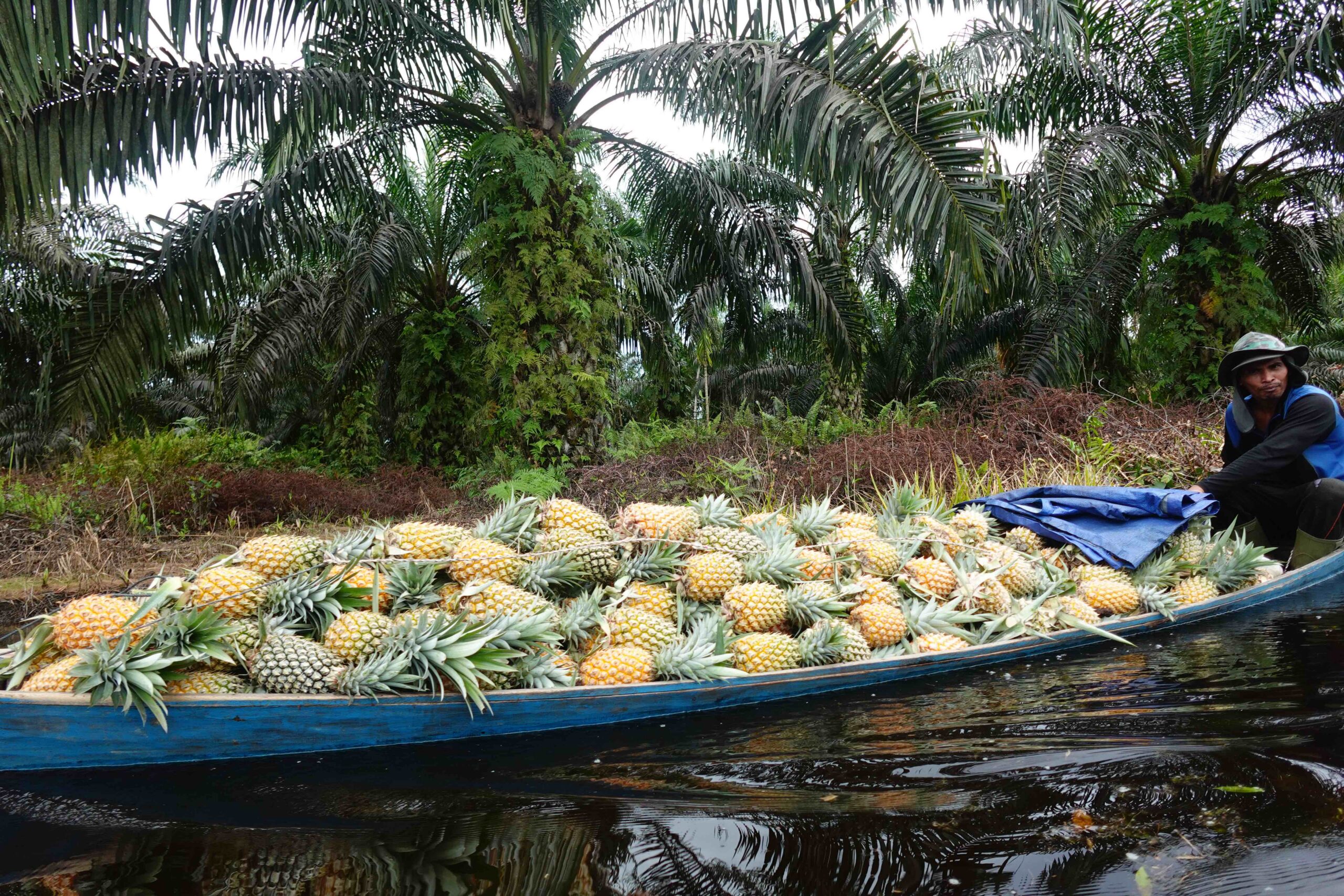
However, the situation in Sungai Gelam is more precarious. With communities heavily dependent on palm oil, the transition to sustainable agroforestry—integrating native species like Jelutung and Pulai with economic crops like Liberica coffee and pineapple—is a delicate balancing act. While local women have been trained in pineapple processing, they lack the necessary infrastructure to scale production.
The I-CAN project emphasizes that if communities do not have viable, sustainable income streams, they will inevitably return to practices that degrade the land further. Restoration, therefore, cannot be a top-down mandate; it must be an economic incentive that rewards stewardship over exploitation.
The Limits of Resilience
The central question posed by the researchers at I-CAN is: At what point does an ecosystem pass the point of no return?
Ecological resilience is the capacity of a system to absorb disturbance and still retain its basic function. Yet, every system has a "tipping point." When fires, drainage, and climate variability occur with such frequency that the biological memory of the land is erased, the ecosystem shifts into a new, degraded state.
In Lampung, the mangroves are showing signs of reaching this threshold. In Jambi, the presence of resilient fungi and wildlife provides a buffer, but it is not a guarantee of long-term survival. Without rigorous, long-term monitoring of water tables, soil acidity, and faunal diversity, we are essentially flying blind.
Policy and Global Perspectives: Beyond "Number of Trees"
The international community’s focus on quantitative targets—such as the number of hectares restored or the number of saplings planted—is a double-edged sword. It encourages action, but it often ignores the quality of that action.
The experiences in Indonesia suggest a paradigm shift is required:
- Explore before you restore: Before planting, we must understand the historical and current hydrological state of the site. Planting mangroves in an area where sediment buildup has rendered the soil toxic is a waste of resources.
- Investment in local agency: Restoration is a long-term commitment. Local communities are the only ones capable of the day-to-day management required to prevent fires and monitor water levels.
- Complexity thinking: Policy must move away from linear, "one-size-fits-all" restoration models and embrace the complex, site-specific realities of tropical ecosystems.
Conclusion: A Call for Adaptive Management
As the world prepares to report on the progress of the Kunming-Montreal Global Biodiversity Framework, the lessons from Indonesia are clear. We must stop measuring success solely by the surface area of green space. True restoration success is defined by the endurance of the ecosystem against a changing climate and the stability of the communities that rely upon it.
The mangroves of East Lampung and the peatlands of Jambi are currently testing the limits of nature’s endurance. Whether they continue to provide habitat for migratory birds and livelihoods for local families depends on our ability to shift from passive restoration to active, adaptive management. We are not just planting trees; we are managing the future of our biosphere. If we continue to ignore the warning signs—the mass dieback, the recurring fires, and the changing water tables—we risk losing not just the forests, but the very resilience that sustains life on Earth.
References
- Maes, S. L., et al. (2024). Explore before you restore: Incorporating complex systems thinking in ecosystem restoration. Journal of Applied Ecology.
- IPCC (2022). Climate Change 2022: Impacts, Adaptation and Vulnerability. Working Group II.
- CBD (2022). Kunming-Montreal Global Biodiversity Framework, Target 2.
- Permana, R. D., et al. (2025). Oceanic index variability and its role in mangrove dieback events in East Lampung. BIO Web of Conferences.
- Nurrochmat, D. R., et al. (2022). Making sustainable forest development work: Formulating an idea for a more appropriate green policy paradigm. Frontiers in Environmental Science.







