Masters of Camouflage: Unveiling the Secrets of Trimeresurus insularis in the Forests of Sumbawa
By Environmental Desk
Deep within the lush, humid corridors of the Tatar Sepang conservation area in West Sumbawa, Nusa Tenggara Barat, the line between predator and environment blurs into near-invisibility. For the casual observer, a rock sitting by a quiet stream is just a rock. But for a trained herpetologist, that same rock may harbor one of Indonesia’s most fascinating, albeit misunderstood, inhabitants: the Trimeresurus insularis, or the Island Pit Viper.
The recent documentation of this species by biodiversity surveyor Annisa Ramdani (29) has provided fresh insights into the ecological health of the Sumbawa wilderness. As the world grapples with biodiversity loss, field observations of such specialized reptiles serve as a vital pulse check on the integrity of our remaining forest ecosystems.
The Art of Stealth: A Chronology of Discovery
The discovery occurred at approximately 9:00 PM on a humid night, shortly after a tropical rain shower had refreshed the forest floor. Annisa, an alumna of the Master of Biology program at the Universitas Nasional (UNAS), was leading a herpetofauna survey team through the dense vegetation of Tatar Sepang.
The humid conditions were ideal for nocturnal reptilian activity. As the team navigated the riparian zone—a critical habitat for many species—the environment seemed silent, yet teeming with life. The team’s first encounter was almost accidental.
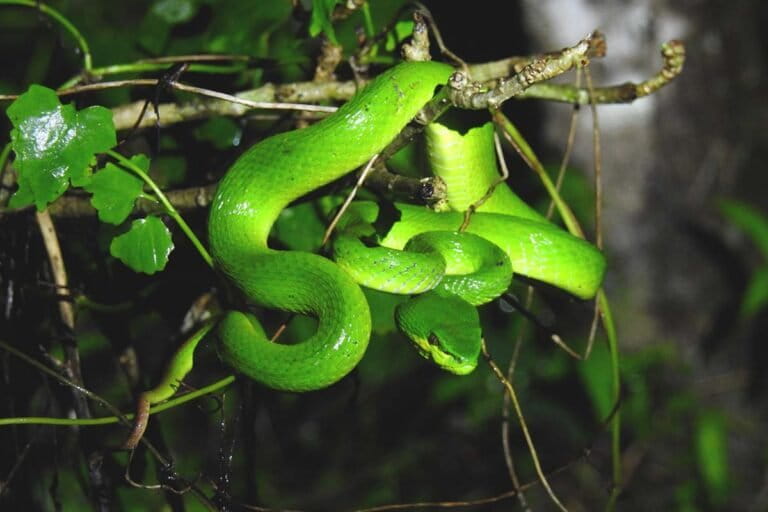
"At first, we were completely unaware that the snake was resting right there on the rock," Annisa recounted on July 20, 2026.
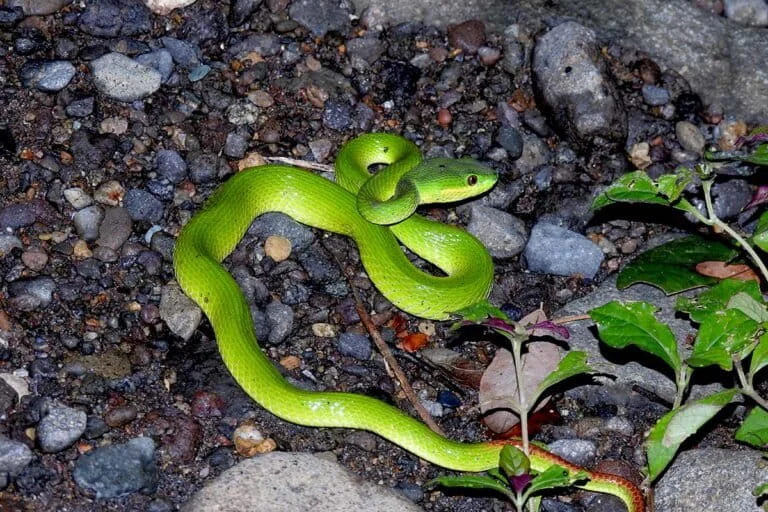
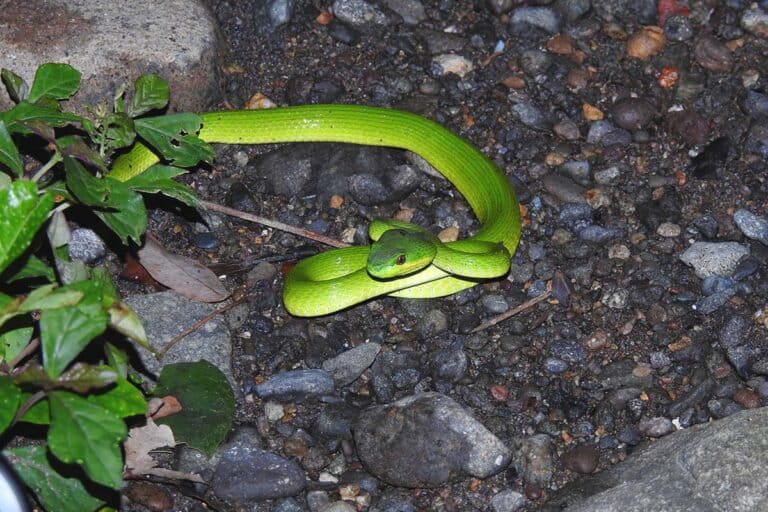
The individual was spotted roughly 100 to 200 meters from the stream. The snake’s vibrant green scales, perfectly adapted to the mossy, leaf-strewn forest floor, rendered it nearly invisible. It was only through the sharp, practiced eye of the researchers that the predator was unmasked.
Thirty minutes later, the team encountered a second individual, this time closer to the water’s edge. Despite her extensive experience in biodiversity surveying, Annisa admitted to a surge of adrenaline. Encountering a venomous snake in the wild is a humbling experience that demands absolute focus. Following strict safety protocols, the team opted to document the animals from a safe distance, utilizing high-zoom photography to capture data without disturbing the natural behavior of the vipers.
Decoding the Trimeresurus insularis
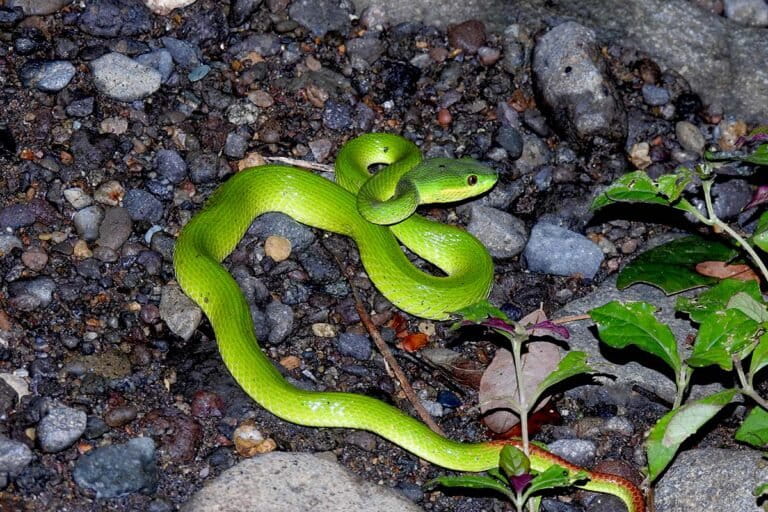
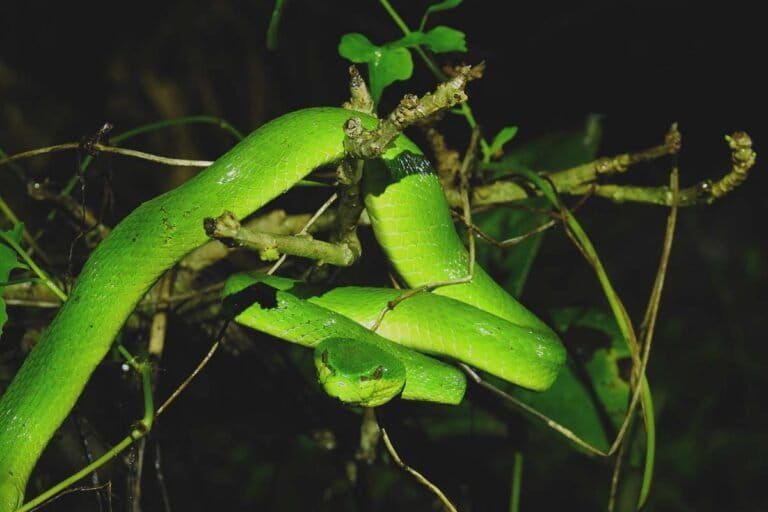
The Island Pit Viper, Trimeresurus insularis, is a masterclass in evolutionary adaptation. Its primary defense mechanism is its exceptional camouflage, featuring a brilliant lime-green body accented by a subtle, reddish tail tip.
Morphological Identity
To ensure scientific accuracy, the team did not rely solely on visual cues. The identification process involved cross-referencing morphological characteristics—such as scale patterns and head shape—with known distribution data for the Lesser Sunda Islands.
Geographic Distribution and Nomenclature
The name insularis is Latin, signifying "of the islands." This is a nod to its restricted range. Unlike the widespread Trimeresurus albolabris (White-lipped Pit Viper), the T. insularis is predominantly an island-dweller. It is found across East Java, Bali, West Nusa Tenggara (NTB), and East Nusa Tenggara (NTT). Notably, it is absent from the faunal regions of Kalimantan, Sumatra, and western Java, reinforcing its status as a specialized insular species.
Expert Insight: Venom and Ecological Role
While T. insularis is a venomous viper, it is frequently mischaracterized by public fear. Maulana Hakul Dafa, a renowned herpetologist and Skill Trainer for the Research and Development Division of the Sioux Ular Indonesia Foundation, offers a more balanced perspective.
"The fatality rate associated with this species is significantly lower than that of the Cobra (Naja spp.) or the Krait (Bungarus spp.)," Dafa explains. "It is generally estimated at well under 10 percent. However, this is not to imply that their bite is harmless. It is a venomous species, and any contact requires immediate professional medical intervention."
The Predator-Prey Dynamics
Within the trophic web, T. insularis acts as a crucial intermediate predator. Its diet is opportunistic, consisting of small mammals like rodents, birds, amphibians, and lizards. Conversely, they serve as a food source for larger predators, including king cobras, monitor lizards, raptors, and various mammalian carnivores.
"They occupy a middle position in the food chain," says Dafa. "Their presence is an indicator of a functional, balanced ecosystem. If you remove the mid-tier predators, the population of rodents or insects can explode, causing secondary ecological imbalances."
The Mystery of Color Variation
One of the most intriguing aspects of the species is its phenotypic plasticity. While the green variant is the most common in the western part of its range, other populations exhibit stunning variations. In the unique environment of Komodo Island, the snakes appear in a striking blue hue, while populations in Alor and Wetar display a vivid yellow.
Current scientific consensus suggests that these variations are evolutionary responses to localized selective pressures, possibly linked to camouflage against specific rock or vegetation types, or perhaps a form of aposematism—warning signals to potential predators.
Environmental Implications and Conservation Challenges
The survey conducted by Annisa and her team was not merely a biological census; it was a broader inquiry into the health of the Tatar Sepang habitat. The data collected—including species counts, time of observation, and meteorological variables—provides a baseline for future conservation efforts.
The Threat of Habitat Loss
While the current state of the Tatar Sepang conservation area appears relatively intact, Annisa expressed a guarded concern. "If the forest is lost or its function is altered, the population will almost certainly decline," she warned. The viper is highly dependent on a microclimate of high humidity and specific canopy cover; even minor fragmentation of the forest can lead to rapid local extinction.
Human-Wildlife Conflict
During their fieldwork, the team observed local residents engaged in hunting activities. While the target species of these hunters remains unconfirmed, the presence of human interference in the core of a conservation area is a red flag.
"Even if we don’t know exactly what they are hunting, such activities in a protected zone require immediate attention from local authorities," says Annisa. Wildlife trade, particularly for exotic, color-variant specimens, poses a significant threat. Rare, yellow- or blue-tinted T. insularis individuals are highly prized in the illegal pet trade, creating a financial incentive for poachers to target these sensitive populations.
Toward a Sustainable Future
The survival of the Trimeresurus insularis is inextricably linked to the preservation of the Indonesian archipelago’s forest corridors. As urban development and agricultural expansion continue to press against the boundaries of protected areas, the "Island Pit Viper" stands as a silent sentinel of the wild.
The documentation of these snakes in Sumbawa serves as a reminder that biodiversity is not just a collection of species, but a complex web of interactions that sustains the environment we rely on. Effective conservation, as suggested by the researchers, must include:
- Strict Monitoring: Enhanced patrols in conservation areas to deter illegal hunting and habitat encroachment.
- Scientific Education: Bridging the gap between the public’s fear of snakes and the scientific reality of their importance to ecosystem health.
- Habitat Connectivity: Ensuring that conservation areas are not "islands" of protection but are connected to larger forest landscapes, allowing for genetic flow and population stability.
As the sun sets on the Tatar Sepang forest, the Trimeresurus insularis remains, curled upon a moss-covered stone. It is a creature of mystery and beauty, a reminder that in the deep, dark corners of our world, there is still so much to discover—and so much that must be protected.
The work of researchers like Annisa Ramdani and the advocacy of organizations like the Sioux Ular Indonesia Foundation are the first lines of defense in ensuring that these cryptic predators continue to play their part in the intricate theater of nature. The future of the Island Pit Viper is not yet written, but with continued vigilance, it can remain a permanent fixture of the Indonesian wilderness.