Transition in the National Nutrition Agency: Nanik Sudaryati Deyang Steps Down to Prioritize Health
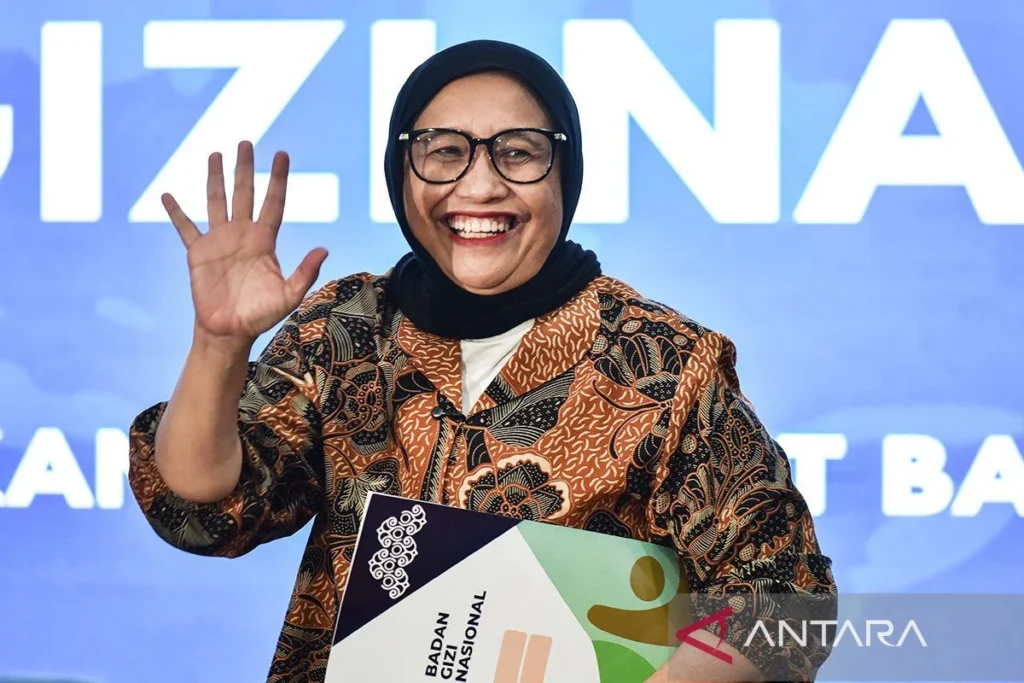
JAKARTA – In a significant administrative development for the Prabowo Subianto administration, the Head of the National Nutrition Agency (BGN), Nanik Sudaryati Deyang, has officially resigned from her position. The decision, which comes just six weeks into her tenure, was conveyed directly to President Prabowo Subianto on Wednesday, marking a poignant transition for one of the government’s most critical social welfare initiatives: the Free Nutritious Meal (Makan Bergizi Gratis/MBG) program.
While speculation often follows high-level resignations in the political sphere, this departure is firmly rooted in medical necessity. Nanik has confirmed that she will be traveling abroad for specialized cardiac treatment, a move intended to ensure her long-term health and recovery.
The Chronology of Departure: A Difficult Decision
The news of Nanik’s resignation was confirmed by Dirgayuza Setiawan, the Special Assistant to the President for Communications and Policy Analysis. According to Yuza, Nanik met with President Prabowo to formally bid farewell and tender her resignation.
"Today, Ibu Nanik Deyang bid farewell to President Prabowo to undergo heart treatment while simultaneously resigning as the Head of the National Nutrition Agency," Yuza stated in a press conference in Jakarta.
The sequence of events unfolded rapidly but with mutual understanding. Nanik, acknowledging the gravity of her health condition, reached out to the President to explain her need for medical intervention, including the pursuit of a "second opinion" from international specialists. In a personal statement, Nanik expressed deep regret for having to step down from a role that is central to the President’s vision for human capital development.
"I expressed my deepest apologies to the President, saying that I must step down as Head of the BGN for the sake of my health. Because the President is concerned and sympathetic toward my condition, he accepted the resignation, but requested that I remain involved in supervising the agency," Nanik shared in a public post.
Health as the Sole Catalyst
Nanik has been categorical in addressing potential rumors regarding her departure. She emphasized that her exit is not a result of political friction, internal policy disputes, or professional failure, but is strictly a response to an urgent medical directive.
For someone tasked with overseeing a program as massive and logistically complex as the MBG, the physical and mental toll is significant. Nanik’s decision to prioritize her health reflects a desire to avoid being a liability to the administration, ensuring that the agency’s leadership remains robust and capable of sustained, high-intensity operations.
The President’s reaction, characterized by both compassion and a desire for continuity, underscores the high regard in which Nanik is held within the inner circle of the Prabowo administration. By requesting her continued involvement in an oversight capacity, the President has signaled that while her executive role has ended, her institutional knowledge remains a valued asset.
Evaluating a Short but Impactful Tenure
Though Nanik’s time at the helm of the BGN lasted only about 45 days, it was a period of intense activity and critical internal restructuring. Tasked with the implementation of the flagship "Free Nutritious Meal" program, Nanik did not shy away from the granular challenges of such a monumental task.
Internal Audits and Systemic Cleanup
Upon taking office, Nanik initiated a sweeping review of the agency’s infrastructure. The BGN, which coordinates the distribution of meals to millions of students and vulnerable populations, relies on a network of Service Units for Nutrition Fulfillment (SPPG).
Data indicates that Nanik oversaw the evaluation of approximately 28,000 SPPGs across the country. Her audit process was rigorous and, at times, corrective:
- Quality Standardization: She implemented a system to categorize thousands of kitchens based on strict quality and hygiene benchmarks.
- Strategic Halting: She proactively halted the expansion of kitchen facilities in regions where the infrastructure did not meet the necessary standards, prioritizing quality over speed.
- Problem Identification: Her team identified hundreds of SPPGs that were deemed "problematic," either due to logistical inefficiencies, supply chain bottlenecks, or failure to meet nutritional requirements.
By tackling these systemic issues early, Nanik provided a foundational roadmap for her successor, ensuring that the program is built on a stable, verified, and transparent network rather than an unchecked expansion.
Official Responses and Political Implications
The government’s response to the resignation has been one of professional empathy. By allowing a graceful exit, the administration avoids the perception of instability. Furthermore, the quick pivot toward discussing a potential supervisory role for Nanik indicates that the government is keen to retain her expertise.
There has been significant discussion regarding the potential for an "Advisory Board" or a "Board of Supervisors" for the BGN. Nanik hinted that she might transition into this role, which would allow her to contribute to the agency’s strategic direction without the daily pressures of executive management.
The Search for a Successor
As news of the resignation circulated, political observers and analysts turned their attention to the next potential leader of the BGN. The agency is too critical to the administration’s legacy to remain leaderless for long. Reports have pointed toward figures like Sudaryono, the current Deputy Minister of Agriculture, as a potential successor.
The Gerindra Party, which holds a significant stake in the success of the MBG program, has been vocal about the importance of appointing someone with a strong track record in operational management. Sudaryono’s background, having served in various high-level agricultural and administrative capacities, is seen by many in the party as a perfect fit to continue the momentum established by Nanik.
The Future of the Free Nutritious Meal Program
The resignation of the agency head naturally raises questions about the continuity of the MBG program. However, the government has moved to reassure the public that the initiative is an institutional priority, not merely a personal project of the previous leadership.
The BGN was established as an independent body precisely to ensure that programs like the MBG would be insulated from departmental bureaucratic hurdles. With the infrastructure audit completed under Nanik’s tenure, the path forward is clearer. The incoming head will inherit a system that is currently being streamlined and purged of inefficient units, allowing for a more focused and scalable rollout.
Challenges Ahead
Despite the progress, the challenges remain daunting:
- Logistical Scale: Feeding millions of children daily requires a supply chain that is currently being stress-tested.
- Nutritional Consistency: Maintaining uniform nutritional value across diverse geographic regions with varying access to local ingredients remains a significant hurdle.
- Fiscal Accountability: As a public-funded program, the BGN is under intense scrutiny to ensure that every cent is spent efficiently.
Nanik’s contribution to establishing these accountability mechanisms—specifically the vetting of the 28,000 SPPGs—is perhaps her most enduring legacy. By prioritizing transparency, she has laid the groundwork for her successor to lead with greater confidence.
Conclusion: A Graceful Exit
Nanik Sudaryati Deyang’s departure is a reminder of the personal sacrifices made by those serving in high-stakes public office. Her ability to recognize the limitations imposed by her health, while simultaneously ensuring that the agency’s mission remained on track, speaks to her professionalism.
As she moves to focus on her recovery, the focus now shifts to the transition of power within the National Nutrition Agency. With the President’s support and a clearer vision for the agency’s operational structure, the BGN is poised to enter its next phase. For the millions of beneficiaries of the Free Nutritious Meal program, the change in leadership is a behind-the-scenes adjustment in a broader, long-term commitment to improving the nutritional health of the nation.
The story of Nanik’s tenure is one of short-term intensity and long-term vision—a testament to the fact that effective governance is not just about the person at the top, but the systems they leave behind for the country.