
Tragic Toll: Forest Fires Decimate Endangered Bekantan Population in South Kalimantan
By [Your Name/Journalistic Staff]
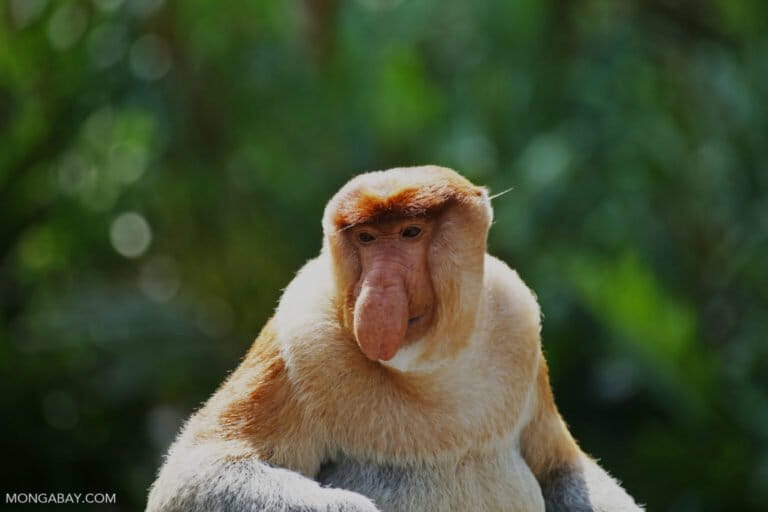
The ongoing crisis of forest and land fires (karhutla) in South Kalimantan has escalated into a biological catastrophe. Beyond the widespread destruction of peatlands and the choking shroud of smog engulfing the region, the infernos have claimed the lives of at least 11 bekantan—the iconic, endangered proboscis monkey (Nasalis larvatus)—in Balimau Village, Hulu Sungai Selatan (HSS) Regency. As the fires continue to ravage the landscape, conservationists and local officials are grappling with the grim reality that current mitigation strategies are failing to protect the region’s most vulnerable inhabitants.
A Landscape in Flames: The Balimau Tragedy
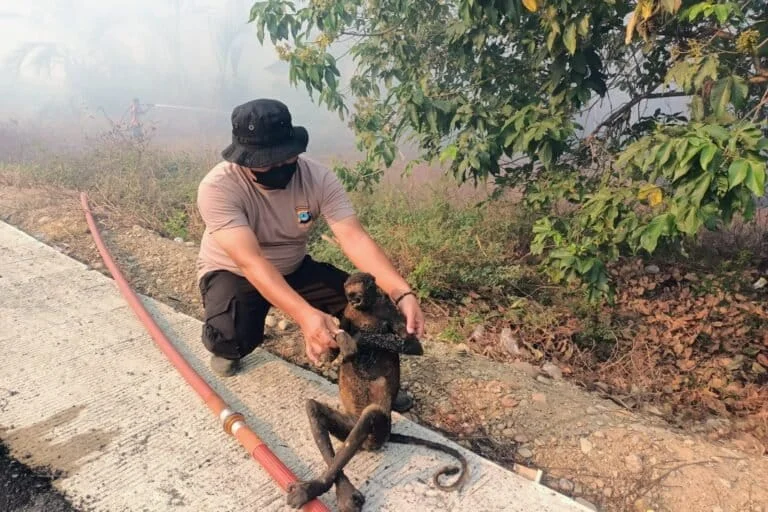
On Sunday, September 13, 2026, the quiet ecosystem of Balimau Village was shattered by rapidly spreading fires. According to Alamsyah, the Head of Balimau Village, the discovery of the dead primates was a harrowing byproduct of the community’s desperate fight against the encroaching blaze.
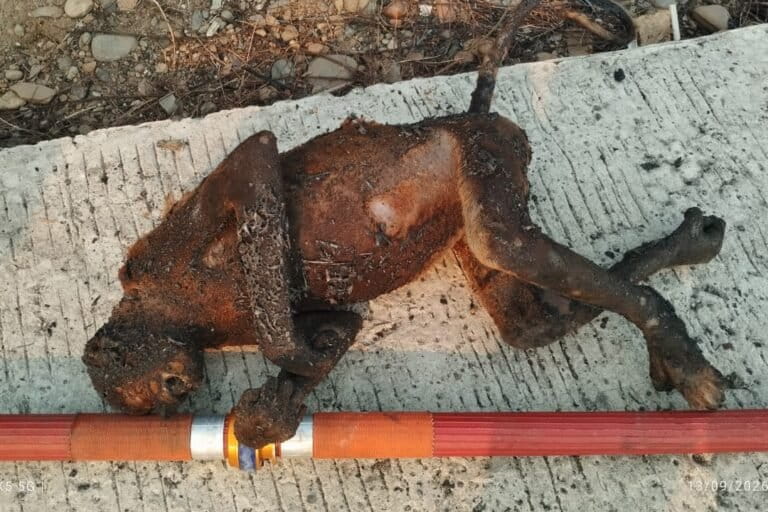
"We found 11 of them—ten adults and one infant," Alamsyah reported. The discovery highlighted the brutal reality of how these arboreal creatures, listed as "Endangered" by the International Union for Conservation of Nature (IUCN), are being trapped by fire.
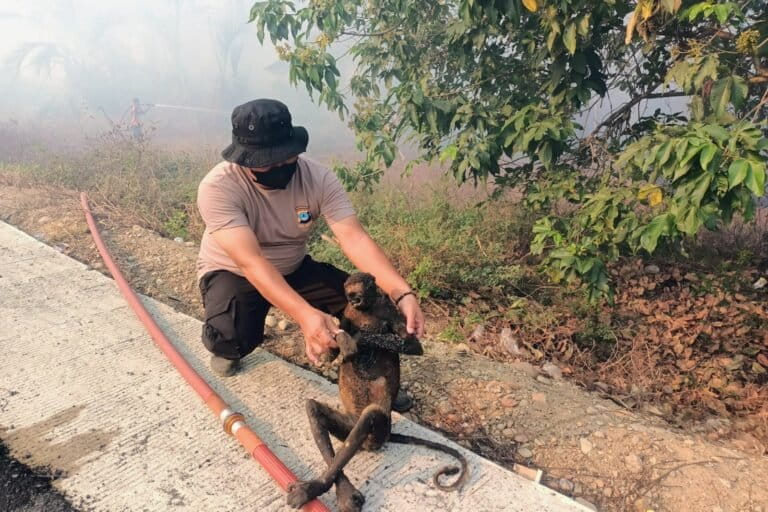
The fire, which local reports suggest originated from the neighboring village of Karangpaci, jumped a river boundary, fueled by high winds and dry vegetation. The primary area affected was a field of rumbia (Metroxylon sagu), a critical part of the local habitat. As human firefighters converged on the scene, the bekantan, already stressed and disoriented by the heat and smoke, became trapped. "Because these monkeys instinctively flee from humans, they were effectively herded into a corner by the fire," Alamsyah explained. "They had nowhere to go, and they were consumed by the flames."
The impact of the fire is not limited to the bekantan. The Natural Resources and Ecosystem Conservation Agency (BKSDA) of South Kalimantan confirmed that the area also serves as a habitat for lutung (Presbytis frontata) and long-tailed macaques (Macaca fascicularis). Along with the deceased bekantan, responders documented a python (Malayopython reticulatus) and a king cobra (Ophiophagus hannah) among the casualties, with other wildlife remaining under close observation.
Escalating Intensity: The Statistical Reality
The situation in Balimau is a microcosm of a larger, systemic crisis. According to data from the Regional Disaster Management Agency (BPBD) of South Kalimantan, the province recorded 3,256 fire incidents between January and September 15, 2026, scorching approximately 21,696 hectares of land.
The fires in Balimau were not easily extinguished. By September 15, the fire had fragmented into at least six distinct hotspots. Local efforts were hampered by the lack of specialized equipment and the drying up of traditional water sources. Only through the deployment of water tank trucks from the regency center was the situation finally brought under relative control.
Beyond Balimau: A Regional Crisis
The tragedy is not confined to one village. In Sungai Rutas, Tapin Regency, residents have been battling fires for weeks. Syahrani Sarunang, a local resident, noted that the area is home to nine colonies of bekantan, each consisting of 30 to 35 individuals. While no deaths were reported in this specific incident, the loss of 30 hectares of land—much of it critical feed-source vegetation—has put the local population under extreme duress.
"The plants that burned won’t grow back immediately; it takes months for new shoots to emerge," Sarunang stated. He recalled the horrors of 2015, when similar fires wiped out between 15 and 20 bekantan in the area. "They are incredibly sensitive to smoke, likely because of their large noses. Many died of respiratory failure during that time."
Even in areas like Penjaratan Village in Tanah Laut, where fires were contained within a day, the proximity to palm oil plantations remains a perennial threat. "The fires are frequent, often starting near company-owned plantations," noted Village Head Heldiyani. "It creates a constant state of anxiety for both the community and the wildlife."
The "Silent" Impact: Scientific Implications
The loss of these primates is a devastating blow to conservation efforts. Scientific literature underscores that fire is not just a direct killer; it is a catalyst for long-term population collapse.

Research published in Scientific Reports and iScience has highlighted how smoke haze from peatland fires in Kalimantan disrupts the vocal behavior of primates like the Hylobates albibarbis (Borneo white-bearded gibbon) and orangutans. Reduced vocalization is a precursor to health decline and reproductive failure. Furthermore, studies on rhesus monkeys exposed to high concentrations of PM2.5 particulate matter have shown a direct correlation with increased miscarriage rates and long-term lung capacity issues in surviving offspring.
For the bekantan, the destruction of their riparian habitat means they are forced to travel further into degraded areas, increasing their exposure to human conflict, predators, and starvation.
Official Responses and Institutional Gaps
The response from the government has sparked intense debate. Rudiono Herlambang, Head of the Conservation Division at the South Kalimantan Forestry Office, argued that the government’s approach is to provide "independent evacuation space" for wildlife during fires. However, he admitted that the agency faces significant limitations.
"Most of the fire hotspots in 2026 are located in Other Use Areas (APL) or community-owned land," Herlambang stated. "Our authority is largely focused on conservation zones, but the wildlife does not recognize these administrative boundaries."
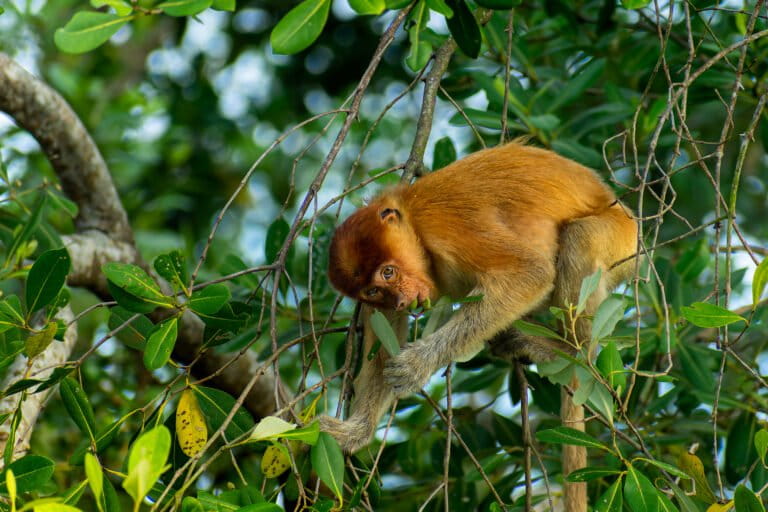
Data from the BKSDA confirms this disparity: out of 3,757 bekantan recorded in 2025, only 1,281 lived within established conservation areas. The remaining 2,476 (two-thirds of the population) exist in production forests or APL—areas where government protection protocols are significantly weaker.
Agus Ngurah, Head of BKSDA South Kalimantan, noted that while his team utilizes the SiPongi system for fire monitoring and deploys Wildlife Rescue Units, these interventions are often reactive. "When fires are large and water sources are scarce, our ability to evacuate animals is extremely limited," he admitted. He is now advocating for the establishment of "Preservation Areas" to bridge the gap between state-protected zones and community lands.
A Call for Radical Change
Professor Muhammad Arief Soendjoto, a leading expert in Flora and Fauna Conservation at Lambung Mangkurat University (ULM), is deeply critical of the current strategy. He argues that the government’s focus is exclusively on suppressing flames rather than preserving life.
"The habitat has been cleared for development, and what little remains is being burned. Where are they supposed to go?" Professor Soendjoto asked. He emphasized that the government must move beyond mere firefighting.
"We need a cultural approach," he suggested. "In a region as religious as South Kalimantan, the role of local leaders and ulama (clerics) is paramount. They could influence the community to stop using fire as a tool for land clearing during the dry season. Law enforcement against corporations or individuals who intentionally burn land must also be ironclad and uncompromising."
For Alamsyah in Balimau, the tragedy is personal. Having observed the bekantan in his village for years, he feels the weight of the loss. "I have been asking the government for protection for this habitat since 2016, and it took the death of 11 monkeys to finally get a visit from the BKSDA," he said.
As the dry season continues, the fate of the remaining bekantan remains precarious. The 2026 fires serve as a grim reminder that without a fundamental shift in land management, legal accountability, and proactive wildlife conservation, one of Kalimantan’s most unique species may be nearing a point of no return.
The burning of the forest is not merely an environmental disaster; it is a testament to a broken system of stewardship—one that, if left uncorrected, will leave behind only ash where once there was life.







