
The Sky-High Marathon: Inside Gianni Infantino’s Global Odyssey During the 2026 World Cup
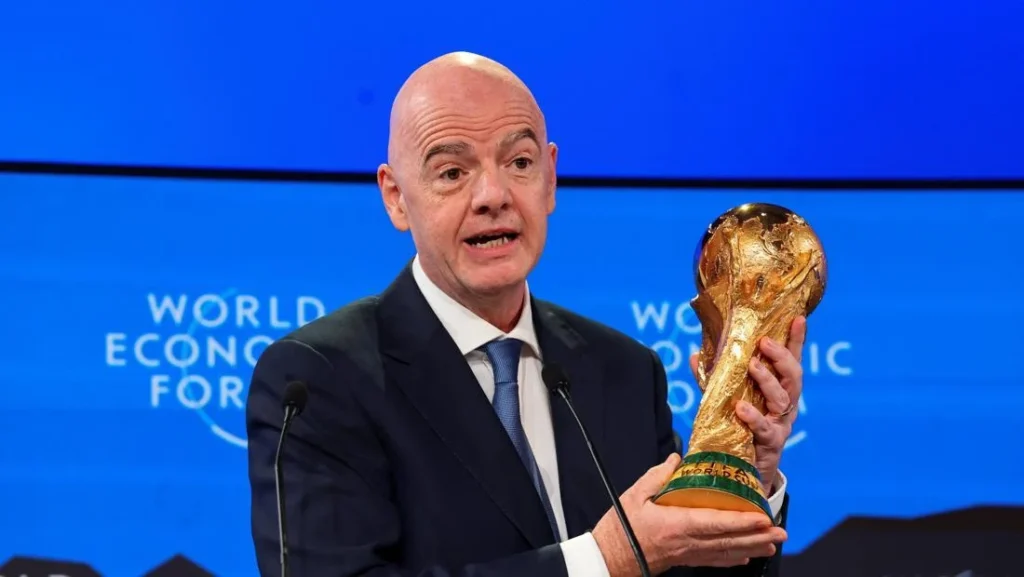
Jakarta – When the 2026 FIFA World Cup concluded, it did not just set records for the number of goals scored, attendance figures, or the sheer scale of its 104-match schedule spanning three nations. For FIFA President Gianni Infantino, the tournament represented a logistical feat of a different kind: a relentless, high-altitude marathon that redefined the term "executive travel."
Analysis of flight data, official FIFA social media activity, and photographic evidence by the Associated Press reveals that Infantino’s footprint during the tournament was as vast as the sport he governs. Covering nearly 60,000 miles (approximately 96,500 kilometers), the FIFA chief spent over 100 hours in the air—a journey equivalent to circumnavigating the Earth two and a half times.
The Main Facts: A Global President in Constant Motion
The 2026 tournament, hosted jointly by the United States, Canada, and Mexico, demanded an unprecedented level of visibility from the organization’s leadership. Infantino, aiming to maintain a presence across all 16 host cities, utilized a state-of-the-art Gulfstream G650 jet. This aircraft, part of the Qatari government’s fleet and operated by the private charter division of Qatar Airways—a premier FIFA sponsor—became his primary office in the sky.
Infantino’s schedule was nothing short of grueling. He attended at least one match at every single one of the 16 host stadiums, ensuring that the global face of football was present in every corner of the North American host nations. His most frequented destination, the Hard Rock Stadium in Miami, saw him in attendance for five separate matches, reflecting both the venue’s strategic importance and the sheer frequency of his transit.
The data suggests that for Infantino, the world of football is a borderless entity. By utilizing both major international hubs and smaller private executive airports—such as Fulton County Executive Airport in Atlanta and Opa-locka Executive Airport in Miami—the FIFA president bypassed traditional travel bottlenecks to maintain a pace that allowed him to occasionally attend two matches in a single day, despite the massive geographical distances separating the venues.
Chronology of an Aerial Marathon
To understand the scale of this travel, one must look at the specific flight logs that defined the tournament’s timeline.
The Long-Haul Realities
The longest single leg of his journey (excluding flights to and from Qatar) clocked in at 344 minutes—nearly six hours of flight time. This journey from Miami to Seattle on June 15, undertaken to attend the Belgium versus Egypt match, was a testament to the geographic challenges of the 2026 format. To put that in perspective, the flight duration was equal to three full regulation-time football matches played back-to-back.
The Sprint Legs
Conversely, the shortest flight—a 28-minute hop from Seattle to Vancouver on July 6—highlighted the efficiency of private aviation. This "sitcom-length" flight allowed Infantino to transition seamlessly from a match between the United States and Belgium in Seattle to witness Switzerland take on Colombia in Vancouver the very next day.
The Peak of Intensity: June 26
Perhaps the most illustrative day of this odyssey was June 26. The schedule involved a multi-leg aerial feat:
- Morning: Departure from Miami to Dallas for official duties.
- Afternoon: Transit from Dallas to Seattle to attend the Egypt-Iran match.
- Night: A late-night departure from Seattle, arriving in Miami the following morning.
- Following Day: Presence at the Colombia versus Portugal match.
This single-day itinerary demonstrates the immense pressure on the FIFA president to be omnipresent, effectively turning the sky into his primary workspace.
Supporting Data: By the Numbers
The sheer magnitude of the travel can be visualized through comparative statistics. The 60,000 miles covered is not merely a number; it is a distance that eclipses several of the world’s most famous ultra-long-haul commercial routes. When aggregated, Infantino’s travel distance exceeds the combined mileage of non-stop flights from New York to Singapore, Los Angeles to Doha, and London to Perth.
The time spent in the air—totaling nearly five full days—represents an extraordinary commitment to the logistics of the tournament. For context, this is equivalent to flying a commercial jet at cruising speed from New York to Los Angeles 20 times over.
The usage of private aviation assets, particularly the Gulfstream G650, allowed for this level of mobility. By integrating private executive airports, Infantino avoided the congestion of major international terminals, a necessity given the frequency of his flights, which often occurred on a near-daily basis throughout the duration of the tournament.
Official Responses and Strategic Context
While FIFA has maintained that the travel was essential to the successful oversight of the most complex tournament in football history, the use of private jets for such extensive travel often draws scrutiny.
FIFA representatives have emphasized that the logistical requirements of managing a 104-match tournament across three massive nations necessitate a high degree of mobility. Given the security requirements, the need for real-time decision-making, and the requirement to conduct high-level meetings with local dignitaries and stakeholders in multiple cities, the use of private air transport is viewed by the organization as a functional necessity rather than a luxury.
Furthermore, the involvement of Qatar Airways—a partner that provided the aircraft—highlights the deep integration of FIFA’s commercial partnerships into its operational infrastructure. The tournament, which marked a transition into a new era of global expansion, required a leader who could physically bridge the gaps between the host cities in real-time.
The Implications: A New Era of Tournament Governance
The 2026 World Cup was a proving ground for the "mega-tournament" format, and Infantino’s travel habits reflect the new reality of sports administration.
1. The Burden of Scale
The logistical strain placed on the FIFA President suggests that as tournaments expand, the physical toll on leadership increases exponentially. The requirement for the head of a global governing body to be present at every venue—or as many as possible—is a self-imposed standard that necessitates a lifestyle of constant motion.
2. Environmental and Ethical Debates
In an era increasingly concerned with the carbon footprint of global events, the extensive use of private jets for official duties is likely to invite further debate. While necessary for efficiency in a fast-paced environment, the total mileage and fuel consumption associated with the FIFA President’s travel profile will undoubtedly serve as a case study for future sustainability discussions within the sporting world.
3. The Future of Host Nation Integration
The success of the 2026 model, which spanned three nations, proves that the world is ready for larger, multi-country tournaments. However, the travel experience of the tournament’s top leadership highlights the infrastructure challenges inherent in such a setup. Future hosts may need to consider how to minimize the travel burden on officials and teams alike to maintain the sustainability of the sport.
4. Visibility as Policy
Infantino’s commitment to appearing at every stadium, including the "short-hop" flights, underscores a philosophy of hyper-visibility. For FIFA, the President’s physical presence is a tool of diplomacy, ensuring that every host city feels valued and that the "global game" remains unified despite the massive distances.
Conclusion
Gianni Infantino’s 60,000-mile journey during the 2026 World Cup is more than a statistic; it is a symbol of the modern era of professional football. As the sport continues to grow, the demands on its leadership are evolving, requiring a level of logistical agility that was once unimaginable.
While the debate over the environmental and operational costs of this lifestyle will persist, the figures remain undeniable: the 2026 tournament was not just played on the grass of 16 stadiums, but in the corridors of the sky, where the FIFA President spent a significant portion of his time ensuring that the world’s biggest show stayed on schedule. Whether this becomes the standard for future FIFA leadership or a unique relic of the 2026 experience remains to be seen, but the bar for "executive attendance" has been set at an altitude that few will ever match.