
The Enigma of the Sands: Unraveling the Mystery of Bahrain’s "Tree of Life"
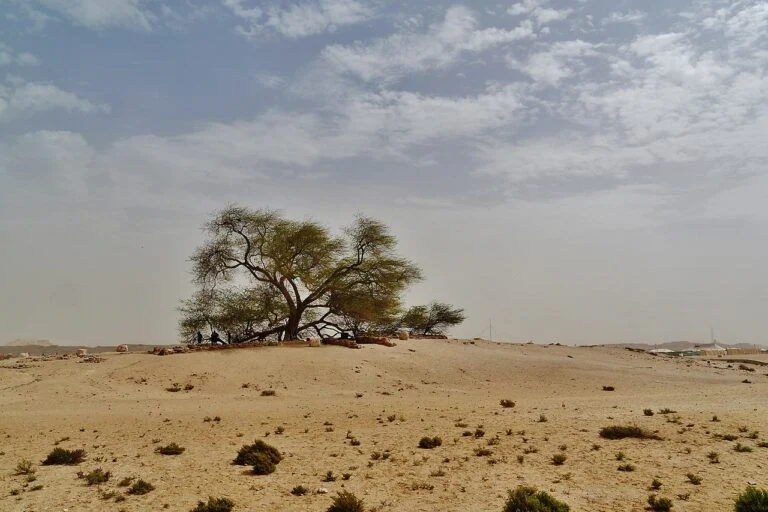
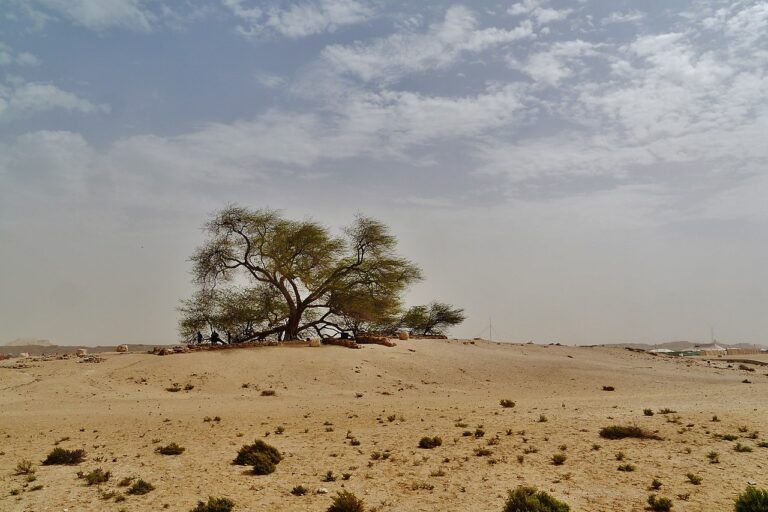
Deep within the unforgiving expanse of the Arabian Desert, miles away from any known water source, stands a solitary, verdant sentinel. Known locally as Shajarat al-Hayat, or the "Tree of Life," this majestic Prosopis specimen has captivated travelers, botanists, and theologians for over four centuries. Standing alone atop a 25-foot-high sandy hill in Bahrain, the tree defies the brutal climatic realities of its environment, where temperatures soar and rainfall is an extreme rarity.
The Tree of Life is more than a biological curiosity; it is a cultural icon, a testament to resilience, and an ongoing scientific puzzle. How does a single organism thrive in a landscape defined by total desiccation?
The Anatomy of Survival: Main Scientific Facts
The Tree of Life is widely believed to belong to the genus Prosopis, likely Prosopis cineraria or Prosopis juliflora. These trees are renowned in arid-land botany for their "drought-evading" strategies, yet even by the standards of the hardy Prosopis family, the specimen in Bahrain is an outlier.
The Deep-Root Hypothesis
The most widely accepted scientific theory regarding the tree’s longevity concerns its root system. Prosopis trees are known for having some of the deepest root structures in the plant kingdom, often extending over 50 meters into the ground. Researchers hypothesize that the tree has successfully tapped into a deep, subterranean aquifer—a hidden reservoir of groundwater that remains untouched by the harsh surface conditions. This "fossil water" or recharged aquifer provides a steady, albeit invisible, lifeline.
Physiological Adaptation
Beyond its roots, the tree employs sophisticated biological mechanisms to minimize water loss:
- Compound Leaves: The leaves are composed of tiny leaflets that reduce surface area, thereby minimizing transpiration—the process by which plants lose water through evaporation.
- Drought Deciduousness: In times of extreme heat or water stress, the tree has the ability to shed its foliage, entering a semi-dormant state to conserve vital moisture.
- Symbiotic Relationships: Scientists believe the tree may maintain a symbiotic relationship with specific soil fungi and nitrogen-fixing bacteria. These organisms help the tree extract trace minerals and moisture from the nutrient-poor, sandy soil that would be inaccessible to other flora.
- Atmospheric Moisture: While not fully proven, some researchers suggest the tree may supplement its water intake by absorbing nighttime dew, a common phenomenon in the humid coastal environment of the Persian Gulf.
A Chronological Journey: Centuries of Solitude
The timeline of the Tree of Life is shrouded in both history and mythology. While carbon dating has not been applied to the living core of the tree to avoid damage, its age is estimated to be approximately 400 to 450 years.
- 17th Century (c. 1580–1620): Local traditions suggest the tree was planted around this period. Given the trade routes that traversed the Arabian Peninsula, it is possible the tree was either a deliberate planting or a fortuitous seed dispersal from passing caravans.
- The 20th Century Discovery: As Bahrain modernized, the tree transitioned from a local secret to a global landmark. It became a protected site as tourism in the region began to expand.
- 2010 Archaeological Milestone: A major archaeological excavation conducted around the base of the tree uncovered evidence of a Dilmun-era settlement dating back thousands of years. The discovery of ancient pottery and, more importantly, traces of abandoned wells and irrigation channels, suggests that the site may have been a historical oasis.
- Modern Era: Today, the tree is managed by the Bahrain Authority for Culture and Antiquities. It remains under constant observation to monitor its health and the environmental impact of thousands of annual visitors.
Supporting Data: The Archaeological Context
The 2010 excavations provided a crucial piece of the puzzle: the location was not always a desolate, isolated hill. The presence of ancient residential structures indicates that this specific area of the desert once held a more favorable microclimate or a accessible water table that supported human life.
However, a critical question remains: does the tree survive on the same water source that fueled these ancient settlements, or has it adapted to survive on deep-seated moisture that predates the human occupation of the site?
Data collected from regional geological surveys show that the area sits on a complex network of limestone and sandstone layers. These layers can trap water during the rare, intense rain events in the desert, allowing the water to migrate slowly downward. The tree acts as a biological "drill," tapping into these ancient, trapped pockets of moisture that remain insulated from the surface heat.
Official Responses and Preservation Efforts
The popularity of the Tree of Life has been a double-edged sword. As the tree became a "must-see" destination, it faced the threat of human interference.
Protecting the Icon
In recent decades, the Bahraini government has taken rigorous steps to preserve the site:
- Restricting Access: A physical barrier—a fence—was erected around the tree to prevent visitors from touching, climbing, or carving into the bark. This was a direct response to rising levels of graffiti and physical vandalism that threatened the tree’s structural integrity.
- Infrastructure Development: An information center was built nearby, providing educational context to tourists and serving as a control point for human activity.
- Ongoing Monitoring: Agricultural and botanical experts from the state regularly assess the tree’s health, checking for signs of disease, insect infestation, or moisture stress.
"The Tree of Life is not merely a botanical specimen; it is a symbol of Bahrain’s endurance," says a spokesperson for the local heritage department. "Our duty is to ensure that while the world witnesses this miracle, their presence does not lead to its demise."
Implications: A Symbol of Sustainability
The mystery of the Tree of Life has profound implications for modern science, particularly in the fields of desertification and climate change.
Lessons in Resilience
As the global climate warms and aridification affects larger swaths of the Earth, the survival strategies of Prosopis trees are being studied with renewed interest. If researchers can fully decode how the Tree of Life manages water extraction, these findings could be applied to reforestation efforts in other desert regions.
Cultural and Spiritual Significance
For the people of Bahrain, the tree represents more than biology. Local legends often associate the location with the Garden of Eden, suggesting that the tree is a vestige of a primordial paradise. It is a site of pilgrimage for some and a classroom for others. By integrating the tree into educational curricula, Bahrain has turned the site into a living laboratory for environmental science, teaching the next generation about the importance of protecting fragile ecosystems.
Conclusion: The Unanswered Question
Despite the advancements in satellite imaging, soil analysis, and botanical research, the definitive "how" of the Tree of Life remains elusive. We know it belongs to a genus of survivors, and we know it occupies a site with a deep, layered history. Yet, there is a haunting beauty in the fact that, in our age of total information, nature still holds secrets that escape our full understanding.
The Tree of Life stands as a silent witness to the passage of centuries. It is a reminder that life, when given the smallest opportunity, will not just survive—it will endure. Whether it draws its strength from a deep, ancient aquifer or a complex, hidden cycle of atmospheric moisture, the tree continues to flourish in the heart of the desert, an eternal puzzle that continues to inspire awe in all who stand beneath its sprawling, sun-drenched canopy.







