Revitalizing Indonesia’s Idle Sports Infrastructure: A Strategic Pivot to Elevate the National Sports Economy
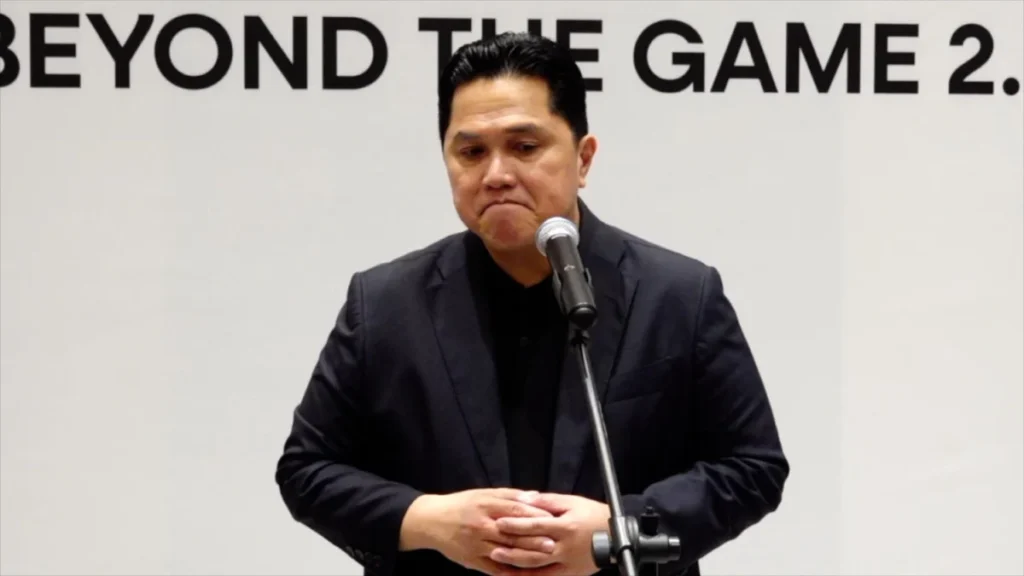
JAKARTA — In a decisive push to reform and invigorate Indonesia’s sports landscape, Minister of Youth and Sports (Menpora) Erick Thohir has announced a comprehensive government initiative to audit, rehabilitate, and repurpose long-abandoned sports facilities across the archipelago. Speaking on Friday, September 11, 2026, the Minister emphasized that reclaiming these dormant assets is not merely a matter of urban renewal or infrastructural upkeep, but a vital economic prerequisite.
The primary catalyst behind this aggressive policy shift is a stark statistical reality: Indonesia’s domestic sports industry currently contributes a negligible 0.5 percent to the global sports economy. By transforming idle, crumbling stadiums, training halls, and community complexes into vibrant, revenue-generating, and accessible hubs, the government aims to catalyze grassroots participation while simultaneously constructing a robust framework for professional sports commerce, tourism, and manufacturing.
This strategic pivot signals a departure from the legacy model of constructing high-cost, single-use venues that fall into disrepair post-event. Instead, the administration is pivoting toward sustainable asset management, public-private partnerships (PPPs), and community-centric integration to ensure that national investments yield long-term socio-economic dividends.
Main Facts
The initiative spearheaded by Menpora Erick Thohir rests on several core pillars and quantifiable objectives designed to reshape Indonesia’s sporting ecosystem over the next decade:
- Policy Mandate: The immediate identification, structural audit, and functional redesign of hundreds of stalled, unutilized, or neglected sports infrastructure projects nationwide. These facilities span multiple administrative tiers, from regional training centers initiated decades ago to multi-purpose stadiums left derelict after major regional games.
- Economic Impetus: Bridging the glaring gap in Indonesia’s economic contribution to the global sports market. With the national sports industry hovering at a mere 0.5 percent global share, the state aims to unlock untapped potential in sports merchandise, sports science, tourism, event hosting, and digital media broadcasting.
- Multi-Sectoral Collaboration: Integrating ministries—including the Ministry of Public Works and Public Housing (PUPR), regional local governments (Pemerintah Daerah), and private sector investors—to share the financial and operational burden of facility revitalization.
- Grassroots Accessibility Coupled with Commercial Viability: Ensuring that revived facilities serve a dual purpose: acting as affordable, safe training grounds for local youth and prospective elite athletes, while simultaneously hosting commercial concerts, e-sports tournaments, exhibitions, and domestic leagues to guarantee self-sustaining financial models.
Chronology: From Abandonment to Re-engagement
The path leading to the September 2026 policy announcement has been marked by decades of infrastructural overreach, decentralized mismanagement, and shifting political priorities. Understanding how these facilities fell into disarray provides crucial context for the urgency of the current intervention.
Phase 1: The Legacy of Mega-Events and Decentralized Overreach (2000s–2010s)
For decades, the Indonesian government—both at the national and provincial levels—embarked on construction sprees tied to major multi-sport events such as the National Sports Week (Pekan Olahraga Nasional or PON), the Southeast Asian (SEA) Games, and international qualifiers.
While these events temporarily galvanized construction sectors, they frequently left behind massive, specialized complexes in regions with insufficient population density or municipal budgets to maintain them. Without long-term operational roadmaps, facilities built at the cost of hundreds of billions of rupiah quickly succumbed to tropical weathering, structural decay, and administrative neglect.
Phase 2: The Audit and Identification Process (Late 2024–Mid 2025)
Following structural shifts within the Ministry of Youth and Sports, preliminary administrative reviews began mapping out the status of state-owned and regional sports assets. Task forces deployed to various provinces discovered scores of "white elephants"—facilities featuring overgrown fields, cracked velodromes, looted copper wiring, and locked administrative offices.
During this period, the Ministry began categorizing these assets based on three criteria:
- Salvageable with Minor Renovations: Facilities structurally sound but suffering from poor maintenance or lack of operating capital.
- Requiring Major Engineering Overhauls: Venues suffering from severe structural neglect, outdated technology, or obsolescence that required complete architectural redesigns.
- Candidates for Adaptive Reuse: Structures that could no longer function effectively as sports arenas but could be converted into community centers, youth entrepreneurship incubators, or integrated public spaces.
Phase 3: The Strategic Policy Announcement (September 11, 2026)
On Friday, September 11, 2026, Menpora Erick Thohir formalized the government’s stance. Moving beyond localized pilot projects, the administration elevated asset rehabilitation to a national strategic priority. By directly tying the physical state of infrastructure to the macroeconomic performance of the sports industry (the 0.5 percent global contribution metric), the Ministry reframed the initiative not as a welfare expenditure, but as a high-yield economic investment.
Supporting Data and Economic Context
To fully grasp the gravity of Menpora Erick Thohir’s policy, one must examine the metrics defining the current state of Indonesia’s sports economy relative to regional and global benchmarks.
The 0.5 Percent Dilemma
Globally, the sports industry is a multi-trillion-dollar economic powerhouse encompassing professional leagues, sports broadcasting, apparel and footwear manufacturing, sports tourism, fitness wellness, and advanced sports technology. Major economies derive anywhere from 1.5% to over 3% of their Gross Domestic Product (GDP) from sports-related commerce.
In contrast, Indonesia—despite boasting a population of over 275 million, a passionate sports-loving demographic, and an exploding digital native consumer base—accounts for roughly 0.5 percent of the global sports economic pie. Analysts attribute this underperformance to several structural bottlenecks:
- Fragmented Value Chains: Domestic production of sports gear often remains limited to low-value contract manufacturing, with few homegrown brands capturing high-margin global market share.
- Monetization Deficits: Professional leagues (outside of select football and badminton circuits) struggle with broadcast rights valuation, ticketing transparency, and corporate sponsorship retention.
- Asset Underutilization: Billions of dollars in public capital are locked inside dormant stadiums that generate zero revenue, incur constant security and deterioration costs, and fail to stimulate local commercial ecosystems (such as hospitality, food and beverage, and retail ventures clustered around active sports hubs).
Comparative Regional Analysis
Neighbouring Southeast Asian nations, such as Singapore, Thailand, and Vietnam, have increasingly leveraged modern sports infrastructure to drive tourism and service-sector growth. Singapore’s Sports Hub, for instance, operates as an integrated commercial, entertainment, and athletic ecosystem that regularly hosts global concert tours alongside elite sporting fixtures.
Indonesia’s new directive seeks to replicate this multi-revenue-stream model domestically, ensuring that regional capitals and secondary cities possess venues capable of shifting seamlessly from athletic competitions to cultural and commercial events.
Official Responses and Stakeholder Perspectives
The announcement has triggered widespread dialogue among government officials, urban planners, sports federations, and private sector investors.
Ministry of Youth and Sports (Kemenpora)
Elaborating on the policy framework, Ministry representatives stressed that the government will adopt a strict performance-based monitoring system for all revitalized venues. Regional administrations (Pemerintah Daerah) that receive central government assistance for facility rehabilitation will be held accountable for maintaining operational continuity.
"We cannot afford to let public funds be squandered on vanity projects that serve no lasting purpose," a senior ministry official noted following the announcement. "Every stadium, indoor court, and training pitch must function as an economic engine for its local community, fostering talent while generating measurable financial returns."
Regional Governments and Local Municipalities
Response from local authorities has been cautiously optimistic, tempered by historical funding constraints. Many regional leaders welcomed central government intervention, noting that local budgets (APBD) are frequently insufficient to cover the capital-intensive costs required to restore deteriorating mega-structures.
Several mayors and regents have already initiated discussions with the Ministry to propose public-private partnership (PPP) models, wherein private concessionaires take over the day-to-day management, marketing, and commercialization of municipal sports complexes.
Athletes and National Sports Federations (KONI/KOI)
Athletic bodies have overwhelmingly praised the initiative. For years, national and regional athletes have voiced frustration over the scarcity of standardized, well-maintained training facilities outside of major national training centers like Gelora Bung Karno in Jakarta.
Representatives from various sports federations pointed out that decentralizing access to high-grade training facilities will significantly widen the talent funnel, allowing scouts to discover and nurture prodigious athletic talent from secondary and tertiary cities rather than concentrating development solely in the capital.
Implications of the Revitalization Policy
The decision to reactivate dormant sports infrastructure carries profound long-term implications across multiple dimensions of Indonesian society and economy.
1. Macroeconomic Growth and the Sports Industry
By turning idle concrete into active commercial venues, the government directly addresses the root causes of the 0.5 percent global contribution deficit. Active facilities attract:
- Sports Tourism: Hosting regional and international championships, marathons, and training camps.
- Retail and SME Integration: Creating surrounding commercial zones for local micro, small, and medium enterprises (MSMEs) specializing in culinary arts, sporting goods, and hospitality.
- Job Creation: Employing facility managers, event coordinators, sports scientists, coaches, and maintenance personnel.
2. Social Impact, Public Health, and Youth Development
Beyond elite sports performance, the democratization of access to safe, modern sports spaces directly impacts public health. Non-communicable diseases, urban sedentarism, and youth delinquency are persistent challenges in rapidly urbanizing Indonesian cities. Affordable, well-maintained community sports complexes provide vital public goods that encourage active lifestyles across diverse demographic groups.
3. Environmental and Fiscal Sustainability
From an environmental perspective, rehabilitating existing infrastructure has a vastly lower carbon footprint than demolishing old structures or clearing new land for greenfield developments. Economically, it represents a responsible fiscal policy: maximizing the return on sunk capital investments made by taxpayers over the past several decades.
Conclusion
Menpora Erick Thohir’s announcement on September 11, 2026, marks a watershed moment for Indonesian sports administration. By confronting the uncomfortable legacy of idle infrastructure head-on and tying physical asset recovery to the broader ambition of expanding the national sports economy, the government has charted a pragmatic, forward-looking course.
If executed with transparency, rigorous maintenance standards, and robust private-sector collaboration, this initiative has the potential to transform Indonesia from an underperforming spectator in the global sports market into a vibrant, economically self-sustaining sporting powerhouse where infrastructure serves its ultimate purpose: empowering athletes, engaging communities, and fueling national prosperity.