
Reclaiming the Earth: Why the Future of Conservation Must Shift from Fortress to People
By Eko Cahyono
The planet is currently locked in the grip of a profound ecological crisis. As the dual threats of global climate change and the catastrophic collapse of biodiversity intensify, humanity is forced to confront a sobering reality: our current strategies for environmental salvation are failing. At the heart of this failure is a fundamental misunderstanding of the relationship between ecological integrity and human rights.
The message emerging from the Peoples’ Conservation Summit (PCS) 2026, held at Universitas Gadjah Mada, Yogyakarta, from September 1–3, is unequivocal: the preservation of our ecosystems is inseparable from the struggle for social justice and the protection of fundamental human rights. This historic gathering of Indigenous peoples, local communities, farmers, fishers, women, youth, activists, and academics culminated in a powerful political and moral manifesto titled: "Restoring the Earth, Upholding Justice: Returning Conservation to the Hands of the People."
The Failure of "Fortress Conservation"
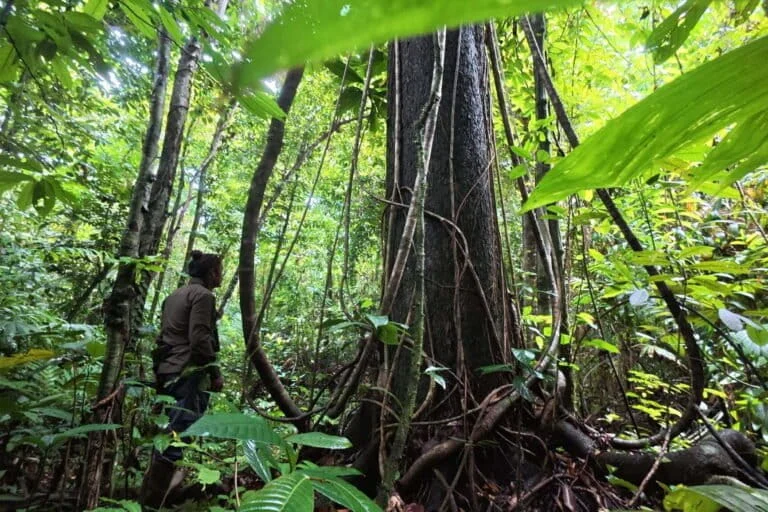
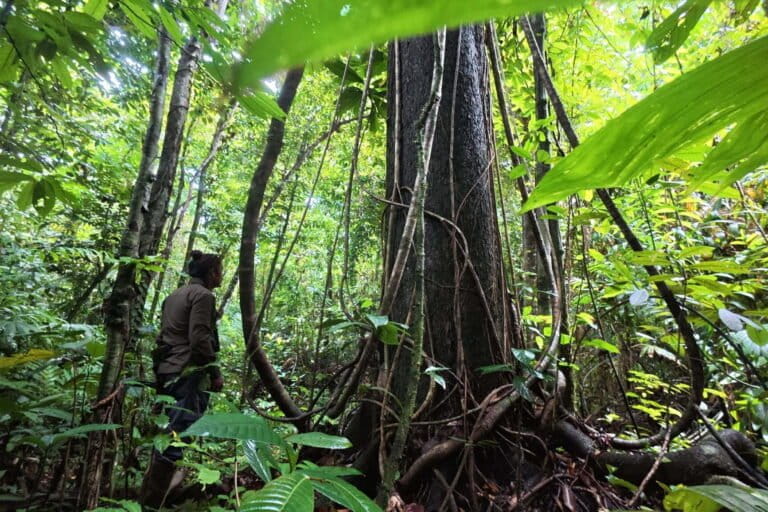
The primary critique leveled at the PCS 2026 is directed at the "mainstream conservation" model—often referred to as fortress conservation—championed by state actors. For decades, this conventional approach has treated the natural world as something to be protected from humanity. By physically and legally isolating people from their ancestral landscapes, this model has not only alienated communities from their own environments but has also catalyzed recurring cycles of agrarian injustice.
Epistemic Colonialism: The Roots of Exclusion
The "Deklarasi Yogyakarta" argues that modern conservation is deeply rooted in colonial scientific rationality. This paradigm views forests and natural landscapes through the lens of terra nullius—the myth of "unoccupied land." By dismissing the presence of Indigenous and local communities, the state positions itself as the absolute owner and arbiter of these spaces, effectively relegating the true stewards of the land to the status of spectators or, worse, trespassers.
The legacy of the German Forestry School of the 19th century persists in today’s governance. This school introduced the doctrine of timber primacy—the idea that a forest is merely a collection of trees, classified only by their economic value. In this view, humans are seen as "disturbances" to the forest’s "natural" state. This reductionist approach ignores the reality that for millennia, Indigenous peoples have managed these ecosystems through holistic, sustainable practices that reflect the philosophy of deep ecology.
Chronology of Dispossession
The systemic marginalization of local communities follows a predictable pattern of policy-driven exclusion:
- State-Centric Mapping: The state declares a territory as a "protected area" or a state forest, often ignoring existing customary land rights.
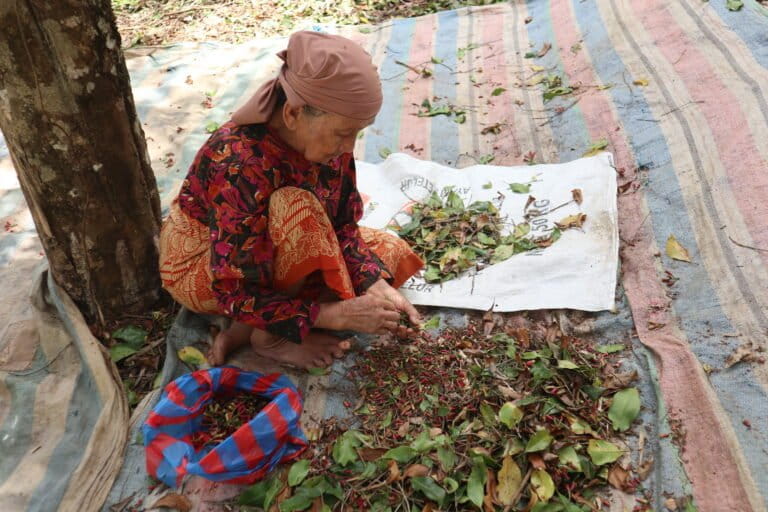
- Criminalization: Local residents who continue their traditional livelihoods (farming, hunting, or gathering) are suddenly labeled as encroachers.
- Green Grabbing: Under the guise of environmental protection or "green" development, land is enclosed, privatized, or handed over to corporations for "sustainability" projects.
- Financialization: Natural resources are converted into carbon credits or financial assets, turning living ecosystems into units of market speculation that exclude local decision-making.
Supporting Data: The Paradox of "Green" Extraction
The contradiction is stark. While the government promotes biodiversity as a national asset, it simultaneously rolls out the "red carpet" for large-scale extractive industries. Mining, monoculture plantations, and infrastructure projects continue to devour forests and coastal ecosystems.
Even the transition to "green energy" has become a tool of dispossession. The scramble for critical minerals—essential for electric vehicle batteries and solar panels—is driving new waves of extraction in coastal areas and small islands, leading to what researchers call green grabbing.

Furthermore, the "financialization of nature" turns forests and oceans into instruments of hedge funds and investment portfolios. This market-based approach reduces complex ecological processes to mere price tags, alienating local populations who are often treated as "project beneficiaries" or "objects" of conservation rather than sovereign stakeholders.
Legal Repression and the "Conservation Trap"
In Indonesia, the legislative landscape has exacerbated this crisis. The enactment of Law No. 32/2024 on the Conservation of Natural Resources and Ecosystems has been criticized for reinforcing state control rather than devolving power.
This has led to the emergence of what I term the "Conservation Trap." In this scenario, the state delegates the burden of forest protection to local communities—effectively making them "unpaid night watchmen"—without granting them any real political authority or land tenure security. Under the current interpretation of forestry laws, community management is only permitted if it "does not disturb the main function of the conservation area." This is partial devolution—a cosmetic gesture that masks the continued centralization of power.
Implications: A Call for Transformative Change
The Yogyakarta Declaration demands a radical shift. It is no longer enough to measure conservation success by the number of hectares protected under the global "30×30" target (protecting 30% of the Earth by 2030). True success must be measured by the recognition of human rights, the resolution of agrarian conflicts, and the enhancement of local livelihoods.
The Ten Pillars of People-Centered Conservation:
- Paradigm Shift: Moving from species-centric models to ecosystem-based models that treat social and biological factors as equal.
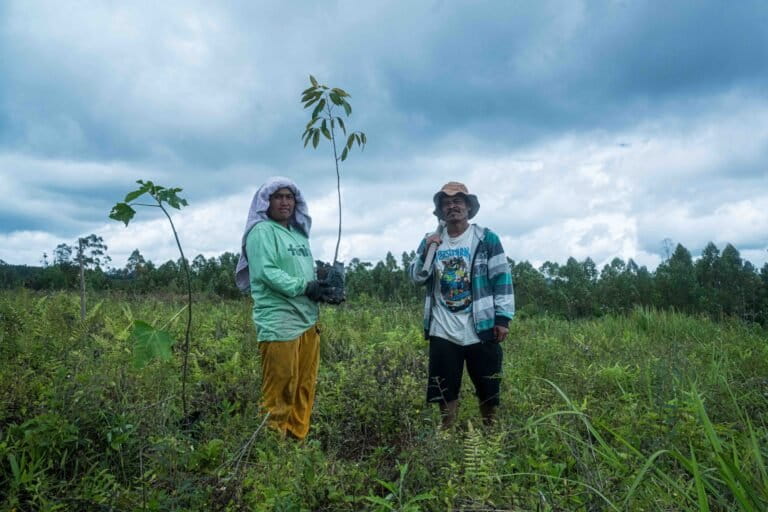
- Recognition of ICCAs: Adopting Indigenous and Community Conserved Areas (ICCAs) as a legitimate, primary pathway in national biodiversity strategies.
- Democratization of Knowledge: Integrating modern science with traditional ecological knowledge through transdisciplinary approaches.
- Collective Data Sovereignty: Ensuring Free, Prior, and Informed Consent (FPIC) at every stage of research and resource management.
- Gender and Intergenerational Justice: Placing women and youth at the center of governance and decision-making.
- Redistribution of Authority: Granting actual legal and political autonomy to Indigenous communities over their ancestral territories, moving beyond mere "participation."
- Regulatory Reform: Repealing restrictive laws (like the current Law 32/2024 and Law 41/1999) and replacing them with frameworks that recognize Indigenous rights. This includes the urgent passing of the Indigenous Peoples Bill and the Climate Justice Bill.
- Reform of Funding Architecture: Creating direct funding mechanisms for community-based organizations rather than funneling money through large, distant NGOs or government agencies.
- Protection of Human Rights Defenders: Ending the criminalization of activists and establishing legal safeguards against SLAPP (Strategic Lawsuit Against Public Participation) tactics.
- Reorientation of Development: Abandoning GDP-centrism and adopting the mandates of the 2001 MPR Decree on Agrarian Reform to ensure that development does not come at the cost of the Earth.
Official Responses and the Road Ahead
The tension between international commitments (such as the Kunming-Montreal Global Biodiversity Framework) and domestic policy is reaching a breaking point. While Indonesia has pledged its commitment to international biodiversity standards, the implementation on the ground remains trapped in the old, colonial-era "monologue" of the state.
Without a fundamental shift, the "conservation" policies currently being implemented will continue to produce "eco-fascism"—a terrifying trend where environmental goals are used to justify the systematic exclusion and repression of the most vulnerable people on the frontlines of the climate crisis.
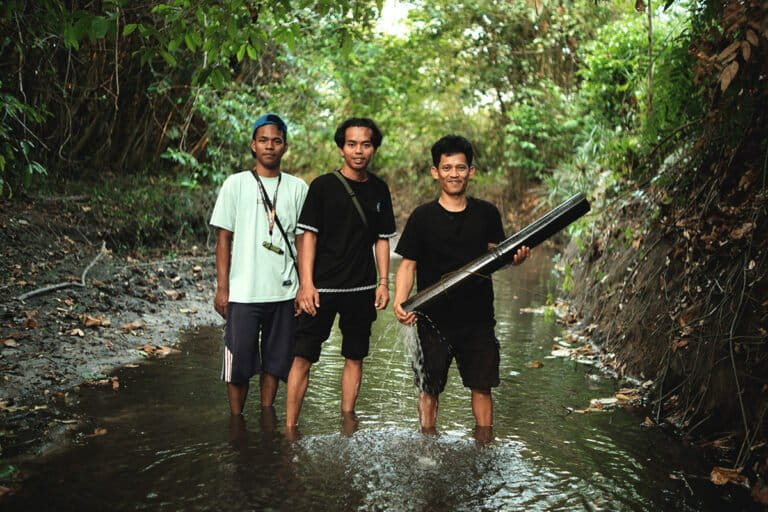
The People’s Conservation Summit 2026 marks a turning point. It is a demand for a future where conservation is not a fence built to keep people out, but a bridge built to protect the rights of those who have been the Earth’s true guardians for generations. The restoration of the planet begins with the restoration of justice. If we are to save the Earth, we must first return its stewardship to the hands of its people.
Eko Cahyono is a Senior Researcher at the Sajogyo Institute, Bogor, and a Doctor of Rural Sociology from IPB University. This article is a reflective summary of the Peoples’ Conservation Summit held in Yogyakarta, September 2026.







