Medical Breakthrough: Surgeons Successfully Perform Rare Reconstruction on Teen Born Without Reproductive Tract
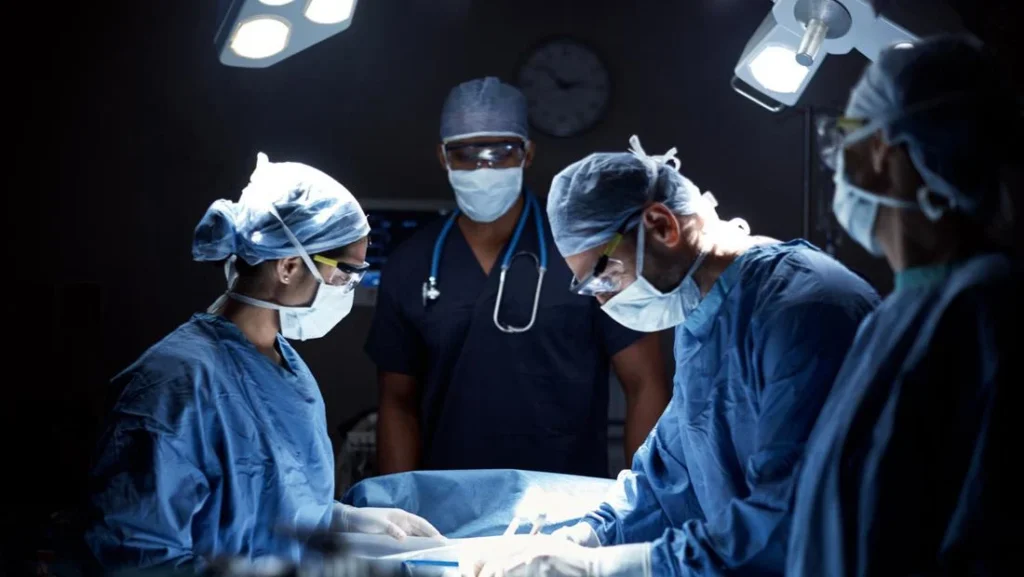
GURUGRAM, India – In a landmark medical achievement that has captured international attention, a multidisciplinary team of surgeons at Max Hospital in Gurugram, India, has successfully performed a complex reconstructive surgery on an 18-year-old girl from the Democratic Republic of Congo. The patient, who was born with a rare congenital anomaly, suffered for years before finding relief through a specialized procedure that restored her reproductive anatomy.
The case serves as a stark reminder of the complexities surrounding congenital reproductive tract anomalies and the critical importance of early diagnostic intervention for adolescent girls experiencing atypical symptoms during puberty.
The Clinical Challenge: A Rare Congenital Anomaly
The patient presented with a condition known as cervicovaginal agenesis. This is an exceptionally rare congenital disorder where an individual is born without a cervix and a vaginal canal, despite the presence of a functional uterus and healthy ovaries.
For the teenager, this meant that while her body was undergoing the hormonal changes associated with puberty, she was physically incapable of menstruating. Because the ovaries were functioning normally, the patient’s body continued to produce endometrial lining and blood each month. However, because there was no exit route—no vaginal canal or cervix—the blood became trapped.
This resulted in a condition known as hematometra, where menstrual blood accumulates within the uterine cavity. The accumulation caused the patient to suffer from excruciating, chronic pelvic pain every month as the uterus became increasingly distended.
A History of Misdiagnosis and Medical Ordeals
The road to the operating room in India was paved with frustration and physical trauma. Prior to her arrival at Max Hospital, the teenager had sought medical help in her home country of the Democratic Republic of Congo. Unfortunately, the rarity of her condition led to a series of diagnostic errors.
Over several years, the patient underwent four separate abdominal surgeries. These procedures, which included attempts to treat suspected appendicitis and hernia, proved entirely ineffective in addressing the root cause of her pain. Instead of providing relief, these surgeries left the young woman with significant abdominal scarring and keloids, further complicating her physical and emotional well-being.
It was only when her family sought an international consultation that the true nature of her condition was identified. The diagnosis of cervicovaginal agenesis marked the end of her long, painful search for answers and the beginning of a complex surgical journey.
Surgical Intervention: Cervicovaginoplasty
The procedure required to address the patient’s condition is considered one of the most difficult in the field of reconstructive gynecology. The medical team at Max Hospital, led by Dr. Suman Lal, Senior Director and Head of the Obstetrics and Gynecology unit, faced the daunting task of creating a functioning anatomical system where none existed.
The Objective
The primary goal of the surgery was two-fold:
- Neovagina Creation: To construct a functional vaginal canal that would allow for future menstruation and sexual health.
- Cervical Reconstruction: To create a conduit between the uterus and the newly constructed vagina, ensuring that the reproductive tract was continuous and functional.
"This was an incredibly challenging case," Dr. Suman Lal stated in an interview with the Times of India. "The patient presented with a fully functional uterus and ovaries, which made the stakes significantly higher. Our objective was not merely to alleviate the debilitating pain, but to perform a precise reconstruction that would preserve the function of her reproductive system."
The surgery, known as a complex cervicovaginoplasty, required immense precision to avoid damaging surrounding pelvic structures, including the bladder and the rectum. The success of the procedure was a testament to the hospital’s advanced surgical infrastructure and the expertise of the gynecology and reconstructive teams.
Post-Operative Recovery and Complications
The recovery phase was characterized by rigorous monitoring. The complexity of the tissue reconstruction meant that the patient remained at high risk for post-operative infection and tissue rejection.
Eight days after the initial procedure, the patient was initially discharged. However, the medical team’s commitment to safety led to a planned readmission on the 18th day for a thorough evaluation under anesthesia. During this check-up, surgeons identified a minor infection and localized fluid accumulation near the surgical site.
This discovery proved critical. By acting immediately, the medical team was able to administer targeted antibiotic therapy. The patient responded exceptionally well to the treatment and was declared fully recovered from the infection the following day. By the third week post-surgery, clinical examinations confirmed that the neovagina and the reconstructed cervical connection had healed perfectly, with the anatomical structures now in their intended positions.
Implications for Adolescent Health: A Call for Vigilance
The successful outcome of this case has prompted experts to issue a strong message to parents and pediatricians worldwide regarding the importance of recognizing the signs of reproductive tract anomalies.
Warning Signs for Parents
Dr. Suman Lal emphasized that the silence of puberty—or the absence of expected physical milestones—should never be ignored. "If a young girl has reached the age of puberty and is exhibiting secondary sexual characteristics, such as breast development and pubic hair, but has not yet begun menstruating, this is a significant clinical red flag," Dr. Lal warned.
Furthermore, cyclic pelvic pain—pain that occurs at regular monthly intervals—in the absence of menstrual bleeding is a classic symptom of an obstructed reproductive tract. In such cases, the blood is often being trapped inside the body, which can lead to severe health complications, including endometriosis, scarring of the fallopian tubes, and potential fertility issues if left untreated for extended periods.
The Necessity of Early Diagnosis
The patient’s story highlights how easily rare conditions can be misdiagnosed as more common ailments, such as gastrointestinal issues. When a patient presents with recurrent abdominal pain, medical professionals should include gynecological examinations in their diagnostic workup, even if the patient is a teenager.
Early detection allows for surgical intervention before the patient suffers from years of chronic pain, emotional trauma, or the long-term physical damage caused by repeated, unnecessary, and unsuccessful surgeries.
Looking Forward: A Future Restored
For the 18-year-old from the Democratic Republic of Congo, the surgery has provided more than just physical healing; it has restored her quality of life. By correcting the anatomy, the team at Max Hospital has effectively ended her cycle of agony and paved the way for a future where she can experience a normal, healthy life.
This case is expected to be documented in medical literature as a successful model for managing cervicovaginal agenesis. It underscores the vital importance of international medical collaboration, as the patient had to travel across continents to find the specialized care required for her unique condition.
As medical technology continues to evolve, the ability to perform complex reconstructive surgeries on congenital anomalies offers hope to countless young women living in silence with similar, often misunderstood, conditions. The message from the medical community is clear: when it comes to the development of adolescent reproductive health, silence is not an option. Early professional evaluation is the most effective tool in preventing long-term suffering and ensuring a healthy future for the next generation.
Through the intervention of the dedicated team at Max Hospital, a young woman’s life has been fundamentally transformed, turning a case of medical rarity into a story of profound medical success.