Indonesia’s New Educational Frontier: Inside the Establishment of the Universitas Republik Indonesia (URI)
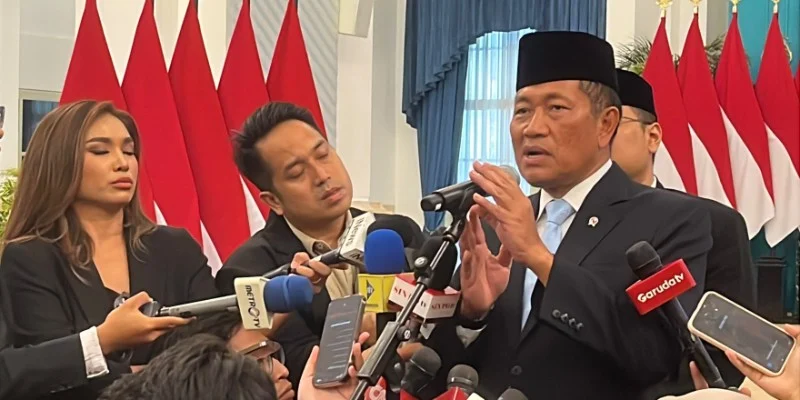
JAKARTA – In a strategic move aimed at recalibrating the nation’s human capital development, President Prabowo Subianto has officially inaugurated the Universitas Republik Indonesia (URI), a centralized powerhouse designed to serve as the epicenter for national education and the grooming of Indonesia’s future leadership.
The establishment of URI, which also functions under the umbrella of the National Education Management Agency (Badan Pengelola Pendidikan Kebangsaan – BPPK), marks a paradigm shift in how the state identifies, nurtures, and deploys talent across the public and corporate sectors. Marshal (Ret.) Donny Ermawan, who currently serves as the Deputy Minister of Defense, has been appointed as the Governor of URI, signaling the administration’s focus on discipline, national character, and strategic foresight.
The Strategic Vision: Integrating the National Intellectual Pipeline
The birth of URI is not merely an administrative reorganization; it is a manifestation of President Prabowo’s overarching vision to consolidate Indonesia’s fragmented educational institutions into a cohesive, mission-driven ecosystem.
For decades, the training of state officials, academic elites, and civil servants occurred in silos. By bringing these disparate entities under a single, unified coordination mechanism, the administration aims to ensure that every future leader—whether in the bureaucracy or the state-owned enterprise (BUMN) sector—shares a common ethos of service and national pride.
"The President’s vision is centered on the holistic development of our human resources," stated Governor Donny Ermawan following his inauguration at the State Palace in Jakarta on Wednesday, July 22, 2026. "URI is the platform where we integrate national education institutions to ensure our leaders of tomorrow are not only academically proficient but deeply rooted in the national ideology."
Organizational Structure: The Three Pillars of URI
According to the governing mandates, the BPPK/URI framework operates through three core operational pillars. Each pillar serves a distinct function in the national development strategy:
1. The Management Agency for Schools of Excellence (Badan Pengelola Sekolah Unggulan)
This arm is tasked with identifying and nurturing top-tier talent from the secondary school level. By standardizing the curriculum for excellence, the state aims to create a meritocratic pipeline that feeds directly into the nation’s top universities and leadership programs.
2. The Management Agency for Higher Education (Badan Pengelola Perguruan Tinggi)
This body oversees the synergy between public universities and national strategic interests. It acts as the bridge between academic research and the practical needs of the state, ensuring that tertiary education remains relevant to the evolving economic and geopolitical landscape.
3. The National Institute of Public Administration (LAN)
Perhaps the most significant change lies in the evolution of the LAN. Historically focused solely on the training and certification of Civil Servants (ASN), the institute is now undergoing a radical expansion. Under the URI umbrella, the LAN’s mandate now extends to the professional development and leadership training of personnel within State-Owned Enterprises (BUMNs).
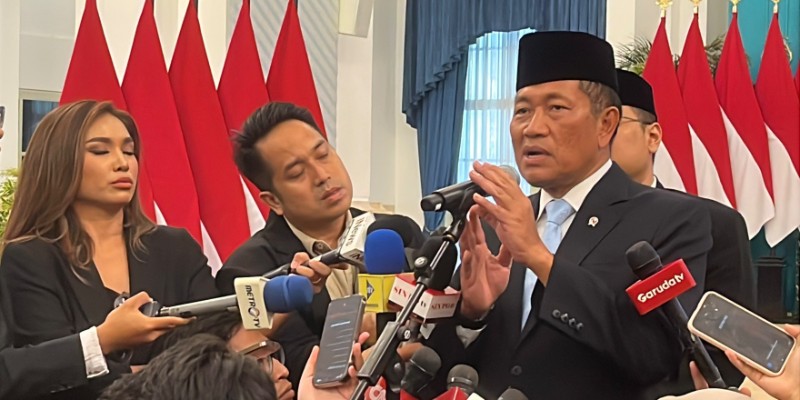
"We are strengthening the LAN," Donny explained. "We are integrating existing systems but expanding their scope. If in the past their mandate was exclusively for civil servants, we are now adding BUMN personnel into the mix to ensure a unified standard of management and integrity across all state entities."
Chronology and The Path to Launch
The formal establishment of URI follows months of intensive policy drafting and institutional alignment. The process culminated on July 22, 2026, with the issuance of Presidential Decree (Keppres) No. 80 P of 2026, which formally ratified the creation of the agency and appointed its leadership.
- Pre-2026: Informal discussions on the need for a "Leadership Academy" to synchronize the training of future ministers, regional heads, and corporate leaders.
- Early 2026: Launch of the Program Presiden untuk Pemimpin Masa Depan (P3MD) as a pilot project for the broader URI concept.
- July 2026: Formal signing of Keppres 80 P/2026.
- July 22, 2026: Official inauguration of Marshal (Ret.) Donny Ermawan as Governor and Prof. Yos Sunityoso as Deputy Governor of URI at the State Palace.
Supporting Data: The P3MD Pilot Program
The operational success of URI is currently being modeled after the Program Presiden untuk Pemimpin Masa Depan (P3MD). This program serves as the "Proof of Concept" for the type of rigorous character building and intellectual training that URI will implement on a national scale.
Currently, 399 new employees from various BUMNs are participating in an intensive pilot program. These individuals represent the first cohort of what the administration calls "the future architects of Indonesia’s progress."
"We are training these 399 individuals to be more than just employees," said Donny. "We are building ‘noble hearts’ and ‘sharp, intelligent minds.’ To advance this nation, technical skills are not enough. They must possess a profound sense of duty and a clear understanding of the state’s strategic goals."
The curriculum for this pilot focuses on three key areas:
- Ideological Foundation: Strengthening national identity and the Pancasila framework.
- Strategic Management: Teaching administrative efficiency and decision-making under pressure.
- Ethical Leadership: Combating corruption through the cultivation of integrity and civic responsibility.
Official Responses and Administrative Leadership
The appointment of Marshal (Ret.) Donny Ermawan is seen as a strategic choice, blending military discipline with administrative expertise. His background as the Deputy Minister of Defense provides him with the necessary experience in managing large-scale national security and development projects.
He is supported by Prof. Yos Sunityoso, whose academic credentials are expected to balance the administrative and security-heavy background of the Governor. Together, the leadership duo is tasked with building the agency from the ground up—an ambitious project that requires the harmonization of labor laws, educational statutes, and the internal regulations of BUMNs.
Observers note that while the move is ambitious, its success will depend on the agency’s ability to remain apolitical. By institutionalizing the training process, the Prabowo administration hopes to insulate the next generation of Indonesian leaders from the whims of electoral cycles.

Implications: A New Era for the Indonesian Bureaucracy
The establishment of URI carries profound implications for the future of the Indonesian state.
1. The Blurring Lines Between Public and Corporate Leadership
By training BUMN employees alongside civil servants, the government is signaling that the management of state assets is just as critical as the management of the state itself. This could lead to a more fluid exchange of talent, where professionals move seamlessly between the public sector and state-owned enterprises without a loss of administrative standards.
2. Standardizing National Character
Critics and supporters alike agree that the primary output of URI will be a "standardized" leader. While supporters argue this creates a more efficient and disciplined government, some critics caution that a centralized educational body must guard against the homogenization of thought. The challenge for Governor Donny and his team will be to foster national unity without stifling the creative and critical thinking necessary for a modern democracy.
3. Economic Impact
If the program succeeds, the state expects to see a significant reduction in administrative friction within BUMNs and public offices. Better-trained human resources are expected to translate into higher efficiency in project execution, faster digital transformation, and more robust anti-corruption measures.
4. A Template for the Future
The URI model could eventually become a blueprint for regional cooperation. As Indonesia aims to project its influence in Southeast Asia, the ability to produce a highly trained, ideologically consistent cadre of leaders could provide the country with a significant soft-power advantage.
Conclusion: The Road Ahead
As the first cohort of 399 BUMN employees nears the end of their training, the eyes of the nation are fixed on the effectiveness of this new model. For Governor Donny Ermawan, the task is clear: the Universitas Republik Indonesia is not just another government body. It is the crucible where the future of Indonesia is being forged.
"We are building the future, one leader at a time," Donny remarked. "With the support of the President and the dedication of our instructors, URI will become the benchmark for quality and integrity in Indonesian public service."
As the administration moves into the next phase of implementation, the expansion of the LAN and the formal integration of the BPPK agencies will be closely watched by international observers and domestic stakeholders. If the vision of President Prabowo holds, Indonesia is on the cusp of an era where leadership is no longer a matter of chance, but a product of precision-engineered national education.