Tears in the Halls of Power: The Struggle of a Small-Scale Fuel Retailer Against Alleged Police Extortion
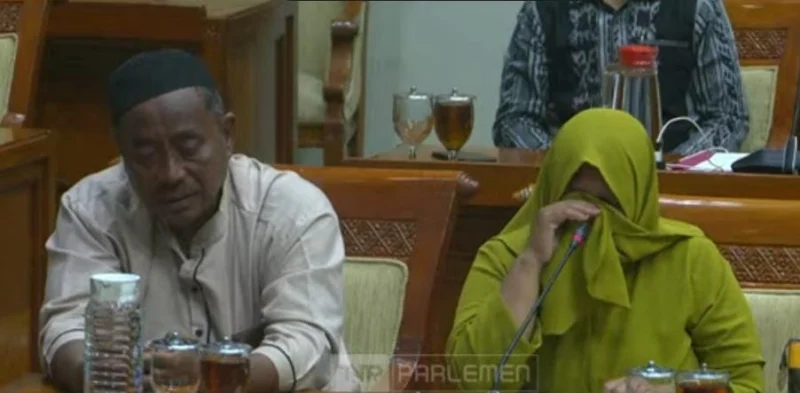
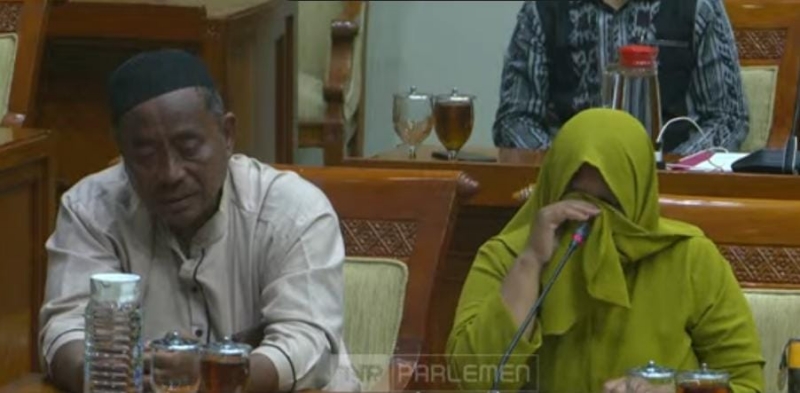
JAKARTA – The ornate chambers of the House of Representatives (DPR) usually echo with the dry rhetoric of legislative debate. However, on Wednesday, July 22, 2026, the atmosphere in the Commission III hearing room shifted dramatically. The proceedings were punctuated not by political posturing, but by the raw, inconsolable sobbing of Supiah, a small-scale Pertalite fuel retailer from Way Kanan, Lampung.
Her presence at the Public Hearing (RDPU) was a desperate plea for justice, a final attempt to prevent her husband, Hartono, from facing a criminal trial that she believes is built on a foundation of corruption, intimidation, and systemic abuse.
The Core Conflict: A Family’s Fight for Survival
The narrative presented by Supiah is one that resonates with many in Indonesia’s informal economic sector: a struggle between local livelihoods and the rigid, sometimes predatory, application of fuel distribution laws.
Hartono, a small-time entrepreneur, found himself in the crosshairs of the Way Kanan Police following the delivery of several dozen jerrycans of Pertalite—a subsidized gasoline product—to their modest shop. In the eyes of the law, this act constituted "illegal hoarding" of subsidized fuel, a criminal offense under Indonesian regulations designed to prevent the misappropriation of government-funded energy resources.
However, for Supiah and her family, the incident was not a criminal enterprise, but a matter of economic survival. As she stood before the members of the House, her voice trembled, breaking through the formalities of the meeting. "I want my husband to be free, Sir. Please, do not let it go to trial," she pleaded, her tears painting a stark picture of the human cost of the legal process.
Chronology of the Dispute: From Arrest to Alleged Extortion
The sequence of events leading to the RDPU reveals a troubling timeline of police conduct and legal uncertainty.
The Initial Detention
The arrest occurred after local police intercepted the delivery of subsidized fuel intended for the couple’s retail stall. Following the seizure, Hartono was taken into custody by the Way Kanan Police. He remained behind bars for 12 days—a period that Supiah describes as a nightmare of uncertainty and financial devastation for her family.
The Allegation of Extortion
The most damning aspect of Supiah’s testimony, however, did not concern the legality of the fuel, but the conduct of the authorities during the detention. According to Supiah, the legal process was not strictly about justice, but about financial extraction. She alleged that certain police officers demanded a payment of Rp 50 million in exchange for her husband’s release.
For a family living on the thin margins of a small-scale fuel retail business, Rp 50 million is an astronomical figure. When the family failed to produce the demanded sum, the detention continued, and the case was pushed further toward the judicial process. This allegation has transformed a local "hoarding" case into a high-profile inquiry regarding professional ethics within the National Police (Polri).
Supporting Data: The Complexity of Subsidized Fuel Distribution
To understand the broader implications of this case, one must examine the environment in which Hartono and Supiah operate. Indonesia’s subsidized fuel distribution system is notoriously difficult for small businesses to navigate.
The "Grey Zone" of Retailers
Many small-scale retailers operate in a legal grey area. While the government strictly regulates the distribution of Pertalite to ensure it reaches the intended beneficiaries, the demand in remote or rural areas often outstrips the supply available at official gas stations (SPBU). This creates a market for independent retailers who bridge the gap.
While the law defines the unauthorized storage and transport of such fuel as "hoarding," critics argue that the regulations are often used to target small operators while large-scale industrial abusers occasionally escape scrutiny. The case in Way Kanan highlights the tension between the state’s desire to control subsidies and the practical reality of rural energy access.
Official Responses: Accountability Under Scrutiny
The gravity of Supiah’s accusations forced an immediate response from the leadership of the Way Kanan Police. During the same RDPU session, Way Kanan Police Chief (Kapolres) AKBP Didik Kurnianto was held accountable for the allegations leveled against his subordinates.
The Police Position
AKBP Didik Kurnianto acknowledged the gravity of the situation, confirming that his department has initiated an internal investigation into the allegations of extortion. "We have received the information regarding the alleged extortion and are currently conducting a thorough follow-up," Didik stated.
The police chief emphasized that the internal affairs division is tasked with determining whether the detention of Hartono was conducted in accordance with Standard Operating Procedures (SOP) or if, as alleged, it was influenced by the solicitation of bribes.
The Status of the Accused
As a result of the public pressure and the ongoing inquiry, Hartono has been granted a suspension of detention. He is currently free, though the legal shadow of the charges remains. This move is seen by observers as a significant concession, likely intended to de-escalate the tension surrounding the case while the investigation into the alleged misconduct of the officers proceeds.
The Broader Implications: Police Reform and Judicial Integrity
The case of Supiah and Hartono is far more than a local dispute; it serves as a litmus test for the integrity of law enforcement in Indonesia.
The Role of Commission III
The fact that this case reached the House of Representatives speaks to a growing frustration with the police’s internal grievance mechanisms. Commission III, which oversees Law, Human Rights, and Security, has become an increasingly vital venue for citizens to challenge the abuse of power. By bringing the matter to the national stage, the legislature is signaling that the era of "business as usual" for local law enforcement is under pressure.
The Impact on Public Trust
The allegation of extortion, if proven true, does profound damage to public trust in the National Police. In an era where the Indonesian government is pushing for greater transparency and anti-corruption measures, the behavior of individual officers can undermine years of institutional reform. If small-scale entrepreneurs fear that the police are not protectors of the law but rather predators seeking illicit gains, the social contract in rural regions begins to fray.
Next Steps for the Judiciary
As the investigation continues, several key questions remain:
- Will the extortion investigation lead to administrative or criminal sanctions for the accused officers?
- Will the case against Hartono be dropped, or will it proceed to trial as a test of the hoarding regulations?
- What reforms will be implemented in Way Kanan to ensure that fuel enforcement is transparent and free from corruption?
Conclusion: A Call for Systemic Change
Supiah’s tears in the halls of the DPR are not just the tears of a worried wife; they are a symbol of a deeper, systemic struggle. Her story highlights the vulnerability of ordinary citizens when confronted by the machinery of the state. While the suspension of Hartono’s detention is a victory for the family, the fight is far from over.
The Indonesian public, and the national media, will be watching the Way Kanan Police closely. The outcome of this case will serve as a bellwether for whether the system is capable of correcting its own failures or if the shadows of extortion will continue to loom over those trying to make an honest, albeit complex, living in the margins of the economy.
For now, Hartono remains home, but the echoes of his wife’s testimony remain in the halls of power, serving as a reminder that behind every criminal statute is a human life—and that the law, when wielded with malice, can be as destructive as any crime it claims to prevent.