
Indonesia Revives Vision for World Mangrove Center: A Strategic Pivot for Global Climate Resilience
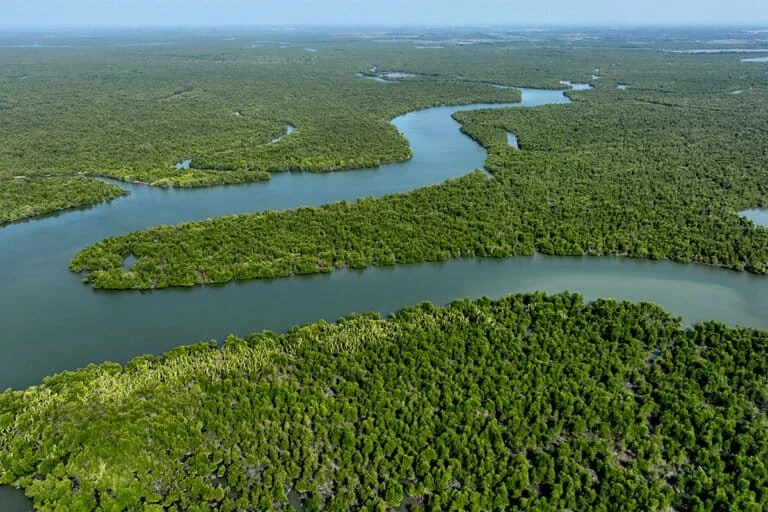
Indonesia is once again breathing life into its ambitious vision to establish the World Mangrove Center (WMC), a global hub envisioned as the epicenter for mangrove conservation, restoration, and collaborative research. After years of stagnation, the project has regained momentum, driven by the urgent necessity of protecting Indonesia’s 3.4 million hectares of mangrove forests—a staggering 25% of the world’s total mangrove cover.
As the climate crisis intensifies, the WMC is no longer just a diplomatic aspiration; it is a strategic imperative. This article explores the evolution, challenges, and high-stakes potential of Indonesia’s bid to lead the world in coastal ecosystem management.
1. The Strategic Significance: Why Mangroves Matter
Mangroves are often misunderstood as mere coastal shrubs, yet they serve as the "guardians of the coastline." These unique ecosystems are unparalleled in their environmental utility, serving three primary functions:
- Climate Mitigation: Mangroves are prolific "blue carbon" sinks, sequestering carbon dioxide at rates far exceeding terrestrial forests.
- Disaster Risk Reduction: Acting as natural bio-shields, they dissipate wave energy, protecting coastal communities from storm surges, tsunamis, and accelerating erosion.
- Biodiversity and Livelihoods: They serve as vital nurseries for marine life, supporting the food security and economic stability of millions of people residing in coastal regions.
Dyan Murtiningsih, Director General of Watershed Management and Forest Rehabilitation at the Ministry of Forestry, emphasizes that managing these ecosystems requires a tripartite approach: ecological integrity, socio-economic prosperity, and global climate alignment. "No single country, ministry, or organization can solve these complex issues in isolation," she asserts. The WMC is designed to bridge the gap between these silos.
2. A Chronology of the WMC Initiative
The road to the WMC has been a long and winding diplomatic journey, marked by both international consensus and domestic hesitation.
- 2017 (Bali Conference): The seeds of the WMC were sown during a major international mangrove conference in Bali, where Indonesia first proposed the need for a global knowledge-sharing platform.
- 2019 (UNEA-4, Nairobi): Indonesia successfully elevated the discourse to the United Nations level. The efforts culminated in the adoption of Resolution No. 12 of 2019 at the United Nations Environment Assembly (UNEA-4) in Nairobi, Kenya. This resolution provided a global framework for the sustainable management of mangrove ecosystems, positioning Indonesia as a de facto leader in the field.
- 2020–2023 (The Stagnation Period): Despite international backing, the project faced internal delays due to shifting bureaucratic priorities, pandemic-related budget reallocations, and the complexities of coordinating cross-ministerial efforts.
- 2024–Present (The Revival): Recognizing the competitive pressure from other nations and the accelerating degradation of its own forests, the Indonesian government has signaled a renewed commitment to institutionalizing the WMC.
3. Beyond Bricks and Mortar: The WMC Model
One of the most critical clarifications provided by Putera Parthama, Chairman of the National Watershed Forum, is that the WMC is not intended to be a monolithic, sprawling bureaucratic complex.
"The WMC is not a grandiose office building," Parthama explains. Instead, it is designed as a "hub-and-spoke" network. It acts as a connective tissue linking governments, academic researchers, private investors, NGOs, and local coastal communities across the globe.
Core Functions of the WMC:
- Collaborative Research: Synchronizing scientific efforts to understand mangrove resilience in the face of sea-level rise.
- Knowledge Exchange: Creating a global repository of "best practices" for restoration techniques that actually survive in the long term.
- Capacity Building: Training local practitioners and policymakers in developing nations on how to manage mangrove resources.
- Standardization: Developing global protocols for measuring, reporting, and verifying (MRV) blue carbon credits, ensuring that the carbon market for mangroves remains transparent and credible.
4. The Funding Dilemma: Financing the Future
A project of this magnitude requires a robust and sustainable financial architecture. Agus Justianto, a prominent forestry expert, argues that relying on state budgets alone is insufficient and unsustainable.
He proposes a "Blended Finance" model, which creates a synergy between:
- Public Funds: Government budget allocations for environmental stewardship.
- Private Capital: Impact-driven investments from corporations seeking to offset their carbon footprint.
- International Grants: Funding from multilateral climate funds, such as the Green Climate Fund (GCF).
Additionally, the WMC could act as a clearinghouse for REDD+ (Reducing Emissions from Deforestation and Forest Degradation) payments. By proving that preserved mangroves effectively capture carbon, Indonesia can leverage results-based payments to fund further conservation efforts.
5. Challenges: The Reality of Restoration
Despite the optimism, the road ahead is treacherous. The primary obstacle is the physical state of the forests themselves.
- The Scale of Damage: Approximately 700,000 hectares of Indonesia’s mangrove forests are currently categorized as damaged. Restoration is not as simple as planting seedlings; it requires complex hydrological restoration, land-use conflict resolution, and years of monitoring.
- Institutional Volatility: A recurring theme in Indonesian environmental policy is the impact of political transitions. Changes in administration often lead to shifting targets and policy reversals, which can undermine long-term conservation projects that require decades of stability.
- Geopolitical Competition: Indonesia is not the only player in the room. Countries like China are aggressively pursuing their own mangrove initiatives and regional hubs. If Indonesia fails to move quickly, it risks losing its status as the "World’s Mangrove Leader," effectively surrendering the diplomatic advantage it earned at UNEA-4.
6. Official Responses and Future Implications
The government’s stance is increasingly clear: inaction is the greatest risk.
The Ministry of Forestry recognizes that to succeed, the WMC must transcend the typical "project-based" mindset. Success depends on four pillars:
- Policy Consistency: Ensuring that mangrove protection is integrated into national development plans regardless of election cycles.
- Multistakeholder Alignment: Moving beyond government control to include the private sector and indigenous communities as active shareholders in the WMC.
- Sustainable Funding: Moving from donor-dependent models to market-based blue carbon financing.
- Scientific Integrity: Using the WMC to establish Indonesia as the global authority on mangrove data, ensuring that policies are based on hard science rather than political narratives.
The Human Element
Beyond the metrics and the carbon credits, there is a fundamental human rights and social justice aspect. In coastal regions, mangrove forests are often exploited by illegal networks for wildlife smuggling or industrial development. The WMC, if implemented correctly, provides a framework to empower local communities, turning them from victims of ecological decline into the primary stewards of their own resources.
Conclusion
The revival of the World Mangrove Center represents a pivotal moment for Indonesia. With the world’s largest mangrove estate, the country holds a unique key to global climate stability. However, holding the resource is not the same as holding the leadership.
To realize the WMC, Indonesia must demonstrate that it can move past the planning stage and into the era of implementation. This requires not just capital and scientific expertise, but a sustained political courage to prioritize long-term ecological health over short-term industrial expansion. If the WMC can successfully harmonize the interests of the international community with the needs of local coastal populations, it will not only secure Indonesia’s position as a climate leader but also ensure that the world’s most effective natural carbon defense remains standing for generations to come.
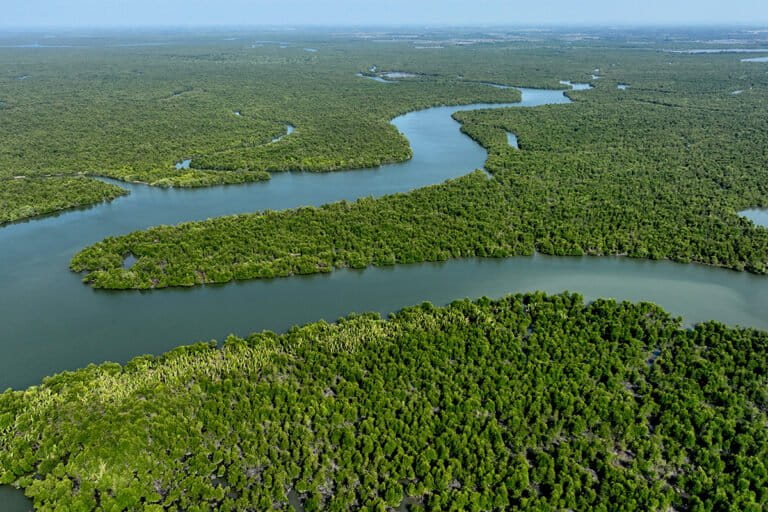
Photo Caption: An aerial view of mangrove forests and rivers on the east coast of Aceh. These waterways are frequently exploited by illegal actors to smuggle wildlife and other contraband abroad. Drone photo: Junaidi Hanafiah/Mongabay Indonesia.







