Indonesia Poised to Become Global Financial Hub: Landmark PFII Bill Set for Final Parliamentary Approval
JAKARTA – Indonesia is standing on the precipice of a transformative economic era. Today, July 21, 2026, the Indonesian House of Representatives (DPR RI) is set to hold a plenary session to officially ratify the Bill on the Indonesian International Financial Center (Rancangan Undang-Undang Pusat Finansial Internasional Indonesia/RUU PFII) into law.
This legislative milestone marks the culmination of months of rigorous deliberation between the government and the legislature. Designed to catapult Indonesia into the upper echelons of global finance, the PFII is a strategic gambit to lure global conglomerates, diversify capital sources, and solidify the nation’s footprint in the international financial ecosystem.
The Legislative Journey: From Concept to Plenary
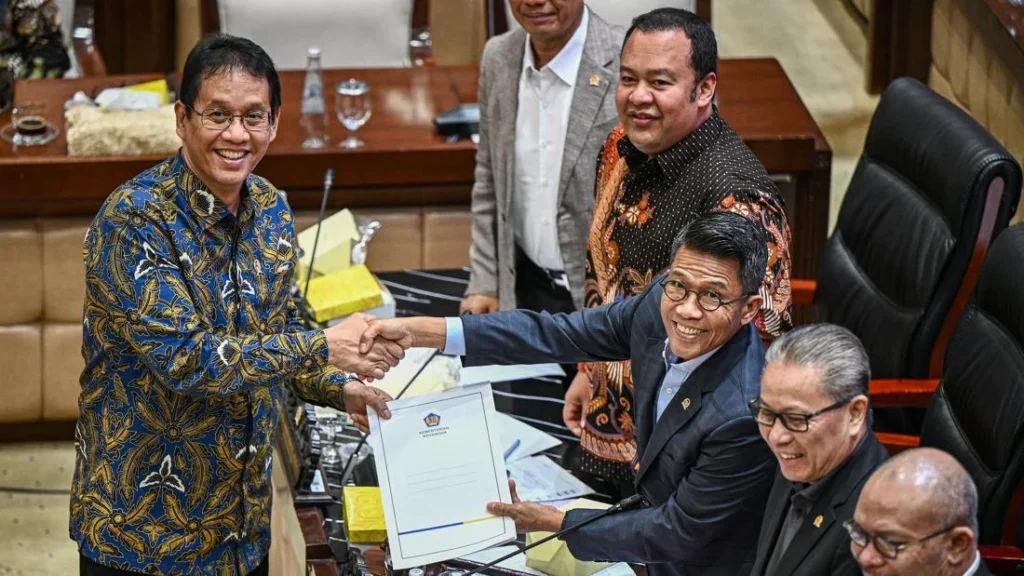
The path to this moment has been characterized by cross-party consensus and high-level technical coordination. On July 20, 2026, the DPR RI Commission XI, which oversees finance and banking, finalized the draft after intensive deliberations with government representatives.
Mohamad Hekal, Chairman of the Working Committee (Panja) for the PFII, confirmed the structural completion of the legislation. "Based on the diligent work of the Panja, the drafting team, and the synchronization team, we have finalized the draft of the PFII Law, systematically structured into 10 chapters and 73 articles," Hekal stated during the finalization meeting at the DPR complex in Jakarta.
The consensus was unanimous. Representatives from all eight factions in Commission XI—PDI-P, Golkar, Gerindra, Nasdem, PKB, PKS, PAN, and the Democratic Party—offered their full support to advance the bill to the final plenary stage.
Commission XI Chairman, Mukhamad Misbakhun, led the final vote, noting, "It is concluded that all eight factions have agreed to elevate the PFII Bill to the second level of deliberation, which will take place in the DPR RI plenary session."
Strategic Rationale: Why PFII Matters
Representing the government, Minister of Finance Purbaya Yudhi Sadewa articulated the administration’s ambitious vision for the hub. According to the Minister, the PFII is not merely a regulatory framework but an engine for macroeconomic deepening.
"The government believes that the PFII will act as a catalyst to deepen our financial markets, drive diversification of instruments, and broaden our sources of financing," Purbaya stated. "By creating a world-class environment, we are enhancing Indonesia’s competitive advantage and ensuring our nation is a vital node in the global financial network."
Key Pillars of the PFII Framework
The law introduces a suite of "special authorities" and unique regulatory exceptions designed to mirror the success of global financial hubs like Singapore, Dubai, and Hong Kong. Key components include:
- Monetary Flexibility: The law permits the use of foreign currencies for business transactions conducted within the PFII, removing traditional constraints that often hinder international capital flow.
- Regulatory "Golden" Incentives: To attract top-tier global talent and corporate headquarters, the PFII will offer streamlined pathways for golden visas, simplified immigration, and specialized labor regulations.
- Linguistic and Legal Infrastructure: To ensure ease of doing business for multinational firms, the law allows for the official use of English in documentation and operations within the hub.
- Institutional Autonomy: The bill mandates the creation of specialized bodies, including the PFII Council, the PFII Management Authority, a dedicated Financial Services Oversight Board, an international arbitration center, and a specialized PFII court to handle high-level commercial disputes.
Economic Implications: Tax Holidays and Competitiveness
Perhaps the most aggressive incentive embedded within the 73 articles is the fiscal policy. To entice major financial players, the government has authorized a 0% corporate income tax rate for financial services entities operating within the PFII for a period of 50 years.
Economists view this as a "game-changer." By removing the tax burden for half a century, Indonesia is effectively signaling to the world that it is willing to sacrifice immediate tax revenue for the sake of long-term capital accumulation and the development of a world-class financial ecosystem.
Strengthening the Global Position
The creation of the PFII is a response to the shifting tides of global finance. As capital flows become increasingly fluid, nations are competing to offer the most secure, efficient, and investor-friendly jurisdictions. By implementing a "special status" regime, Indonesia is essentially creating a "state within a state" for finance, where international standards of law, tax, and labor are the baseline rather than the exception.
Institutional Oversight and Governance
The complexity of the PFII requires a robust governance structure. The bill outlines a multi-tiered oversight system:
- The PFII Council: Responsible for strategic policy direction and high-level stakeholder engagement.
- The Management Authority: Handles the daily operational administration of the zone, acting as a one-stop-shop for licensing and business permits.
- Independent Oversight: The Financial Services Oversight Board will ensure that, despite the regulatory flexibility, the hub remains insulated from money laundering, terrorist financing, and systemic market manipulation.
- Legal Recourse: The inclusion of an international arbitration center and a specialized court is designed to build trust among foreign investors, ensuring that legal disputes are handled according to international commercial standards rather than local civil court backlogs.
Challenges and Future Outlook
While the political and legislative support is currently at an all-time high, the transition from law to operational reality will present significant challenges. Critics and analysts have pointed to several areas that will require careful management:
- Regulatory Integration: Harmonizing the PFII’s special rules with national laws will be a complex bureaucratic task. The government must ensure that the "special status" does not create legal friction with other existing economic zones.
- Talent Acquisition: Building a hub requires not just buildings, but brains. The government will need to implement a massive human capital development program to ensure that the domestic workforce can support the high-tech, high-finance requirements of the firms moving into the hub.
- Regional Competition: With neighboring countries like Singapore and Malaysia having well-established financial hubs, Indonesia must differentiate itself through speed, efficiency, and the unique scale of its domestic market—which remains the largest in Southeast Asia.
Official Closing Statements
In his final remarks during the Commission XI meeting, Minister Purbaya expressed his optimism. "This is a historic moment for the Indonesian economy. We are not just drafting a law; we are constructing a gateway for Indonesia to become a central player in the global economy. The government stands ready to implement these regulations immediately upon passage."
As the DPR RI convenes today, the eyes of the international financial community are on Jakarta. The passage of the PFII Law will signal that Indonesia is ready to shed its status as a peripheral emerging market and take its place as a cornerstone of international finance.
The ratification today will be the first step in a long journey. The successful implementation of these 73 articles will determine whether Indonesia can effectively harness the power of global capital to fuel its national development goals for the next generation. As the final vote is cast, the message to global investors is clear: Indonesia is open for business, and it is playing for keeps.
Reported by [Name/Bureau], Jakarta.
© 2026, National News Service. All rights reserved.