Indonesia Demands Concrete Action for Humanitarian Personnel Safety at UN High-Level Meeting
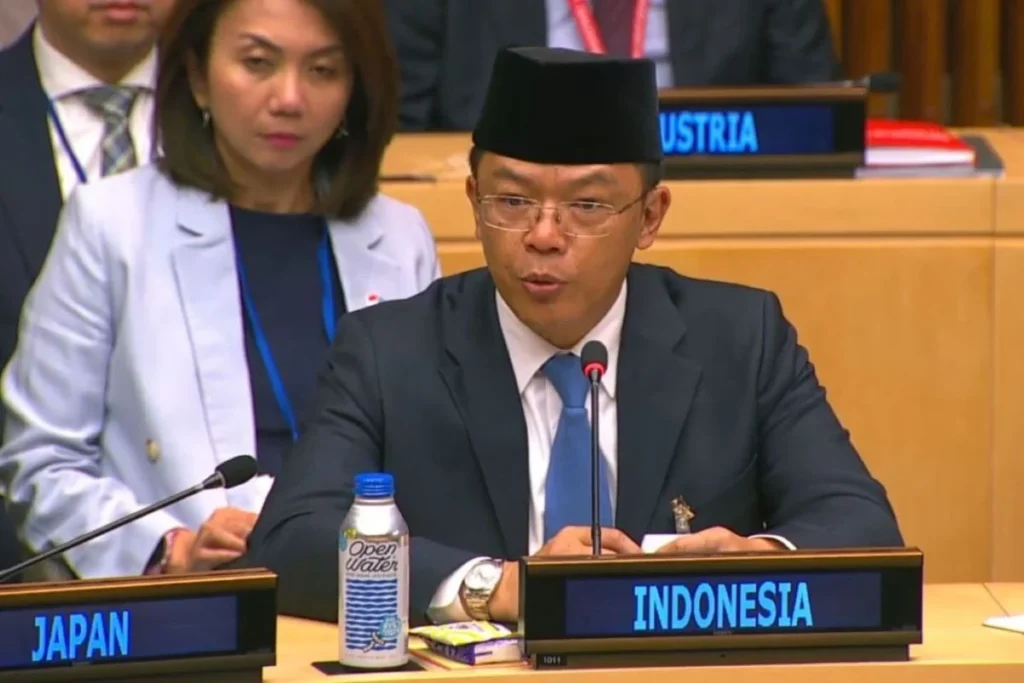
NEW YORK — In a forceful and impassioned address at the United Nations Headquarters, Indonesian Foreign Minister Sugiono has issued an uncompromising call for immediate, tangible action to guarantee the absolute safety and security of humanitarian personnel operating in active conflict zones. Speaking at a high-level meeting dedicated to the Declaration on the Protection of Humanitarian Personnel, the top Indonesian diplomat made it unequivocally clear that Jakarta categorically rejects any form of impunity for violations of international humanitarian law.
The gathering, held on Wednesday, September 23, local time, brought together global leaders and diplomats to assess the escalating dangers faced by aid workers, medical staff, and peacekeepers worldwide. Against the backdrop of worsening global humanitarian crises, Minister Sugiono’s address underscored Indonesia’s steadfast commitment to upholding international legal frameworks and protecting those who risk their lives to alleviate human suffering.
Main Facts
- Core Message: Foreign Minister Sugiono demanded real, concrete actions to safeguard humanitarian personnel in conflict zones and firmly rejected any impunity for violations of international humanitarian law.
- The Venue: The high-level meeting on the Declaration on the Protection of Humanitarian Personnel took place at the United Nations Headquarters in New York on Wednesday, September 23.
- Global Support: The Declaration, launched a year prior, has garnered the official backing of more than 120 member states, reflecting broad international consensus on the necessity of protecting aid workers.
- National Sacrifices: Indonesia cited its own direct experiences with tragedy, notably the destruction of the Indonesian Hospital in Northern Gaza due to Israeli military attacks and the tragic loss of Indonesian National Armed Forces (TNI) personnel serving under the UN peacekeeping banner.
- Diplomatic Initiatives: In collaboration with Egypt and Malaysia, Indonesia spearheaded a resolution at the UN Human Rights Council (UNHRC) to address restricted humanitarian access and mounting threats against aid workers.
- Strategic Leadership: Minister Sugiono is leading the Indonesian delegation at the UN General Assembly sessions in New York, having arrived on Monday, September 21, ahead of his scheduled national statement during the General Debate.
Chronology of Events and Diplomatic Engagements
The trajectory of Indonesia’s recent high-level diplomatic engagements at the United Nations spans a carefully coordinated schedule aimed at maximizing global pressure on pressing humanitarian and geopolitical issues.
Monday, September 21
Foreign Minister Sugiono arrived in New York, establishing the Indonesian delegation’s presence for the high-level segment of the United Nations General Assembly. Immediately upon arrival, the Minister engaged in preparatory bilateral consultations and coordination meetings with like-minded delegations, focusing heavily on the protection of civilians and humanitarian space in ongoing global conflicts.
Wednesday, September 23
Minister Sugiono delivered his landmark statement at the high-level meeting on the Declaration on the Protection of Humanitarian Personnel. During this session, he highlighted the growing chasm between international legal commitments and harsh operational realities on the ground. Later in the week, Indonesian diplomatic maneuvers extended to the floor of the General Assembly, where the Indonesian delegation took part in a high-profile walkout when Israeli Prime Minister Benjamin Netanyahu took the podium to deliver his address—a powerful symbolic gesture underscoring Jakarta’s firm stance on Middle Eastern conflicts.
Upcoming Schedule: Saturday, September 26
Minister Sugiono is scheduled to deliver Indonesia’s comprehensive national statement during the high-level General Debate of the UN General Assembly on Saturday night, local time. This address is expected to synthesize Indonesia’s foreign policy priorities, encompassing sustainable development, international solidarity, and the architecture of global peace and security.
Supporting Data and Realities on the Ground
While the Declaration on the Protection of Humanitarian Personnel has successfully united over 120 nations under a shared banner of commitment, the situation on the front lines of global conflicts remains profoundly alarming. According to briefings monitored via UN Web TV, the humanitarian landscape has deteriorated to unprecedented levels of danger.
Hundreds of aid workers, relief administrators, and medical professionals have been killed while carrying out their life-saving mandates over the past year. Crucial infrastructure, including hospitals, distribution centers, and UN compounds, continues to be treated as strategic targets rather than protected sanctuaries, in direct violation of the Geneva Conventions.
Minister Sugiono pointedly noted that these recurring tragedies are not the result of a vacuum in international jurisprudence. Rather, they stem from a systemic and catastrophic failure of political will to enforce and comply with existing legal norms.
"International humanitarian law is crystal clear: humanitarian and medical personnel must be respected and protected. Violators must be investigated, and perpetrators must be held accountable," Sugiono asserted. "Indonesia has also experienced this tragedy firsthand."
To emphasize this point, the Indonesian delegation drew global attention to two specific losses:
- The Destruction in Gaza: The systematic targeting and destruction of the Indonesian Hospital in Northern Gaza amid Israeli military operations, which crippled essential medical services for thousands of trapped civilians.
- Peacekeeping Casualties: The ultimate sacrifice made by Indonesian National Armed Forces (TNI) personnel who lost their lives while fulfilling UN peacekeeping mandates in volatile conflict theaters.
Official Responses and Strategic Policy Proposals
Recognizing that rhetoric alone cannot stop bullets and bombs, Indonesia has taken proactive diplomatic and operational steps to transform international declarations into enforceable protections.
1. Rejection of Impunity
Indonesia maintains that the culture of impunity is the single greatest enabler of ongoing attacks against aid workers. By stressing that violations must be rigorously investigated and prosecuted, Jakarta is pushing for international accountability mechanisms to ensure that no government or armed group can target humanitarian workers with legal immunity.
2. UN Human Rights Council Resolutions
In a demonstration of practical multilateral diplomacy, Indonesia has joined forces with Egypt and Malaysia to champion a dedicated resolution within the UN Human Rights Council (UNHRC). This joint initiative is specifically designed to dismantle administrative and physical barriers to humanitarian access while tackling the escalating threats directed at field personnel.
3. Institutional Preparedness and Field Capacity
Addressing operational security, Minister Sugiono outlined Indonesia’s comprehensive approach to safeguarding personnel before they are deployed to high-risk areas:
- Mandatory Pre-Deployment Training: Enhancing rigorous operational training and psychological preparedness for all Indonesian peacekeepers and aid coordinators before they enter conflict zones.
- Field Coordination: Optimizing real-time communication channels and logistical coordination mechanisms during active deployment phases.
- Technological Integration: Leveraging advanced situational awareness tools and modern technology to monitor threats and safeguard the physical well-being of personnel on the ground.
"Our focus must be centered on ensuring that this declaration makes a tangible difference on the ground. Protecting those who serve humanity is not an act of charity; it is an absolute obligation," Minister Sugiono declared.
Implications for Global Diplomacy and Future Outlook
Indonesia’s vocal stance at the United Nations carries profound implications for the future of international humanitarian operations and South-South solidarity.
By tying high-level diplomatic declarations directly to national sacrifices—such as the loss of personnel in Gaza and peacekeeping missions—Indonesia bridges the gap between abstract diplomatic norms and human suffering. This authentic engagement enhances Jakarta’s moral authority as a principled mediator and a steadfast defender of multilateralism.
Furthermore, Indonesia’s collaboration with middle-power partners like Egypt and Malaysia signals a growing trend of developing nations taking the legislative and diplomatic initiative at the UN, rather than waiting for traditional Western superpowers to lead the agenda on human rights and international law enforcement.
As the UN General Assembly sessions progress toward their conclusion, the international community faces a critical litmus test. Whether the stark warnings and actionable proposals articulated by Foreign Minister Sugiono will translate into structural reforms within the UN Security Council and Human Rights Council remains to be seen. However, Indonesia has firmly established that the cost of inaction is no longer acceptable, and that the protection of humanitarian workers must be treated as a non-negotiable pillar of international law and global peace.