
Bridging the Digital Divide: Telkom Indonesia and BW Digital Complete Nongsa Changi Cable Landing in Batam
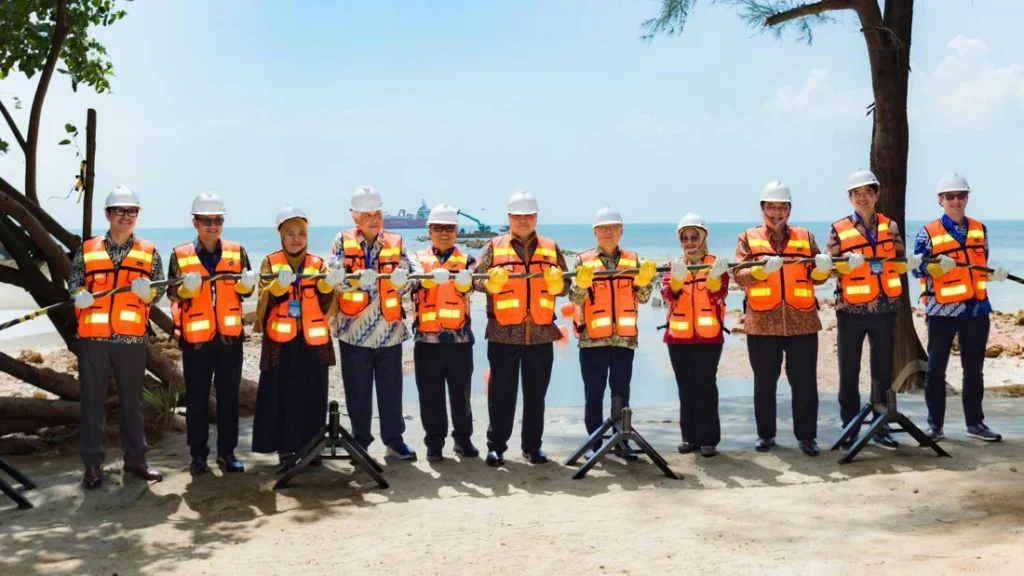
BATAM, INDONESIA – In a move that cements the burgeoning "digital bridge" between Indonesia and Singapore, PT Telkom Indonesia (Persero) Tbk, through its international arm PT Telekomunikasi Indonesia International (Telin), has successfully completed the landing of the Nongsa Changi Cable (NCC) at the Nongsa Digital Park (NDP) in Batam.
The landing ceremony, held on Tuesday, July 21, 2026, marks a pivotal milestone in Southeast Asia’s telecommunications landscape. By connecting the strategic industrial hub of Batam directly to the global financial and data hub of Singapore, the NCC system is poised to become the backbone of a new digital corridor, facilitating the rapid exchange of data required for the next generation of artificial intelligence (AI), cloud computing, and hyperscale data center operations.
Main Facts: A New Arterial Route for Regional Data
The Nongsa Changi Cable (NCC) is a high-capacity subsea fiber optic system designed to address the surging demand for bandwidth between Indonesia and Singapore. Developed through a strategic partnership between TelkomGroup and BW Digital, the cable serves as a critical link within the broader Indonesia Cable Express (ICE) ecosystem.
Key Technical Specifications
- Total Length: Approximately 50 kilometers.
- Capacity: 24 fiber pairs, offering massive throughput for international data traffic.
- Connectivity: Links Nongsa Digital Park (NDP) in Batam directly to Changi in Singapore.
- Infrastructure Synergy: Integrated with the Citra Connect terrestrial fiber network and the NDP1 data center campus (144MW capacity).
The project is not merely a standalone cable but a component of a larger strategy to diversify Indonesia’s international connectivity. Historically, most of Indonesia’s international traffic has relied on a limited number of aging subsea systems. The NCC provides a modern, low-latency alternative that enhances the resilience of the nation’s digital infrastructure.
Chronology: From Vision to Shore Landing
The journey of the NCC project reflects the accelerating pace of digital transformation in the ASEAN region. The project was conceived as a response to the "Batam-Singapore Digital Bridge" initiative, a bilateral effort to turn the Riau Islands into a "Digital Front Porch" for Indonesia.
- Strategic Planning and Partnership (2023-2024): TelkomGroup, via Telin, identified the need for a dedicated high-capacity link to support the growing data center cluster in Nongsa. A partnership was formed with BW Digital, a global infrastructure provider, to co-develop the NCC and integrate it into the Indonesia Cable Express (ICE) system.
- Environmental and Regulatory Approvals (2024-2025): Given the sensitive marine environment between Batam and Singapore, the project underwent rigorous environmental impact assessments and secured necessary permits from both the Indonesian and Singaporean authorities.
- Manufacturing and Integration: The 24-fiber pair cable was manufactured using state-of-the-art technology to ensure durability in the busy shipping lanes of the Singapore Strait.
- The Landing Ceremony (July 2026): The physical landing of the cable at Nongsa Digital Park marks the final stage of marine installation. With the cable now onshore, the project enters the testing and commissioning phase, moving toward full operational readiness.
The NCC landing occurs alongside the development of the Indonesia Singapore Cable System (INSICA), another TelkomGroup initiative, collectively aimed at creating a robust, redundant network architecture between the two nations.
Supporting Data: Powering the AI and Cloud Revolution
The timing of the NCC landing is critical. Southeast Asia is currently witnessing an unprecedented explosion in data consumption, driven by three primary factors:
1. The Rise of Hyperscalers and Cloud Services
As Indonesian enterprises migrate to the cloud, the need for seamless, high-speed access to regional cloud nodes—mostly located in Singapore—has become paramount. The NCC’s 24-fiber pair configuration provides the necessary "fat pipes" to handle petabytes of data with minimal delay.
2. Artificial Intelligence (AI) and Machine Learning
AI workloads require massive datasets to be moved between processing hubs and storage facilities. Low latency (the time it takes for data to travel from point A to point B) is the lifeblood of AI. The NCC is specifically engineered to provide the ultra-low latency required for real-time AI inferencing and large-scale model training.
3. Data Center Interconnectivity
Batam, particularly the Nongsa Digital Park, has emerged as a preferred location for data centers due to its proximity to Singapore, available land, and supportive Special Economic Zone (SEZ) status. The NCC acts as the "umbilical cord" connecting Batam’s data centers, such as the 144MW NDP1 campus, to the global internet backbone in Singapore.
According to industry data, the demand for subsea cable capacity in the Trans-ASEAN route is expected to grow at a compound annual growth rate (CAGR) of over 30% through 2030. The NCC is a direct response to this forecast, ensuring that Indonesia does not face a "bandwidth bottleneck" as its digital economy matures.
Official Responses: A Testament to Bilateral Synergy
The landing ceremony was attended by high-ranking officials from both Indonesia and Singapore, underscoring the geopolitical and economic significance of the project.
Airlangga Hartarto, Indonesian Coordinating Minister for Economic Affairs, emphasized the importance of physical infrastructure in the digital age. "The NCC is the physical foundation for a new digital corridor. It strengthens Batam’s position as Indonesia’s digital gateway. We expect this infrastructure to create a multiplier effect, attracting investment, fostering innovation, and creating high-value jobs in the technology sector."
Gan Kim Yong, Singapore’s Deputy Prime Minister and Minister for Trade and Industry, highlighted the collaborative nature of the project. He noted that the NCC strengthens Singapore’s role as a regional digital hub while simultaneously helping Indonesia build a resilient digital ecosystem.
Dian Siswarini, President Director of Telkom Indonesia, reiterated the company’s commitment to digital sovereignty. "NCC is a manifestation of TelkomGroup’s strategic vision to strengthen Indonesia’s digital sovereignty. By building and owning these international pathways, we ensure that Indonesia is not just a consumer of digital services but a central player in the global digital value chain."
Budi Satria Dharma Purba, CEO of Telin, added technical context to the achievement. "This cable is a vital part of our Indonesia Cable Express (ICE) strategy. It provides the diversity and scalability our global customers—including hyperscalers and AI innovators—demand. We are building the infrastructure that will define the next decade of connectivity in Southeast Asia."
Ludovic Hutier, CEO of BW Digital, focused on the integrated nature of the project. "The NCC landing is a proud moment for BW Digital. Combined with our Citra Connect network and the NDP1 data center, we are offering a truly integrated solution. This is about providing a platform for businesses to scale across the region with confidence."
Implications: Batam as the "Silicon Valley" of Southeast Asia
The successful landing of the NCC has profound implications for the regional economy and the broader tech industry.
1. Economic Diversification for Batam
Batam is transitioning from a traditional manufacturing base to a high-tech services hub. The presence of the NCC, combined with the Nongsa Digital Park’s ecosystem, makes Batam an attractive destination for global tech giants looking to diversify their regional footprint outside of Singapore’s land and power constraints.
2. Strengthening the Indonesia-Singapore "Digital Twin"
The project solidifies the "Digital Twin" concept, where Singapore serves as the financial and headquarters hub, while Batam provides the industrial and infrastructure scale. This synergy allows both nations to compete more effectively against other global digital hubs.
3. Resilience and Redundancy
By adding a new, modern route, the NCC reduces the risk of internet outages caused by cable cuts in other parts of the South China Sea. This increased resilience is vital for banking, government services, and the burgeoning e-commerce sector in Indonesia.
4. Catalyst for Local Talent
As global tech companies set up shop in Nongsa to take advantage of the NCC’s connectivity, there will be an increased demand for local digital talent. This serves as a catalyst for educational institutions in Batam and the Riau Islands to align their curricula with the needs of the global digital economy.
Conclusion: A Foundation for Future Growth
The landing of the Nongsa Changi Cable is more than a technical achievement; it is a statement of intent. It signals that Indonesia is ready to host the most demanding digital workloads of the future, from generative AI to complex cloud ecosystems.
As the NCC moves toward its commercial launch, the focus will shift to the next phase of the Indonesia Cable Express (ICE) system. With the support of the Indonesian government, strategic partners like BW Digital, and the technical expertise of Telin, the project ensures that the digital bridge between Indonesia and the world is stronger, faster, and more resilient than ever before.
For Batam, the message is clear: the city is no longer just a transit point for goods, but a vital junction for the world’s most valuable commodity—data. The completion of the NCC landing ensures that as the global digital economy continues to evolve, Indonesia remains firmly at the center of the map.