
Bridging the Canopy: A Lifeline for the Tapanuli Orangutan in the Batang Toru Ecosystem
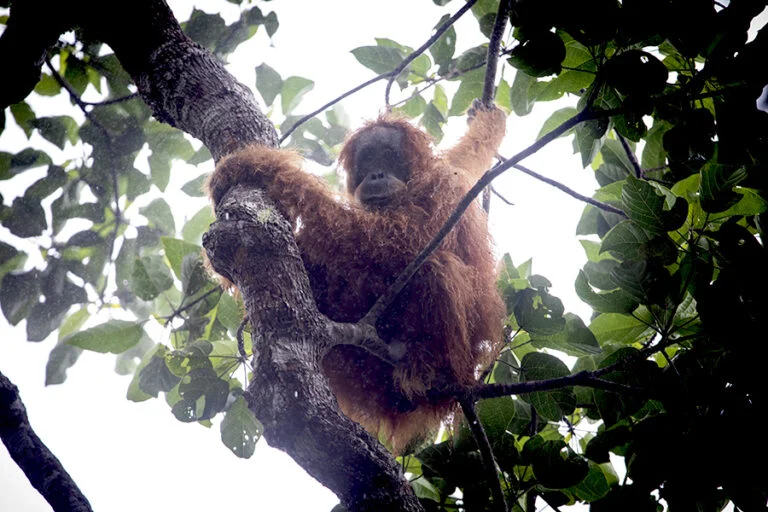
The survival of the Tapanuli orangutan (Pongo tapanuliensis), the world’s most endangered great ape, hangs in a precarious balance. As forest fragmentation tears through the pristine landscapes of the Batang Toru ecosystem, conservationists are turning to an innovative, high-stakes solution: the construction of arboreal bridges. Spearheaded by the Yayasan Ekosistem Lestari (YEL), this initiative aims to restore the vital connectivity necessary to prevent the local extinction of a species that calls these Sumatran forests its only home.
The Shrinking Horizon: A Crisis of Connectivity
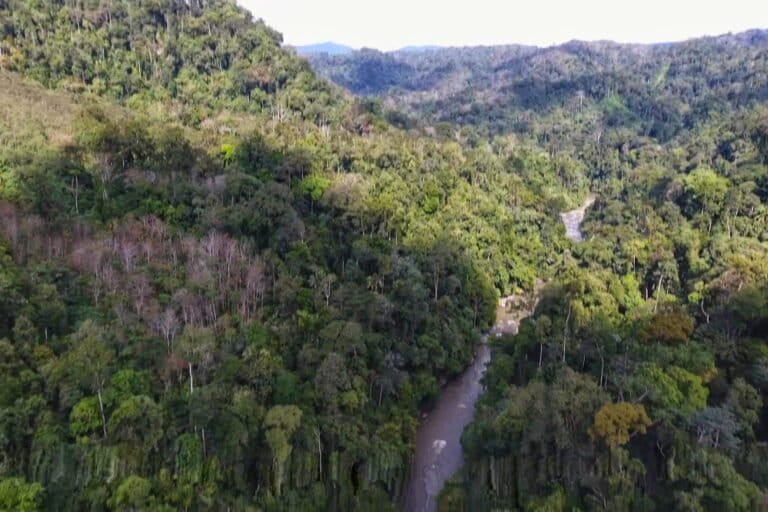
The statistics are grim. According to data from YEL, the forest cover in the Hutaimbaru ecological corridor has plummeted from 9,958.38 hectares in 2004 to just 8,980.84 hectares in 2024. Over the past two decades, more than 1,700 hectares of critical orangutan habitat have vanished, sacrificed to land-use changes, infrastructure development, and environmental degradation.
Julius Paolo Siregar, Head of the In-Situ Conservation Division at YEL, emphasizes that this contraction is not merely a loss of acreage—it is a biological death sentence. The Tapanuli orangutan is classified as "Critically Endangered" by the IUCN, and the Hutaimbaru corridor serves as a bridge between the western and eastern blocks of the ecosystem. This link is essential for gene flow. Without it, the population risks becoming isolated, leading to inbreeding and a catastrophic decline in genetic resilience.

"The primary goal is to restore the connectivity between the western and eastern blocks so the corridor functions optimally," Siregar explains. "The question shouldn’t be ‘when’ we build a bridge, but ‘why’ the ecological connectivity of these two metapopulations is non-negotiable."
A Multi-Faceted Threat: 2025 and Beyond
The ecological stability of Batang Toru was dealt a severe blow in 2025. Severe weather events and land clearing led to the degradation of 23.3 hectares of open land and 22.7 hectares of riparian zones. While an arboretum has been established to mitigate these impacts, the canopy cover remains insufficient to facilitate natural movement.
For the orangutan, every hectare of lost forest represents a narrowing of its life-support system. The proposal for arboreal bridges is part of a broader "concrete action" plan that includes land restoration and collaborative corridor management. However, experts caution that these bridges are not a panacea. If the core forest can be protected and natural corridors maintained, those remain the primary priority.
Lessons from Pakpak Bharat: The "Protect, Connect, Rewild" Framework
To understand the efficacy of these structures, conservationists look to the success of the Yayasan Tangguh Hutan Khatulistiwa (TaHuKah) in Pakpak Bharat. In this region, roughly 350 Sumatran orangutans are squeezed between three major fragments: the Sikulampi Protected Forest, the Siranggas Wildlife Reserve, and the Batu Ardan Protected Forest. These fragments are severed by high-traffic roads, including the Sumatran-Aceh National Highway.
Lina Rita Silaban, West Toba Landscape Manager at TaHuKah, explains that without canopy bridges, these apes are forced to descend to the ground to traverse the gaps. On the forest floor, they are exposed to hunters, human-wildlife conflict, and fatal traffic accidents.
TaHuKah has implemented a rigorous strategy:
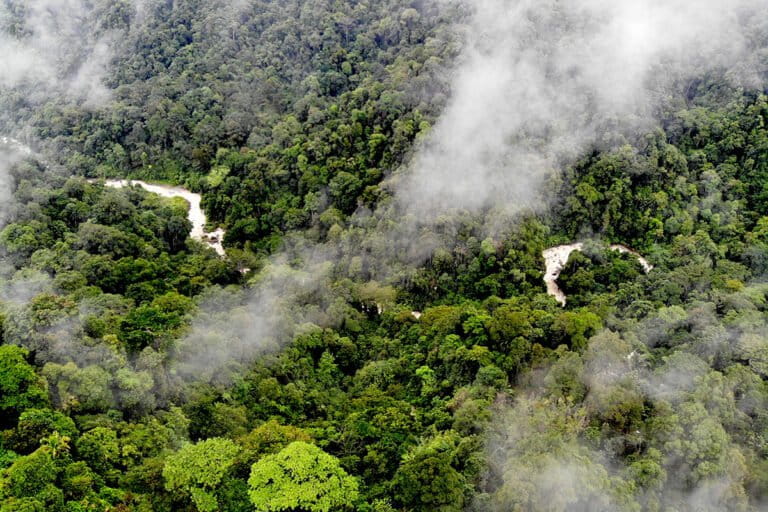
- Protect: Preserving remaining high-quality habitat.
- Connect: Linking fragments via canopy bridges.
- Rewild: Restoring degraded areas through native plant rehabilitation.
The journey to success was not immediate. Their first bridge, built in 2023, went unused for weeks, likely due to the lingering scent of human interference. Through trial and error, they transitioned to "staircase" and multi-level designs, which proved more attractive to larger primates. The results were validated between March 2025 and March 2026: 14 arboreal species crossed the bridges 374 times.
The breakthrough for the Tapanuli orangutans came on December 14, 2025. After an initial failed attempt six days prior, an adult orangutan successfully crossed the bridge—a moment of triumph that underscored the species’ intelligence and caution. "It took nearly two years from the first construction for an orangutan to fully cross," Silaban notes. "Their wariness is a testament to their cognitive complexity, and our infrastructure must reflect that."
Engineering for Biology: The Science of Movement
Beyond the structural engineering, the design of these bridges requires an intimate understanding of primate locomotion. Nadine Adrianna Sugianto, Head of the Research and Animal Welfare Division at the Borneo Orangutan Survival Foundation (BOSF), has pioneered research into how orangutans move.

In the wild, orangutans spend nearly 40% of their time engaged in "irregular upright suspensory locomotion." In contrast, rehabilitated orangutans often struggle to mimic these complex movements, preferring simpler, less efficient methods. To bridge this gap, BOSF has developed 3D netting systems in rehabilitation centers that simulate the natural "sway" of tree canopies.
"When designing for the wild, we must maximize suspension, minimize compression, and provide multiple points of contact," Sugianto explains. The bridges in the field are now being equipped with "Tree Saver Slings"—an innovative attachment system that doesn’t bind the trees, allowing them to grow and expand without injury to the host structure.
The Framework for Long-Term Success
The implementation of these projects is not purely a conservation task; it is a socio-political one. The YEL and TaHuKah models rely on five key pillars for success:

- Habitat Quality: A bridge is only as good as the forest at its ends. Both sides must have dense canopy and food-bearing trees.
- Model Diversity: Small primates prefer stable, double-rope designs, while larger apes require more robust, ladder-like structures.
- Strategic Placement: Bridges must be placed based on real-world movement data and food source mapping, not just site-specific nest counts.
- Visual Cues: Rambu (warning signs) for road users are essential to inform the public that they are driving through an active wildlife corridor.
- Community Engagement: Local communities are the front line of defense. By providing alternative livelihoods and training, the bridges become a shared community asset rather than a target for poaching or destruction.
Official Response and Future Policy
The future of these corridors requires more than just NGO-led initiatives; it requires the formalization of spatial planning. The Tapanuli Selatan regional government has been engaged to ensure that these corridors are protected under local law. The goal is to establish independent management boards that involve government, scientific institutions, and private sector stakeholders.
The presence of industrial projects, such as those related to the Batang Toru hydro-development, necessitates a delicate balance between national development goals and critical biodiversity targets. Effective policy must integrate "wildlife-friendly" infrastructure into the standard requirements for all future land development in the region.
Implications for the Future
The loss of the Tapanuli orangutan would be an irreversible tragedy. However, the success of the canopy bridges provides a roadmap for the future. By prioritizing the "connect" aspect of the Protect-Connect-Rewild framework, conservationists have moved from passive observation to active intervention.
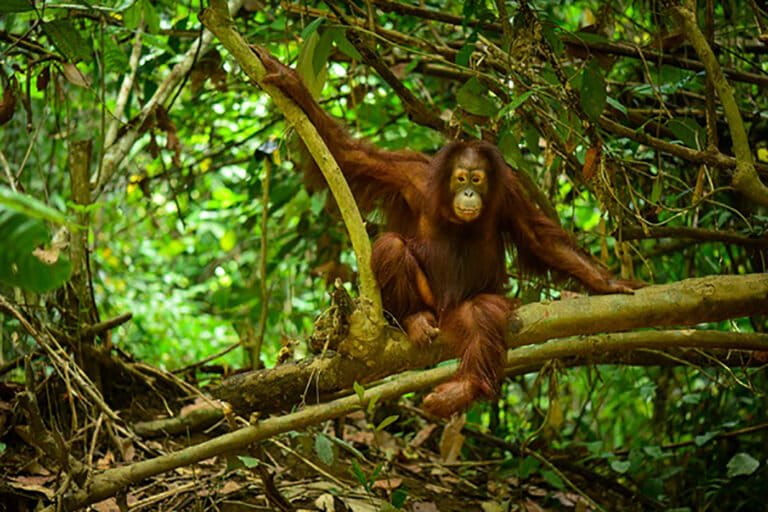
As the forest continues to fragment, the ability of these great apes to navigate their changing world will depend on these man-made structures. The data collected from 2025 to 2026 confirms that even the most wary species will adapt to technology if it is designed with their biological needs at the forefront.
"The success of the orangutan crossing the road is a clear proof of concept," says Silaban. "We are not just building ropes and pulleys; we are building a chance for survival."
As the world watches, the efforts in Batang Toru and Pakpak Bharat serve as a pilot for the rest of Southeast Asia. In an era where human development is rapidly outpacing natural resilience, these arboreal bridges offer a glimpse of how we might begin to stitch the fractured tapestry of our planet back together—one crossing at a time.







