Beyond the Shadow of a Legend: Luca Marini’s Journey from Rossi’s Brother to a Technical Architect of MotoGP
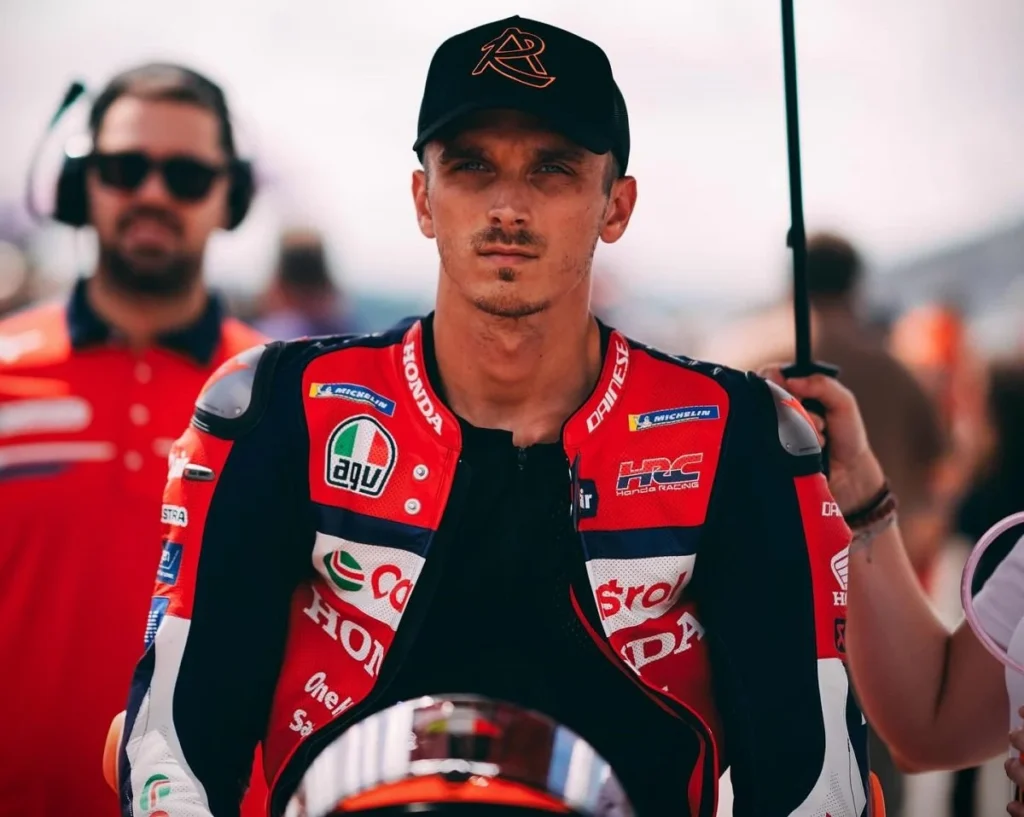
JAKARTA – In the high-octane world of MotoGP, few names carry as much weight as "Rossi." For Luca Marini, being the younger half-brother of the legendary Valentino Rossi is a narrative that has followed him since he first touched a motorcycle. However, as the 2027 season approaches, the narrative is shifting. Marini is no longer just "the brother of the Doctor"; he is emerging as one of the most analytical, articulate, and technically gifted riders on the grid. As he prepares to transition to the KTM-Tech3 stable, his journey serves as a masterclass in carving out an individual identity under the long shadow of a sporting icon.
1. The Roots of an Inspiration: Growing Up Beside a Titan
To understand Luca Marini, one must understand the environment in which he was raised. Born to Stefania Palma—Valentino Rossi’s mother—and Massimo Martini, Luca grew up in the epicenter of motorcycle racing culture. While Rossi was busy cementing his status as a global phenomenon, claiming world titles throughout the 2000s, a young Marini was a constant presence in the paddock.
"When I was a child, I often accompanied my brother to various places and countries around the world, feeling and witnessing firsthand the successes he achieved at that time," Marini shared in an exclusive interview with MotoGP.
This exposure was not merely about the glamour of the podium or the roar of the engines. Marini recalls the meticulous, often invisible labor required to reach the pinnacle of the sport. "We all know what Vale achieved on the track, but it was the hard work behind the scenes that truly shaped me. It provided so much inspiration and positive energy because I enjoyed every single moment of that process."
For Marini, the "Rossi effect" was not a burden but an education. He witnessed the analytical rigor required to master a machine, a trait that has since become his own defining characteristic.
2. Chronology of a Career: From Tavullia to the Factory Grid
Marini’s path to the MotoGP World Championship was not a carbon copy of his brother’s. While Rossi burst onto the scene with a flamboyant, aggressive style, Marini’s ascent was characterized by a methodical, step-by-step progression through the ranks.
- Early Development: Rising through the Italian youth racing circuit, Marini focused on discipline rather than raw, unchecked aggression. His height and physical stature required him to develop a different riding style than the shorter, more compact riders of his generation.
- The Moto2 Era: Marini spent years honing his craft in the intermediate class, where he became a consistent front-runner. His championship challenge in 2020 served as the final proof that he was ready for the premier class.
- The MotoGP Debut: Upon entering the premier class, the inevitable comparisons began. Critics were quick to scrutinize every move, waiting for him to either mirror Rossi’s success or falter under the weight of expectations.
- The HRC Three-Year Tenure: Marini’s tenure with Honda Racing Corporation (HRC) was a period of intense professional growth. Despite the technical challenges faced by the Japanese manufacturer during those years, Marini was lauded for his feedback and his ability to communicate complex mechanical data to engineers—a skill that set him apart from many of his peers.
- The 2027 Pivot: As he prepares to join the KTM-Tech3 factory-supported team for 2027, Marini enters a new phase. His mandate is clear: help guide the development of the new 850cc engine platform.
3. The Analytical Mindset: A New Breed of Rider
In the modern era of MotoGP, where the difference between victory and defeat is often measured in thousandths of a second, raw talent is insufficient. The sport has moved into an era of "technical riding," where the ability to interpret telemetry and provide feedback is as important as throttle control.
Marini has established himself as arguably the most articulate and cerebral rider on the grid. His approach is clinical. While other riders may rely on "feel," Marini relies on data, logic, and a deep understanding of physics.
"He doesn’t just ride the bike; he deconstructs it," remarked a senior engineer from his previous team. This analytical approach is exactly why KTM has invested heavily in bringing him into the fold. As the sport moves toward the 850cc regulations, the team needs a rider who can act as a bridge between the data acquisition team and the mechanical development squad. Marini is not just a pilot; he is a co-developer.
4. Addressing the "Pressure" Narrative
Perhaps the most persistent question Marini has faced throughout his career is how he manages the psychological pressure of being related to the greatest rider in the history of the sport. The expectation to replicate a nine-time world champion is, for most, a career-ending mental block.

However, Marini rejects the premise of the question.
"I wouldn’t say there is extra pressure," he asserts. "Every MotoGP rider faces immense pressure. This is the absolute limit of motorcycle racing. If you aren’t feeling the pressure here, you aren’t doing it right."
He acknowledges that his name brought unwanted attention in his early years. "When I first entered the world championship, many people were a bit more intrusive or bothered me with comparisons. But I learned to deal with that at a very young age. You either learn to separate your identity from the noise, or you lose your focus. I chose the former."
For Marini, the noise has long since faded. He recognizes that his career trajectory is uniquely his own, built on a foundation of professional independence.
5. Implications: The 2027 Regulatory Shift and the Road Ahead
The 2027 season represents a critical juncture for both Luca Marini and the KTM brand. With the introduction of the 850cc engines and revised aerodynamics, the playing field is being reset.
The KTM-Tech3 Strategy
KTM’s decision to sign Marini is a strategic bet on stability and technical intelligence. The team is looking for a rider who can provide a steady hand during a period of volatile regulation changes.
- Engine Development: Marini’s feedback on power delivery and engine braking will be the cornerstone of KTM’s 2027 bike.
- Chassis Geometry: His physical stature requires a specific setup, and his experience with various factory setups gives him a unique vantage point on how to optimize bike geometry for the new engine package.
- Team Leadership: By placing him in the Tech3 seat with factory-level support, KTM is signaling that they view Marini as a leader of their project, not just a rider.
Personal Legacy
For Marini, this move is about legacy. He has spent his career being compared to a legend; now, he is tasked with becoming a pioneer of a new era. If he can help KTM secure a title or consistent race wins with the new 850cc platform, he will have effectively stepped out of his brother’s shadow and into his own light.
Conclusion: A Rider in His Own Right
Luca Marini’s journey is a testament to the fact that greatness is rarely accidental. While the inspiration came from his brother, the career was built through years of lonely study, intense physical training, and a refusal to be defined by his surname.
As the sun sets on the current era of MotoGP and the 850cc revolution begins, Marini stands as one of the most prepared individuals on the grid. He possesses the technical acumen of an engineer, the composure of a veteran, and the hunger of a rider still seeking his first world title.
Whether or not he reaches the heights of his half-brother remains to be seen, but one thing is certain: Luca Marini is no longer following a path. He is, for the first time, helping to pave one. As he prepares for the challenges of 2027, the paddock watches with anticipation—not to see the next Valentino Rossi, but to see exactly what the next Luca Marini is capable of.