
Bridging the Digital Divide: The Strategic Landing of the Nongsa Changi Cable in Batam
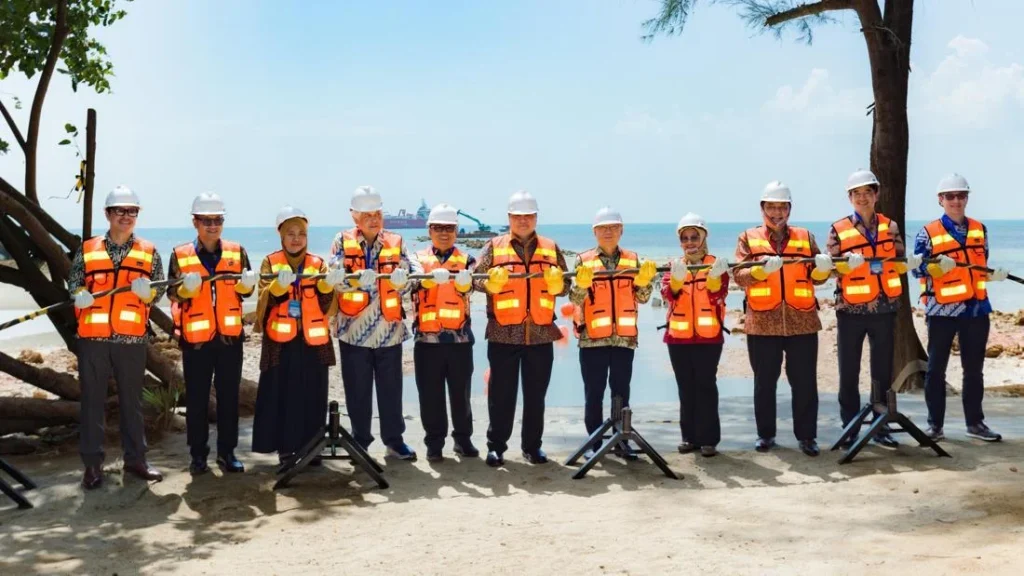
BATAM, INDONESIA – In a move set to redefine the digital architecture of Southeast Asia, PT Telkom Indonesia (Persero) Tbk (Telkom), through its international arm PT Telekomunikasi Indonesia International (Telin), in collaboration with BW Digital and Nongsa Digital Park, officially marked the landing of the Nongsa Changi Cable (NCC). The ceremony, held on Monday, July 20, 2026, at the Beach Manhole of Taman Nongsa Indah Village (TNIV) in Batam, signifies a monumental leap in Indonesia’s quest to become a global digital hub.
The Nongsa Changi Cable is not merely a piece of subsea infrastructure; it is a high-capacity "digital bridge" designed to provide the shortest, most reliable route between the burgeoning data center hub of Batam and the international connectivity gateway of Singapore. As the region pivots toward an economy fueled by Artificial Intelligence (AI), cloud computing, and massive data exchange, the NCC stands as a critical pillar for the future.
Main Facts: A Strategic Link Across the Strait
The Nongsa Changi Cable (NCC) is a subsea fiber-optic system spanning approximately 50 kilometers. It connects Nongsa Digital Park (NDP) in Batam directly to Singapore, traversing the Singapore Strait via the most efficient geographical path available. The project is a joint venture between Telin and BW Digital, with significant institutional support from Nongsa Digital Park.
Key highlights of the project include:
- Capacity: Over 1.6 Petabytes per second (Pbps), providing a massive highway for data.
- Latency: Ultra-low latency of less than 2 milliseconds (ms), essential for real-time applications.
- Operational Date: Targeted for full commercial service by September 2026.
- Strategic Initiative: The NCC is a core component of the Indonesia Cable Express (ICE) initiative, a broader strategy to enhance Indonesia’s sovereignty and competitiveness in global telecommunications.
Dian Siswarini, President Director of Telkom, emphasized during the landing ceremony that this project is a testament to the shared vision of Indonesia and Singapore. "Today, we celebrate the successful landing of the Nongsa Changi Cable. This is a vital milestone that reflects our joint commitment to advancing a digital ecosystem that is more connected, resilient, and future-ready," she stated.
Chronology: From Concept to Shore
The journey of the Nongsa Changi Cable began as a response to the growing demand for diversified and high-speed connectivity between Batam and Singapore. With Batam designated as a Special Economic Zone (SEZ) for digital tourism and technology, the need for a dedicated, low-latency link became paramount.
- Planning and Partnership (Pre-2024): Telin and BW Digital identified the Singapore-Batam corridor as a bottleneck for regional data traffic. The partnership was formed to create the "Shortest Path" solution, bypassing traditional, more congested routes.
- The ICE Initiative Integration: The NCC was integrated into Telin’s "Indonesia Cable Express" (ICE) framework. This initiative aims to create a "digital ring" around Indonesia, connecting the archipelago to global hubs with redundant and high-capacity subsea routes.
- Permitting and Environmental Surveys: Given the ecological sensitivity of the Riau Islands and the heavy maritime traffic in the Singapore Strait, the project underwent rigorous environmental impact assessments and coordination with the Ministry of Marine Affairs and Fisheries (KKP).
- The Landing Ceremony (July 20, 2026): The physical landing of the cable at the Beach Manhole in TNIV signifies the completion of the most challenging marine installation phase. This "shore-end" connection links the undersea segment to the terrestrial station.
- Testing and Commissioning (Q3 2026): Following the landing, the system will undergo rigorous stress testing, light-signal calibration, and integration with the data centers at Nongsa Digital Park.
- Full Operation (September 2026): The cable is expected to go live, providing immediate capacity relief and enhanced speed for businesses operating in the Batam-Singapore corridor.
Supporting Data: Fueling Indonesia’s Digital Ambition
The urgency of the NCC project is underscored by Indonesia’s explosive digital growth. According to data shared during the ceremony, Indonesia currently boasts approximately 235.26 million internet users. Within this massive user base, there are 99.5 million fixed broadband subscribers, a number that continues to grow as the government pushes for "Digital Transformation" across all provinces.
The technical specifications of the NCC are designed to handle this load and more:
- 1.6 Petabytes: To put this in perspective, 1.6 petabytes is equivalent to streaming over 300,000 high-definition movies simultaneously. This capacity ensures that as AI applications become more data-intensive, the infrastructure will not become a bottleneck.
- Sub-2ms Latency: In the world of high-frequency trading, online gaming, and remote industrial automation, every millisecond counts. The NCC’s latency is among the lowest in the region, making Batam an attractive site for "edge computing" facilities.
Official Responses: A Bilateral Triumph
The event was attended by high-ranking officials from both Indonesia and Singapore, signaling the geopolitical and economic weight of the project.
Airlangga Hartarto, Coordinating Minister for Economic Affairs (RI):
Minister Hartarto hailed the NCC as the "physical foundation" of a new digital corridor. Under the leadership of President Prabowo Subianto, Indonesia is prioritizing digital infrastructure as a driver of GDP growth. "This infrastructure is the physical foundation of a new digital corridor. With a capacity of over 1.6 petabytes and a delay of less than 2 milliseconds, I think this is extraordinary," Hartarto noted. He further urged that this corridor be built on "trust, partnership, and a shared vision," ensuring benefits extend across the entire ASEAN region.
Gan Kim Yong, Deputy Prime Minister and Minister for Trade and Industry (Singapore):
Representing the Singaporean government, Gan Kim Yong highlighted the necessity of reliable data movement for modern industry. "As economies become increasingly digital, digital infrastructure is now an essential foundation to support economic growth. Businesses developing AI applications, operating cloud services, or running advanced manufacturing facilities all depend on the ability to move data securely, reliably, and with minimal delay," he explained. He emphasized that the NCC would specifically support the growth of data centers in Batam, creating a "twin-city" digital effect.
Mike Wiluan, CEO of Nongsa Digital Park:
Wiluan focused on the local impact, noting that the NCC transforms Batam from a mere industrial island into a sophisticated digital hub. "Digital infrastructure is no longer just a technology supporter; it has become the foundation for economic growth and national competitiveness. The NCC will help develop local talent, attract tech startups, and create real opportunities for the younger generation of Indonesians."
Strategic Implications: Batam as the "Digital Bridge"
The completion of the Nongsa Changi Cable has profound implications for the regional economy:
1. The Rise of the Batam Data Center Hub
Batam is rapidly becoming a preferred destination for international data center operators who find Singapore’s land and power constraints challenging. The NCC provides these data centers with "near-local" connectivity to Singapore’s financial and tech markets. With the NCC, a server in Batam performs almost as if it were located in downtown Singapore, but with the benefit of Indonesia’s competitive operational costs and space.
2. Enabling the AI Revolution
AI training and inference require massive data throughput and minimal latency. By providing a 1.6 Pbps pipe, the NCC ensures that the Riau Islands can host AI-driven industries, from autonomous shipping logistics in the Singapore Strait to sophisticated financial modeling.
3. Strengthening ASEAN Connectivity
As mentioned by Minister Airlangga, the NCC is a blueprint for ASEAN integration. It reduces reliance on a single point of failure and creates a redundant network that enhances the entire region’s "digital resilience." If one cable route is damaged by maritime activity, the ICE initiative—of which NCC is a part—provides alternative pathways to keep the region online.
4. Economic Spillovers and Talent Development
Beyond the hardware, the project is expected to catalyze the "Nongsa Digital Park" ecosystem. By attracting global tech giants, Batam becomes a training ground for Indonesian engineers, data scientists, and digital entrepreneurs. The presence of such high-tier infrastructure acts as a magnet for Venture Capital and international innovation labs.
Conclusion: A Resilient Digital Future
The landing of the Nongsa Changi Cable at Beach Manhole TNIV is more than a technical achievement; it is a symbol of regional synergy. As PT Telkom Indonesia and BW Digital move toward the September 2026 operational target, the focus shifts from construction to optimization.
In an era where data is the new oil, the NCC is the pipeline that will fuel the next decade of growth for both Indonesia and Singapore. By shortening the distance between these two nations to a mere two milliseconds, the project ensures that the digital future of Southeast Asia is not just connected, but indomitable.
The ceremony concluded with a gathering of key stakeholders, including the Indonesian Ambassador to Singapore, Hotmangaraja Panjaitan, and various provincial leaders, all of whom recognized that the NCC is the first of many steps in making Batam the "Digital Heart" of the ASEAN region.