Democratizing the Beautiful Game: Indonesian Government Secures Free 2026 World Cup Broadcasts via TVRI, Ending 24-Year Hiatus
JAKARTA — In a landmark move aimed at bridging the digital entertainment divide and fostering national unity, the Indonesian Ministry of Communication and Digital Affairs (Kementerian Komunikasi dan Digital, or Komdigi) has announced that the 2026 FIFA World Cup is being broadcast entirely free of charge across the archipelago. Through the state-owned public broadcaster, Televisi Republik Indonesia (TVRI), millions of citizens can access the world’s premier sporting event without the financial burden of premium subscription fees, specialized decoders, or pay-per-view services.
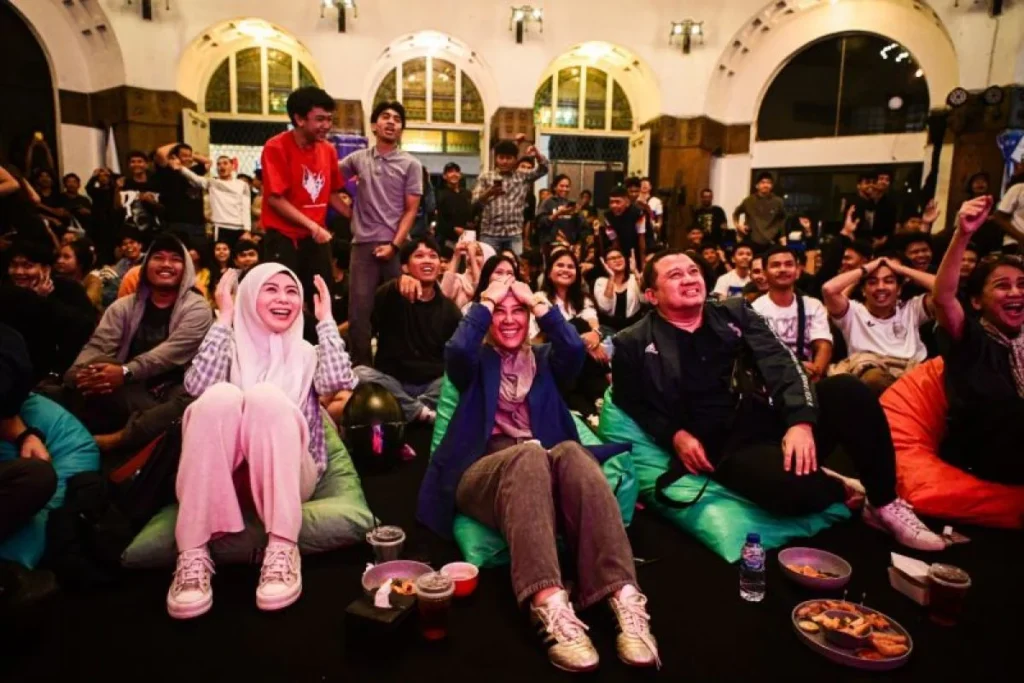
The announcement was highlighted by the Minister of Communication and Digital Affairs, Meutya Hafid, during a vibrant public watch party (known locally as nonton bareng or nobar) for the World Cup matches held at the Garuda Spark Innovation Hub within the historic Pos Bloc in Medan, North Sumatra. This initiative marks a historic milestone for Indonesian broadcasting, restoring TVRI to its legacy role as the official broadcaster of the FIFA World Cup for the first time in nearly a quarter of a century.
Main Facts: A New Era for Public Broadcasting
The decision to provide free access to the 2026 World Cup rests on several critical policy achievements and strategic decisions made by the Indonesian government:
- Free-to-Air Access: Unlike previous editions of the tournament, which were largely monopolized by private media conglomerates and encrypted satellite providers, the 2026 World Cup is available to all Indonesian citizens via TVRI’s digital terrestrial television network.
- Government-Funded Rights: The government, through budgetary allocations directed to TVRI, fully absorbed the licensing fees for the broadcasting rights, eliminating the need for citizens to purchase expensive subscription packages or rent specialized digital decoders.
- A 24-Year Historic Milestone: This tournament marks the official return of TVRI as the primary broadcaster of the FIFA World Cup. The state broadcaster last held the exclusive terrestrial rights for the tournament 24 years ago, during the historic 2002 World Cup co-hosted by South Korea and Japan.
- Synchronized Community Engagement: To celebrate the event and strengthen social cohesion, Komdigi organized synchronized public watch parties across 60 strategic locations nationwide, including major hubs in Medan, Bali, Solo, Bukittinggi, and Serang.
Chronology: From Negotiation to Nationwide Public Screenings
The journey to securing the 2026 World Cup broadcasting rights and deploying them for public consumption involved a coordinated effort between state agencies, regional offices, and public broadcasting units.
Securing the Rights and Preparing the Infrastructure
In the lead-up to the 2026 tournament, Komdigi, in collaboration with TVRI and the Ministry of State-Owned Enterprises, initiated negotiations to acquire the non-exclusive terrestrial broadcasting rights. For years, Indonesian football fans had raised concerns about the growing commercialization of sports broadcasts, which forced low-income households to pay premium fees to access matches. Recognizing sports as a powerful tool for social unity, the government finalized a funding package to secure the terrestrial rights for TVRI.
Rolling Out the "Nobar" Initiative
With the broadcasting rights secured, Komdigi’s Directorate General of Digital Ecosystems developed a nationwide community engagement strategy. The goal was to transform a passive home-viewing experience into an active, community-driven celebration. Komdigi mapped out 60 distinct coordinates across the Indonesian archipelago to host official, government-backed watch parties. These locations were chosen for their accessibility, cultural significance, and capacity to host large crowds safely.
The Medan Showcase
On Monday night, Minister Meutya Hafid arrived at the Garuda Spark Innovation Hub at Pos Bloc Medan to personally open the official watch party for the World Cup. Pos Bloc, a revitalized heritage post office turned creative public space, was packed to capacity with local residents, sports enthusiasts, and community leaders.
Simultaneously, screens lit up across 59 other designated locations from Sumatra to Bali, connecting thousands of spectators in real-time. This coordinated broadcast demonstrated the technical readiness of Indonesia’s digital television infrastructure, which has undergone significant upgrades following the nationwide Analog Switch-Off (ASO) transition.
Supporting Data: The Economics of Football Broadcasting in Indonesia
To understand the significance of this initiative, it is essential to examine the historical cost barriers associated with major sporting events in Indonesia.
| Tournament Year | Primary Indonesian Broadcaster | Access Model | Average Cost to Consumer (Est.) |
|---|---|---|---|
| 2002 | TVRI | Free-to-Air Terrestrial | Free (Analog) |
| 2010 | Private Networks (MNC Group) | Terrestrial / Pay-TV | Free Terrestrial / Premium Satellite |
| 2014 | VIVA Group (tvOne/ANTV) | Terrestrial / Pay-TV | Free Terrestrial / Premium Decoders |
| 2018 | Trans Media / Futbal Momentum Asia | Terrestrial / Pay-TV / Streaming | Subscription Required for HD/Streaming |
| 2022 | Emtek Group (SCTV/Vidio) | Terrestrial / Premium Streaming | IDR 79,000 – IDR 150,000+ for full access |
| 2026 | TVRI (Government Funded) | Digital Terrestrial Television | 100% Free (No Decoder Fees) |
Over the past two decades, the cost of accessing live sports has risen sharply in Indonesia. During the 2022 World Cup, although some matches were broadcast on free-to-air commercial channels, full access to all matches required high-speed internet connections and paid streaming subscriptions, or premium satellite packages. For a country where the median monthly income varies significantly across regions, spending IDR 100,000 to IDR 200,000 on sports entertainment represents a luxury that many households cannot afford.
By utilizing TVRI’s digital terrestrial network, the government has leveled the playing field. Since the completion of the Analog Switch-Off, digital TV signals can be received using a standard digital TV set or a basic Set-Top Box (STB), which requires only a one-time purchase and no recurring subscription fees.
Official Responses: Government Leaders Champion Inclusivity
The initiative has drawn strong praise from senior government officials, who view the project as both a logistical success and a vital social service.
Minister of Communication and Digital Affairs, Meutya Hafid
Speaking from the bustling crowd at Pos Bloc Medan, Minister Meutya Hafid emphasized that the World Cup should be viewed as a shared cultural touchstone rather than a commercial commodity.
"Tonight, we are not only connected with 60 locations organized by Komdigi, but with countless people across the globe who are doing the exact same thing we are doing. This moment brings the community together in a healthy public space, filled with joy, and strengthens our sense of togetherness."
"For our friends at TVRI, this is history. The last time TVRI served as the official broadcaster of the World Cup was 24 years ago. After nearly a quarter of a century, the tournament has finally returned to our national pride, TVRI."
Director General of Digital Ecosystems, Edwin Hidayat Abdullah
Edwin Hidayat Abdullah detailed the financial mechanics behind the decision, highlighting the government’s active intervention to protect consumers from rising media costs.
"Usually, watching the World Cup requires payment because private television networks must recoup the high cost of purchasing broadcasting rights. Alhamdulillah, this year the government, through TVRI, provided the necessary budget so that all Indonesian citizens can enjoy the World Cup without having to pay extra, and without having to rent specialized decoders or pay monthly fees."
Implications: Revitalizing Public Spaces and the Media Landscape
The decision to offer the 2026 World Cup free of charge on public television carries profound implications for Indonesia’s social, economic, and technological landscapes.
                  ┌────────────────────────────────────────┐
                  │ Government Funds 2026 World Cup Rights │
                  └───────────────────┬────────────────────┘
                                      │
             ┌────────────────────────┼────────────────────────┐
             ▼                        ▼                        ▼
┌────────────────────────┐┌────────────────────────┐┌────────────────────────┐
│   Social Cohesion &    ││  Economic Relief for   ││  Digital TV & TVRI    │
│  Healthy Public Spaces ││  Low-Income Families   ││     Revitalization    │
└────────────────────────┘└────────────────────────┘└────────────────────────┘
1. Promoting Social Cohesion and Safe Public Spaces
By organizing 60 synchronized watch parties, Komdigi has successfully reclaimed public spaces for positive community engagement. In an era dominated by individualized smartphone screens, these public gatherings encourage face-to-face interaction, cross-generational bonding, and a shared national identity. Providing "healthy public spaces" reduces youth loitering and fosters a safer, more vibrant nightlife in urban and semi-urban centers.
2. Supporting Digital Terrestrial Television (DVB-T2) Adoption
This broadcast acts as a powerful catalyst for Indonesia’s digital television transition. While the government has legally mandated the transition to digital signals, some households have been slow to install the necessary Set-Top Boxes (STBs). Offering high-definition, free-to-air coverage of the world’s most-watched sporting event provides a compelling incentive for remaining analog households to upgrade their hardware, accelerating national digital literacy.
3. Revitalizing TVRI’s Brand and Market Relevance
For years, TVRI struggled to compete with the flashy programming and deep pockets of commercial networks. Securing the rights to the 2026 World Cup re-establishes TVRI as a major player in national broadcasting. This success proves that public service broadcasters can deliver premium, high-demand content to the public when backed by strong government support and clear strategic vision.
4. Economic Stimulus for Local Micro-Enterprises (MSMEs)
The 60 watch parties held across Indonesia have created lucrative micro-economies around the event venues. Street food vendors, local cafes, public transport providers, and merchandise sellers at locations like Pos Bloc Medan reported surges in foot traffic and revenue during match nights. This demonstrates how state-funded sports broadcasts can yield direct, localized economic benefits for small businesses.
Looking Ahead
As the 2026 FIFA World Cup progresses, the collaboration between the Ministry of Communication and Digital Affairs and TVRI stands as a successful blueprint for future public broadcasts. By prioritizing public access over commercial gain, the Indonesian government has demonstrated that major sporting events can serve as engines for digital adoption, economic vitality, and national unity. For Indonesian football fans, the tournament is no longer a luxury reserved for those who can afford it, but a shared national celebration accessible to all.