A Bond Forged in the Field: Jordanian King Abdullah II’s State Visit to Indonesia Highlights Decades of Diplomatic and Personal Synergy
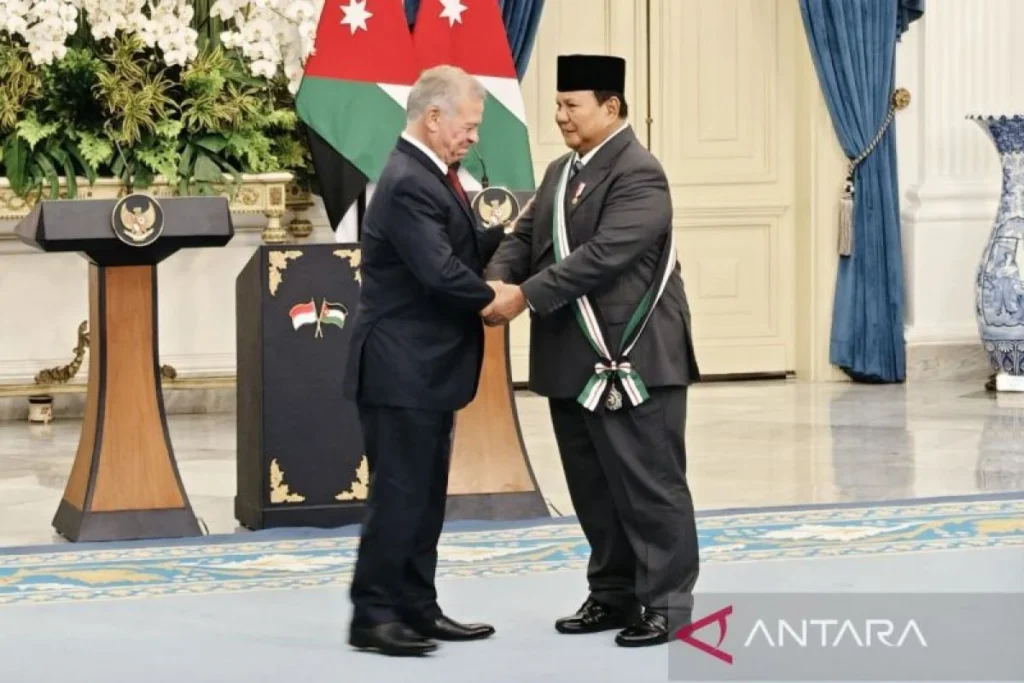
JAKARTA (ANTARA) – In a significant diplomatic maneuver that underscores the enduring ties between Jakarta and Amman, King Abdullah II of Jordan arrived in Indonesia this Friday afternoon for a high-stakes state visit. The arrival of the Hashemite monarch marks not merely a routine diplomatic exchange, but a poignant reunion between two world leaders whose friendship was forged in the crucible of military service long before they ascended to the highest offices of their respective nations.
The Core Agenda: Strengthening Bilateral Economic and Strategic Ties
The centerpiece of King Abdullah II’s visit is a formal summit with President Prabowo Subianto. The agenda is packed with high-level discussions aimed at deepening bilateral cooperation, particularly in the economic sector. A key highlight of the visit is the scheduled engagement between the King and representatives from Danantara Indonesia—the newly established investment management authority aimed at consolidating and optimizing Indonesia’s sovereign assets.
Sources familiar with the preparations indicate that the meetings will focus on strategic investments, with a particular emphasis on the commodities sector, specifically phosphates—a vital resource for Indonesia’s agricultural sector where Jordan is a global leader. Following the closed-door discussions, President Prabowo and King Abdullah II are slated to oversee the ceremonial signing of several bilateral memoranda of understanding (MoUs), signaling a new chapter in trade, energy, and defense cooperation between the two Muslim-majority nations.
This visit is part of a broader regional tour for King Abdullah II, who has recently engaged with leaders across Asia, including Japan, Vietnam, Singapore, and Pakistan. The tour highlights Jordan’s proactive “Look East” policy, seeking to pivot toward the rapidly growing economies of Southeast Asia to bolster its national economic resilience.
A Chronology of Brotherhood: From Fort Benning to the Palace
The rapport between President Prabowo Subianto and King Abdullah II is perhaps one of the most unique in modern international diplomacy. Their history is not defined by bureaucratic protocols, but by shared experiences in the rigorous world of special operations.
The Military Foundation (1995–1999)
Both leaders share the distinction of being alumni of the prestigious U.S. Army Ranger School at Fort Benning, Georgia—a training ground known for breaking the will of even the most elite soldiers. Their first recorded interaction took place on December 4, 1995, during the ceremony marking Prabowo’s appointment as the Commanding General (Danjen) of the Indonesian Army’s Special Forces Command (Kopassus).
At the time, both men were deeply entrenched in the leadership of their respective elite units. King Abdullah II, then a Prince, had served as the Commander of the Jordanian Special Forces in 1994, mirroring Prabowo’s trajectory in the Indonesian military. This shared identity as "Special Forces men" created an immediate, visceral bond of mutual respect.
The Exile and the Gesture of Solidarity (1998–2000)
The depth of their friendship was most vividly demonstrated during the turbulent period of the late 1990s. When Prabowo left Indonesia in 1998, he found a sanctuary in Jordan. King Abdullah II welcomed him with open arms, treating him not as a political exile, but as a brother-in-arms. Historical accounts from that era suggest that the King offered Prabowo Jordanian citizenship, a testament to the level of trust and affection between the two. Prabowo, however, remained steadfastly committed to his identity as an Indonesian citizen, eventually returning home to rebuild his career and his legacy.
The "Amman Moment" (April 2025)
The strength of this bond was on full display on April 14, 2025, when President Prabowo, in his capacity as the newly elected President of Indonesia, visited Jordan. In an unprecedented display of personal hospitality, King Abdullah II personally drove his own vehicle from the airport to the hotel in central Amman, with President Prabowo sitting in the passenger seat. The image of two heads of state sharing a private moment in the driver’s seat of a car went viral, symbolizing a level of intimacy rarely seen in state-level relations.
Strategic Implications: Why This Visit Matters
The visit of King Abdullah II carries significant weight for the current administration in Jakarta. As President Prabowo seeks to assert Indonesia’s role on the global stage, his existing personal relationships with world leaders serve as a vital diplomatic asset.
1. Economic Integration through Danantara
The involvement of Danantara is a clear signal that this visit is intended to produce tangible economic outcomes. By fostering a direct line of communication between the Jordanian Royal Court and Indonesia’s state-owned investment vehicle, the administration is bypassing traditional bureaucratic bottlenecks to facilitate faster, more efficient capital flow and commodity trading.
2. Regional Stability and Gaza
Beyond economics, the geopolitical alignment between Jakarta and Amman is of critical importance, particularly regarding the crisis in Gaza. Both nations have been vocal advocates for a two-state solution and are currently coordinating humanitarian and diplomatic efforts. Reports from the Indonesian Ministry of Foreign Affairs indicate that the two leaders are expected to discuss the logistics and political feasibility of sending joint peacekeeping or humanitarian support to Gaza, a move that would require delicate regional consensus.
3. Political Legitimacy
The public endorsement from a figure as globally respected as King Abdullah II provides an implicit boost to the Prabowo administration’s legitimacy. During their recent interactions, the King openly praised President Prabowo’s vision, noting that the new Indonesian leadership is steering the nation in a "very positive direction." For an administration looking to signal stability and continuity to the international market, such testimonials are invaluable.
Official Responses and Future Outlook
The Indonesian Ministry of Foreign Affairs has been working in high gear to ensure that this visit yields more than just symbolic value. Foreign Minister Sugiono (as noted in recent updates) has emphasized that the coordination regarding the humanitarian situation in Gaza is a priority. "We are in constant communication with the Jordanian side to ensure that our efforts on the ground are synchronized and effective," the ministry stated.
The diplomatic community in Jakarta is watching the proceedings closely. Analysts suggest that the "Personal Diplomacy" style employed by President Prabowo—leveraging decades-old friendships—is a calculated strategy to differentiate his presidency. Unlike traditional transactional diplomacy, the Prabowo-Abdullah dynamic allows for "candid, high-speed negotiation" that can navigate complex international issues with greater agility.
As the state visit concludes, the focus will shift from the pomp of the welcoming ceremonies to the implementation of the signed agreements. For the citizens of both nations, the sight of these two leaders—who once stood together as soldiers in the desert and the jungle—now standing together as heads of state, serves as a powerful reminder of how personal character and historical ties can shape the future of international relations.
Conclusion
The visit of King Abdullah II to Jakarta is a masterclass in how personal history can be leveraged for national interest. From the corridors of Fort Benning to the halls of the Al Husseiniya Palace, and now to the Presidential Palace in Jakarta, the journey of Prabowo Subianto and Abdullah II is a narrative of resilience, brotherhood, and shared purpose.
As they sit down to discuss the future of the Danantara investment framework and the tragic situation in the Middle East, they do so not as strangers forced together by protocol, but as allies who have weathered the storms of history. For Indonesia, this visit marks a strengthening of ties with a key Middle Eastern partner, ensuring that the country’s global footprint continues to expand through deep, meaningful, and historically grounded partnerships.
The world will continue to monitor the outcomes of the MoUs signed this Friday, but for those who know the history of these two leaders, the most significant outcome has already been achieved: the reaffirmation of a bond that serves as a cornerstone for stability and cooperation in an increasingly unpredictable world.