The Bitter Brew: How Climate Change is Brewing a Global Crisis for Coffee
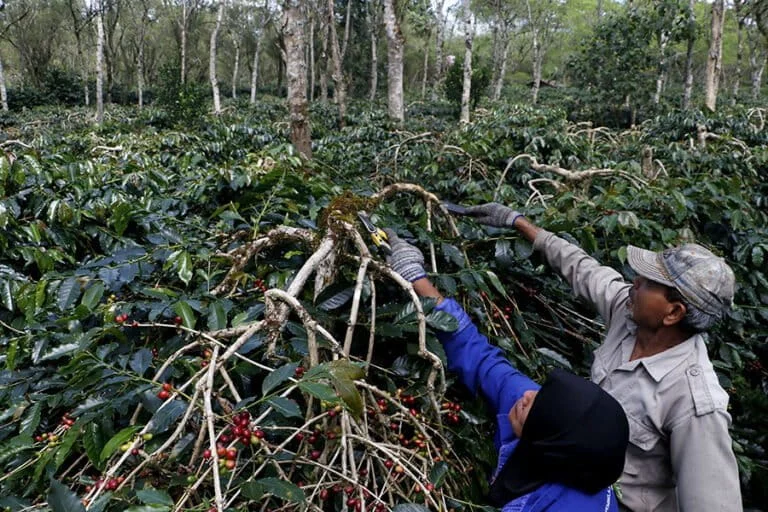
For millions around the globe, the morning ritual is defined by the rich, comforting aroma of freshly brewed coffee. It is a sensory experience that anchors the day. However, behind every cup lies a fragile agricultural cycle—a delicate dance of temperature, rainfall, and humidity that farmers have meticulously managed for generations. Today, that equilibrium is shattering. As the climate crisis intensifies, the future of coffee—a beverage that serves as the lifeblood for millions—is hanging in the balance, not just in Indonesia, but across the world’s most vital coffee-producing regions.
The Shrinking Map: A Global Agricultural Emergency
The threat is no longer a distant projection; it is a current reality. Scientific consensus suggests that within the next 25 years, approximately 80% of global Arabica production will be negatively impacted by climate change. Experts project that the productivity of both Arabica and Robusta varieties could plummet by as much as 50% as land suitable for cultivation continues to disappear.
The biological threshold for coffee plants is narrow. These plants are highly sensitive to even minor fluctuations in temperature, moisture, and soil health. Because coffee requires specific high-altitude conditions, the warming planet is forcing farmers to look for higher ground—but there is only so much altitude to go around. Many coffee species are currently struggling to adapt to the rapid pace of environmental shift, raising concerns about the potential extinction of certain wild varieties that are essential for genetic diversity.
Chronology of a Slow-Motion Crisis: The Indonesian Experience
The ripple effects of this crisis are nowhere more evident than in Indonesia, a powerhouse of global coffee production. Take the case of Enrekang, South Sulawesi. Between 2021 and 2023, the region witnessed a stark irony: despite an increase in plantation land area by 6.7%, production volume plummeted by 8.8%.
This data point dismantles the old-school belief that expansion is the antidote to low yields. When the climate stops cooperating, adding more land is merely a futile exercise in resource depletion. During that same period, the region experienced a drastic decline in rainfall, illustrating that the "coffee belt" is being squeezed by both drought and unpredictable weather patterns.
In Jambi, the situation is even more complex for Liberica coffee farmers. Beyond the erratic rainfall that disrupts the flowering and fruit-setting processes, farmers are battling saltwater intrusion. As sea levels rise, the salinity of the soil in coastal-adjacent areas increases, causing plants to wither and die. This is the multi-faceted face of the climate crisis: it is not just about heat; it is about the changing chemistry of the earth itself.
Supporting Data: The Growing Disparity
The economic data surrounding the industry reveals a deeply unsustainable paradox. According to the International Coffee Organization (ICO), global coffee production has declined by approximately 1.7% since 2020. Conversely, global demand continues to rise, growing by 2% to 2.5% annually.
This supply-demand gap is exacerbated by the plight of the smallholder farmer. Roughly 25 million small-scale farmers are responsible for 80% of the world’s coffee production. Yet, the economics of the industry remain skewed against them. In many cases, the market value of a half-kilogram of coffee yields less than one US dollar for the producer. This meager income leaves farmers with zero buffer to invest in climate-resilient farming techniques, such as irrigation infrastructure, shade-grown agroforestry, or disease-resistant crop varieties.
Voices from the Field: Human Implications
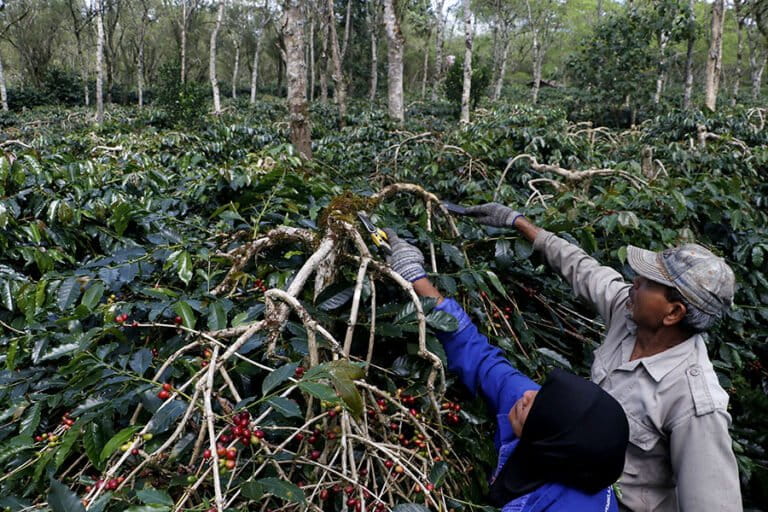
The impact of these environmental shifts is best understood through the experiences of those who toil in the fields. Agus, a coffee farmer in Enrekang, reports a staggering 50% drop in his harvest. Similarly, Nursam Arifuddin, a Robusta farmer, notes that the seasons have become entirely unpredictable, rendering traditional agricultural calendars obsolete.
The devastation does not end at the farm gate. It flows downstream, affecting local economies and businesses. Agil Valentino, a specialty coffee shop owner in Makassar, highlights the downstream friction caused by the crisis. As farm productivity drops, sourcing high-quality Enrekang beans has become increasingly difficult. This scarcity forces roasters and café owners to navigate volatile price spikes, threatening the viability of the entire supply chain.
The Gender Dimension: A Disproportionate Burden
Perhaps the most overlooked aspect of this crisis is its gendered impact. The global coffee industry relies heavily on female labor, with women accounting for approximately 70% of the workforce. Despite their vital contribution, women represent only 20–30% of plantation leadership and ownership.
When climate change triggers crop failure, it is often the women who bear the brunt of the instability. With fewer resources, limited access to land titles, and restricted access to agricultural credit, female farmers find themselves in a state of hyper-vulnerability. The loss of coffee as a cash crop doesn’t just mean a dip in revenue; it often signals a loss of food security and educational opportunities for their families.
Official Responses and Strategic Challenges
While the global community has begun to acknowledge the urgency of the situation, the response remains fragmented. Organizations like the ICO and various NGOs are advocating for "Climate-Smart Agriculture." This approach involves planting shade trees to regulate soil temperature, introducing drought-tolerant hybrids, and implementing precision irrigation.
However, implementation is hampered by the "poverty trap." When a farmer is earning less than a dollar for their produce, they cannot afford the upfront costs of transitioning to sustainable farming methods. Official government responses in Indonesia have focused on land management and subsidies for fertilizers, yet experts argue that these are "band-aid" solutions. To ensure the survival of the industry, there must be a structural shift in how coffee is priced. The global coffee market must transition toward a model that values environmental stewardship and provides a living wage to the 25 million smallholders who keep the industry afloat.
Conclusion: A Wake-Up Call
The future of coffee is not merely a matter of convenience for the consumer; it is an existential threat to the livelihoods of millions and a indicator of our planet’s ecological health. The decline of coffee yields is a "canary in the coal mine" for the broader agricultural sector.
If the industry continues to operate under the current paradigm of high demand and low producer support, the morning cup of coffee may soon become a luxury item reserved for the wealthy, while the small farmers who once fueled the industry are forced to abandon their land. Protecting the future of coffee requires a global mobilization—one that prioritizes climate adaptation, supports gender equity in farming, and fundamentally reforms the economic value chain to ensure that those at the very beginning of the process are not the ones who pay the highest price for the changing climate.