Indonesia Bolsters Air Defense: A Deep Dive into the Acquisition of Leonardo’s M-346 Fighter Attack Aircraft
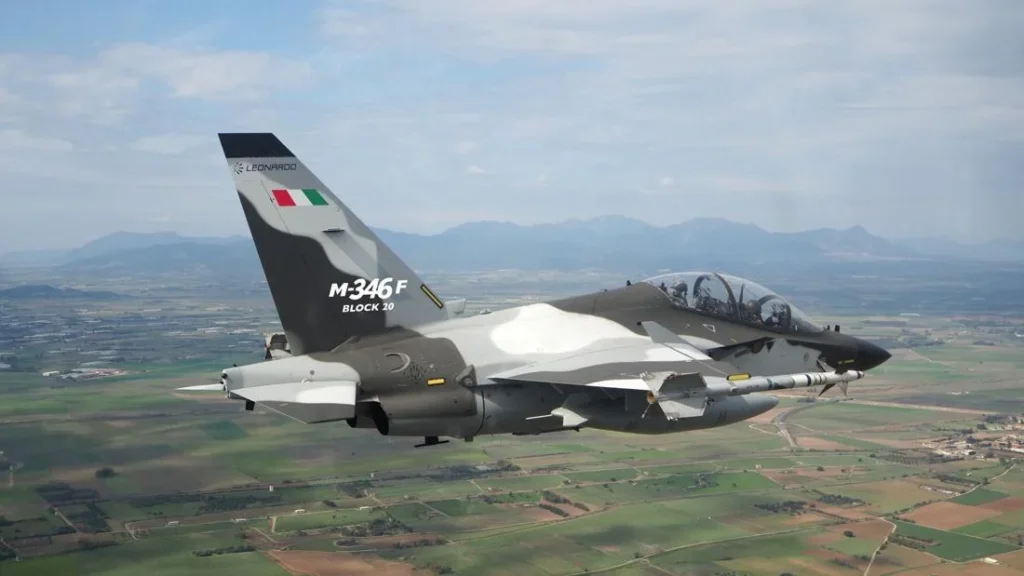
Jakarta – In a strategic move to modernize its air combat capabilities and refine pilot training protocols, the Republic of Indonesia has officially finalized a landmark agreement to acquire 12 units of the M-346 F Block 20 light fighter aircraft. The deal, brokered between the Indonesian Ministry of Defense, Italian aerospace giant Leonardo, and local partner PT ESystem Solutions Indonesia, marks a significant milestone in the evolution of the Indonesian Air Force (TNI AU).
This procurement is not merely an equipment upgrade; it represents a comprehensive shift in how Indonesia approaches both tactical operations and the professional development of its aviators. As the 23rd nation to adopt the M-346 platform, Indonesia is positioning itself within an elite network of global air forces that utilize one of the world’s most versatile advanced jet trainers and light combat platforms.
The Strategic Procurement: A Multidimensional Agreement
The contract signed between the Indonesian Ministry of Defense and Leonardo extends beyond the simple delivery of 12 aircraft. Recognizing the importance of sovereignty and long-term sustainability, the agreement encompasses a robust "industrial cooperation" framework.
Localization and Human Capital Development
A critical component of this deal is the commitment to domestic localization. Indonesia has ensured that the contract includes provisions for local maintenance, repair, and overhaul (MRO) capabilities. By establishing these facilities within the country, Indonesia aims to reduce its reliance on foreign support for routine maintenance, thereby increasing the operational readiness of its fleet. Furthermore, the package includes extensive human resource development programs, ensuring that Indonesian technicians and pilots are not just users of the technology, but also experts in its maintenance and deployment.
Delivery Timeline
According to official disclosures, the delivery of the units is scheduled to commence in 2030. This timeline allows the Indonesian military to prepare the necessary infrastructure, training facilities, and logistical support systems required to integrate these advanced aircraft into the existing air wing seamlessly.
Technical Superiority: Why the M-346 F Block 20?
The M-346 F (Fighter) variant is the combat-capable evolution of the highly successful M-346 Advanced Jet Trainer. The "Block 20" designation signifies the latest iteration of this platform, featuring state-of-the-art enhancements that distinguish it from previous versions.
Advanced Avionics and Sensor Suites
The M-346 F Block 20 is designed to bridge the gap between legacy training aircraft and modern 4.5 or 5th-generation fighters. Key technical highlights include:
- Large Area Display (LAD): The cockpit features an integrated, intuitive display system that provides pilots with a seamless flow of flight and mission data, reducing cognitive load during high-pressure scenarios.
- AESA Radar: The inclusion of Active Electronically Scanned Array (AESA) radar allows for superior target detection, tracking, and multi-mission capabilities. This radar technology is a standard requirement for modern air dominance, providing the M-346 with genuine combat utility beyond its training function.
- Link 16 Data-Link: This provides the M-346 with "network-centric" capabilities, allowing for real-time data exchange with other aircraft, ground stations, and naval units. This integration is vital for modern tactical operations, ensuring that the pilot is never operating in isolation.
- Electronic Countermeasures (ECM): To enhance survivability, the aircraft is equipped with advanced self-protection systems, enabling it to operate effectively in contested environments by neutralizing enemy electronic threats.
Multi-Role Capability and Aerial Refueling
The M-346 F is capable of executing both air-to-air and air-to-ground missions, supported by a sophisticated weapons management system. Additionally, the Block 20 variant includes air-to-air refueling capability, a critical feature for extending the range and endurance of the aircraft during long-range patrols or extended training exercises. With a top speed approaching Mach 0.95, the aircraft provides the high-subsonic performance necessary to simulate modern aerial combat effectively.
A Paradigm Shift in Training: Live, Virtual, and Constructive (LVC)
Beyond its role as a light fighter, the M-346 F Block 20 acts as the core of a revolutionary training ecosystem. The aircraft is integrated with the Ground Based Training System (GBTS), which utilizes the concept of Live, Virtual, and Constructive (LVC) simulation.
In this environment, a pilot flying a physical M-346 (Live) can engage in training scenarios alongside virtual aircraft simulated on computers (Virtual) and computer-generated threats (Constructive). This allows Indonesia to conduct highly complex training exercises—such as multi-ship dogfights or coordinated strike missions—at a fraction of the cost and risk associated with traditional full-scale flight training.
This system has already proven its worth globally. In Italy, the M-346 is the backbone of the International Flight Training School (IFTS), a facility renowned for producing world-class pilots. It has even been selected by the Italian Air Force for its iconic aerobatic team, Frecce Tricolori, underscoring the platform’s agility and reliability.
Official Responses and Strategic Rationale
The Ministry of Defense has been clear regarding the motivation behind this acquisition. Speaking to the press, the Head of the Defense Information Bureau (Karo Infohan), Brigadier General TNI Rico Ricardo Sirait, highlighted the dual-purpose nature of the purchase.
"One of the primary considerations is to meet the training requirements of TNI AU pilots while simultaneously supporting operational readiness," Brig. Gen. Sirait stated. By acquiring an aircraft that can transition from a trainer to a combat asset, Indonesia is optimizing its defense budget, ensuring that assets are not sitting idle during peacetime but are actively contributing to the sharpening of pilot skills.
The M-346 is expected to serve as a bridge to Indonesia’s future, providing a seamless transition path for pilots before they move on to more advanced, heavy-duty platforms.
Contextualizing the Fleet: Strengthening the TNI AU
The Indonesian Air Force currently operates a diverse fleet of fighter jets, including the F-16 Fighting Falcon and the Sukhoi Su-27/30 series. For years, the T-50i Golden Eagle, purchased from South Korea, has served as the primary advanced jet trainer and light fighter platform.
The Role of the T-50i
Indonesia currently operates 22 units of the T-50i, stationed at the Iswahjudi Air Force Base in East Java. These aircraft have been instrumental in preparing pilots for the F-16. The addition of the M-346 F will complement this existing infrastructure, allowing the TNI AU to scale its training capacity and modernize its fleet in anticipation of future procurements of more advanced 4.5 and 5th-generation combat aircraft.
Global Adoption and Proven Pedigree
With over 170 aircraft ordered globally and more than 170,000 flight hours recorded, the M-346 is a battle-tested and trainer-proven platform. Its adoption by countries like Israel, Singapore, Poland, Qatar, and Austria—all nations with stringent defense requirements—vindicates Indonesia’s decision to choose this specific platform.
Future Implications for Indonesian Air Power
The acquisition of 12 M-346 F Block 20 jets is a long-term investment in national security. As the security landscape in the Indo-Pacific region becomes increasingly complex, the ability to rapidly train a new generation of pilots and maintain a fleet of flexible, modern light combat aircraft is paramount.
Enhancing Operational Readiness
The M-346 will allow Indonesia to perform "lead-in fighter training" (LIFT) at a level previously unattainable. This ensures that when a pilot graduates to a frontline fighter, they are already proficient in modern sensor management, data-link communication, and advanced tactical maneuvers.
A Step Toward Industrial Autonomy
Perhaps most importantly, the emphasis on local MRO and human capital development signals a move toward self-reliance. By fostering a domestic workforce capable of servicing advanced Western-designed avionics and airframes, Indonesia is building the industrial base necessary to sustain its defense infrastructure for decades to come.
As the 2030 delivery date approaches, the integration of these 12 aircraft will mark a turning point for the Indonesian Air Force. It represents a commitment to technological parity with regional powers, a dedication to professionalizing the pilot corps, and a clear signal that Indonesia is serious about its role in maintaining regional stability. Through the M-346 F Block 20, Indonesia is not just buying airplanes; it is securing the future of its skies.