The Evolution of Immersion: Philips Debuts the Evnia 32M2N6901A 4K QD-OLED Monitor
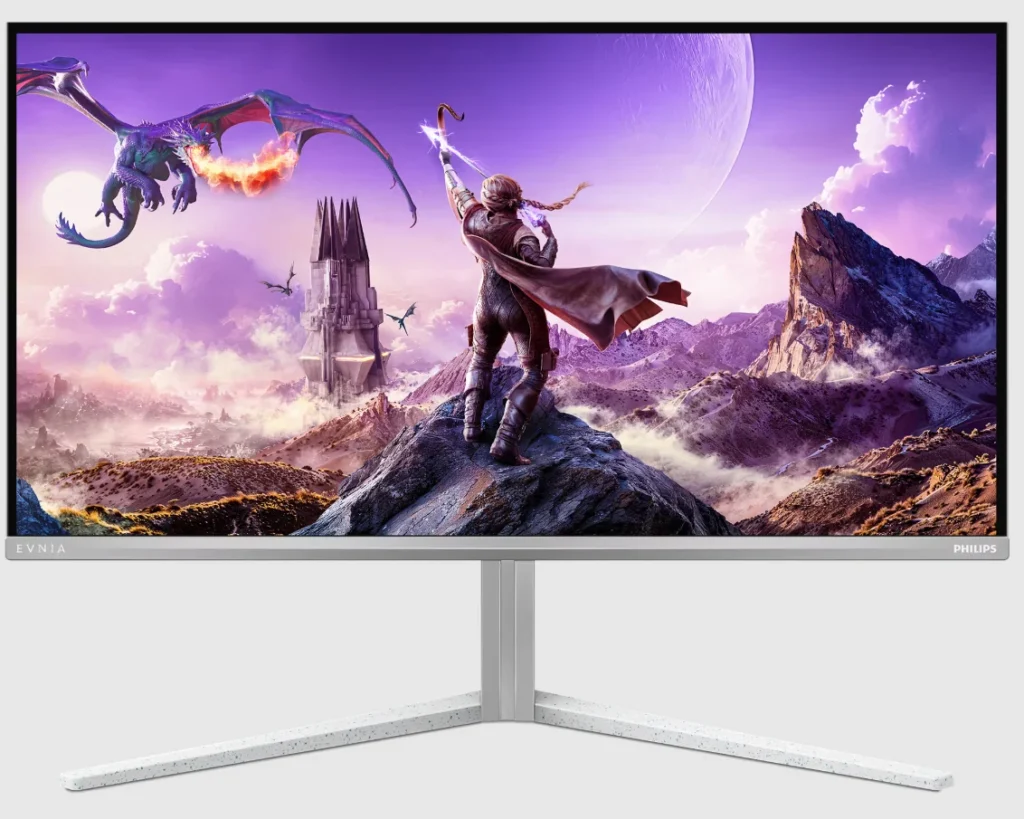
The landscape of PC gaming hardware is undergoing a seismic shift. For years, the pursuit of the "ultimate" gaming monitor was defined by a frantic race for higher refresh rates, often at the expense of visual fidelity or financial accessibility. However, a new philosophy is taking root among top-tier manufacturers. Leading this charge, Philips has officially unveiled the Evnia 32M2N6901A, a 32-inch 4K QD-OLED masterpiece that prioritizes a balanced, high-fidelity experience over the diminishing returns of ultra-high refresh rates.
By marrying the cutting-edge contrast of Quantum Dot OLED (QD-OLED) technology with a sensible 165Hz refresh rate, Philips is positioning the Evnia 32M2N6901A as the new standard for enthusiast-grade gaming—all while maintaining a price point that challenges the industry’s status quo.
The Core Offering: Specifications and Performance
At the heart of the Evnia 32M2N6901A lies a stunning 32-inch QD-OLED panel. This is not merely a screen; it is a visual engine designed for the most demanding AAA titles. With a native resolution of 3840 x 2160 (4K), the monitor delivers pixel density that ensures sharp, crisp textures, while the QD-OLED architecture provides perfect blacks and near-infinite contrast ratios that traditional IPS or VA panels simply cannot replicate.
Technical Breakdown:
- Panel Type: QD-OLED
- Resolution: 3840 x 2160 (4K UHD)
- Refresh Rate: 165Hz
- Response Time: 0.03ms (GtG)
- HDR Certification: DisplayHDR True Black 400
- Connectivity: 2x HDMI 2.1, 1x DisplayPort 1.4, USB-C (90W PD)
While 165Hz might seem conservative compared to the 240Hz or 360Hz displays currently flooding the market, the inclusion of a 0.03ms response time ensures that motion blur is effectively nonexistent. For the average gamer, the difference between 165Hz and 240Hz is often negligible, whereas the difference between a standard LED backlight and the individual pixel-level illumination of OLED is transformative.
Chronology: The Shift Toward Balanced Premium
To understand the significance of the Evnia 32M2N6901A, one must look at the recent history of the monitor market.
2022–2023: The Era of "More is More."
Early OLED monitors were marketed primarily to competitive esports professionals. Manufacturers focused on 240Hz+ refresh rates, often limiting resolutions to 1440p to keep costs manageable while chasing the "pro-gamer" aesthetic. 4K OLEDs during this period were strictly luxury items, often exceeding the $1,500–$2,000 threshold.
2024: The Maturation Phase.
As OLED panel manufacturing processes became more efficient, supply chains stabilized. Brands began to realize that the vast majority of PC gamers playing open-world RPGs or cinematic action games were not prioritizing 360Hz output. Instead, they were craving the visual punch of 4K.
Mid-2026: The Philips Pivot.
With the announcement of the Evnia 32M2N6901A, Philips has explicitly targeted the "sweet spot." By opting for 165Hz, they have allowed the retail price to drop to approximately $868 (£649.99). This represents a fundamental shift in strategy: moving away from marketing gimmicks toward hardware that aligns with the performance capabilities of modern high-end GPUs.
AI Ambiglow and the Immersive Experience
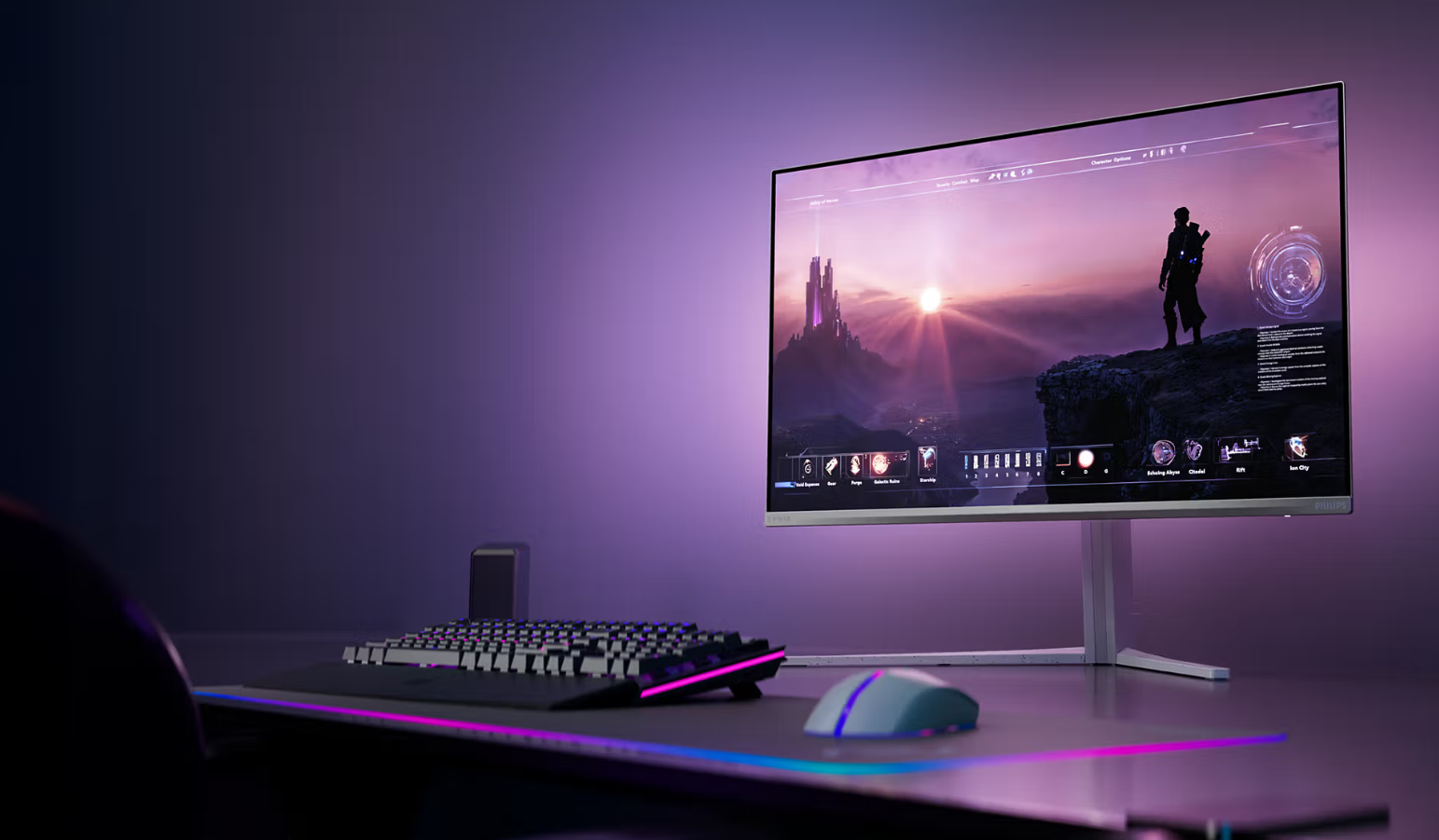
A hallmark of the Philips Evnia line is its focus on atmosphere. The 32M2N6901A continues this tradition with AI Ambiglow. Unlike basic RGB backlighting, which simply cycles through colors, AI Ambiglow utilizes a processor to analyze the image content on the screen in real-time.
It projects a halo of light onto the wall behind the monitor that mimics the dominant colors of the game, effectively extending the screen’s visual range into the user’s peripheral vision. This creates an unparalleled sense of immersion, particularly during low-light gaming sessions. When paired with the perfect blacks of the QD-OLED panel, the monitor essentially makes the physical borders of the display disappear, pulling the user deeper into the digital environment.
Connectivity and Versatility
In an era where users juggle multiple devices, the Evnia 32M2N6901A functions as more than just a PC monitor; it is a central hub for a modern home office or gaming battlestation.
The inclusion of USB-C with 90W Power Delivery is a significant value add. A laptop user can connect a single cable to handle video, data, and charging simultaneously, simplifying cable management. Furthermore, the built-in KVM Switch allows users to control two different computers—such as a gaming desktop and a work laptop—using the same keyboard and mouse.

Combined with two HDMI 2.1 ports, the monitor is fully "console-ready." PlayStation 5 and Xbox Series X users can take full advantage of 4K resolution at high refresh rates, making this an ideal hybrid display for those who split their time between console and PC platforms.
Implications: A New Benchmark for Pricing
The most critical takeaway from the Evnia 32M2N6901A launch is the pressure it puts on the market. For years, the barrier to entry for a 4K OLED was prohibitively high. By setting the MSRP at $868, Philips is effectively forcing competitors to re-evaluate their pricing models.
Industry Impact:
- Normalization of 4K OLED: The sub-$900 price point for a high-quality 32-inch panel suggests that OLED is finally transitioning from a niche status symbol to a mainstream high-end choice.
- Hardware Realism: Most gamers, even those with high-end GPUs like the RTX 4080 or 4090, struggle to maintain a consistent 240+ FPS in 4K resolution in modern, ray-traced titles. By focusing on 165Hz, Philips is building a monitor that matches the actual, real-world frame rates gamers can expect from their hardware.
- Consumer Value: Features like the 5W integrated speakers, KVM, and USB hub show that Philips is not cutting corners on the "quality of life" aspects of the monitor, despite the aggressive pricing.
Conclusion: Is This the Future?
The Philips Evnia 32M2N6901A is not designed to win a spec-sheet war against 360Hz esports displays. It is designed to be the ultimate daily driver for the discerning gamer who values image quality, color accuracy, and deep immersion above all else.
As we look toward the future of display technology, it is clear that the industry is moving toward a more pragmatic approach. We are seeing a maturation of the market where performance is no longer defined by a single number, but by a cohesive, balanced ecosystem of features. For the gamer looking to upgrade to 4K without sacrificing the incredible visual benefits of OLED, the Evnia 32M2N6901A stands out as one of the most compelling options of 2026.
Whether you are a competitive gamer, a creative professional, or someone who simply wants the most vibrant, high-fidelity experience possible, the 32M2N6901A proves that you no longer need to pay a "luxury tax" to get top-tier performance. Philips has delivered a product that hits the mark where it matters most: right in the center of the user experience.
As August approaches and the monitor reaches retail shelves, it will be fascinating to see how the broader market responds. Will others follow suit and bring their prices down to match, or will Philips maintain its competitive edge as the go-to brand for value-oriented premium gaming? Only time will tell, but for now, the gamer is the ultimate winner.