Indonesia and Fujian Province Forge Deeper Economic Ties: Accelerating the "Two Countries, Twin Parks" Strategy
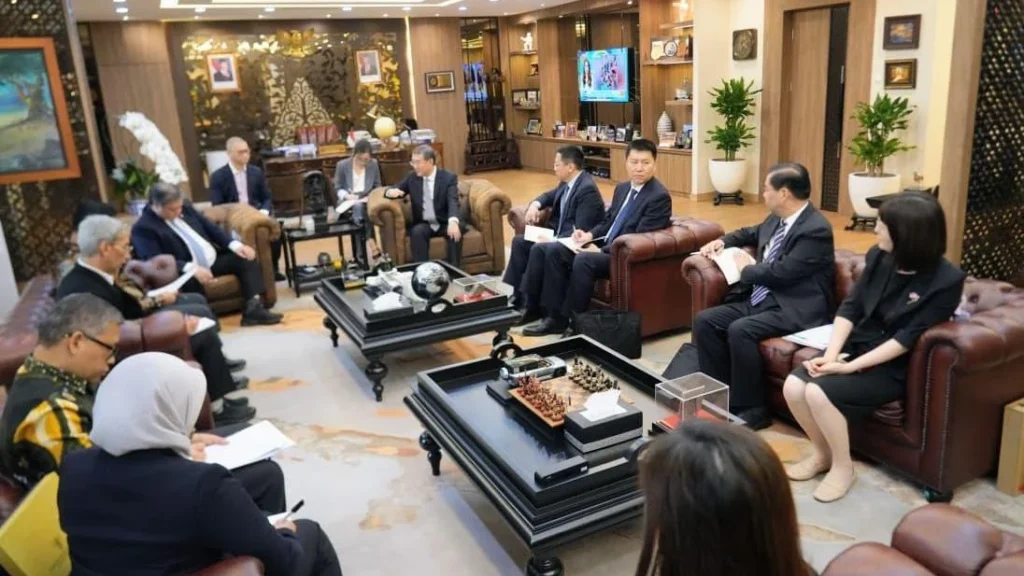
JAKARTA – In a significant move to bolster bilateral economic relations, Coordinating Minister for Economic Affairs Airlangga Hartarto held a high-level meeting with the Vice Governor of China’s Fujian Province, Zhao Zenglian, at the Coordinating Ministry’s headquarters in Jakarta. The meeting marks a critical juncture in the implementation of the "Two Countries, Twin Parks" (TCTP) initiative, a collaborative economic framework designed to mirror the industrial success of China’s Shenzhen within the Indonesian archipelago.
The Core Objective: Operationalizing the TCTP Framework
The dialogue between Minister Hartarto and Vice Governor Zhao centered on a singular, actionable goal: the urgent creation of a definitive list of priority sectors and high-potential projects. This roadmap is intended to serve as the blueprint for the TCTP program, ensuring that cooperation is not merely symbolic but grounded in concrete, mutually beneficial economic outcomes.
The TCTP initiative is fundamentally designed to act as a bridge between Indonesian and Chinese industrial zones. By aligning the regulatory and logistical frameworks of these "twin parks," both nations aim to catalyze a surge in bilateral trade, attract high-quality foreign direct investment (FDI), and accelerate the industrialization of key Indonesian regions.
Transforming Batang into Indonesia’s Shenzhen
A central focus of the discussion was the development of the Batang Industrial Special Economic Zone (KEK Industropolis Batang). Officially inaugurated on March 20, 2025, the zone is being positioned as the "Shenzhen of Indonesia."
"Following the strategic directive of President Prabowo Subianto, we are committed to realizing the vision of Batang as a world-class industrial hub. By leveraging the TCTP framework, we intend to accelerate the implementation of projects that will transform this zone into an engine of growth, mirroring the rapid industrial trajectory seen in China," Minister Hartarto stated in a formal communique.
Chronology of the Partnership
The relationship between Indonesia and Fujian Province regarding the TCTP program has evolved significantly over the past several years. While the recent meeting provided the momentum, the groundwork was laid through a series of incremental diplomatic and economic milestones:
- Early Conceptualization: The initial framework for TCTP was proposed as a strategic response to the increasing demand for cross-border industrial integration, aimed at reducing supply chain friction between the two nations.
- The Inception of MOUs: Over the last few years, the partnership has formalized through the signing of 30 separate Memorandums of Understanding (MOUs). These documents have laid the legal and operational foundation for collaboration between provincial governments and private enterprises.
- Economic Milestone (2025): The official launch of the Batang Industrial Special Economic Zone in March 2025 acted as the primary catalyst for the current phase of the TCTP project.
- The July 2026 Summit: The recent meeting between Minister Hartarto and Vice Governor Zhao served as the "acceleration phase," focusing on moving from planning to active implementation of specific industrial projects.
Supporting Data: A Multi-Trillion Rupiah Commitment
The scale of the economic cooperation is significant. According to the latest figures provided by the Coordinating Ministry for Economic Affairs, the partnership has already secured substantial financial commitments.
- Investment Value: As of July 2026, the 30 signed MOUs represent an estimated investment value of approximately Rp 37.1 trillion (roughly USD 2.3–2.4 billion, depending on exchange fluctuations).
- Sectoral Diversity: The investments are not limited to a single industry. They span manufacturing, renewable energy components, logistics, and consumer goods processing, highlighting a diverse industrial portfolio designed to support Indonesia’s downstreaming policy.
- Economic Impact: The TCTP program is expected to create thousands of jobs, improve technological transfer from Chinese firms to Indonesian workers, and integrate Indonesian manufacturing more deeply into global value chains.
Official Responses and Strategic Directions
The Perspective of the Indonesian Government
Minister Airlangga Hartarto emphasized that the Indonesian government is committed to creating an enabling environment for these investments. Beyond the construction of physical infrastructure, the focus has shifted toward institutional reforms. "We are working on strengthening the ecosystem that supports TCTP. This includes streamlining customs procedures, improving the efficiency of cargo logistics, and ensuring that market access for products manufactured in these zones is seamless," Hartarto noted.
The Perspective of the Fujian Provincial Government
Vice Governor Zhao Zenglian expressed high confidence in the partnership, underscoring Fujian’s readiness to share its expertise in industrial park management. "Fujian is committed to walking hand-in-hand with Indonesia," Zhao stated. "Our focus now is on coordination. We are identifying the sectors where Fujian’s industrial strengths—such as electronics, machinery, and green technology—perfectly align with Indonesia’s resource-rich landscape and market potential."
Zhao emphasized a three-pronged approach for the next phase:
- Stakeholder Synchronization: Enhancing communication channels between local Indonesian governments and their Fujian counterparts.
- Project Prioritization: Moving away from broad goals to specific, high-impact industrial projects that can be launched within the next 12 to 24 months.
- Efficiency Protocols: Developing a "fast-track" mechanism to resolve administrative hurdles that might impede the development of the twin parks.
Implications for the Future: A New Era of Industrial Cooperation
The strategic alliance between Indonesia and Fujian through the TCTP framework carries profound implications for the regional economy.
1. Strengthening Global Supply Chains
By integrating the industrial capacity of Fujian with the raw materials and workforce of Indonesia, the TCTP initiative effectively creates a regional powerhouse. This reduces reliance on distant supply chains and provides a localized manufacturing base that is highly attractive to companies looking to relocate or diversify their operations away from over-concentrated regions.
2. The "Shenzhen Model" and Downstreaming
The reference to Shenzhen is deliberate. Shenzhen evolved from a small fishing town into a global technological and manufacturing giant through special economic policies and foreign investment. By attempting to replicate this model in Batang, Indonesia is signaling its intent to move up the value chain. Instead of merely exporting raw commodities, the nation is actively building the infrastructure to process these materials domestically, thereby capturing more value within the national borders.
3. Logistical and Regulatory Hurdles
Despite the optimism, experts note that the success of TCTP will depend on the "fine print." While the central government in Jakarta is fully on board, the successful implementation of the program will require sustained coordination at the provincial and regency levels. Ensuring that the "twin parks" actually function as a single unit will require harmonized regulations, particularly regarding the movement of goods, tax incentives, and labor mobility.
4. A Template for Future Bilateral Ties
If the TCTP program succeeds, it could serve as a template for Indonesia’s future economic partnerships with other provinces in China or even other nations. The model shifts the focus from sporadic, isolated investments to integrated industrial ecosystems, which are generally more resilient and provide a more stable return on investment for all parties involved.
Conclusion: Moving Forward
The meeting between Minister Hartarto and Vice Governor Zhao is a testament to the deepening synergy between Indonesia and China. As the world navigates a complex economic landscape, the TCTP initiative provides a roadmap for structured, long-term industrial collaboration. With Rp 37.1 trillion already on the table and a clear directive from the Indonesian presidency to accelerate development, the coming months are expected to see a flurry of activity in the Batang zone and beyond.
For investors, policymakers, and the public, the development of the "Two Countries, Twin Parks" program is a critical metric to watch. It represents not just an investment in infrastructure, but a profound shift in how Indonesia engages with the global economy, striving to become a central hub for industrial innovation and manufacturing excellence in the Indo-Pacific region. As the project moves from the MOU stage to physical construction and operational reality, the "Shenzhen of Indonesia" may soon become more than just a vision—it could become the cornerstone of Indonesia’s future industrial identity.