Biodiversity at the Brink: The Fight Against the Illicit Songbird Trade in Sumatra

By Investigative Desk
In a major blow to illegal wildlife trafficking syndicates, a joint operation by the West Sumatra Natural Resources Conservation Agency (BKSDA) and the Agam Police Criminal Investigation Unit successfully intercepted a massive shipment of protected and non-protected songbirds. The operation, conducted on July 18, 2026, resulted in the seizure of 225 birds and the arrest of an individual identified as KZ, who is suspected of acting as a key node in an inter-provincial trafficking network.
The arrest serves as a sobering reminder of the relentless pressure on Indonesia’s avian biodiversity, driven by the insatiable demand from the songbird hobbyist market in Java. As authorities scramble to rehabilitate the traumatized animals, experts warn that the systematic extraction of these species from the wild is pushing delicate ecosystems toward a tipping point.
The Chronology of the Interception
The operation unfolded on a Saturday, following weeks of surveillance on trafficking routes connecting the northern reaches of Sumatra to the southern ports of Lampung. According to Ade Putra, Head of the BKSDA Agam Resort, the suspect, KZ, was apprehended while transporting the birds in a four-wheeled vehicle.
“The birds were being transported from West Pasaman with a final destination of Lampung,” Putra stated. “From our initial findings, the suspect was not merely a courier but appeared to be an investor in the trade, leveraging his own capital alongside external funding sources to facilitate these illegal shipments.”
The seizure was the culmination of intelligence gathering regarding the movement of wildlife from the northern districts of West Sumatra and the neighboring North Sumatra province. Investigations revealed that KZ had sourced the birds from a combination of local markets and forest hunters in Pasaman Barat and Mandailing Natal.

This arrest is particularly significant as it represents the first major breakthrough in curbing inter-provincial bird trafficking in the Agam region in five years. Officials noted that the suspect had already completed at least two similar shipments earlier in the year, highlighting a recurring pattern of illegal wildlife movement that utilizes the trans-Sumatran transport infrastructure.
The Cargo: A Taxonomic Crisis
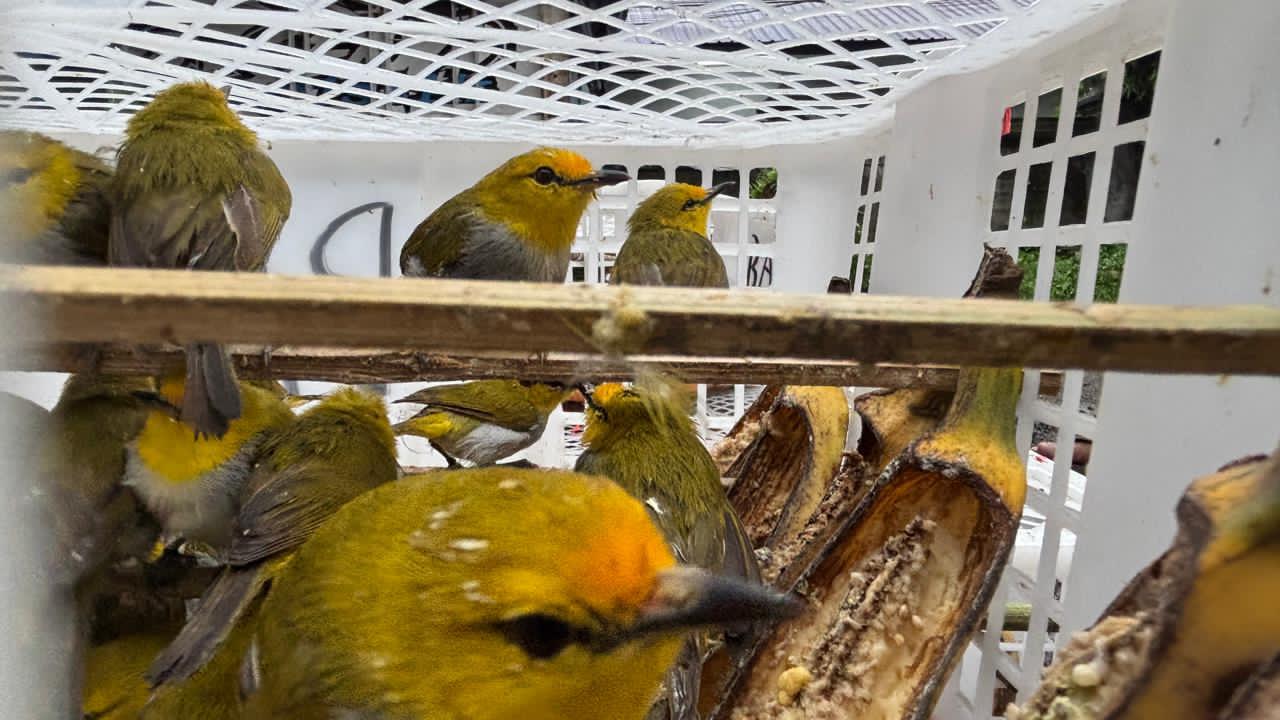
The 225 birds seized in the raid represent a diverse array of species, ranging from the common Kutilang Emas (Gold-fronted Leafbird) to more elusive and protected varieties. Among the species identified were:
- Cica Daun Besar (Greater Green Leafbird – Chloropsis sonnerati): Endangered.
- Cica Daun Kecil (Lesser Green Leafbird – Chloropsis cyanopogon): Near Threatened.
- Various species: Including Kapodang, Pleci (Oriental White-eye), Kolibri (Sunbirds), and other songbirds.
The financial scale of the operation was significant. While individual birds were priced from as low as IDR 20,000 to millions of rupiah, the collective value of the confiscated shipment reached tens of millions of rupiah.
The inclusion of the Greater and Lesser Green Leafbirds in the haul is particularly concerning to conservationists. The Greater Green Leafbird, in particular, is classified as "Endangered" on the IUCN Red List, having suffered a drastic population decline over the last three generations. Their vibrant plumage and melodious calls have made them high-value targets for illegal poachers, creating a "prestige market" that drives the prices upward and incentivizes further poaching.
Ecological Implications: The Trophic Cascade
Wilson Novarino, a conservation biologist and ornithologist at Andalas University, highlights the devastating ecological vacuum left behind by the removal of these birds. "These species are not just ornaments of the forest," Novarino explains. "They perform dual roles as insectivores and seed dispersers in the forest canopy. They are the silent architects of forest health."
According to Novarino, the mass removal of these birds could trigger a "trophic cascade"—an ecological phenomenon where the loss of a specific predator or seed disperser leads to unforeseen systemic collapses. For instance, without the natural predation provided by these birds, populations of specific insects may explode, potentially becoming agricultural pests that could devastate local plantations bordering the forests.
"We have already seen the tragic outcome of such pressures," Novarino adds, citing the local extinction of the Sumatran rhinoceros in the Kerinci Seblat National Park during the late 90s, as well as the disappearance of the Cucakrawa (Straw-headed Bulbul) and various species of Poksai from the wild in West Sumatra. "We are witnessing the slow emptying of our forests. If this continues, the sound of the forest—and its ability to regenerate—will be permanently silenced."
Supporting Data: The Pipeline to Java
The trade is not an isolated phenomenon but a massive, organized pipeline. Data from the organization Forum Against Illegal Wildlife Trade (FLIGHT) reveals that over 14,000 wild birds from Sumatra were rescued from trafficking attempts in 2025 alone. Most of these seizures occurred at the Bakauheni Port and along the Terbanggi Besar–Bakauheni toll road in Lampung.
Lampung serves as the primary gateway for wildlife smuggled from Sumatra to the islands of Java and Bali. Research by TRAFFIC indicates that there are over 11,000 bird shops and 125 major bird markets in Java that rely heavily on the constant influx of wild-caught birds from Sumatra and Kalimantan.
This demand is rooted in a deeply ingrained cultural practice of keeping songbirds, often exacerbated by the popularity of bird-singing competitions. These competitions, which often command large cash prizes, have historically favored wild-caught birds over captive-bred ones, further fueling the illegal supply chain.
Official Response and Policy Measures
The BKSDA has taken a multi-pronged approach to combat this crisis. In September 2025, the agency conducted extensive outreach and socialization programs for bird traders across Agam, Pasaman, Pasaman Barat, and Bukittinggi. The objective was to educate traders on the regulations regarding protected species and the legal consequences of the trade.
"We have engaged with almost all major traders in the region to ensure they understand that the exploitation of protected wildlife is a criminal offense," said Ade Putra. "However, enforcement must keep pace with the increasing sophistication of these syndicates."
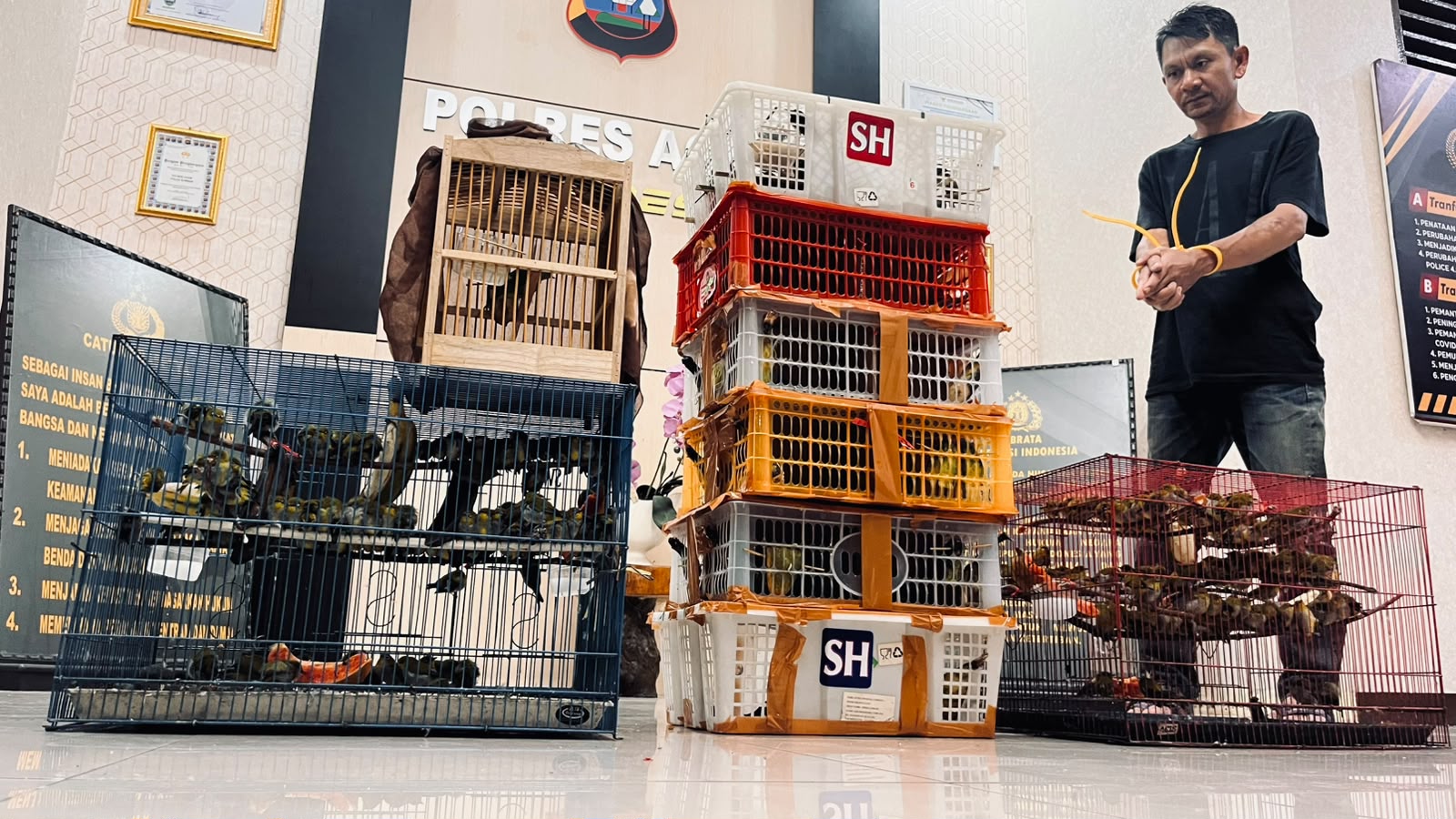
The authorities are currently preparing the confiscated birds for health assessments. Once cleared by veterinarians, the birds will be prepared for release back into their natural habitats, provided they have not lost their survival instincts during captivity.
Legal Consequences and Future Outlook
The suspect, KZ, is now facing severe legal repercussions under the updated legislative framework of Indonesia. He is charged under Article 40A paragraph (1) letter d, in conjunction with Article 21 paragraph (2) letter a of Law Number 32 of 2024, which serves as an amendment to Law Number 5 of 1990 concerning the Conservation of Living Natural Resources and Their Ecosystems.
Under these revised laws, the maximum penalty for trading protected wildlife has been significantly bolstered, with potential prison sentences of up to 15 years. This reflects a growing political will in Indonesia to treat wildlife crime with the same gravity as drug trafficking or money laundering.
Recommendations for Systemic Change
Experts like Wilson Novarino argue that arrests alone are insufficient to stop the tide of extinction. A comprehensive solution must include:
- Community-Based Conservation: Transforming former poachers into wildlife guardians through the development of eco-tourism, specifically bird-watching ventures that provide sustainable, long-term income.
- Demand-Side Regulation: Implementing strict mandates for bird-singing competitions, where only captive-bred birds with verified documentation are permitted to compete.
- Digital Vigilance: Strengthening the monitoring of social media and e-commerce platforms, which have become the new "digital markets" for wildlife trafficking.
- Strengthening Law Enforcement: Expanding the mandate for inter-agency cooperation between the BKSDA, the police, and maritime security agencies to choke off the transit nodes at major ports.
As the case of the 225 birds proceeds through the judicial system, the eyes of the conservation community remain fixed on the authorities. The survival of Sumatra’s avian heritage depends not only on the success of individual seizures but on the total dismantling of the trade networks that prioritize profit over the fundamental balance of nature.
"We are at a crossroads," concludes Novarino. "Either we accept the silence of our forests as the new normal, or we act with the urgency required to protect what little remains of our natural legacy."