Strengthening Ties: The Future of Australia-Indonesia Educational and Diplomatic Relations
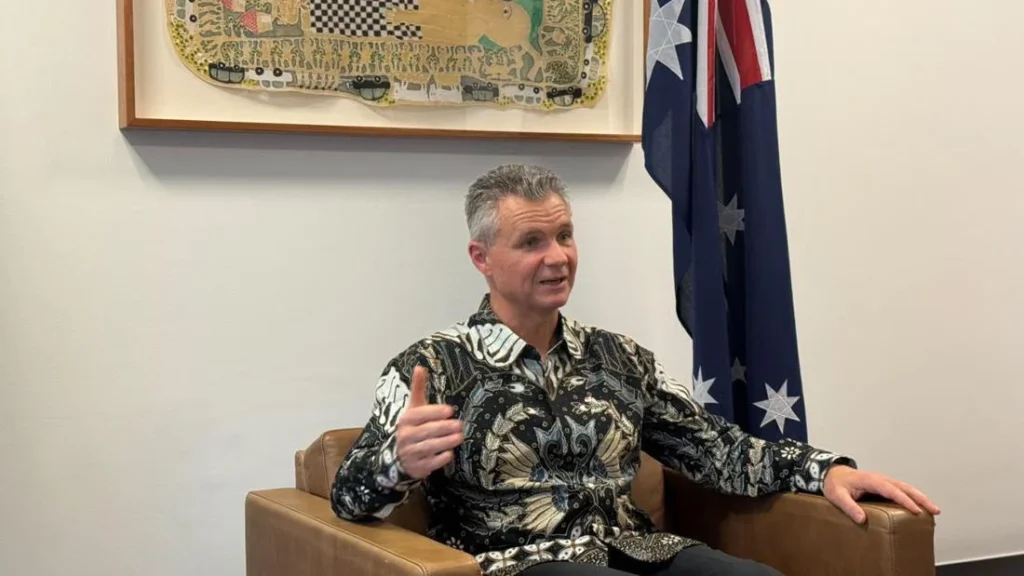
JAKARTA – As the geopolitical and economic landscape of the Indo-Pacific continues to evolve, the partnership between Australia and Indonesia has increasingly centered on a vital common denominator: education. With a relationship spanning over seven decades, both nations are looking toward 2027 and beyond as a critical window to deepen their collaborative efforts.
In a recent exclusive interview with detikedu at the Australian Embassy in Jakarta, Matt Thistlethwaite, Australia’s Assistant Minister for Foreign Affairs and Trade, addressed the future of the prestigious Australia Awards, clarified misconceptions regarding visa fees, and outlined a new, equitable approach to the Working Holiday Visa (WHV) program.
The Strategic Importance of Educational Diplomacy
For Australia, the relationship with Indonesia is not merely diplomatic; it is structural. According to Thistlethwaite, the foundation of this connection is built within the classrooms and lecture halls of both nations. Currently, there are approximately 25,000 Indonesian students pursuing higher education in Australia.
"Education ensures that the relationship becomes stronger in the future," Thistlethwaite noted. "These students will eventually become leaders in business and government. By fostering these connections during their formative academic years, we are essentially building the framework for future economic and social collaboration between our two nations."
This sentiment is backed by significant historical data. Since its inception in the 1950s, the Australia Awards program has supported 200,000 alumni. The impact of this program is visible at the highest levels of the Indonesian government. Notably, 16 members of President Prabowo’s current cabinet have studied in Australia, with six of them being recipients of the Australia Awards scholarship. This statistic serves as a testament to the long-term value of the educational exchange.
Expanding Transnational Education: The "Invested" Strategy
Australia has set an ambitious goal to bolster its transnational education model across Southeast Asia, with Indonesia serving as a primary hub. This initiative is anchored in the "Invested" policy—a comprehensive government strategy designed to increase economic and people-to-people links between Australia and the ASEAN region.
"One of the key recommendations of the Invested report is to strengthen educational ties," Thistlethwaite explained. The strategy involves not only bringing Indonesian students to Australia but also bringing Australian educational institutions to Indonesia. Several Australian universities have already begun offering courses within Indonesia, marking a shift toward a more integrated, borderless educational landscape.
To ensure that this expansion does not compromise quality, the Australian government relies on the Tertiary Education Quality and Standards Agency (TEQSA). As an independent national regulator, TEQSA enforces rigorous standards for degrees, master’s programs, and PhDs. Thistlethwaite emphasized that whether a student is attending a campus in Sydney or a joint-degree program in Jakarta, the content, quality, and standards remain identical. "They must ensure the same quality in the courses provided. It should be as if they were attending the university in Australia," he added.
Addressing the 2027 Australia Awards Outlook
A frequent point of discussion among prospective scholars is whether the Australia Awards quota will see an increase by 2027. Thistlethwaite clarified that while the quota remains stable, its current allocation for Indonesia is already among the highest in the world.
"The quota remains the same, but Indonesia already holds one of the highest volumes of awards granted annually," he stated. He encouraged prospective students to continue applying, highlighting that the program’s 73-year longevity is a result of the high-quality outcomes and the invaluable connections participants make. The commitment from the Australian government is to ensure the program remains a cornerstone of the bilateral relationship for years to come.
Clarifying the Visa Fee Misconception
In recent months, rumors circulated regarding a sharp increase in Australian student visa fees, with reports suggesting a hike to AUD 2,500 (approximately IDR 31.5 million). Thistlethwaite issued a firm correction to these reports, aimed at alleviating concerns among the Indonesian student community.
"I really want to clarify this because there have been some incorrect reports," Thistlethwaite said. "There has been a price increase for some Australian visa categories, but we are not applying that increase to students from Indonesia."
Due to the "special relationship" between Australia and Indonesia, and the broader ASEAN partnership, the drastic fee hike does not apply. Instead, there is a minor adjustment based on the Consumer Price Index (CPI), which is a standard annual procedure. Consequently, the fee will rise from AUD 2,000 (IDR 25.2 million) to AUD 2,050 (IDR 25.9 million). This clarification is expected to provide much-needed stability for Indonesian students planning their academic futures.
Revolutionizing the Working Holiday Visa (WHV)
The Working Holiday Visa (WHV) serves as a vital tool for cultural exchange, and Australia is moving toward a more meritocratic and transparent system for Indonesian applicants.
Currently, Indonesia is allocated 5,000 spots annually under the WHV program. While the quota remains unchanged, the method of selection is set to undergo a significant transformation. Following a proposal from Indonesia’s Directorate General of Immigration, Australia has agreed to implement an electronic lottery system.
"The Director General of your Immigration Department suggested a lottery system to make it fairer and to eliminate the need for letters of support," Thistlethwaite explained. "We think it is a suitable recommendation, and we are working toward implementing it."
The move is designed to remove bureaucratic hurdles and ensure that all applicants have an equal opportunity to secure one of the 5,000 available spots. While the specific timeline for the launch of this electronic system has not yet been finalized, Thistlethwaite assured that the Australian government would provide advance notice to allow applicants to prepare.
Broader Economic and Travel Implications
Beyond formal education and long-term residency, the movement of people between the two nations remains robust. Thistlethwaite highlighted the recent introduction of a five-year business visa for Indonesians, aimed at facilitating short-term professional engagements.
This is complemented by the massive tourism flow from Australia to Indonesia, with approximately 1.5 million Australians visiting Bali annually. These figures underscore a deep, multi-faceted relationship that transcends politics.
Summary of Key Developments:
- Australia Awards: The program remains a pillar of the bilateral relationship, with Indonesia continuing to hold one of the highest quotas globally.
- Student Visa Fees: Contrary to widespread rumors, there is no massive fee hike for Indonesian students. The increase is limited to a minor CPI-based adjustment to AUD 2,050.
- WHV Reform: A new electronic lottery system is in development to replace the current process, aiming for greater fairness and the removal of the "letter of support" requirement.
- Transnational Education: Increased collaboration between Australian and Indonesian universities, monitored by TEQSA to ensure consistent quality across borders.
As Australia and Indonesia move toward 2027, the focus remains on deepening these ties. Whether through the pursuit of higher education, cultural exchange via the WHV, or professional collaboration, both nations appear committed to a partnership that is as much about the future as it is about the long-standing history they share.
"This is a relationship we value," Thistlethwaite concluded, "and it will only grow stronger from time to time."