
Borneo in Flames: The Silent Extinction of Orangutans Amidst Unprecedented Forest Fires
By [Your Name/Journalist Desk]
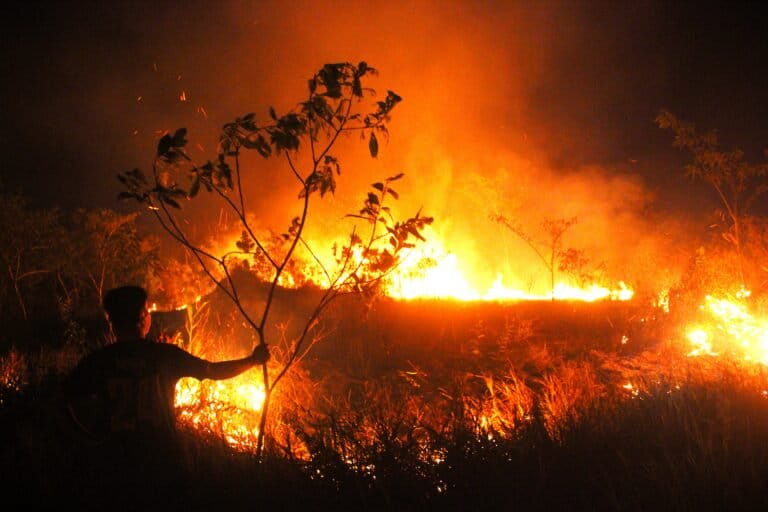
The vast, emerald heart of Borneo is currently battling a silent, suffocating catastrophe. As thick, acrid haze blankets the island, the orangutan—an iconic primate that shares 97% of its DNA with humans—is being driven to the brink of survival. Recent data confirms that the ongoing forest and land fires (karhutla) in Kalimantan are not merely an environmental crisis; they are a targeted assault on the remaining wild habitats of one of the world’s most endangered species.
From the quiet villages of Ketapang to the dense peatlands of Central Kalimantan, the story is the same: scorched trees, displaced wildlife, and a desperate race against time to save those who cannot flee the flames.
The Human and Animal Toll: A Cycle of Despair
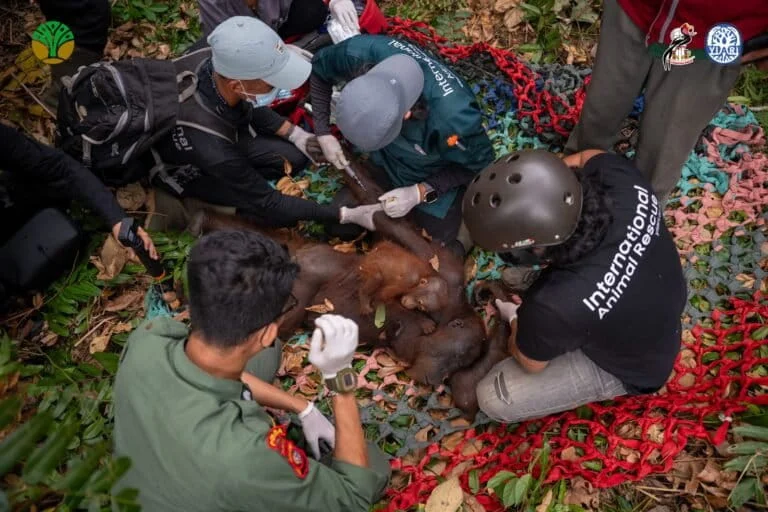
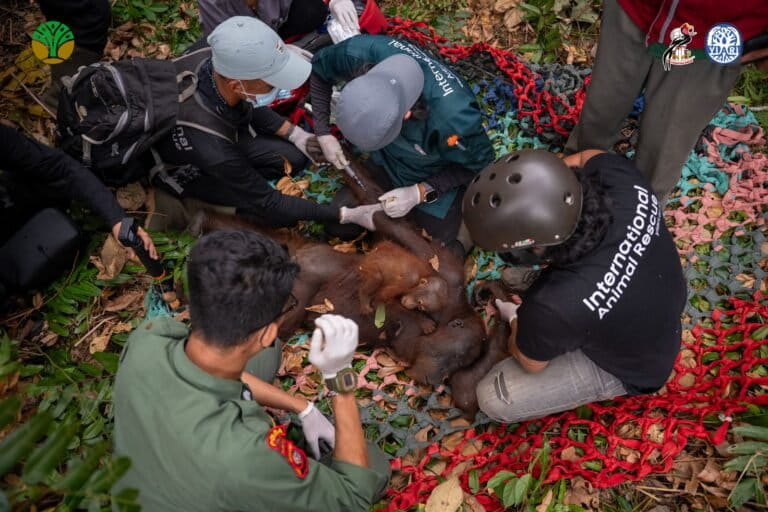
The tragedy is personified in stories like that of "Sampurna," an orangutan recently rescued from the burning landscapes of Sungai Awan Kiri village in West Kalimantan. Sampurna is but one of many. According to Argitoe Ranting, Operational Director of the Yayasan Inisiasi Alam Rehabilitasi Indonesia (Yiari), the situation has reached a breaking point.
"The conditions are dire. In less than a month, we have had to rescue nine orangutans directly threatened by the inferno," Ranting stated.
Silverius Oscar Unggul, Chairman of Yiari, emphasizes that these fires have created a self-perpetuating cycle of destruction. The root cause—often the uncontrolled use of fire for land clearing—has triggered a collision between human economic survival and wildlife conservation.
When forests are incinerated and fragmented, orangutans lose their primary sources of food and shelter. Disoriented and starving, they are forced to encroach upon local plantations. This creates a volatile conflict: local farmers see their crops destroyed by displaced, hungry primates, while the orangutans face retaliation or death. "Both the orangutans and the local communities are victims of the same destructive practices," Unggul noted. The burden on the state to manage this conflict, provide disaster relief, and conduct emergency translocations is becoming increasingly unsustainable.
Chronology of the 2026 Fire Crisis
The escalation of this year’s fire season has been nothing short of alarming. According to detailed spatial analysis by Geopix, the timeline of destruction reveals a sharp, exponential spike in thermal anomalies:
- June 2026: The early onset of the dry season saw 3,493 hotspots detected across Kalimantan. Of these, 1,946 (55.7%) were situated within the vital habitats of the orangutan.
- July 2026: While the total number of hotspots dipped slightly to 1,876, the concentration within orangutan habitats increased, with 1,409 points (75.1%) recorded in these sensitive areas.
- August 2026: The situation deteriorated rapidly. A massive surge brought the total to 63,615 hotspots, with a staggering 57,094 (89.8%) occurring within orangutan territory.
- Early September 2026 (1–5 September): In just five days, the intensity matched the entirety of August. Satellite imagery detected 55,671 hotspots, with 49,946 (89.7%) directly overlapping with orangutan home ranges.
This trajectory suggests that the "fire season" is no longer a seasonal nuisance but a systemic, recurring disaster that threatens the very existence of the Pongo genus in the wild.
Data Insights: A Siege on Biodiversity
The Geopix report, titled “Alerta! Borneo Lautan Api” (Borneo: A Sea of Fire), provides a chilling statistical breakdown of the disaster. By overlaying SiPongi+ data—the Indonesian government’s fire monitoring system—with the known habitats of the three recognized subspecies of the Bornean orangutan (Pongo pygmaeus pygmaeus, Pongo pygmaeus wurmbii, and Pongo pygmaeus morio), the researchers identified a clear pattern of targeted destruction.
The Subspecies Most at Risk
The data indicates that Pongo pygmaeus wurmbii is currently bearing the brunt of the crisis. Between June and early September, this subspecies faced 99,717 detected hotspots. In comparison, Pongo pygmaeus pygmaeus faced 6,826 hotspots, and Pongo pygmaeus morio faced 3,852.
Geographically, Central Kalimantan has emerged as the epicenter of the crisis. With 52,703 hotspots recorded, it is the most vulnerable region, largely due to the density of P. p. wurmbii populations within its borders.
Annisa Rahmawati, a Senior Wildlife Campaigner at Geopix, cautions that while "hotspots" are not always verified ground fires—they represent anomalies in surface temperature—the sheer density of these readings in protected areas is a clear indicator of catastrophic potential. "When 88.6% of all hotspots in Kalimantan occur within orangutan habitats, we aren’t just looking at forest fires; we are looking at the destruction of an entire ecosystem," Rahmawati explained.
Official Responses and Rescue Operations
The Ministry of Forestry, in coordination with the Natural Resources Conservation Agency (BKSDA) of West Kalimantan and partners like Yiari, has mobilized emergency response teams. To date, 23 orangutans have been successfully rescued from fire-ravaged areas.
However, the scope of the rescue operation goes beyond our closest primate cousins. The teams have also recovered nine pangolins, three slow lorises, a proboscis monkey, a civet, and a grey langur. Despite the logistical nightmare of navigating smoldering peatland, these teams have maintained 24-hour medical readiness, monitoring wildlife in fire-prone corridors to prevent further mortality.
While these rescue efforts are heroic, they are reactive. The Ministry faces intense pressure to shift from reactive firefighting to proactive, long-term habitat preservation.
Implications: The Need for Radical Policy Shifts
The environmental and social consequences of the 2026 fires are profound. Beyond the loss of biodiversity, the fires have exacerbated the regional air quality crisis, leading to widespread respiratory distress among human populations.
1. The Call for Legal Accountability
There is a growing consensus that "business as usual" is no longer an option. Experts are calling for a strict, uncompromising crackdown on the corporations and individuals responsible for illegal land clearing. Rahmawati stresses that after the fires are extinguished, the state must prioritize legal action against any entity found to have acted with negligence. "We need to break the chain of fire once and for all," she says.

2. Updating the Science
The current Population and Habitat Viability Assessment (PHVA) for the Bornean orangutan is nearly a decade old. Given the rapid rate of habitat loss, this data is likely obsolete. Scientists are urging the government to conduct an immediate, comprehensive survey to understand the current population status, the availability of food sources, and the extent of the damage to protected corridors.
3. A National Emergency Action Plan
Advocates are pushing for the development of a "National Emergency Action Plan for the Rescue of Orangutan Populations and Habitats." This framework would include:
- Enhanced Monitoring: Real-time, satellite-linked surveillance of wildlife corridors.
- Restoration: Large-scale ecological restoration of peatlands to prevent future fires.
- Conflict Mitigation: Providing sustainable economic alternatives to local communities to discourage the use of fire in agriculture.
- Strict Enforcement: Zero-tolerance policies for forest encroachment in protected zones.
Conclusion: A Race Against Time
The images of scorched landscapes and displaced orangutans are more than just news headlines; they are a reflection of a fractured relationship between development and nature. As the smoke clears in some parts of Kalimantan and intensifies in others, the message is clear: the survival of the orangutan is inextricably linked to the survival of the forest, and by extension, the stability of our climate.
The "solidarity of the air" shared by both humans and animals, who are all currently struggling to breathe amidst the haze, serves as a grim reminder of the stakes. We are at a critical juncture. Without immediate, decisive action to enforce the law and restore the damaged lungs of the island, the orangutan may soon become a ghost of the Borneo jungle—a victim of a crisis that was, in many ways, entirely preventable.
The fires may eventually stop, but for the orangutan, the damage to their home and their future may be permanent unless the international community and the Indonesian government move beyond rhetoric and into the era of radical, uncompromising conservation.







