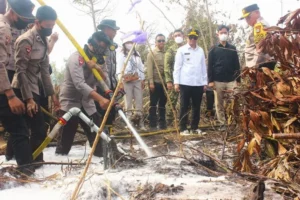
Beneath the Surface: Indonesia’s High-Stakes Battle Against Peatland Fires in an Era of El Niño
As Indonesia grapples with an extended dry season exacerbated by the "Godzilla" El Niño phenomenon, the nation’s vast peatland ecosystems have once again become the epicenter of a critical environmental struggle. With the mercury rising and humidity levels plummeting, the susceptibility of these carbon-rich landscapes to combustion has triggered an urgent, nationwide mobilization. Government authorities, environmental watchdogs, and private sector concession holders are locked in a race against time, prioritizing the "rewetting" of peatlands to prevent the spark of a crisis that threatens not only biodiversity but also the nation’s climate commitments.
The Ministry of Environment and the Agency for Environmental Management (KLH/BPLH) have issued a stern directive to all concession holders: implement aggressive mitigation strategies with the ultimate target of achieving "zero fire" status. For Indonesia, this is not merely a matter of disaster management; it is a fundamental challenge of ecological preservation.
The Ecological Imperative: Why Peat Matters
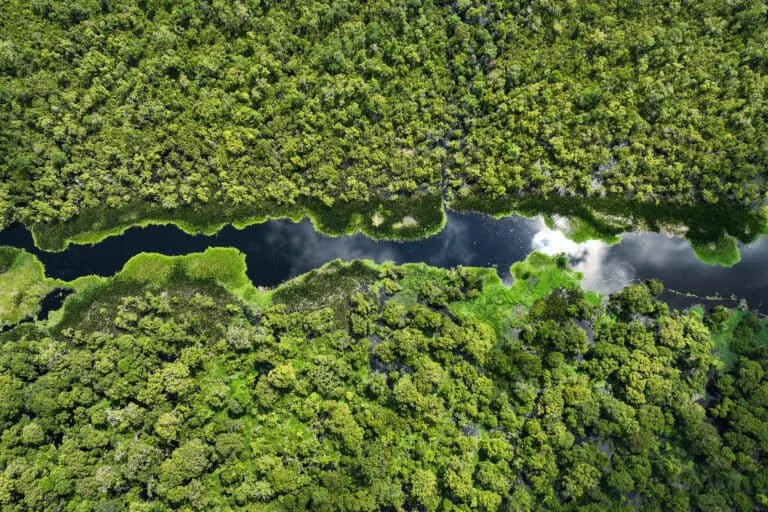
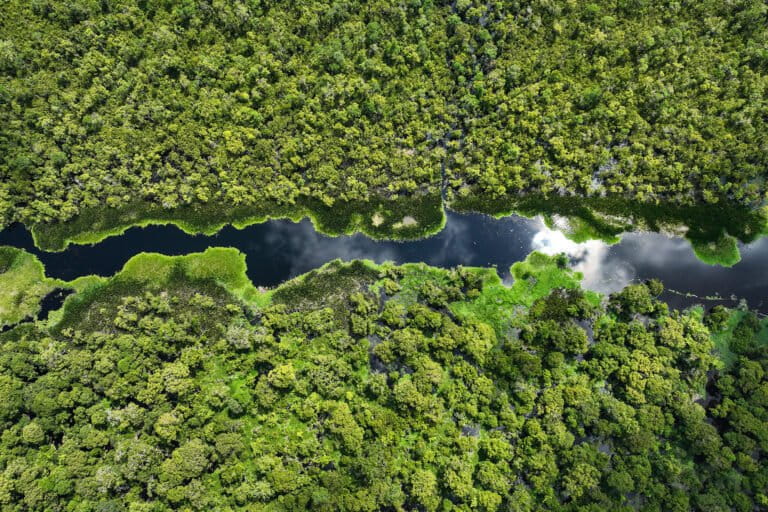
Peatlands are the silent sentinels of the global climate. These ecosystems possess the extraordinary capacity to sequester carbon at rates significantly higher than conventional forests. When these lands dry out and ignite, they release decades, sometimes centuries, of stored carbon into the atmosphere, transforming from vital carbon sinks into massive carbon emitters.
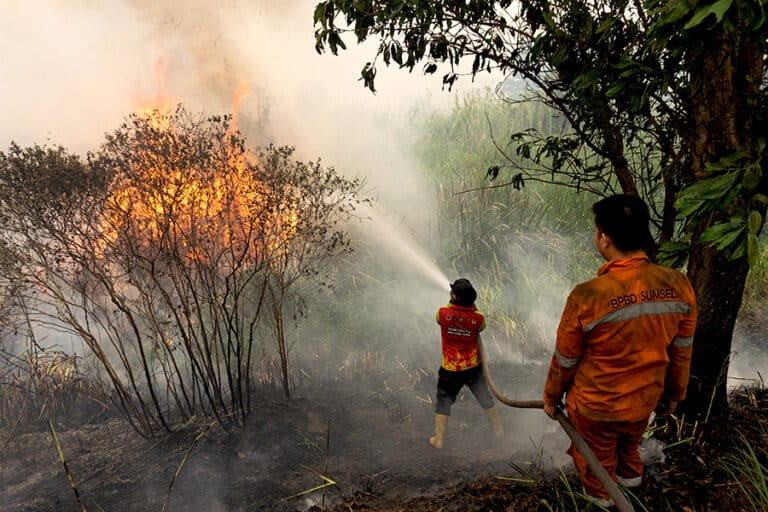
Jumhur Hidayat, Minister of Environment and Head of the BPLH, emphasized during the "Work Meeting on Prevention and Anticipation of Forest and Land Fires in Peatland Ecosystems" in Jakarta on July 10, 2026, that the focus must shift beyond mere firefighting. "We are not just avoiding fires; we are protecting a crucial part of our life-support system," Hidayat stated. The core of the government’s strategy is a rigorous hydrological management plan designed to keep the water table at levels that prevent the underlying peat layers from becoming fuel.
The Mechanics of Mitigation: Canal Blocking and Hydrology
The technical backbone of this prevention strategy rests on "canal blocking." Historically, companies operating in peat-rich concessions have drained the land to facilitate agricultural productivity, such as oil palm cultivation. This drainage dries out the deeper layers of peat, making them highly flammable.
Under the new government mandates, companies are required to install canal blocks—structures that prevent water from draining into rivers, effectively keeping it trapped within the concession to maintain high moisture levels. Additionally, the construction of water reservoirs, or embungs, serves as a critical buffer during the peak of the dry season.
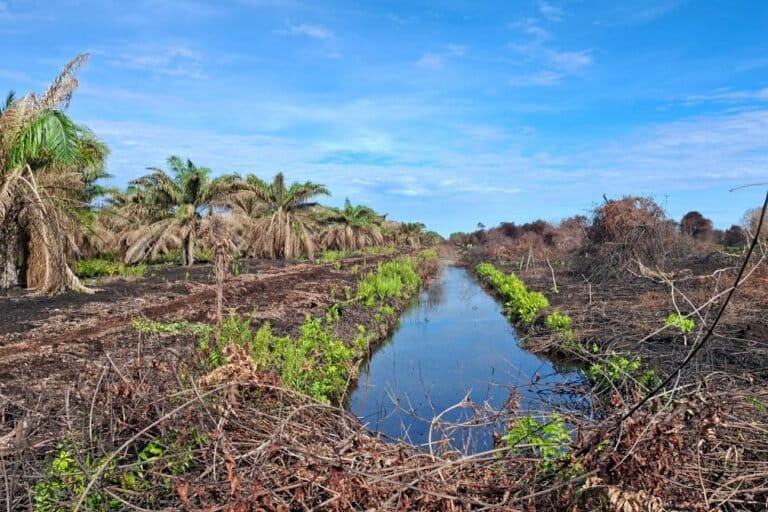
KLH/BPLH data indicates that across 4.15 million hectares of peatland managed by 314 companies, approximately 34,989 canal blocks have been installed. However, the task remains incomplete. In community-managed areas, forest zones, and buffer regions, only 8,857 blocks have been constructed, with a documented need for an additional 17,394 units to fully secure the hydrological integrity of the landscape.
Chronology of a Crisis: The 2026 Dry Season Escalation
The situation on the ground is deteriorating rapidly. Sigit Reliantoro, Deputy of Environmental Governance and Sustainable Natural Resources at KLH/BPLH, highlighted a drastic decline in the Groundwater Table (TMAT) since January 2026.
By July, the hydrological status of peatlands in several provinces had reached a "high alert" level. According to government standards, when the TMAT drops below 80 centimeters, the peat becomes a dangerous fuel source. "If the water table is at 80 centimeters, the peat is essentially a ticking time bomb," Reliantoro warned.
The Regional Breakdown:
- Sumatra: The region is in a state of high alert. Riau and South Sumatra are the primary hotspots. In Riau, over 80 monitoring points show critical TMAT levels, with Pelalawan, Indragiri Hilir, and Bengkalis identified as priority zones for immediate intervention.
- Kalimantan: West Kalimantan faces a grave risk, particularly in Kubu Raya, where 1,823 hotspots were recorded between January and June. Central and South Kalimantan also remain under high-alert status, with significant hotspot activity in Sukamara and Katingan.
- Papua: A concerning trend has emerged in the East. In the Merauke and Mappi districts, massive hotspot clusters have appeared, coinciding with the acceleration of the government’s Food Estate and other Strategic National Projects (PSN).
The "Blank Spot" Challenge: Data Gaps in Monitoring
One of the most significant hurdles identified by the KLH is the prevalence of "blank spots"—regions where no TMAT monitoring exists. Out of thousands of peat-dependent villages, only a fraction possess the necessary equipment to track water levels in real-time.
In West Kalimantan, for instance, 295 out of 366 peatland villages lack any detection system. This lack of data prevents the government from acting before a fire breaks out, rendering the "early warning" component of their strategy ineffective in many remote areas.
Corporate Claims vs. Field Reality
Several major players, including PT Arara Abadi (APP Sinarmas), PT TH Indo Plantation (THIP), and state-owned enterprise Pertamina Patra Niaga, have publicly touted their adherence to government guidelines.
Pertamina has highlighted its "Gambut Lestari" program, which utilizes innovative "Peat Nozzles" and portable hydrants to suppress fires three times faster than traditional methods. Similarly, APP Arara Abadi claims to have implemented an integrated water management system, sharing water resources across concessions to maintain moisture levels, backed by over 200 automatic TMAT monitoring instruments.
However, these claims are met with skepticism by environmental groups. Pantau Gambut, an advocacy coalition, points out that the existence of infrastructure does not equate to effective restoration. Their field assessments have revealed that 70% of the canal blocks they surveyed were in a state of disrepair, and 52% of monitored sites still showed water levels well below the safety threshold.
"Sekat kanal (canal blocks) are merely tools, not the end goal," says Wahyu Perdana, Advocacy Manager at Pantau Gambut. "The success of restoration must be measured by the recovery of the hydrological function of the ecosystem, not just the number of structures built."
Implications: The High Price of Failure
The legal consequences for companies failing to mitigate fire risks are significant. Irjen Pol Rizal Irawan, Deputy of Law Enforcement at KLH, has adopted a "zero-tolerance" policy. Companies found responsible for fires in their concessions face administrative, civil, and criminal penalties. Administrative fines alone can range from tens to hundreds of billions of rupiah. Last year, the government secured over IDR 500 billion in fines from successful litigation against non-compliant corporations.
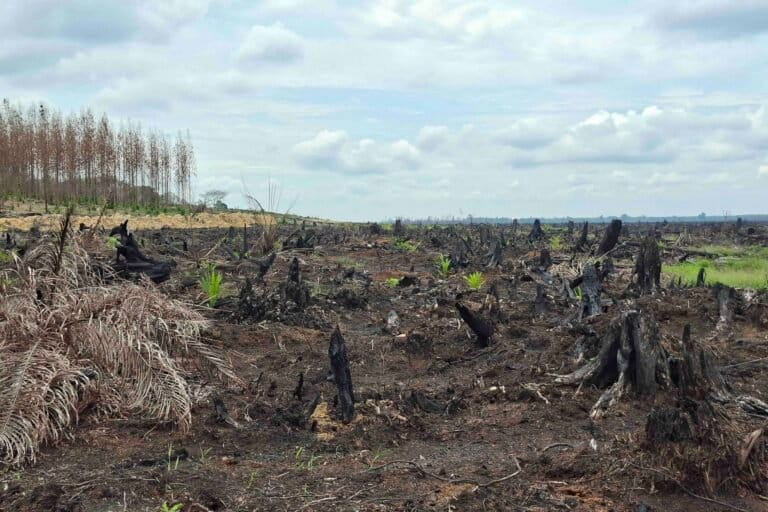
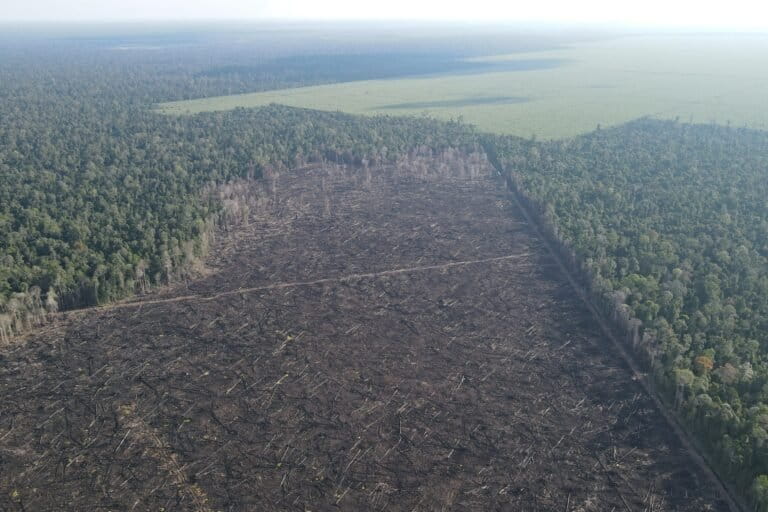
Despite these measures, the cycle of destruction continues. Data from the last 12 years (2014–2025) shows that over 9.9 million hectares of forest and land have burned in Indonesia, with nearly 25% of that being peat-swamp forest. Post-fire, the landscape rarely returns to its original state. Instead, research by Pantau Gambut shows that only 1–3% of burned areas successfully regenerate into forest, while 54% are converted into oil palm plantations and 41% into scrubland.
A Call for Systemic Reform
The ongoing fire crisis in 2026, intensified by the El Niño event, underscores a systemic failure that transcends seasonal weather patterns. While the government’s focus on rewetting is a step in the right direction, experts argue that it is insufficient without a fundamental re-evaluation of land-use planning.
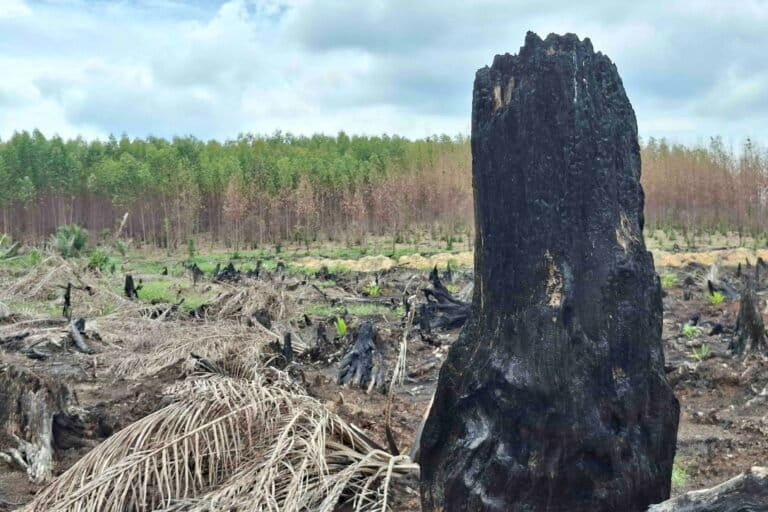
Uli Arta Siagian, Coordinator of Walhi National, argues that the concentration of fires within areas designated for Strategic National Projects (PSN) suggests that the state’s own development agenda is contributing to the volatility of the landscape. "We cannot view these fires as mere natural events," Siagian asserts. "They are the direct consequence of massive, forced changes to the landscape that ignore the ecological reality of peat."
As the 2026 dry season nears its peak, the situation remains precarious. The reliance on fragmented infrastructure and corporate promises has yet to break the cycle of annual smoke-haze crises. For Indonesia, the path forward requires more than just blocking canals; it demands a radical shift in how the nation values its peatlands—moving away from a model of extraction and toward one of long-term ecological preservation. Without such a shift, the "zero fire" goal will remain an elusive ambition, and the country’s vast peatlands will continue to burn, threatening both the regional economy and the global climate.