Astrid Widayani: The Academic-Turned-Politician Aiming to Redefine PSI’s Influence in Solo’s "Bull Pen"
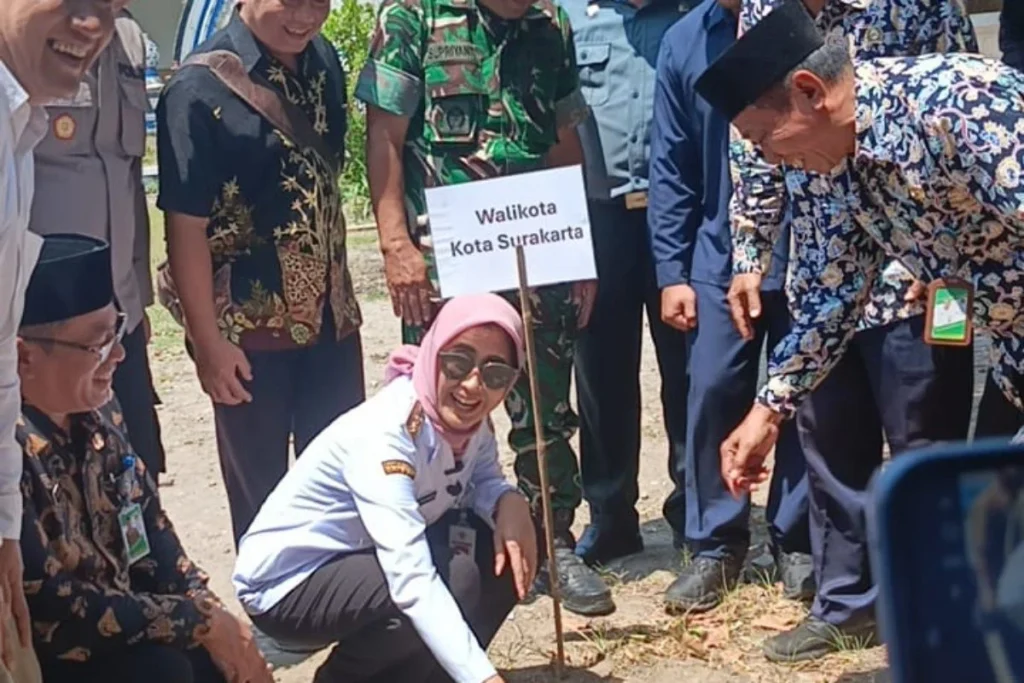
JAKARTA – The political landscape of Surakarta, traditionally known as the "Kandang Banteng" (Bull Pen)—a long-standing stronghold for the Indonesian Democratic Party of Struggle (PDI-P)—is witnessing a significant shift. On Sunday, October 12, 2025, the local chapter of the Indonesian Solidarity Party (PSI) announced a strategic leadership transition. Astrid Widayani, a figure widely recognized for her academic credentials and youthful vigor, was inaugurated as the Chair of the DPD PSI Solo for the 2025–2030 period.
This appointment is not merely a change in administrative personnel; it marks a calculated move by the national party to inject fresh, intellectual, and community-driven energy into one of Indonesia’s most politically challenging environments.
The Leadership Transition: A Strategic Pivot
The inauguration of Astrid Widayani signals a transition of responsibility from Tri Mardiyanto, who has served the party diligently and will now assume the role of Treasurer for the DPD PSI Solo. This shift ensures a continuity of institutional memory while allowing for a new strategic direction under Astrid’s leadership.
Astrid’s elevation to the head of the Solo branch comes on the heels of her national appointment in September 2025 as the Head of the PSI Party School (Sekolah Partai DPP PSI) for the same 2025–2030 term. Her dual roles—managing the party’s ideological and educational core at the national level while spearheading operations in the symbolic heart of Central Java—underscore the high degree of trust the PSI central leadership places in her capabilities.
A Biography of Versatility: Who is Astrid Widayani?
To understand why Astrid Widayani has become a central figure in PSI’s expansion strategy, one must examine her multifaceted career. Born in Surakarta on November 9, 1986, Astrid has spent nearly two decades oscillating between the worlds of high-level academia, community activism, and business leadership.
Early Life and Academic Excellence
Astrid’s educational journey is defined by intellectual rigor and a penchant for interdisciplinary study. She earned her Bachelor of Economics (S.E.) from Universitas Surakarta in 2007, simultaneously pursuing a Bachelor of Literature (S.S.) from Diponegoro University, which she completed in 2009.
She did not stop there. Astrid went on to earn a Master’s degree in Strategic Management from Gadjah Mada University (UGM). Her academic pursuits culminated in a Doctorate in Business Transformation, Sustainable Business, and Entrepreneurship from the Business School Lausanne in Switzerland. This robust academic background serves as the foundation for her methodical, data-driven approach to politics.
The "Mbak Rektor" Phenomenon
Beyond her degrees, Astrid broke barriers in the Indonesian academic sphere. In 2023, at the age of 36, she was appointed Rector of Universitas Surakarta, becoming the institution’s first female rector. Her youth, combined with her authoritative position, earned her the affectionate nickname "Mbak Rektor." During her tenure, she has been credited with modernizing campus governance and fostering stronger ties between academia and the local industry.
Beyond the Campus: Beauty, Business, and Community
Before her ascent in academia, Astrid was a prominent figure in regional pageantry and community service. She served as "Denok Semarang" and was recognized as a Duta Wisata (Tourism Ambassador) of Central Java, as well as Putri Citra Central Java in 2006. These roles provided her with a platform to engage with the public early in her career.
Her business acumen is equally notable. She has held executive roles, including CEO of Direct English Solo and CEO of PT Pilar Bumi Bengawan. Furthermore, her dedication to social impact is evidenced by her leadership in the "Jawara UMKM" initiative, a program designed to empower micro, small, and medium enterprises in Solo through business incubation, digital marketing training, and financial mentorship.
Chronology of Political Integration
Astrid’s transition into formal politics was not sudden but rather a culmination of years of community-based leadership:
- 2006–2010: Active involvement in youth organizations and tourism advocacy (Paguyuban Duta Wisata, Solo Mengajar).
- 2023: Appointed as the first female Rector of Universitas Surakarta.
- 2024: Entered the political arena as a candidate for Wali Kota Solo, paired with Respati Achmad Ardianto. The pair received backing from a robust coalition including PSI, Gerindra, PKS, Golkar, PKB, and PAN.
- September 2025: Appointed as the Head of the PSI Party School (Sekolah Partai DPP PSI).
- October 12, 2025: Officially inaugurated as the Chair of DPD PSI Solo.
Implications: Breaking the "Bull Pen" Monopoly
The appointment of an intellectual, female leader in Solo is a calculated move by PSI to broaden its appeal. For decades, PDI-P has dominated Solo, the political hometown of many influential Indonesian figures.
Expanding the Voter Base
PSI, often characterized by its youthful, progressive, and urban-centric ideology, views Solo as a vital frontier. By installing someone with deep local roots like Astrid—who understands the cultural nuance of Surakarta while possessing the credentials to appeal to the educated middle class—PSI hopes to bridge the gap between traditionalist voters and the party’s modern agenda.
The Role of the Party School
As the Head of the PSI Party School, Astrid is responsible for the ideological and practical training of party cadres across Indonesia. This position gives her a unique advantage in managing the Solo branch; she can directly implement the national party’s best practices and "soft-skill" reinforcement strategies at the local level. Her "Youth Reinforcement Program" (YRP), which focuses on practical skills for the younger generation, is expected to be a cornerstone of her campaign to attract first-time voters in Solo.
Official Stance and Future Outlook
While PSI has been vocal about its support for the current national administration, specifically regarding the programs of President Prabowo Subianto, the local strategy under Astrid focuses on pragmatic, hyper-local issues.
During recent public addresses, PSI leadership, including Kaesang Pangarep, has emphasized that the party’s goal is to ensure that national development programs truly reach the grassroots level, fostering "people’s independence." Astrid’s appointment aligns with this vision, as she is expected to prioritize the economic empowerment of Solo’s youth and the sustainability of its UMKM sector.
Analyzing the Challenges
Despite the optimism surrounding her appointment, Astrid faces significant challenges:
- Cultural Barriers: Solo is a city with deep Javanese traditional roots. While Astrid is a local, the challenge lies in shifting the political loyalty of voters who have historically aligned with the PDI-P "red" identity.
- Maintaining Momentum: After the 2024 election cycle, maintaining the enthusiasm of a coalition-based support structure requires constant engagement. Astrid must prove that her leadership can sustain the momentum generated during the mayoral race.
- Policy vs. Rhetoric: As an academic, Astrid is expected to provide policy-based solutions. Whether these translate into tangible improvements for the citizens of Solo remains to be seen in the coming years leading up to the next election cycle.
Conclusion
Astrid Widayani represents a new breed of Indonesian politician: one who brings the discipline of the boardroom and the lecture hall into the legislative arena. As she takes the reins of PSI in Solo, the political community will be watching closely. If she succeeds in translating her background in education and entrepreneurship into electoral success, she may well become the blueprint for how smaller parties can challenge entrenched political monopolies in Indonesia’s urban centers.
Her journey from a campus rector to the head of a major political party branch is a testament to the changing dynamics of Indonesian democracy—where credentials, community service, and a clear vision for the future are becoming as vital as traditional political networking.
Disclaimer: This article is based on recent reporting and public profile data. As a political figure, Astrid Widayani’s tenure as Chair of DPD PSI Solo will be subject to ongoing evaluation by the party and the public.