Ministry of Health Launches Comprehensive Investigation into Death of Internship Doctor in Lampung

JAKARTA – The Ministry of Health (Kemenkes) of the Republic of Indonesia has formally addressed the tragic passing of a medical professional participating in the national internship program in Lampung. The incident, which has sparked widespread public concern and ignited debates regarding the welfare and working conditions of young doctors, is currently under rigorous investigation.
As the nation waits for answers, the Ministry of Health has moved to dispel speculation, emphasizing that a dedicated team is currently on the ground to determine the precise circumstances surrounding the death.
1. Main Facts: A Call for Transparency
The death of an internship doctor in Lampung has become a focal point of national discourse, highlighting the inherent pressures faced by medical practitioners in their early careers. The Ministry of Health confirmed that the investigation is not merely a superficial review but a deep-dive analysis involving the Bureau of Communication and Public Information and the Agency for Human Resources Development and Empowerment in Health (BPPSDMK).
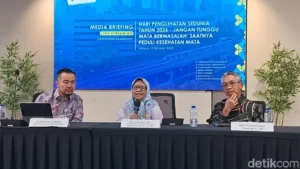
"We have deployed an investigation team to the field. This team consists of representatives from the BPPSDMK working in tandem with relevant professional organizations," stated Aji Muhawarman, Head of the Bureau of Communication and Public Information at the Ministry of Health, during a press briefing in South Jakarta.
The Ministry maintains that while the tragedy is deeply felt, it is imperative to allow the investigative process to reach its conclusion before definitive public statements are made regarding the cause of death or the specific culpability of any involved parties.
2. Chronology and Ongoing Investigation
The investigation team is currently operating across multiple locations, specifically focusing on the hospital facilities that serve as the clinical site for the internship program. The goal is to reconstruct the timeline of the events leading up to the tragedy.
The Investigative Scope:
- On-site Audits: Investigators are conducting interviews and gathering documentation at the hospital where the internship took place.
- Inter-Agency Collaboration: The involvement of professional medical associations ensures that the clinical and ethical standards of the internship program are scrutinized from a peer-review perspective.
- Data Collection: The team is reviewing logs, shift schedules, and reporting structures to understand the environment the doctor was working in.
Aji Muhawarman clarified that the complexity of the investigation lies in the need to understand the "systemic versus individual" factors. "I cannot disclose the findings yet because the team is still actively moving between several sites. We need to fully understand the chronology of the event to determine the appropriate follow-up actions," he explained.
3. Supporting Data and the Internship Landscape
The internship program in Indonesia, designed to bridge the gap between academic medical education and independent clinical practice, has been a subject of continuous improvement. The Ministry of Health notes that the current program is governed by strict regulations, including the Permenkes (Minister of Health Regulation), which dictates the parameters of daily operations for interns.
Key Regulatory Frameworks:
- Working Hours: Regulations are in place to limit the duration of shifts to prevent burnout and fatigue—a common concern in medical education.
- Supervision Protocols: Every intern is assigned to a mentor or supervisor, and there are local and regional committees tasked with overseeing the well-being and clinical progress of participants.
- Ongoing Evolution: The Ministry has been actively refining these regulations over the years, using lessons learned from previous incidents to enhance the protection of medical interns.
Despite these frameworks, the recent case has prompted a national outcry, leading many to question if existing policies are being effectively implemented at the facility level.
4. Official Responses: The Ministry’s Stance
In response to calls for immediate policy changes or the suspension of the program, the Ministry of Health has adopted a stance of "calculated evaluation."
Addressing Systemic Concerns
Aji Muhawarman stressed that while the Ministry is deeply concerned, it must avoid making reactive, "instant" policy changes based on a single case. "We must ensure we are not viewing this solely as a isolated, case-by-case incident. We are evaluating the entirety of the program. It is not that we simply change policies because of one event; that is not how systemic improvement works," he asserted.
Strengthening Oversight
The Ministry acknowledges that the responsibility for doctor safety is shared. The official response highlighted three pillars of oversight that must be strengthened:
- Central and Regional Committees: These bodies are tasked with monitoring the execution of the internship program and must become more proactive.
- Hospital Management: Facilities hosting interns are the first line of defense in ensuring that clinical environments are safe and that workloads are manageable.
- Clinical Mentors: The physicians responsible for supervising interns play a critical role in identifying signs of distress or exhaustion before they escalate into crises.
5. Implications: The Future of the Internship Program
A central question facing the government is whether the internship program should be suspended. To this, the Ministry has provided a firm answer: The program will continue.
Why the Program Persists
The Ministry of Health argues that suspending the program would have significant repercussions for the healthcare system at large. "There are larger interests at stake. If we stop the program, we must consider the impact on other interns, the medical education cycle, and the availability of healthcare services for the public," said Aji.
The Path Toward Reform
The Ministry views this tragedy as a catalyst for a broader, more robust evaluation of the entire system. The implications of the investigation are expected to be far-reaching:
- Review of Shift Policies: There may be stricter enforcement or a revision of the maximum working hours allowed for interns, with a focus on real-world compliance rather than just "paper" compliance.
- Mental Health Support: There is a growing consensus that medical interns require better access to mental health resources, counseling, and support groups to navigate the high-stress environment of hospital wards.
- Accountability Mechanisms: The Ministry is exploring ways to ensure that hospitals and supervisors are held strictly accountable for the adherence to health and safety regulations for interns.
6. Conclusion: A Call for Collective Responsibility
The death of a young doctor is a stark reminder of the immense pressures inherent in the medical profession. As the Ministry of Health continues its investigation, the focus remains on uncovering the truth, honoring the memory of the deceased, and ensuring that the internship program evolves into a safer, more sustainable system.
The Ministry of Health has reiterated its commitment to transparency. Once the investigation concludes, the findings will be used as a primary source to develop a more resilient framework for medical internship in Indonesia.
"Our hope is that from these findings, we can implement systemic improvements. We do not want to see this happen again. We are committed to a process that involves all stakeholders—hospitals, the government, and the medical community—to ensure that our doctors are protected as they serve the nation," concluded Aji Muhawarman.
As the investigation proceeds, the public, the medical community, and the families affected by this tragedy remain in a state of watchful anticipation, waiting for a resolution that offers both justice and the promise of a safer future for those who dedicate their lives to healing others.