MotoGP’s 2027 Revolution: Marc Marquez Calls for Radical Aero Overhaul to Save Racing
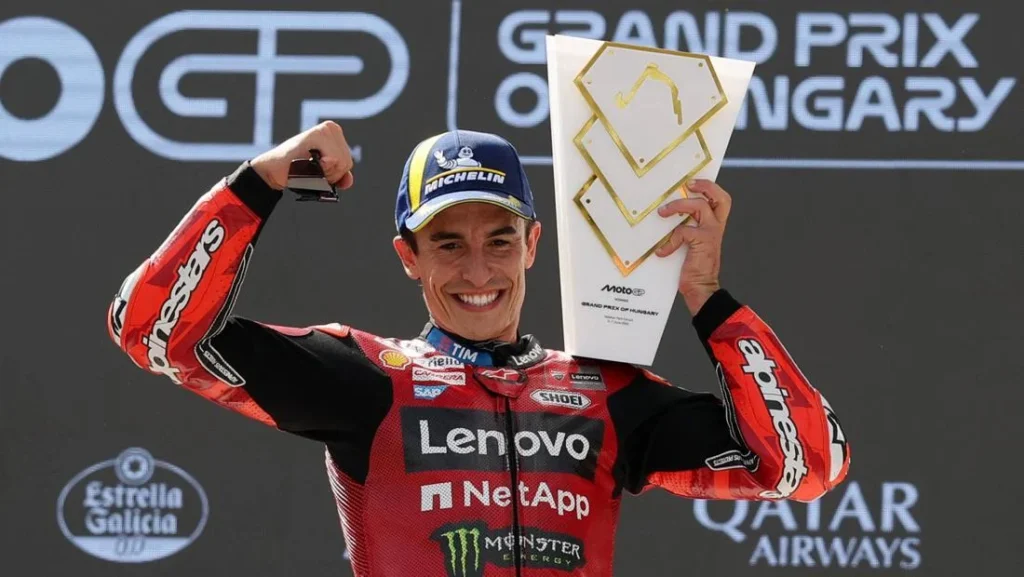
JAKARTA – As the MotoGP paddock prepares for the most significant technical transformation in decades, eight-time world champion Marc Marquez has emerged as a vocal advocate for aggressive change. While the 2027 regulations—centered on a reduction in engine capacity—are already set in stone, the Spanish icon believes that the sport must go further to ensure the long-term health and excitement of Grand Prix racing.
With the sport currently grappling with the unintended consequences of "aero-dependency," the conversation surrounding the 2027 technical package has shifted from mere engine specs to the very nature of how a motorcycle interacts with the air.
Main Facts: The 2027 Technical Reset
The 2027 MotoGP regulation overhaul represents a total paradigm shift. After years of escalating speeds and increasingly complex engineering, the FIM and Dorna Sports have opted to hit the "reset" button. The key pillars of this new era include:
- Engine Downsizing: The current 1,000cc engines will be replaced by 850cc powerplants. This change is designed to reduce top speeds and extend braking distances, theoretically allowing for more maneuvering room.
- Aerodynamic Restrictions: The current "aero-war" will be curbed. The dimensions of fairings will be restricted, and the reliance on complex, turbulence-inducing winglets will be strictly limited.
- Ride-Height Device Ban: To keep the focus on rider input rather than automated chassis systems, all ride-height and "holeshot" devices will be prohibited.
- Sustainability and Safety: The focus is heavily weighted toward rider safety and environmental sustainability, with a mandate for 100% non-fossil fuel usage by 2027.
Chronology: How We Reached This Turning Point
The trajectory toward the 2027 regulations did not happen overnight. The current era of MotoGP, often dubbed the "Aero Era," began in earnest around 2016 with the introduction of rudimentary winglets. Over the following eight years, the development race accelerated exponentially.
- 2016–2019: Ducati pioneered the aerodynamic winglet revolution, which forced every other manufacturer to follow suit to remain competitive.
- 2020–2022: The introduction of ride-height devices changed the game. Bikes began squatting on the straights and during exits, maximizing traction but making the machines significantly more complex to pilot.
- 2023: The "dirty air" phenomenon became a major talking point. Riders began complaining that following a competitor became physically exhausting and tactically frustrating due to the turbulent wake created by the bikes in front.
- 2024: Official discussions between the MSMA (Motorcycle Sport Manufacturers’ Association) and the FIM reached a boiling point. The consensus was clear: the bikes were becoming too fast for many circuits and the racing spectacle was being compromised by the inability to overtake.
- 2025–2026 (The Transition): The current period serves as a "lame duck" phase, where manufacturers are balancing the development of current machinery with the looming shadow of the 850cc era.
Supporting Data: The Marquez Perspective
Marc Marquez, currently riding for the Ducati Lenovo Team, has had the unique opportunity to sample the early iteration of the 850cc prototype during private testing at the Brno circuit. His insights provide a critical window into the future of the sport.
"I have tried the 850cc bike at Brno. Yes, it is slower, but I don’t think the fans will actually notice the difference in speed from the grandstands," Marquez remarked in an interview with GPOne. "The real change, the one that will dictate the racing, is the tires and the aerodynamics."
Marquez’s technical assessment is rooted in the physics of the sport. Modern MotoGP bikes produce massive amounts of downforce, which stabilizes the bike in corners but creates a vacuum of turbulent air behind the machine. This turbulence ruins the front-end grip of the bike following behind, leading to overheating tires and increased braking distances.
"I hope they reduce the aerodynamics even further," Marquez added. "I want them to go even further than what is currently planned. Without aero, you can have group battles—like you see in Moto3. Right now, in MotoGP, it is becoming increasingly difficult to stay close because you lose downforce and the bike becomes unstable."
Official Responses and Industry Dynamics
The debate has split the paddock. While manufacturers like Ducati and KTM have mastered the current aerodynamic environment, others have struggled to catch up.
Dorna Sports’ Chief Sporting Officer, Carlos Ezpeleta, has emphasized that the 2027 rules are not just about slowing the bikes down, but about "future-proofing" the sport. "We want to ensure that MotoGP remains the pinnacle of motorcycle racing while making it accessible and entertaining for the viewers," Ezpeleta stated.
The manufacturers’ response has been a mix of caution and resignation. They recognize that the "aero-war" has driven costs to astronomical levels. By restricting aero, the series is inadvertently helping the teams’ bottom lines, as the cost of wind-tunnel testing and carbon-fiber aero-research is expected to plummet.
Furthermore, the shift in tire suppliers—moving from Michelin to Pirelli for all Grand Prix classes—marks a tectonic shift in how the bikes will handle. Pirelli, known for their performance in the World Superbike Championship (WorldSBK), brings a different philosophy to grip and longevity, which will force manufacturers to redesign their chassis from the ground up.
Implications: The Future of "Dogfight" Racing
The implications of the 2027 rules are profound. By reducing engine displacement and cutting back on aerodynamic aids, the sport is essentially trying to "humanize" the racing.
1. Re-emphasizing Rider Skill
When a bike is heavily assisted by downforce and ride-height devices, the gap between a "good" rider and a "great" rider often narrows. With less aero, the bikes will become more physically demanding. They will move more under braking and shake more on exit, putting the responsibility of control back into the hands of the rider.
2. The Return of Overtaking
The ultimate goal of these changes is to bring back the "dogfight." In the current era, overtaking is often limited to heavy braking zones, where the rider can lunge from a distance. With reduced aero, riders will be able to follow each other through fast, sweeping corners without the fear of being unsettled by "dirty air." This will lead to more tactical racing, where slipstreaming and line-choice become more important than raw horsepower.
3. A New Strategic Era
Teams will have to adapt to a world where they cannot simply "engineer" their way out of a deficit. With restricted engine development and limited aero, the margin for error will be smaller. The bikes will be more similar in performance, meaning that the championship will be decided by the minute details: tire management, fuel mapping, and the raw talent of the riders.
Conclusion: A Necessary Evolution
Marc Marquez’s call for further aerodynamic restriction is not just a plea for a more exciting show—it is a warning. If MotoGP continues on its current trajectory of technological escalation, the "pinnacle of racing" risks becoming a parade of machines that are too fast to race and too complex to overtake.
The 2027 regulations represent a brave attempt to return to the roots of motorcycle racing: a sport where the rider matters more than the wind tunnel. While the transition to 850cc engines will inevitably bring complaints about lost speed, the trade-off for better, closer, and more aggressive racing is one that both the riders and the fans seem ready to embrace.
As we look toward the 2027 season, the words of Marquez resonate as a challenge to the rule-makers: don’t just tweak the system—transform it. If the sport is willing to strip away the complex aero-aids that currently stifle the action, MotoGP might just enter its most competitive and entertaining era yet. The fans are waiting, and if the current testing data is any indication, the best is yet to come.